

A crypto card lets you spend Bitcoin, Ethereum, USDT, USDC, and other digital assets at the same coffee shops, online retailers, and ATMs that take a regular Visa or Mastercard. The card handles the conversion behind the scenes, so you never have to log in to an exchange, sell your holdings, wait for a bank transfer, and then spend the proceeds.
That single function is reshaping how crypto holders use their assets in everyday life. This guide explains what crypto cards are, how they actually work, what fees and tax rules apply, and how Upay makes spending crypto practical in 2026, whether you have never owned digital assets before or you have held Bitcoin since 2017 and never spent a single satoshi.
Punti chiave
- A crypto card spends digital assets the same way a debit card spends cash, with conversion handled automatically at the point of sale.
- Most crypto cards run on the Visa or Mastercard network, which gives them acceptance at 55 million-plus merchants worldwide.
- There are three main types: prepaid (load fiat in advance), custodial (provider holds your crypto), and non-custodial (you keep control of the wallet).
- Stablecoins like USDT and USDC are the most practical assets for daily spending because their value does not swing between top-up and purchase.
- Spending volatile crypto triggers a taxable disposal event in most jurisdictions, including the US, UK, and Australia.
- Upay supports BTC, ETH, USDT, USDC, and other major cryptocurrencies, with Apple Pay, Google Pay, ATM access, and signup in minutes.
What Is a Crypto Card and How Does It Work?
Fonte: Criptonomista
A crypto card is a payment card, either virtual or physical, that is linked to a cryptocurrency wallet rather than a traditional bank account. When you pay, the card either converts your crypto into the local fiat currency at the point of sale or draws from a pre-loaded fiat balance that you funded earlier with crypto. The merchant sees a normal Visa or Mastercard payment in their local currency and processes it the same way as any other card transaction.
Crypto cards run on the same networks that handle most card payments worldwide. You do not need a special terminal, the cashier does not need any crypto knowledge, and the merchant receives funds the way they always have. The crypto part happens entirely behind the scenes through the card provider’s wallet and conversion engine.
Crypto Card vs Traditional Debit Card: What’s the Difference?
The main difference is what sits behind the card. A traditional debit card is tied to a bank account holding fiat currency, while a crypto card is tied to a wallet holding digital assets. Both cards spend at the same merchants because both ride the Visa or Mastercard network.
| Caratteristica | Carta crittografica | Carta di debito tradizionale |
|---|---|---|
| Collegato a | Portafoglio Crypto | Conto bancario |
| Spending source | Crypto or stablecoin | Valuta Fiat |
| Accettazione del commerciante | 55M-plus Visa/Mastercard | 55M-plus Visa/Mastercard |
| Commissioni tipiche sui cambi | 0% a% 1 | 2% a% 3 |
| Signup requirements | Email plus KYC | Conto bancario richiesto |
| Time to virtual card | Minuti | 5 10 per giorni lavorativi |
| Assicurazione sui depositi | Generalmente nessuno | FDIC up to $250,000 (US) |
Types of Crypto Cards Explained
Crypto cards are not all built the same way. There are three main approaches to custody and conversion.
Carte prepagate crittografiche
You load fiat onto the card by selling crypto in the provider’s app. The card itself holds fiat, which keeps spending simple but locks in the conversion rate at the time of loading rather than at the time of spending.
Custodial Crypto Cards
The card provider holds your crypto on your behalf. When you make a purchase, the provider converts the required amount at the current market rate. You rely on the provider’s security, custody, and operational stability. Most consumer crypto cards, including Upay, use this model.
Non-Custodial Crypto Cards
Your crypto stays in a wallet you control, and the card provider connects to that wallet at the point of sale. In theory this offers better security, but these cards are less common, often slower at checkout, and usually have more friction during setup.
Which Cryptocurrencies Can You Use on a Crypto Card?
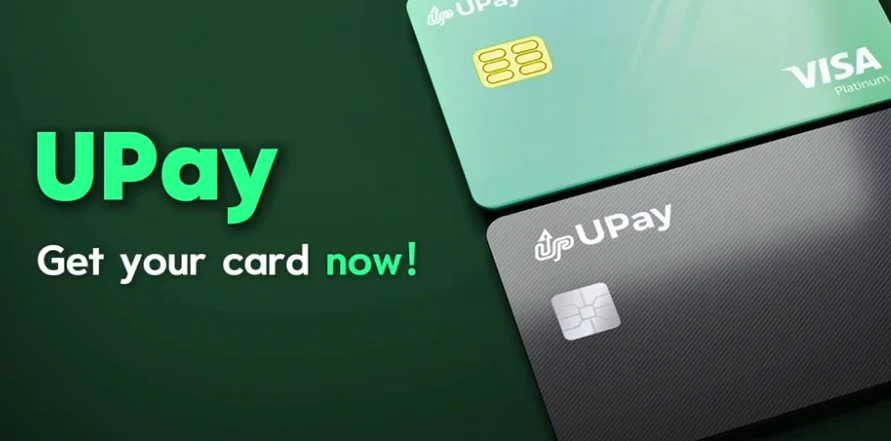
Fonte: https://upay.best/
Supported assets depend on the provider, but the widely accepted list is short and stable across most major cards.
- BTC (BTC): The most recognised cryptocurrency. Network fees can be high for small purchases, which is why most users treat it as a store of value rather than a daily payment asset.
- Ethereum (ETH): Faster than Bitcoin for transactions and widely supported across crypto cards.
- USDT (Tether): A US dollar stablecoin. The most practical asset for everyday spending because its value does not swing between top-up and purchase.
- USD/C: Another US dollar stablecoin, issued by Circle, widely trusted and liquid across exchanges and on-chain venues.
- Litecoin (LTC): Fast and low-fee, though less commonly supported than BTC or ETH.
- XRP: Fast settlement times, often supported on internationally-focused platforms.
For everyday purchases, stablecoins like USDT or USDC are the practical default. Their value does not change between top-up and spending, which removes both volatility risk and most tax complexity.
Are Crypto Cards Safe to Use?
Security is a fair concern, since crypto cards do not carry the same government-backed insurance that bank-issued cards do. Reputable providers compensate with several protections.
- Instant card freezing: Most apps let you freeze the card in seconds if it is lost or you spot a charge you do not recognise.
- Autenticazione a due fattori (2FA): Access to your wallet and card controls requires a second verification step beyond your password.
- Verifica KYC: Identity verification at signup makes it harder for bad actors to open fraudulent accounts.
- Protezione PIN: Physical cards require a PIN for in-person transactions.
- Limiti di spesa: You can set daily spending and ATM withdrawal limits from inside the app.
NB: crypto card balances are generally not covered by deposit insurance like the FDIC in the US (currently $250,000 per depositor per insured bank) or the FSCS in the UK (£85,000). Your crypto is held by the card provider, not in a government-insured bank account. Read the provider’s terms and any custody disclosures before depositing significant amounts.
What Are the Fees on a Crypto Card?

Fee structures vary by provider, but the common categories are worth understanding before you sign up. The headline offer is often fee-free domestic spending, while international and ATM use can carry costs that add up.
| Tipo di commissione | Gamma tipica | Quando si applica |
|---|---|---|
| Foreign exchange fee | 0% a% 1.5 | Spending in a currency different from the card’s base |
| Commissione di prelievo allo sportello bancomat | $1 to $3 or 1% to 2% | May be waived up to a monthly limit on some plans |
| Spread di conversione delle criptovalute | 0.5% a% 2 | Gap between market rate and the rate you receive |
| Commissione di consegna della carta | 0 $ a $ 10 | Physical card shipping, varies by region |
| Tassa di inattività | Da $ 0 a $ 5 / mese | Charged after 12-plus months of no use on some plans |
| Canone di manutenzione mensile | Di solito $ 0 | Most modern providers do not charge this |
Can You Use a Crypto Card for Online Shopping?
Yes, a crypto card works for online purchases the same way any Visa or Mastercard does. You enter the card number, expiry date, and CVV at checkout. If the site accepts Visa, it accepts your crypto card and you can also add a virtual crypto card to PayPal or other payment wallets that support card linking.
Virtual cards, which are available immediately after signup, are particularly well-suited for online shopping. You get the full card details instantly without waiting for physical delivery, which is useful for one-off purchases or when you need to spend right after funding your wallet.
Do You Have To Pay Tax on Crypto Card Transactions?
In most countries, including the United States, the United Kingdom, and Australia, spending cryptocurrency is treated as a disposal for tax purposes. Each time you use your crypto card, the difference between what you paid for the crypto and its value at the time of spending is a capital gain or loss that may be reportable.
Stablecoins like USDT and USDC largely sidestep this issue because their value is pegged and rarely moves, so gains and losses on each transaction are negligible. If you spend volatile assets like BTC or ETH, keep records of each transaction. Many crypto tax software tools import card transaction history automatically from major providers, which removes most of the manual work at year-end.
Tax rules vary by jurisdiction. Consult a local tax professional if you are unsure how crypto spending applies to your specific situation.
Why Upay Is a Strong Crypto Card for Beginners
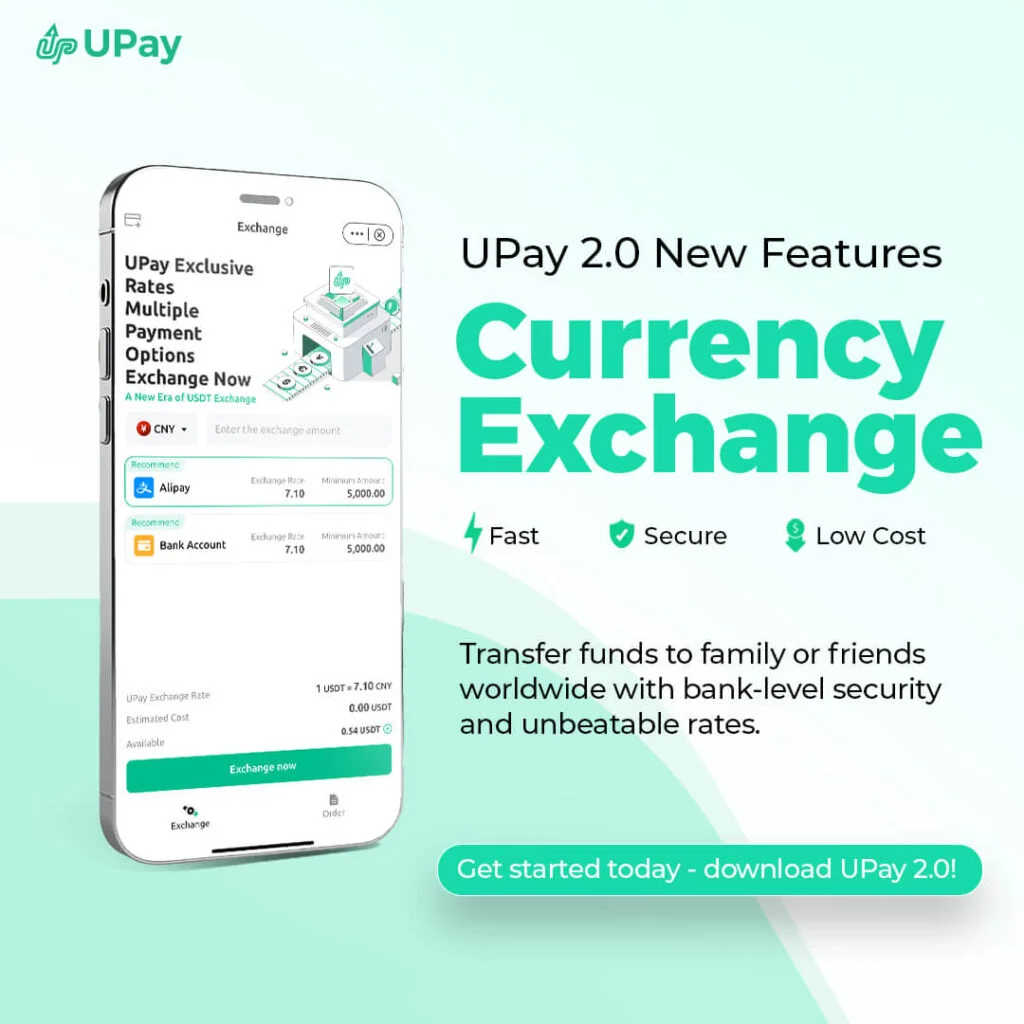
Upay is a crypto card and wallet platform built to make spending digital assets as straightforward as using any other payment card.
- Broad merchant acceptance: Works at 55 million-plus merchants worldwide via the Visa network.
- Multi-asset support: Hold BTC, ETH, USDT, USDC, and other major cryptocurrencies on a single card.
- No manual conversion at checkout: Upay handles conversion automatically, so you do not need to sell crypto before each purchase.
- Apple Pay e Google Pay: Add the virtual card to your phone wallet and tap to pay.
- Accesso bancomat: Withdraw local currency from any Visa-compatible ATM worldwide.
- Configurazione rapida: Sign up, verify your identity, and get a virtual card in minutes. No bank account required.
- iOS and Android apps: Full-featured app on both major mobile platforms.
Upay is particularly useful for people who receive income in crypto, hold stablecoins as a savings vehicle, or want to spend crypto while travelling internationally without paying the 2 to 3 percent FX fees typical of bank-issued cards.
How to Get Started With Your First Crypto Card
- Download the Upay app: Available on the iOS App Store and Google Play. Search for ‘Upay’ and install.
- Crea un account: Sign up with your email and a strong password, then verify your email.
- KYC completo: Upload a government-issued ID and a selfie. Most verifications complete within minutes.
- Add crypto to your wallet: Copy your Upay deposit address and send BTC, ETH, USDT, or another supported asset from your exchange or wallet.
- Start spending: Use the virtual card number for online purchases immediately, order a physical card for in-store use, or add the card to Apple Pay or Google Pay for tap-to-pay.
Domande frequenti (FAQ)
Do I need a bank account to get a crypto card?
No. That is one of the main advantages. You sign up with an email address, complete identity verification, and fund the card with cryptocurrency. A bank account is not required.
Can I get a physical crypto card?
Yes. Most providers including Upay offer a physical card delivered by mail. You also get a virtual card instantly after signup, which works right away for online purchases and tap-to-pay through Apple Pay or Google Pay.
Is my crypto card linked to my identity?
Yes, because KYC is required. Your card activity is linked to your verified identity, in line with anti-money-laundering rules that apply in most jurisdictions.
Can I use my crypto card abroad?
Yes. Because Upay runs on the Visa network, your card works in any country where Visa is accepted. FX fees may apply if you spend in a currency different from the card’s base currency, though these are typically far lower than on a bank-issued debit card.