


Tether CEO Paolo Ardoino Says “Bitcoin Will Stand the Test of Time”
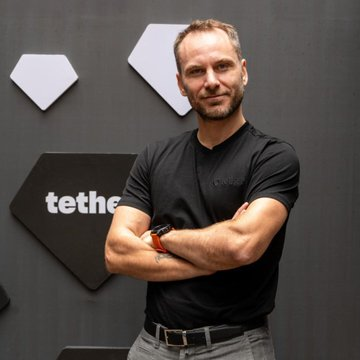
“Bitcoin will resist to the test of time,” declared Tether CEO Paolo Ardoino — a statement that has ignited discussion across the crypto sector and beyond. Ardoino’s remarks reinforce a growing narrative: Bitcoin’s longevity is not only expected, but inevitable. A Defiant Message from Tether’s Chief Ardoino didn’t mince words as he underscored Bitcoin’s resilience and future prospects. “Those organizations that try to undermine it, will fail and become dust. Simply because they can’t stop people choice to be free,” Ardoino said. His message speaks directly to Bitcoin’s foundational principles: decentralization, financial autonomy, and a system that cannot be controlled by corporations or governments. He went on to stress that criticism and opposition only serve to highlight Bitcoin’s durability: “Institutions that attempt to destroy it will ultimately fail and will fade into the dusty abyss of history.” Bitcoin’s Enduring Journey Bitcoin celebrated its 16th anniversary in January 2025, marking more than a decade and a half of defying predictions of its demise. From media pundits declaring it a bubble, to policymakers questioning its legitimacy, Bitcoin’s existence has been a long-running endurance test. Despite skepticism, major financial voices have shifted their tone over the years. JPMorgan Chase CEO Jamie Dimon, once a staunch critic who repeatedly called Bitcoin a scam, has since acknowledged the reality of digital assets, noting that crypto, blockchain, and stablecoins are “real.” Likewise, Goldman Sachs, after publishing an analysis in 2020 dismissing cryptocurrencies as an asset class, has since returned to the space, increasing its Bitcoin-related exposure. This quiet pivot by institutional giants underscores an evolving sentiment: even if one dislikes Bitcoin, ignoring it is no longer an option. A Market Under Pressure — But Still Standing Ardoino’s comments arrive amid a downturn in crypto prices driven by concerns over quantum computing and market-wide liquidations. Bitcoin had surged to an all-time high of $126,251 in early October, buoyed by strong inflows into BTC-focused exchange-traded funds. A subsequent wave of forced liquidations then pushed the price sharply lower, sending Bitcoin briefly below $81,000 before rebounding to around $86,107. While some fear that future quantum technologies could threaten cryptographic security systems, many developers note that Bitcoin already incorporates quantum-resistant features — and can evolve further as needed. Ardoino, like many long-term Bitcoin advocates, believes that technological challenges will be met with technical adaptation rather than collapse. More Than a Market: A Philosophy For many in the crypto community, Bitcoin is not merely speculative or transactional — it represents a shift in financial culture. Ardoino’s statement resonates because it reflects shared values: Even amid regulatory crackdowns, media controversy, and political scrutiny, Bitcoin continues to attract users and investors who see it as a hedge against centralized monetary authority. Looking Ahead Ardoino asserts that Bitcoin will not just survive—it will strengthen. Supporters view the current market turbulence as another cycle in a long-running pattern: volatility, skepticism, recovery, and renewed confidence. As discussions around Bitcoin’s future intensify—from central bank policy debates to technological innovation—one thing remains consistent: Bitcoin keeps proving that predictions of its demise are premature. Paolo Ardoino’s message is ultimately a challenge to doubters and a reassurance to believers: Bitcoin’s story is far from over, and its endurance, so far, suggests that it may indeed stand the test of time.
JUST IN: Bitcoin Mining Is Quietly Resurging in China

China’s 2021 attempt to extinguish Bitcoin mining has not only failed—it has backfired. Despite an official nationwide ban, China has quietly surged back into the top three global mining hubs, now accounting for an estimated 14–20% of global hashrate, according to recent reporting and network analytics. What was once presumed to be a permanent shutdown has transformed into a silent but powerful resurgence. China Quietly Regains Mining Strength When Beijing outlawed Bitcoin mining in mid-2021, the expectation was straightforward: cut the power, shutter the rigs, and end the industry. And initially, it worked. Hashrate from China plunged to nearly zero. Many operators dismantled their facilities and relocated to countries like Kazakhstan, Russia, and the United States. But four years later, the picture looks different. Underground miners—operating discreetly in regions with excess electricity—have revived activity across key provinces. Xinjiang and Sichuan remain major hotspots due to cheap power availability and infrastructure suited for intensive computing. A private miner working in Xinjiang described the dynamic on the ground: “A lot of energy cannot be transmitted out of Xinjiang, so you consume it in the form of crypto mining. New mining projects are under construction.” Authorities may still officially prohibit cryptocurrency activity, but enforcement cracks are visible. Excess local energy, data center expansion, and rising domestic sales of mining hardware have created a favorable, if unofficial, environment for miners. Why the Ban Didn’t Work Crypto bans tend to look decisive on paper—and porous in practice. China is not alone in facing this reality. Countries including Russia, Bolivia, India, Zimbabwe, and Nigeria have at times enforced strict restrictions on crypto activity, only to retreat or soften their approach. In most cases, these shifts are driven by two basic forces: Bitcoin mining—especially in areas with unused or stranded energy—can effectively convert surplus power into digital assets. For power-rich regions like Xinjiang and Sichuan, this has become a practical outlet. Even without an official policy reversal in Beijing, miners have returned to the sector because the cost-benefit math still favors mining operation. China’s Position in the Global Mining Map In late 2025, China’s hashrate share had quietly risen to roughly 14–20%, placing it behind only the U.S. and—depending on measurement period—either Russia or Kazakhstan. This makes China the third-largest mining hub once again. This resurgence comes despite the fact that the official ban, issued in 2021, remains unchanged. Crypto mining and transactions are still formally prohibited. The People’s Bank of China and the state planning authorities have not announced any formal policy adjustments. Yet the hashrate data tells the real story: activity has simply adapted and gone underground. Network analysts have noted steady growth in Chinese miner participation as well as increased activity from domestic resellers providing ASIC rigs and maintenance. Pressure on Global Miners and the Hashprice Slump This reopening of Chinese mining activity comes at a time when global miners are already facing pressure. Hashprice—the revenue miners earn per terahash—recently hit new lows, driven by weaker Bitcoin prices, higher mining difficulty, and low transaction fees. More miners competing for rewards means lower profitability overall. China’s quiet mining rebound adds further difficulty to the network, raising competition for rewards among miners worldwide. The Bigger Picture Even with regulatory hostility, it is becoming clear that Bitcoin mining is extremely difficult to eliminate. Hashrate can migrate, reconfigure, and decentralize faster than governments can adapt policies. As long as unused energy exists, mining can thrive—quietly or openly. China’s return to the mining map suggests that suppression strategies may ultimately be weaker than pragmatic energy economics. Whether Beijing eventually formalizes policy accommodation or continues turning a blind eye to selective underground mining activity remains to be seen. But one fact is already established: Bitcoin mining in China didn’t die in 2021— it merely went dark for a while, and now it’s humming again in the shadows.
MetaMask Launched Perpetual Trading of 150+ Tokens on Mobile App

MetaMask really said: “Not enough degen in the world; let me fix that.” MetaMask just flipped the switch on one of its biggest upgrades yet: perpetual futures trading directly inside MetaMask Mobile, powered by Hyperliquid. Users can now open long or short positions on more than 150 crypto tokens — and, surprisingly, a growing list of US equities including NVDA, TSLA, AAPL, MSFT, AMZN, and more. No centralized exchange, no separate dapp connections—just tap, trade, and done. “Trade perps… fast.” Yes, they mean fast. MetaMask describes the new experience as “lightning fast perpetual futures” trading, built for mobile traders who don’t want delay, lag, or UX friction. You can: And for every trade, MetaMask says users “earn MetaMask Rewards points that unlock $LINEA tokens, fee discounts, and other perks.” MetaMask is not just offering a trading function — it’s attaching a rewards economy to trading behavior. Real Assets, Real Speculation The supported list of tradables is wild: ETH, BTC, SOL, AVAX, XRP, WLD, SUI, FARTCOIN, PUMP, HYPE—yes, memecoins included. But then, stocks: MetaMask is effectively turning its wallet into an on-chain trading terminal that touches both crypto and listed equity markets. It’s an entry into a hybrid market that DeFi has been flirting with for years but never delivered in a mainstream-ready UX. How Perps Work Perpetual futures are contracts that track the price of an asset without ever expiring. Traders can “go long” if they think the price will rise or “go short” if they expect it to drop. These contracts are tied to a funding mechanism that keeps them near spot price. Your position remains open indefinitely unless: MetaMask explains the risk cleanly: “Higher leverage means higher potential gains, but also higher potential losses.” This is not casual trading. This is high-speed, high-risk speculation. And MetaMask is leaning into that culture. A Wallet No More MetaMask started as the standard Web3 wallet — just a way to connect to DeFi apps. Then it added swaps. Then staking. Then bridging. Now: derivatives trading and a rewards program. This update turns MetaMask into something like: The company announced an upcoming integration with prediction platform Polymarket as well — meaning users could soon trade on real-world events right inside the wallet. This is the kind of feature stack that redefines what “wallet” even means. UX Designed for Degens on the Move MetaMask calls this its “newly redesigned mobile experience,” emphasizing instant trade execution: “Tap long or short, confirm, done.” MetaMask is chasing the crypto-native fast-execution culture: the kind of trader who sees a CPI print, an Elon tweet, or a memecoin pump and wants to take action immediately. Strategic Chess Move Why is MetaMask doing this? Because: By embedding perps into the wallet layer, MetaMask bypasses dapp discoverability problems entirely. This is not a minor feature drop. This is MetaMask applying pressure to both DeFi trading platforms and centralized exchanges. Crypto users now have: If the execution runs as smoothly as promised—and if liquidity holds—MetaMask may have just unlocked an era where your wallet is your exchange, your brokerage, your reward program, and your gateway to speculation.