


Vitalik Buterin Says “DVT-Lite” Could Enable One-Click $ETH Staking for Institutions

Ethereum co-founder Vitalik Buterin has proposed a simplified validator model that could dramatically lower the barrier for institutions looking to stake Ether. In recent comments, Buterin introduced the idea of “DVT-lite,” a streamlined version of Distributed Validator Technology designed to make Ethereum staking infrastructure easier to deploy and manage. The concept centers on reducing the operational complexity associated with running validators while maintaining the network’s decentralization and security. The proposal arrives as Ethereum continues to attract growing institutional interest in staking, even during periods of volatile market conditions. Key Takeaways A Simpler Path to Institutional Staking Running Ethereum validators has traditionally required technical expertise, specialized infrastructure, and constant monitoring to avoid penalties known as “slashing.” These requirements have pushed many large ETH holders toward third-party staking services rather than operating their own validator nodes. Buterin believes this complexity is unnecessary. The concept behind DVT-lite is to distribute validator responsibilities across multiple machines while significantly simplifying the setup process. Instead of configuring complex distributed key systems, operators could run nodes that share the same validator key and automatically coordinate with each other. In practice, this means institutions could potentially launch distributed validators with minimal configuration—closer to installing a pre-built environment than manually setting up multiple systems. Ethereum Foundation Testing the Model The idea is not purely theoretical. The Ethereum Foundation has already begun experimenting with the model using a large internal staking allocation. According to recent disclosures, around 72,000 ETH has been deployed using the DVT-lite framework as part of the foundation’s validator infrastructure experiments. This trial aims to demonstrate that distributed validators can be run with much less operational overhead while maintaining reliability. If one node goes offline, another machine running the same validator key can continue operating, minimizing downtime and reducing the risk of penalties. The initiative also reflects Ethereum developers’ broader effort to encourage direct participation in staking rather than relying heavily on centralized providers. Why Distributed Validators Matter Distributed Validator Technology (DVT) is not new in the Ethereum ecosystem. The approach divides validator responsibilities across several nodes to improve redundancy and security. However, traditional implementations can be difficult to configure, often requiring advanced coordination between operators and specialized software setups. DVT-lite attempts to retain the resilience benefits while removing much of the complexity. Buterin has argued that making validator infrastructure accessible is essential for maintaining Ethereum’s decentralized ethos. By simplifying validator deployment, Ethereum developers hope more institutions will operate their own nodes instead of delegating control to large staking platforms. Growing Demand for ETH Staking The push for simpler validator infrastructure comes at a time when demand for Ethereum staking remains strong. Data from validator queue trackers shows roughly 3.2 million ETH waiting to join the validator set, representing a waiting period of around 55 days for new validators to activate. In total, about 37.5 million ETH—roughly 31% of the circulating supply—is currently staked across the network, securing Ethereum’s proof-of-stake consensus. These figures indicate that staking participation continues to expand despite fluctuations in ETH’s market price. For large institutions holding significant Ether reserves, however, running validator infrastructure has remained a logistical challenge. Tools like DVT-lite could reduce that barrier and potentially unlock additional capital for staking. What Comes Next While DVT-lite is still in its early stages, the experiment signals a broader direction for Ethereum’s staking infrastructure: making validator operations easier without sacrificing decentralization. If successful, the approach could lead to more institutions directly participating in network security, rather than relying on custodial staking services. For Ethereum, the long-term impact could be significant. A validator set that is both widely distributed and easy to operate may strengthen the network’s resilience while encouraging deeper institutional involvement in staking. Whether DVT-lite becomes widely adopted remains to be seen, but Buterin’s latest proposal highlights a key priority for Ethereum’s development roadmap—making participation in the network simpler without compromising its decentralized foundations
Zcash Open Development Lab Raises $25M+ in Seed Funding
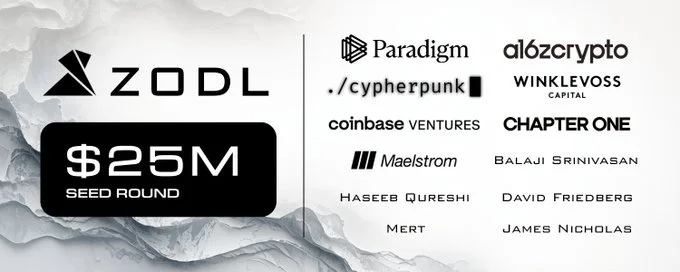
A new development group focused on advancing the Zcash ecosystem has secured more than $25 million in seed funding from some of the most influential investors in the crypto industry. The organization, called the Zcash Open Development Lab (ZODL), was founded by former members of the Electric Coin Company engineering and product teams following a governance dispute earlier this year. The funding round drew support from major crypto venture firms, including Paradigm, Andreessen Horowitz’s crypto arm, Coinbase Ventures, and Winklevoss Capital. Other participants included Cypherpunk Holdings, Chapter One, and Maelstrom, alongside a group of high-profile angel investors. Among the individual backers were Balaji Srinivasan, David Friedberg, and Haseeb Qureshi, reflecting strong investor interest in privacy-focused cryptocurrency infrastructure. The capital injection is expected to support engineering hires and accelerate development of tools designed to strengthen the usability and adoption of Zcash. Key Takeaways A Team Rebuilding After a Governance Rift ZODL was launched by Josh Swihart, the former chief executive of the Electric Coin Company. Swihart and the entire engineering and product team resigned in January following disagreements with Bootstrap Project, the nonprofit that oversees ECC’s operations. The dispute centered on governance and the direction of Zcash’s development structure. With the engineering team leaving en masse, the group decided to continue their work independently through the newly formed development lab. Operationally, the Electric Coin Company remains under the oversight of Bootstrap, but many of the engineers responsible for building core Zcash software are now working within ZODL. The new entity positions itself as both a protocol maintainer and product developer dedicated to advancing the Zcash ecosystem. Focus on the Zodl Wallet and Private Transactions A key focus of ZODL’s development efforts is the Zodl Wallet, a self-custodial mobile wallet designed to support shielded ZEC transactions. The application was originally released in 2024 under the name Zashi while still part of the Electric Coin Company. After the team’s departure, the wallet was rebranded as Zodl and is now maintained by the new development lab. Shielded transactions are one of Zcash’s defining features. Using zero-knowledge cryptography, these transfers conceal the sender, receiver, and transaction amount from public view. According to the development team, the wallet has already played a major role in increasing privacy usage on the network. Since its introduction, activity within Zcash’s shielded pool has grown by more than 400%. The application has also processed over $600 million in ZEC swaps since October 2025, signaling rising demand for private digital payments. Renewed Momentum for Privacy Infrastructure The creation of ZODL and the backing from prominent venture firms arrive at a critical time for privacy-focused cryptocurrencies. Regulatory pressure and the delisting of some privacy tokens from exchanges in recent years have challenged projects that emphasize transaction anonymity. ZODL’s strategy focuses on improving usability rather than solely advancing protocol research. The team believes easier-to-use consumer tools could expand the appeal of private payments. Part of the funding will go toward expanding the engineering team responsible for Zcash’s core software and building consumer products around the network. By combining protocol development with wallet infrastructure, the lab hopes to strengthen both liquidity and adoption within the Zcash ecosystem. Market Reaction to the Announcement The funding news coincided with a positive move in the price of Zcash’s native token, ZEC. Following the announcement, the cryptocurrency climbed more than 4% to around $217.80, according to market data. Over a 24-hour period, the token posted gains approaching 10% as broader crypto markets also rebounded. The rally follows a volatile period for ZEC. Over the past year, the asset surged from roughly $55 to a peak above $500 before retracing alongside the wider market in early 2026. Investors appear to be interpreting the new funding and the continuity of Zcash’s core engineering talent as a sign of stability for the project’s future development. What Comes Next for ZODL With a sizable seed round secured, ZODL now faces the challenge of delivering products that can broaden real-world use of privacy-preserving payments. The team plans to continue improving the Zodl wallet while contributing to the underlying Zcash protocol. Key areas of development include expanding wallet functionality, strengthening network privacy features, and lowering the technical barriers to using shielded transactions. If successful, these efforts could reinforce Zcash’s position as one of the most prominent privacy-focused cryptocurrencies. For now, the funding signals that major investors remain confident in the long-term role of privacy technologies within the crypto industry—and in the team now leading ZODL’s next phase of development.