


Court Lets Arbitrum DAO Transfer $71M in ETH Tied to North Korea Hack to Aave

A U.S. federal judge has cleared the way for Arbitrum DAO to transfer roughly $71 million worth of frozen Ethereum to Aave, marking a major step in one of the crypto industry’s largest coordinated recovery efforts this year. The ruling, issued by Judge Margaret Garnett in Manhattan’s Southern District of New York, modifies an earlier restraining notice that froze the assets after claims they were connected to North Korea’s Lazarus Group. Key Takeaways Judge Opens Path for Recovery Vote The case stems from the April 18 exploit involving Kelp DAO’s rsETH infrastructure, where attackers manipulated a cross-chain mechanism and drained approximately $230 million in Ethereum-linked assets from the Aave ecosystem. A portion of those funds, around 30,765 ETH valued near $71 million, was later frozen on Arbitrum after members of the DeFi community intercepted the assets before they could be fully moved. The court’s modification now permits Arbitrum governance participants to proceed with an on-chain vote authorizing the transfer of the frozen ETH to Aave’s recovery wallet. Importantly, the order also shields delegates and governance participants from legal exposure related to the transfer itself. That protection became a key issue after concerns emerged that DAO voters or contributors could face liability for interacting with assets tied to an active court dispute. Still, the ruling does not fully settle ownership of the funds. The restraining notice remains attached to the assets even after transfer, meaning Aave cannot freely deploy or distribute the ETH without potential future legal consequences if the court later sides with plaintiffs seeking damages from North Korea-linked cyberattacks. Aave Pushes Back Against North Korea Claims Aave had filed an emergency motion asking the court to lift the freeze, arguing the assets belonged to innocent protocol users rather than the attackers accused of carrying out the exploit. The legal dispute intensified after attorneys representing families with unpaid terrorism judgments against North Korea claimed the funds should be treated as North Korean property because the Lazarus Group allegedly controlled them during the hack. Aave rejected that interpretation, arguing that stolen assets do not legally become the property of a thief simply because they passed through the attacker’s wallets. The company also warned that allowing such seizures could create dangerous legal uncertainty for future DeFi recovery operations, especially in cases where communities move quickly to freeze stolen funds before hackers can cash out. Final thoughts The case is now being closely watched across the crypto industry because it touches several unresolved legal questions surrounding decentralized governance, asset recovery, and liability during protocol emergencies. For now, the court’s decision gives Aave and the broader DeFi recovery coalition room to continue rebuilding. But the remaining legal claims mean the fight over the frozen Ethereum is far from over.
Saylor Reveals What Will Happen if Strategy Sells Bitcoin

Michael Saylor is attempting to calm fears that Strategy may be preparing to abandon its long standing Bitcoin accumulation playbook after recent comments about potentially selling part of the company’s holdings triggered backlash across the crypto market. The Strategy co-founder clarified this week that any future Bitcoin sales would not signal a shift away from the company’s aggressive treasury strategy. Instead, he argued that limited sales could actually help the firm acquire even more Bitcoin over time. Key Takeaways The remarks followed growing speculation after Saylor and Strategy executives acknowledged during the company’s recent earnings call that Bitcoin could be sold under certain conditions, including dividend obligations or broader capital management decisions. For many investors, the comments marked a sharp contrast from Saylor’s years long “never sell your Bitcoin” messaging that helped define both his public image and Strategy’s identity as the world’s largest corporate Bitcoin holder. Now, Saylor says the slogan was never meant to be interpreted literally. Strategy Defends Its Bitcoin Treasury Model Strategy currently holds 818,334 BTC, making it by far the largest publicly traded corporate owner of Bitcoin. According to the company, those holdings were accumulated at an average purchase price of roughly $75,537 per coin. The debate intensified after Strategy disclosed a $12.54 billion net loss for the first quarter of 2026. At the same time, the company continues carrying roughly $1.5 billion in annual dividend obligations tied to its preferred stock products. That combination has fueled speculation that Bitcoin sales may eventually become necessary to support parts of the company’s financing structure. Saylor rejected the idea that occasional sales would weaken Strategy’s long-term thesis. He framed the approach as a calculated treasury management strategy rather than an ideological reversal. According to him, Strategy’s objective remains increasing its net Bitcoin exposure over time, even if small portions are occasionally sold to support funding operations or create new buying opportunities. Strategy CEO Phong Le echoed that position during recent interviews, stating that the company would only sell Bitcoin when it benefits shareholders and improves Bitcoin-per-share metrics. Le also suggested that sales could occur if Strategy’s stock trades below certain valuation thresholds or if tax-related opportunities emerge. “Never Sell” Was Never Meant Literally Saylor acknowledged that his earlier messaging contributed to the market reaction. For years, Saylor positioned Bitcoin as a long term reserve asset that should be held indefinitely. His comments became central to Bitcoin’s corporate adoption narrative and helped transform Strategy from a software company into a proxy vehicle for institutional BTC exposure. But as Strategy’s financial structure has grown more complex, executives appear increasingly focused on flexibility rather than rigid ideology. The company recently introduced additional preferred stock products designed to raise capital while maintaining its Bitcoin acquisition strategy. Some analysts believe that approach could eventually require more active treasury management, including limited BTC sales during specific market conditions. Still, Strategy executives insist the company remains deeply committed to Bitcoin accumulation. Le recently downplayed concerns about market impact, noting that Bitcoin’s daily trading volume remains large enough to absorb Strategy related transactions without major disruption. “Bitcoin trades north of $60 billion a day,” he said during a recent interview. Schiff Revives Ponzi Criticism The renewed discussion around Strategy’s treasury model has also reignited criticism from economist Peter Schiff, one of Bitcoin’s most vocal skeptics. Schiff has repeatedly argued that Strategy’s financing structure resembles a fragile system dependent on Bitcoin price appreciation and continued investor confidence. He recently warned that the company could eventually face pressure tied to dividend payouts or falling BTC prices. Saylor dismissed those claims outright. The Strategy chairman also defended the legitimacy of the company’s financial products, arguing that critics fundamentally misunderstand Bitcoin’s role as a form of digital capital. Despite the controversy, Strategy continues to remain one of the most influential forces in Bitcoin markets. The company owns nearly 4% of Bitcoin’s circulating supply, and its buying activity has become closely tied to broader institutional sentiment surrounding the asset. For now, Saylor appears focused on reframing the debate. Rather than abandoning Bitcoin, he wants investors to understand that Strategy’s willingness to occasionally sell portions of its holdings may simply be another tool designed to accumulate even more BTC over the long run.
Coinbase Says Outage ‘Unacceptable’ as CEO Weighs Speed-Resilience Tradeoffs

Coinbase is facing renewed scrutiny after a major outage disrupted trading, delayed account balance updates, and temporarily blocked some users from accessing parts of the platform during one of the busiest periods in the crypto market. The disruption, which stretched for several hours between May 7 and May 8, was ultimately traced back to a cooling system failure inside an Amazon Web Services data center. According to Coinbase, multiple chillers failed at the facility, causing overheating that triggered cascading infrastructure problems across key exchange systems. Key Takeaways The outage affected spot trading, Coinbase Prime, derivatives products, and the company’s international exchange. Some users were unable to place trades or withdraw funds, while others reported delayed balance updates and account access problems as internal systems struggled to recover. Coinbase CEO Brian Armstrong addressed the incident publicly, describing the disruption as unacceptable for customers. AWS Cooling Failure Exposed Exchange Weaknesses The incident exposed a deeper issue inside modern exchange infrastructure: the balance between ultra-fast trade execution and system resilience during cloud failures. According to Armstrong, most Coinbase systems are designed with redundancy that allows them to survive the loss of a single AWS Availability Zone. The centralized exchange itself, however, proved more vulnerable because of how it is engineered for low-latency trading. That tradeoff matters particularly for institutional and professional traders, many of whom rely on co-location setups that place trading systems physically close to exchange infrastructure in order to reduce execution delays to microseconds. In practical terms, Coinbase optimized parts of its exchange for speed rather than maximum failover resilience. When the AWS cooling issue triggered broader infrastructure instability, the platform’s order-matching engine and internal messaging systems began failing simultaneously. Trading Halted as Internal Systems Failed Coinbase engineering lead Rob Witoff later explained that the exchange’s matching engine lost quorum, the minimum number of synchronized nodes required for trading to continue safely. At the same time, Kafka messaging clusters responsible for communication between internal services experienced outages, leading to delayed customer balance information across the platform. “No data lost,” Coinbase stressed during the recovery process. To avoid further instability, the company temporarily halted trading activity across retail, institutional, and professional accounts while engineers worked to restore systems. Rather than bringing the exchange back online all at once, Coinbase reopened trading gradually. The company first shifted markets into cancel only mode before running product checks, enabling auction mode, and eventually restoring full trading functionality. Witoff acknowledged the severity of the customer impact during the outage. Coinbase Reassesses Infrastructure Priorities While services were eventually restored, the disruption has intensified concerns around the crypto industry’s heavy dependence on centralized cloud infrastructure providers like AWS. The affected AWS region, US-East-1, has long been considered one of the most critical hubs in cloud computing. It hosts massive amounts of financial, enterprise, and internet infrastructure, making it a frequent point of concentration risk. Industry analysts have repeatedly warned that outages tied to power systems, cooling failures, or networking problems in the region can ripple across multiple sectors simultaneously. The Coinbase incident demonstrated how even physical infrastructure problems inside a data center can freeze major crypto trading activity within minutes. Armstrong said the company will now reevaluate how it balances execution speed, customer co-location requirements, and infrastructure resilience going forward. He added that Coinbase believes future outage durations can be reduced substantially, even if certain latency-sensitive exchange systems continue prioritizing speed. The outage also arrives during a broader restructuring period for Coinbase. The company recently announced plans to reduce its workforce by roughly 14%, citing cost controls, crypto market conditions, and increasing operational efficiency driven by artificial intelligence tools. For traders, however, the immediate focus remains reliability. Centralized exchanges continue to dominate crypto liquidity, but incidents like this highlight the operational risks tied to large-scale trading platforms. Whether caused by cyberattacks, cloud failures, or traffic spikes, downtime during volatile market conditions can leave users unable to react while billions of dollars move across the market. Coinbase’s latest outage may ultimately become more than just a temporary disruption. It has reopened a broader debate about whether the industry’s biggest exchanges are sacrificing resilience in pursuit of trading speed — and how much risk users unknowingly inherit when infrastructure fails at the wrong moment.
Strike CEO: Wall Street Can’t Break Bitcoin—and That’s the Point

Strike CEO Jack Mallers has pushed back against growing concerns that Wall Street’s deeper involvement in Bitcoin could undermine the cryptocurrency’s original purpose, arguing instead that institutional participation validates Bitcoin’s strength rather than threatens it. Speaking on the What Bitcoin Did podcast with host Danny Knowles, Mallers dismissed the idea that large financial firms entering the Bitcoin market could weaken the asset’s decentralized foundation. His remarks come as traditional financial institutions continue accelerating their crypto expansion, particularly after the launch of spot Bitcoin ETFs in the United States last year. Data from Farside Investors shows the 11 spot Bitcoin ETFs have collectively attracted nearly $60 billion in net inflows since their January 2024 debut, signaling sustained institutional appetite for Bitcoin exposure. Mallers framed Wall Street’s involvement as an inevitable outcome of Bitcoin competing for global capital rather than a betrayal of its founding principles. Bitcoin’s Battle for Global Capital Mallers also outlined a broader macroeconomic argument that has become increasingly common among long-term Bitcoin advocates. According to him, Bitcoin is gradually competing against traditional stores of value including real estate, sovereign debt, and fine art. He suggested that as Bitcoin adoption grows, capital parked in legacy assets could increasingly shift toward digital scarcity. The comments reflect a growing belief among Bitcoin supporters that the asset is moving beyond its early identity as a speculative technology play and becoming a global savings instrument. Supporters often point to Bitcoin’s fixed supply of 21 million coins as a key differentiator compared to fiat currencies that can be expanded through monetary policy. Mallers’ company, Strike, has positioned itself around this narrative by building payment infrastructure on Bitcoin and the Lightning Network, allowing users to move funds with lower costs and faster settlement speeds. Institutional Adoption Still Divides Bitcoiners Not everyone in the Bitcoin community shares Mallers’ confidence about Wall Street’s growing influence. Some critics argue that large institutional holders could eventually gain disproportionate influence over Bitcoin’s direction through custody concentration, lobbying power, or indirect influence on development priorities. Nic Carter recently warned that major institutions accumulating Bitcoin may eventually pressure developers to move faster on unresolved technical risks, including future quantum computing threats. The debate highlights a long running ideological divide inside the Bitcoin ecosystem. One side sees institutional capital as necessary for mainstream adoption and long-term legitimacy. The other fears that concentrated ownership could slowly weaken Bitcoin’s decentralized culture even if the protocol itself remains unchanged. Despite those concerns, institutional participation continues to expand across both traditional finance and crypto-native platforms. Morgan Stanley Moves Further Into Crypto The discussion gained additional relevance this week after Morgan Stanley reportedly launched a cryptocurrency trading pilot through its E*Trade platform. According to reports, the bank is charging clients roughly 50 basis points per crypto transaction, undercutting standard retail fees offered by platforms including Coinbase, Robinhood, and Charles Schwab. The move is another sign that traditional financial firms are increasingly competing directly with crypto exchanges for retail users and trading volume. For Mallers, however, that competition is evidence that Bitcoin has already moved beyond its niche beginnings. Rather than viewing Wall Street as a threat, he argued that institutional demand demonstrates Bitcoin’s resilience and growing relevance in the global financial system. As institutional adoption accelerates, the debate around Bitcoin’s future is shifting from whether Wall Street will participate to how much influence it will ultimately have. For Mallers, however, Bitcoin’s ability to attract global capital without losing its core principles is exactly what proves its long-term strength.
Strategy CEO Phong Le Outlines Conditions for Selling Bitcoin

Strategy, the company formerly known as MicroStrategy, is softening one of the most recognizable positions in corporate Bitcoin history: never sell. CEO Phong Le said the company could consider selling part of its Bitcoin holdings under extreme financial conditions, marking a notable shift from the uncompromising accumulation strategy championed for years by executive chairman Michael Saylor. Key Takeaways Strategy Moves Beyond the ‘Never Sell’ Bitcoin Narrative The comments came as Strategy introduced a new treasury framework centered on “Bitcoin Per Share” (BPS), a metric designed to measure how much Bitcoin backs each share of the company. Instead of focusing only on increasing the firm’s total Bitcoin holdings, the new model prioritizes whether decisions improve value for shareholders on a per-share basis. Strategy currently holds about 818,334 BTC, making it the world’s largest corporate Bitcoin holder. The company still plans to expand that position and has previously outlined ambitions to reach 1 million BTC, supported by a broader capital-raising strategy. What changed is the company’s willingness to treat Bitcoin as a managed treasury asset rather than an untouchable reserve. A Shift From Ideology to Financial Engineering For years, Strategy built its identity around aggressive Bitcoin accumulation financed through equity offerings and convertible debt. Under Saylor, the company framed Bitcoin as a long term monetary asset meant to be held indefinitely. Le’s approach keeps Bitcoin at the center of the company’s strategy but introduces stricter treasury rules and more emphasis on balance-sheet flexibility. Under the updated framework, Bitcoin sales are permitted only if two conditions are met simultaneously. First, Strategy’s stock would need to trade below its modified net asset value, or mNAV, meaning the market values the company at less than the underlying value of its Bitcoin holdings. Second, all alternative financing options would need to be exhausted. That means equity issuance, debt raises, and preferred-share offerings would be attempted before any Bitcoin sale is considered. The company also revealed it has established a multi-year U.S. dollar reserve intended to cover preferred dividend obligations and reduce the possibility of forced Bitcoin liquidations during market downturns. Le pointed to a recent $1.44 billion equity raise completed in just over a week as proof that Strategy can still access traditional capital markets quickly when needed. As long as Strategy shares trade above mNAV, issuing new equity can actually increase Bitcoin exposure per share for existing investors, despite dilution in share count. Bitcoin Per Share Becomes the Main Metric The introduction of BPS may become one of the most important changes in how investors evaluate the company. Instead of celebrating only the raw number of Bitcoin held, Strategy now wants shareholders to focus on whether each financing move increases the amount of BTC tied to every outstanding share. That distinction matters because Strategy’s capital structure has become increasingly complex. The company has expanded beyond convertible notes into preferred products such as STRC, a Bitcoin-linked income instrument designed for investors seeking lower volatility and regular yield exposure. Le described this transition as part of a broader evolution in Strategy’s business model. According to him, the company has already moved through multiple phases: first as a simple Bitcoin accumulation vehicle, then as a leveraged treasury company, and now as a more sophisticated Bitcoin-based financial platform. The latest approach relies more heavily on structured capital management, scenario modeling, and liquidity planning. Markets Appear Comfortable With the Change Despite concerns that relaxing the “never sell” narrative could weaken investor confidence, the market reaction has so far been relatively calm. Bitcoin climbed more than 2% intraday following the company’s latest earnings update and treasury disclosures, briefly trading above $82,800. Investors appeared to interpret the announcement less as a retreat from Bitcoin conviction and more as an effort to reduce long-term balance-sheet risk. Le also disclosed personal transactions involving Strategy securities, including the sale of 3,299 shares valued at roughly $456,000 and the purchase of about $250,000 worth of STRC preferred stock. The company described the transactions as portfolio rebalancing rather than a directional change in outlook. The broader message from Strategy remains clear: Bitcoin is still the foundation of the business. But under Le, the company is becoming more focused on protecting shareholder value through disciplined treasury management rather than relying purely on a permanent HODL narrative. Strategy’s latest shift suggests the company is moving toward a more flexible and institutionally structured Bitcoin strategy rather than abandoning its long term conviction. While Bitcoin remains central to the business, the focus is increasingly turning toward disciplined treasury management, shareholder value, and long term financial resilience.
It Might Be Too Late for Bitcoin’s Quantum Migration, Project Eleven Report Argues

A new report from post-quantum security firm Project Eleven is reigniting debate around one of Bitcoin’s longest-running existential threats: quantum computing. The report warns that “Q-Day” the point at which quantum computers become capable of breaking modern public-key cryptography could arrive as early as 2030. According to the company’s analysis, the odds of a cryptographically relevant quantum breakthrough happening by 2033 are now greater than 50%. Key Takeaways Quantum Threat Could Put 6.9M BTC at Risk Project Eleven estimates that roughly 6.9 million BTC, worth more than $560 billion at current prices, may already be exposed to future quantum attacks because their associated public keys are visible on-chain. That includes coins stored in older address formats, reused wallets, and early Bitcoin-era transactions. The warning lands at a time when governments, cloud providers, and financial institutions are beginning to accelerate their own migration timelines. Google, for example, is reportedly targeting 2029 for parts of its transition toward quantum-resistant cryptographic systems. Why Bitcoin Could Face a Difficult Transition Unlike centralized financial infrastructure, Bitcoin cannot simply roll out a network-wide software patch overnight. Any major cryptographic upgrade would require coordination between miners, developers, exchanges, wallet providers, custodians, and node operators across the globe. Historically, even relatively modest Bitcoin upgrades have taken years to implement. Project Eleven pointed to SegWit as an example. The upgrade, proposed in 2015 and activated in 2017, triggered years of debate and eventually contributed to a chain split that resulted in Bitcoin Cash. The company framed its argument using Mosca’s Inequality, a cybersecurity principle that states systems become vulnerable if the time needed to upgrade exceeds the time remaining before a threat becomes viable. In other words, if Bitcoin needs ten years to complete a quantum-safe migration and functional attacks become possible in seven years, the network is already behind schedule. Quantum Progress May Not Be Linear One of the report’s more striking arguments is that quantum computing breakthroughs are unlikely to arrive gradually. Project Eleven said advances in hardware and algorithms may compound rapidly, creating sudden jumps in capability rather than predictable incremental improvements. The company described the likely trajectory as “nothing, and then all at once.” That concern gained attention after a researcher reportedly succeeded in deriving a 15-bit elliptic curve key using quantum hardware earlier this year. While Bitcoin uses 256-bit elliptic curve cryptography, vastly more complex than a 15-bit demonstration, the experiment was viewed by some researchers as proof that practical attacks are no longer purely theoretical. Project Eleven CEO Alex Pruden said the report is meant to encourage preparation rather than predict an exact deadline. Millions of BTC Could Be Vulnerable The report estimates that between 5.6 million and 6.9 million BTC could eventually become accessible to attackers once sufficiently powerful quantum systems emerge. The risk primarily affects wallets where public keys have already been exposed. Bitcoin’s newer address standards, including many addresses beginning with “bc1,” offer stronger protection because they hash public keys until coins are spent. However, older pay to public key hash addresses and reused wallets remain more exposed. Some of the vulnerable coins are believed to include dormant holdings linked to Bitcoin creator Satoshi Nakamoto, though there is no evidence those funds are currently at risk. Project Eleven also argued the threat extends well beyond crypto. The same elliptic curve cryptography used across Bitcoin, Ethereum, and stablecoin networks also secures banking infrastructure, cloud services, authentication systems, and military communications. Proposed Solutions Are Already Emerging Developers and researchers are already discussing possible migration paths. One proposal, BIP-361, would introduce a structured migration period allowing users to move funds into quantum-resistant addresses over several years. Another idea from Paradigm researcher Dan Robinson involves timestamp-based ownership proofs. The concept would allow users to prove control of wallets today and potentially reclaim assets later on a quantum-safe version of Bitcoin without revealing sensitive on-chain activity. Still, no formal Bitcoin roadmap for post quantum migration currently exists. That uncertainty is creating a growing tension between Bitcoin’s commitment to immutability and the practical need to adapt to new security threats. While practical quantum attacks on Bitcoin may still be years away, the report highlights how slowly decentralized systems move when major upgrades are required. For now, the debate is shifting from whether Bitcoin needs quantum-resistant protections to whether the industry can coordinate a transition before the threat becomes real.
U.S. Bitcoin Reserve Update Coming in ’Next Few Weeks,” White House Adviser Says
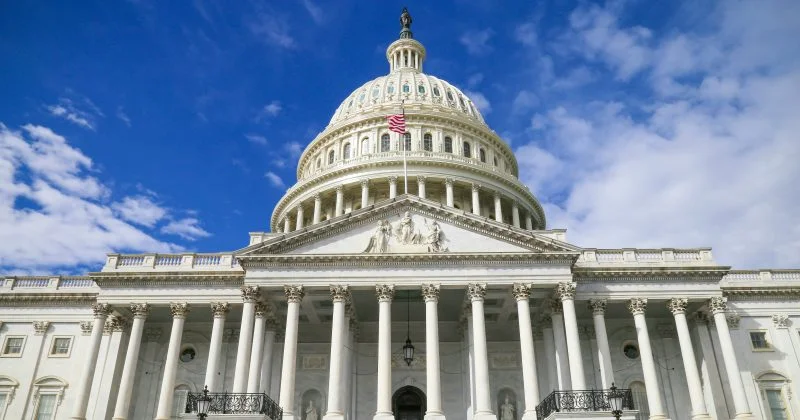
The White House is preparing to release fresh details on the U.S. Strategic Bitcoin Reserve within the next few weeks, according to Patrick Witt, executive director of the President’s Council of Advisors for Digital Assets. Key Takeaways What’s Next for America’s Strategic Bitcoin Reserve? Speaking at Consensus Miami 2026, Witt said the administration has made significant progress behind closed doors on both the Strategic Bitcoin Reserve (SBR) and the broader U.S. Digital Asset Stockpile, signaling that the initiative is moving beyond the planning stage. The comments mark the clearest timeline yet from the White House since President Donald Trump signed the executive order establishing the reserve in March 2025. The order directed federal agencies to stop liquidating forfeited Bitcoin through routine auctions and instead preserve those holdings as strategic reserve assets. The reserve currently consists of Bitcoin seized through criminal and civil forfeiture cases rather than coins purchased directly from the market. A separate Digital Asset Stockpile was also created to manage other confiscated cryptocurrencies, including Ethereum, XRP, and additional altcoins. Security Concerns Push Custody Into Focus Witt tied the upcoming announcement to growing concerns about how the federal government stores and secures digital assets. He referenced a recent alleged breach involving wallets connected to the U.S. Marshals Service, a case that drew attention after blockchain investigator ZachXBT claimed more than $46 million in seized crypto had been stolen from government controlled addresses. The alleged theft reportedly led to the arrest of John Daghita in Saint Martin earlier this year. Investigators alleged that funds tied to government-controlled wallets were improperly accessed through systems connected to a federal crypto custody contractor. The incident appears to have accelerated discussions around centralized custody standards inside the federal government. According to Witt, agencies are now being forced to confront operational issues that had never previously been addressed at scale, including how digital assets should be stored, transferred, audited, and protected across departments. The administration has not yet disclosed which agency will ultimately oversee custody operations for the reserve. Questions Still Surround the Reserve Despite the White House’s growing confidence, several major questions remain unanswered. The administration has not clarified whether the United States plans to actively accumulate more Bitcoin in the future or simply retain assets already obtained through forfeiture proceedings. Officials have repeatedly said any acquisition strategy would need to remain “budget-neutral,” meaning it could not involve direct taxpayer spending. Current estimates suggest the U.S. government controls somewhere between 198,000 and 328,000 BTC, although the exact figure remains uncertain due to ongoing legal proceedings and unresolved forfeiture claims. At Bitcoin’s current market price near $81,000, those holdings could be worth between $16 billion and $26 billion. Much of the government’s Bitcoin came from major enforcement actions, including the Silk Road seizure and the Department of Justice recovery tied to the 2016 Bitfinex hack. Witt acknowledged during the conference that the audit process uncovered disorganized storage practices across agencies. That revelation reinforced concerns among industry participants who argue that government agencies have historically treated digital assets as temporary evidence rather than long-term strategic holdings. Congress Could Determine the Reserve’s Future While the reserve was established through executive action, its long-term future may depend on Congress. Witt stressed that legislation would ultimately be necessary to make the reserve permanent and prevent future administrations from reversing the policy. In the Senate, Senator Cynthia Lummis has introduced the BITCOIN Act of 2025, which proposes that the Treasury acquire 200,000 BTC annually over five years and hold the assets for at least two decades. In the House, Representative Nick Begich introduced a companion proposal known as the American Reserves Modernization Act (ARMA), designed to align with the Senate’s framework while broadening political support. Witt suggested lawmakers could advance broader crypto market structure legislation by July 4, a timeline that has gained attention across the industry as Washington moves closer to formalizing digital asset policy. Market Watches for the Next Move The reserve announcement is being closely watched across the crypto market because it could shape how governments worldwide approach Bitcoin as a sovereign asset. Countries including China, the United Kingdom, and El Salvador already hold significant Bitcoin reserves tied to seizures or national policy decisions. However, the United States would become the first major global power to formally position Bitcoin as a strategic reserve asset if Congress ultimately codifies the framework into law. The upcoming White House announcement could mark a major turning point in how the United States approaches Bitcoin as a sovereign asset. While major questions around custody, accumulation, and regulation remain unresolved, the broader shift from auctioning seized crypto to strategically holding it is already reshaping global discussions around digital asset reserves.
Essential Terminologies in the Crypto Industry

Unlock the crypto world with essential terminologies. Understand blockchain, wallets, exchanges, tokens, and more.
How to Minimize Crypto Losses in Volatile Markets

Minimize crypto losses with diversification, stop-loss orders, dollar-cost averaging, risk management, staying informed, and emotional control.