

The limited supply of a token is one of the most powerful forces shaping its value. When projects want to reinforce that scarcity, they sometimes resort to an extreme measure: destroying their own tokens permanently. This process, known as crypto burning or token burning, has become one of the most widely discussed mechanisms in cryptocurrency tokenomics.
In October 2025, Binance conducted its 33rd consecutive quarterly BNB burn, removing approximately 1.44 million BNB tokens worth hundreds of millions of dollars. Since Ethereum’s EIP-1559 upgrade in August 2021, over 4.6 million ETH worth more than $20 billion has been permanently destroyed. OKX burned 65.26 million OKB tokens worth around $7.6 billion in 2025 alone. PayPal burned 600 million PYUSD tokens to maintain its dollar peg.
Token burning has moved from a niche concept to a central pillar of tokenomics strategy across the crypto ecosystem. But the picture is more nuanced than the headlines suggest. Burns do not always increase prices, and some critics argue they can be misleading if used without genuine ecosystem substance behind them.
This article covers everything you need to know about crypto burning: what it is, how it works technically, why projects do it, the different types of burn mechanisms, real-world examples with current data, the genuine advantages, the risks and criticisms, and how to evaluate whether a burn is meaningful.
Recommended reading: How to Recover Money From a Crypto Scammer
What Is Crypto Burning?

Crypto burning, also called token burning or coin burning, is the deliberate and permanent removal of a specific number of cryptocurrency tokens from circulation. The process involves sending those tokens to a specially designed wallet address, called a burn address or eater address, from which they can never be retrieved.
In simple terms, it is like sending coins into a black hole. The tokens arrive at the burn address, are permanently locked there with no way to access or spend them, and are effectively removed from existence. The total and circulating supply figures for the cryptocurrency are updated to reflect this reduction.
Burn addresses typically look like strings of zeros, such as Ethereum’s canonical address: `0x0000000000000000000000000000000000000000`. They can only receive cryptocurrency, and because no private key exists for these wallets, whatever is sent there stays there forever. On public blockchains, anyone can verify the burn by checking the blockchain explorer and confirming the transaction.
The concept is similar to a company buying back its own shares in traditional finance. When a company repurchases shares and retires them, it reduces the total number outstanding and theoretically increases earnings per share and value for remaining shareholders. Token burning attempts the same outcome in digital form: reduce supply, all else equal, and the remaining tokens become scarcer and potentially more valuable.
How Crypto Burning Works: The Technical Process
Understanding the mechanics behind token burning helps distinguish between genuine supply reduction and promotional announcements.
The Burn Function
For smart contract tokens, such as ERC-20 tokens on Ethereum, burning is typically initiated by calling a `burn()` function built into the token’s smart contract. Here is what happens step by step:
A token holder or project team initiates the burn by calling the burn function and specifying the number of tokens to destroy. The smart contract immediately verifies that the caller holds at least that many tokens in their wallet. If the balance is sufficient, the function executes: the specified tokens are deducted from the caller’s wallet and sent to the designated burn address. If the specified amount is invalid (zero, negative, or greater than the available balance), the function is cancelled and nothing happens. Once the burn executes, the total supply figure encoded in the smart contract is permanently reduced by the burned amount.
Because this entire process happens on-chain, it is publicly visible and verifiable by anyone through a blockchain explorer like Etherscan (for Ethereum) or BSCScan (for Binance Smart Chain). The burn transaction shows the amount destroyed, the wallet that initiated the burn, and the destination burn address.
Burn Addresses
The most widely recognised Ethereum burn address is `0x0000000000000000000000000000000000000000`, the null or zero address. Another commonly used address is `0x000000000000000000000000000000000000dEaD`, which has become a standard burn destination for many projects. Both share the same critical property: no private key exists, making the funds permanently inaccessible.
Once tokens are sent to a burn address, the process is irreversible. Unlike a frozen account where access might theoretically be restored, a burn address transaction is mathematically final. The tokens are gone permanently.
Manual vs. Automatic Burning
There are two broad categories of burn execution.
Manual burning is when a project team or designated authority deliberately sends tokens to a burn address at a specified time or based on certain conditions. Binance’s quarterly BNB burns historically used a combination of manual execution based on the exchange’s trading volume. Manual burns are flexible but require trust in the team executing them, and without independent verification they raise questions about governance and transparency.
Automatic burning uses smart contracts to trigger the burn process based on predefined conditions without any human action required. Ethereum’s EIP-1559 is the most prominent example: every time a transaction occurs on Ethereum, the base fee portion is automatically sent to the burn address by the protocol itself, with no team action needed. Automatic burns are generally considered more transparent and reliable because they remove human discretion from the equation.
Why Do Projects Burn Crypto? The Reasons Behind Token Burns
Crypto burning is not done arbitrarily. Projects have specific goals in mind, and understanding those goals helps evaluate whether a burn is genuinely beneficial.
Recommended reading: How to Buy New Cryptocurrency Before It’s Publicly Available
Controlling Inflation and Managing Supply
The most fundamental reason for burning tokens is supply management. Just as traditional currencies can lose value through inflation when too much money is printed, cryptocurrencies can face the same problem when too many tokens exist relative to demand.
By permanently reducing supply, projects aim to counteract inflationary pressures and maintain or increase the value of remaining tokens. This is particularly important for projects that initially issued very large numbers of tokens and now want to create a path toward greater scarcity.
Increasing Token Value Through Scarcity
Supply and demand economics suggest that if supply decreases while demand stays constant or grows, price should rise. This is the primary price mechanism behind token burns. When fewer tokens are available and demand remains the same, each remaining token represents a larger proportional share of the network.
However, this relationship is not automatic or guaranteed. Burns reduce supply, but they do not create demand. A project that burns tokens aggressively while its ecosystem stagnates will likely see limited price impact, regardless of how much supply is reduced.
Maintaining Stablecoin Pegs
For algorithmic and collateral-backed stablecoins, burning is a critical balancing mechanism. Stablecoins like USDC and USDT burn tokens when users redeem them for the underlying fiat currency, keeping the circulating supply aligned with the actual reserve backing. Without this mechanism, unredeemed stablecoins would accumulate in circulation, creating a mismatch between tokens and reserves that undermines the peg.
PayPal’s PYUSD burned 600 million tokens in 2025 specifically to maintain its dollar peg, demonstrating that burning is an essential operational function for these assets rather than a speculative strategy.
Rewarding Token Holders
As circulating supply decreases through burning, each remaining holder’s proportional ownership of the network increases. If you hold 1,000 tokens out of 10 million total and a burn reduces supply to 9 million, your proportional stake has increased even though you received nothing directly. This passive appreciation mechanism rewards long-term holders over time.
In staking-based networks, burning large amounts of tokens also benefits validators and stakers: the same amount of staking rewards represents a larger share of a smaller total supply, potentially increasing the real value of staking income.
Spam Protection and Network Security
Token burning can serve as a defence mechanism against network attacks. [Distributed Denial-of-Service (DDoS) attacks](https://www.cloudflare.com/learning/ddos/what-is-a-ddos-attack/) flood networks with fraudulent transactions to overwhelm them. When transaction processing requires burning a small amount of tokens as a fee, spamming becomes economically costly rather than free.
This is a key function of Proof-of-Burn (PoB) as a security mechanism, and also why Ethereum’s EIP-1559 improves spam resistance alongside its supply management function. When every transaction costs a burned base fee, there is a real economic cost to flooding the network with junk transactions.
Signalling Commitment to Token Holders
Large burns from project treasuries or developer allocations serve as credibility signals. When a project team burns tokens they themselves hold, they are demonstrating that they are not simply planning to dump those holdings on the market. The Stellar Development Foundation’s 2019 burn of approximately 55 billion XLM from its own reserves was framed as a commitment to a leaner, more focused economic model rather than a covert exit strategy.
Similarly, when Vitalik Buterin burned approximately 410 trillion SHIB tokens that had been gifted to him, rather than selling them, it served as a powerful demonstration that he had no intention of profiting from the position, which significantly influenced community sentiment.
Post-ICO and Post-IDO Cleanup
When projects conduct token sales and not all tokens sell, the unsold tokens create what the market calls “overhang.” Burning unsold tokens from initial offerings removes this potential future selling pressure. Buyers can invest with greater confidence that the supply they are buying into will not be suddenly diluted by a flood of unsold tokens hitting the market.
Types of Crypto Burning
Not all burns work the same way. Different burn mechanisms serve different purposes and carry different levels of credibility and effectiveness.
Regular Scheduled Token Burns
Periodic burns conducted on a set schedule, such as monthly, quarterly, or annually, are designed to create predictable, ongoing supply reduction. Binance’s quarterly BNB burns are the most prominent example. The regularity builds community expectations and provides a transparent commitment to long-term supply reduction.
However, as markets price in expected events quickly, the price impact of announced, scheduled burns tends to diminish over time. Once traders know that a burn will happen every quarter, they incorporate that expectation into the current price rather than waiting for each event to react.
Fee-Based Automatic Burns (Protocol-Level)
This is the most structurally sound burn mechanism because it ties supply reduction directly to real network activity. Every time the network is used, tokens are automatically burned. Ethereum’s EIP-1559 is the defining example: a portion of every transaction fee is permanently destroyed, creating a link between adoption and scarcity that strengthens with usage.
Protocol-level burns are the most credible type because they require no team action, no announcement, and no governance decision. They operate continuously, are fully transparent on-chain, and cannot be paused or redirected without a network-wide governance change.
Buy-and-Burn Programs
Some projects use their revenue, trading fees, or profits to buy tokens from the open market and immediately burn them. This model is directly analogous to stock buybacks: the project spends real capital to reduce supply, which demonstrates that the ecosystem is generating enough revenue to fund the buyback.
BNB’s current Auto-Burn mechanism combines a formula tied to BNB’s price and on-chain activity to determine how many tokens to burn each quarter. This creates a transparent, verifiable relationship between the burn amount and actual network performance.
Token Burning as a Reward Mechanism
Some projects structure community incentives around burning. Token holders who complete certain tasks, participate in governance, or contribute to the ecosystem might receive rewards while simultaneously triggering burns. This creates engagement and supply reduction simultaneously.
Token Burning as a Penalty
Projects can build penalties into their tokenomics where violations of rules or terms result in token destruction. A validator that acts maliciously in a proof-of-stake system might have a portion of their staked tokens burned (slashed) as punishment. This creates economic disincentives against bad behaviour that are enforced automatically by smart contracts.
Token Burning to Align Interests
When development teams hold a significant portion of the token supply, their potential to sell creates uncertainty for other holders. Burning developer or treasury allocations removes this potential selling pressure and aligns the team’s financial interests more directly with those of the broader community of token holders.
Proof-of-Burn (PoB) as a Consensus Mechanism
Proof-of-Burn is an alternative consensus mechanism used by some blockchain networks. In a PoB system, participants burn tokens to earn the right to mine new blocks or to gain mining capacity in a different cryptocurrency. The act of burning serves as proof of commitment to the network, similar to how proof-of-work requires computational energy expenditure or proof-of-stake requires locking up tokens.
PoB is considered more energy-efficient than Proof-of-Work (PoW) because it does not require continuous energy consumption for computation. The burn itself is the evidence of commitment, not ongoing resource expenditure.
Related: What is UPay Business? Everything You Need to Know
Burn Mechanisms: Manual vs. Automatic
The choice between manual and automatic burning has significant implications for a project’s transparency and credibility.
Manual burning relies on a project team or designated authority to execute burns at specified intervals or when they decide conditions warrant it. While flexible, it raises questions about centralisation: who decides when and how much to burn? Can the team choose not to burn if prices are falling? Can they front-run the announcement? Manual burns require users to trust the team’s intentions and execution. If not accompanied by clear on-chain verification, they can be difficult to authenticate.
Automatic burning through smart contracts removes human discretion entirely. The burn logic is encoded in the token’s contract or the network’s protocol, and it executes based on predefined triggers (transaction volume, time intervals, fee amounts) without any team intervention. This is inherently more trustworthy because it cannot be manipulated or skipped.
For investors evaluating a project, automatic burns tied to real usage are a stronger signal of sustainable tokenomics than manually executed periodic burns that depend on the team’s continued willingness and ability to execute.
Major Real-World Examples of Crypto Burning
Binance Coin (BNB): Structured Quarterly Burns
Binance was among the first major projects to implement a structured burn program. The original model burned BNB tokens worth 20% of Binance’s quarterly profits. The program has evolved: the current Auto-Burn mechanism determines the amount burned each quarter using a transparent formula based on BNB’s price and the number of blocks produced on BNB Smart Chain.
The long-term target is to reduce BNB’s total supply from its initial 200 million tokens down to 100 million. BNB’s Auto-Burn and BEP-95 mechanisms have already destroyed more than 60 million BNB, bringing circulating supply to approximately 137.7 million tokens by late 2025. The 33rd consecutive quarterly burn in October 2025 removed approximately 1.44 million BNB and caused a moderate price appreciation following the announcement, consistent with the pattern where burns tied to genuine revenue and transparent formulas receive positive market responses.
BNB’s burn program is widely cited as the most successful large-scale example because it combines consistent execution, transparent methodology, real revenue backing, and genuine ecosystem utility. Each burn reflects actual business performance rather than arbitrary token destruction.
Ethereum (ETH): EIP-1559 and Protocol-Level Burns
The Ethereum London Hard Fork in August 2021 introduced EIP-1559, fundamentally changing the network’s fee structure and introducing the most significant protocol-level burn mechanism in the industry.
Before EIP-1559, all transaction fees went to miners. After the upgrade, each Ethereum transaction fee is split into two components: a base fee set algorithmically by the network based on congestion, which is automatically burned; and a priority fee (tip) that goes to block validators as an incentive.
Since EIP-1559 went live, approximately 4.6 million ETH have been permanently destroyed, worth over $20 billion at 2025 prices. During periods of high network activity such as NFT launches and DeFi surges, the burn rate has exceeded new issuance, making Ethereum temporarily deflationary.
However, the picture has become more nuanced after Ethereum’s Dencun upgrade in March 2024. By making Layer 2 transactions dramatically cheaper, Dencun reduced the volume of high-fee transactions on the mainnet, which in turn reduced the burn rate. Ethereum’s supply has actually grown by approximately 950,000 ETH since the Merge in September 2022, meaning the network is currently in a mildly inflationary phase. The “ultrasound money” narrative of guaranteed deflation depends heavily on sustained mainnet activity, which has partially shifted to Layer 2 networks.
The Ethereum gas fee structure works as follows: when network activity increases, the base fee rises automatically, which in turn burns more ETH per block. The ETH burn address is `0x000000000000000000000000000000000000000000`. You can verify cumulative burns in real time at ultrasound.money, and daily burn data on The Block’s data platform.
Recommended reading: Solana vs Ethereum: Which Ecosystem is the Best
Shiba Inu (SHIB): Community-Driven Burns and the Buterin Effect
Shiba Inu’s token burn story illustrates both the power and limitations of burning as a price mechanism. In 2021, Vitalik Buterin received approximately 50% of SHIB’s total supply as an unsolicited gift from the project’s creators. Rather than selling, Buterin burned approximately 410 trillion SHIB tokens (roughly 40% of the total supply at the time, worth about $6.7 billion), then donated the remaining holdings to charitable causes.
This single burn dramatically altered SHIB’s distribution profile and contributed significantly to a speculative rally that took the token to all-time highs later that year.
Since then, the SHIB community has maintained a voluntary burn program through Shibarium (the project’s Layer 2 scaling solution launched in August 2023) and other community initiatives. Daily transactions on Shibarium surpassed 14,000 as of mid-2024, with wallet addresses exceeding 1.8 million. Millions of SHIB tokens are burned daily, which can be tracked via dedicated burn tracking services.
Despite this aggressive burning, SHIB’s price has not followed a consistent upward trajectory corresponding to supply reduction. This is because SHIB’s supply is so enormous (originally in the quadrillions) that even burning trillions of tokens represents a tiny fraction of total supply. The principle is clear: burn percentage matters far more than the absolute number of tokens destroyed. Burning a billion tokens from a quadrillion-token supply is negligible, like removing a cup of water from an ocean.
Tether (USDT): Operational Burns for Stablecoin Management
Tether burns USDT tokens when users redeem the stablecoin for US dollars. When $1 million of USDT is redeemed, Tether receives $1 million in fiat and burns 1 million USDT tokens, keeping the circulating supply precisely aligned with the underlying reserve. This is not a speculative burn but an operational necessity for maintaining the dollar peg.
In May 2022, Tether burned 3 billion USDT tokens using its “Tether Treasury” account to stabilise the stablecoin after market disruptions temporarily pushed its price to $0.95. The burn successfully helped restore the peg to $1.00.
Stellar (XLM): The Reserve Burn Signal
In 2019, the Stellar Development Foundation made a dramatic decision: it burned approximately 55 billion XLM, representing roughly 50% of the total supply, including a significant portion from its own foundation reserves. The stated purpose was to simplify Stellar’s economics and signal commitment to a more focused, lean supply structure rather than maintaining a large treasury that could theoretically be sold at any time.
The market initially reacted positively, though long-term price effects were mixed. The burn demonstrated that centralised token burns can serve as strong governance signals even when their direct supply impact is debated.
OKX (OKB): 2025’s Largest Single Exchange Burn
In 2025, OKX burned 65.26 million OKB tokens, worth approximately $7.6 billion, and introduced an autoburn feature that links future burns to network activity. This represented one of the largest single token burn events in terms of dollar value and demonstrated the scale that major exchange-based burn programs have reached.
Crypto.com (CRO): The Burn That Was Reversed
Crypto.com’s experience provides a cautionary illustration. In February 2021, the company destroyed 70 billion CRO tokens (70% of total supply) in what it called the largest token burn in history, framing the action as a major commitment to decentralisation and holder value. In March 2025, the company proposed re-issuing 70 billion tokens through a new Cronos Strategic Reserve, effectively reversing the burn. The governance vote passed, but it drew significant criticism because the vote was dominated by Crypto.com-linked validators, raising questions about whether the original burn had ever represented the irreversible commitment it was presented as.
This case underscores a critical risk with manual burns: if the governance structure allows the same entities that executed the burn to later mint new supply, the “permanent” nature of the burn is compromised.
Recommended reading: Top Tokenomics Statistics You Should Know
Does Token Burning Actually Increase Price?
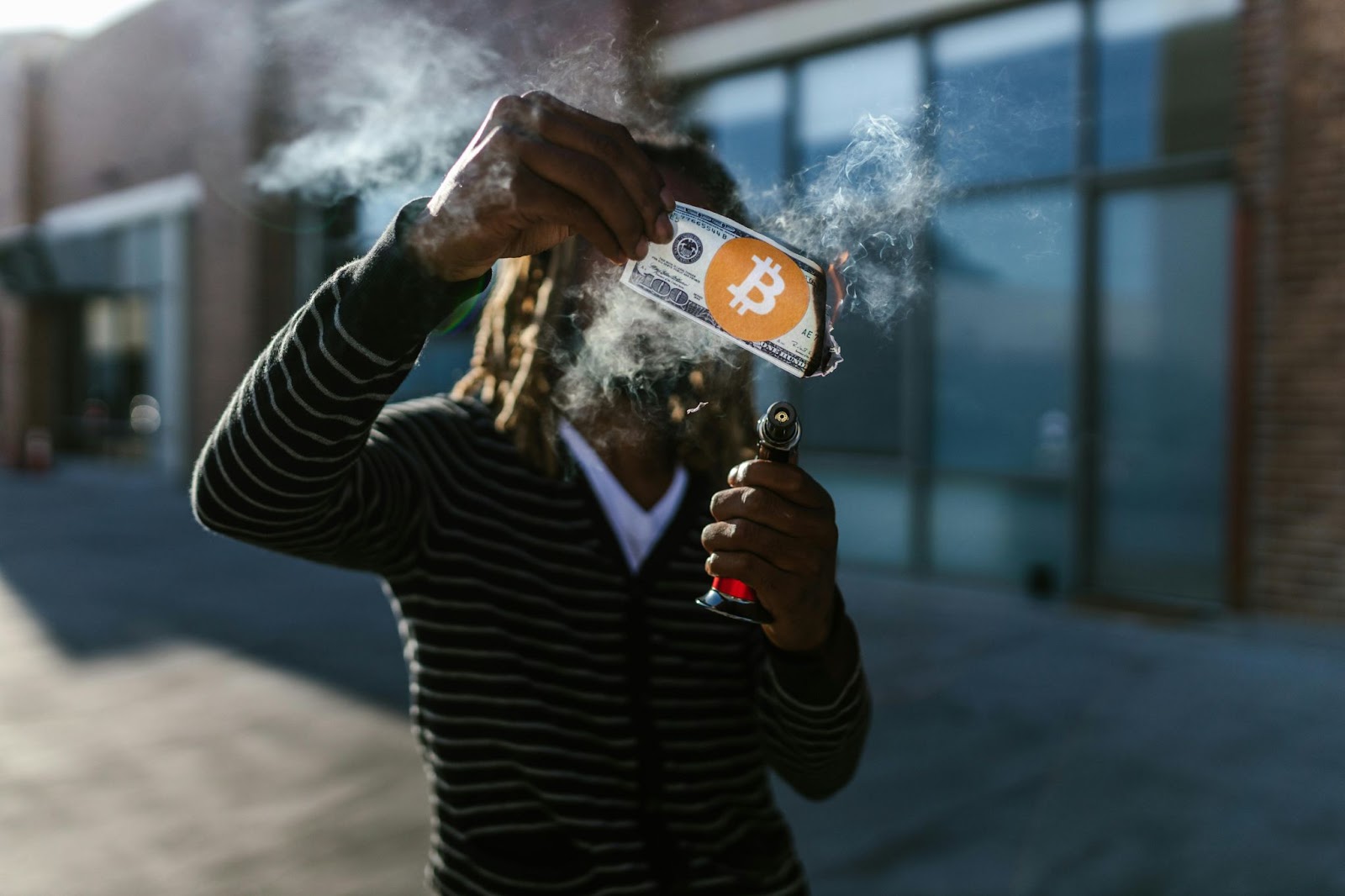
The relationship between token burning and price is one of the most debated questions in tokenomics. The honest answer is: sometimes yes, but not reliably, and not automatically.
The Supply-Demand Logic
The basic economic argument for burns is straightforward. If supply decreases while demand remains constant, the price of the remaining tokens should rise to maintain equilibrium. This is the same principle that makes limited edition products more valuable than mass-produced ones.
In practice, this logic holds most reliably when:
The burn represents a meaningful percentage of circulating supply, not a tiny fraction. A 2% supply reduction has genuine scarcity impact; burning a few hundred tokens from a trillion-token supply does not. The burn is backed by real ecosystem activity, such as fee burns that increase when the network is genuinely being used more. Demand is either stable or growing. Burns reduce supply but cannot create demand where none exists. The project has genuine utility and adoption beyond the burn itself.
When Burns Work
BNB’s decade-long burn program is the clearest example of burns working as intended. Each quarterly burn reduces supply incrementally, is tied to actual exchange revenue, uses a transparent formula, and exists alongside a genuinely active ecosystem. The price of BNB has increased significantly over the long term, though market conditions, not burns alone, explain that trajectory.
Ethereum’s EIP-1559 mechanism works because it ties burn rate directly to usage. When the network is highly active, more ETH is burned. This creates a direct link between adoption growth and supply reduction that protocol-level fee burns provide and ad-hoc burns cannot replicate.
When Burns Do Not Work
Shiba Inu’s experience illustrates the limits clearly. Despite burning trillions of tokens since 2021, with burn rates in October 2024 reportedly 407% higher than the previous month, prices did not respond with sustained appreciation. The total supply remained so large that even aggressive burns barely moved the needle on relative scarcity. Community interest faded, new participants did not arrive in sufficient numbers, and scarcity without demand proved ineffective.
Terra Classic (LUNC) attempted extensive community burn campaigns after the Terra ecosystem’s collapse in 2022. While burns reduced supply, the underlying ecosystem had lost credibility and utility, meaning demand never recovered. Supply reduction without demand recovery cannot repair a broken ecosystem.
The Price-In Effect
One nuance that sophisticated traders understand. When burns are predictable and scheduled, markets tend to price them in advance rather than reacting to them when they occur. If Binance’s quarterly burn schedule is publicly known, traders buy in anticipation of each burn and then may sell after the announcement. The positive price effect occurs gradually during the anticipation phase, not dramatically when the burn actually executes. This is why surprise burns or larger-than-expected burns tend to generate stronger immediate price reactions than routine, predictable ones.
Advantages of Crypto Burning
Transparency and On-Chain Verifiability
Because burn transactions are recorded on the blockchain, anyone can independently verify them. You do not need to trust the project team’s announcement; you can check the burn address directly on a blockchain explorer and confirm exactly how many tokens were sent there and when. This transparency is a meaningful advantage over off-chain supply reduction claims.
Supply Control Without Centralised Intervention
For projects with automatic burn mechanisms embedded in their protocol, supply reduction happens continuously without any team having to make decisions or take action. This removes a category of governance risk that exists in centrally managed supply systems.
Environmental Advantages Over Proof-of-Work
The energy consumed in the Proof-of-Burn (PoB) consensus process is substantially lower than Proof-of-Work (PoW) mining, which requires continuous computational work and energy consumption. PoB requires a one-time token destruction rather than ongoing energy expenditure, making it a more environmentally sustainable approach to achieving similar security guarantees.
Deflationary Potential
For networks with fee-based burns, increased usage automatically reduces supply. As adoption grows and more transactions occur, more tokens are burned, creating a self-reinforcing scarcity mechanism that aligns holder economics with network growth. This is the most structurally sound deflationary design.
Community Engagement and Trust Building
Transparent, publicly verifiable burn events can strengthen community trust. Regular burn events signal that the project team is executing on its commitments and that they prioritise the economic health of the token. For projects that burn their own treasury allocations, it demonstrates alignment between team incentives and holder interests.
Disadvantages and Risks of Crypto Burning
Irreversibility
The defining feature of crypto burning is also its greatest risk. Once tokens are burned, they are gone permanently. If a burn proves harmful to a project’s economics, it cannot be undone. If too many tokens are burned, creating insufficient supply for future network needs, there is no mechanism to restore them. Every burn decision needs to be made with this permanent, unrecoverable nature fully understood.
Burns Do Not Create Demand
This is the most important limitation to understand: burning tokens reduces supply, but it cannot create demand. A project with no genuine utility, poor development, weak community engagement, or failed partnerships will not see sustained price appreciation from burning tokens. Scarcity without demand creates something that is rare and worthless simultaneously. The Shiba Inu pattern of aggressive burns without corresponding demand growth demonstrates this clearly.
Market Volatility and Speculative Trading
Burn announcements routinely trigger speculative buying and selling around the event itself, which can create short-term price swings that have little to do with the project’s fundamental value. This volatility can mislead retail investors into buying into excitement around a burn event that the market quickly prices in and moves past.
Potential for Market Manipulation
Manual burns controlled by project teams or foundations create opportunities for insider trading. If those with advance knowledge of a large upcoming burn buy tokens before the public announcement, they can profit from the short-term price reaction. This is why transparent, automatic burns with publicly known schedules are preferred over ad-hoc manual burns.
Limited Impact From Insufficient Scale
Tokens with extremely large total supplies require enormous burns to move the needle on relative scarcity. Burning a few hundred million tokens from a quadrillion-token supply (like SHIB in its early days) has essentially no mathematical impact on scarcity. The percentage burned relative to circulating supply is the only number that matters, not the absolute quantity.
Reversibility Risk in Manual Systems
The Crypto.com (CRO) case showed that when the same entities who executed a burn also control subsequent governance votes, the “permanent” nature of the burn can be effectively reversed through re-issuance. For burns to genuinely signal commitment, they need to be either protocol-level (unchangeable without community consensus) or come with credible governance structures that prevent re-minting.
Regulatory Scrutiny
Token burns that influence price action may attract regulatory attention, particularly in jurisdictions where regulators view them as a form of market manipulation or misleading disclosure. As global crypto regulation matures, projects implementing burn programs should be aware of the potential for regulatory scrutiny and ensure their communications around burns are transparent and accurate.
Proof-of-Burn: The Consensus Mechanism Explained
Proof-of-Burn (PoB) is a distinct application of burning that goes beyond supply management to serve as a consensus mechanism in some blockchain networks.
In a PoB system, participants demonstrate commitment to the network by burning a verifiable quantity of tokens, typically the network’s own currency or an established cryptocurrency like Bitcoin. The act of burning serves as proof of investment in the network, similar to how miners demonstrate commitment through computational work in PoW systems.
In exchange for burning tokens, participants receive the ability to mine new blocks or earn mining rights proportional to the amount burned. The more tokens burned, the higher the probability of being selected to create the next block and earn the associated reward.
PoB has several theoretical advantages. It is far more energy-efficient than PoW since it does not require ongoing computation. It is also arguably fairer than PoW mining, which tends to favour those with access to specialised hardware. Because burning requires spending real value, it provides genuine economic skin-in-the-game for validators.
Critics of PoB argue that it can entrench early participants who accumulated large amounts of tokens cheaply and burned them for ongoing mining advantages. It also does not provide the same level of security guarantees as the accumulated energy expenditure in PoW systems.
How to Evaluate a Token Burn: What Investors Should Look For
Not all burns are created equal. Here is a framework for assessing whether a specific burn is meaningful or primarily a marketing exercise.
Check the burn percentage. Divide the amount burned by the total circulating supply. A burn that represents 1-5% or more of circulating supply is meaningful. A burn of 0.001% is mathematically negligible regardless of how impressive the absolute number sounds in a headline.
Verify the burn on-chain. Do not rely on press releases or social media announcements. Look up the burn address on the relevant blockchain explorer and confirm that the reported amount was actually sent there. Legitimate burns are publicly verifiable in seconds.
Assess whether the burn is tied to real activity. Fee-based automatic burns that increase when the network is used more are the strongest signal. Ad-hoc manual burns that happen whenever the team decides are weaker.
Ask whether new tokens offset the burn. If a project burns 5 million tokens but simultaneously issues 10 million in staking rewards or team allocations, the net supply is actually increasing. Review the total issuance schedule alongside the burn program.
Evaluate the underlying ecosystem. Burns only support price if demand is stable or growing. Review active users, transaction volume, developer activity, partnerships, and genuine utility before concluding that a burn program will benefit token value.
Scrutinise governance structures. For manual burns, ask whether the team or foundation could theoretically issue new tokens to replace what was burned. Governance structures that allow this undermine the credibility of burns as permanent commitments.
Related: How to Accept Crypto Payments Online
How to Track Crypto Burns
Several tools allow you to monitor burn activity across major cryptocurrencies:
Etherscan lets you view the balance and transaction history of Ethereum’s burn addresses in real time. You can see exactly how much ETH has been burned since EIP-1559 by checking the null address balance.
Ultrasound.money is a dedicated Ethereum burn tracker that provides real-time burn rate data, cumulative burned ETH totals, net issuance figures, and projections under various network activity scenarios.
BSCScan provides the same transparency for BNB Chain, including BNB burn address activity.
Shibburn is a dedicated tracker for SHIB token burns, showing daily, weekly, and cumulative burn totals across the Shiba Inu ecosystem.
CoinGecko and CoinMarketCap provide circulating supply figures that reflect the remaining supply after burns, though they may not always update in real time for every project.
Although this process works for the project developers, knowing how it works for a crypto trader is important. To participate in the burning process, you’ll need to initiate it by calling the “burn function.” Afterward, you’ll specify the amount of coins you want to burn.
Once you have done that, the token’s smart contract verifies that you, the holder, have enough tokens in your wallet. The system then checks whether the specified number of tokens is available. If the tokens are insufficient or invalid (e.g., 0, -2, -0.5), the request is deemed invalid, and the burn function is canceled.
If you have enough tokens and the number you requested to be burned is available, the function starts. When the function finishes, the number that you input is removed from your wallet and sent to a “burn address” or “eater address.” This address is special because it has no private key associated with it, which means no one can access the coins once it has been sent there.
Once this happens the specified amount of coins that you put in cannot be recovered again, it is gone forever.
For example you want to burn some amount of ETH, all you would have to do is to send the amount of ETH that you want burnt to the Ethereum burn address Which is
Ethereum burn address: 0x0000000000000000000000000000000000000000 and your ETH is gone for good.
Why the Waste?
Frequently Asked Questions (FAQs)
How is crypto burned?
Crypto is burned by sending the token to a special address known as a “Burn address”. This address is not accessible by anybody therefore the coin is lost forever.
Is burning crypto safe?
Yes, It is a well-known practice and is done to benefit the cryptocurrency world. However, the burning process must be transparent and legal.
Who decides to burn crypto?
The community and Project developers are the key individuals known for crypto-burning decisions
How often does crypto burning happen?
Some projects burn coins regularly while others might do it only when it is needed. It all depends on the cryptocurrency used.