


“Over 70% of adult Somalis rely on mobile money for their daily transactions.”
Overview of Crypto Adoption in Somalia
When you think of Somalia, crypto might not be the first thing that comes to mind. Known more for its struggles with economic instability and a largely unbanked population, the country is now quietly emerging as a surprising player in the global shift toward digital currencies.
With over 80% of adult Somalis relying on mobile money for their daily transactions, the leap to cryptocurrency feels less like a stretch and more like a natural next step. Even in rural areas, 55% of the population uses mobile money.
For many in Somalia, traditional banking has always been out of reach. High fees, lack of infrastructure, and mistrust of financial institutions have left millions looking for alternatives. Crypto technology doesn’t ask for a bank account or a government’s approval, just an internet connection.
People are already using Bitcoin and other cryptocurrencies to send money home, pay for goods, and even hedge against inflation. It’s fast, cheap, and, for many, a lifeline in a country where financial access is a luxury.
This isn’t just about survival—it’s about opportunity. Somalia’s young, tech-savvy population is catching on quickly, with local exchanges and grassroots education paving the way. But is crypto a long-term solution for the country, or just a temporary fix?
Keep reading to find out.
Current Economic Situation in Somalia

Alt text: Phone disbursing dollar notes
Source: The Somalia Investor Magazine
Somalia is undergoing a significant economic transformation despite its historical challenges with instability and limited infrastructure. A landmark moment was the recent completion of the Heavily Indebted Poor Countries (HIPC) Initiative in December 2023. This resulted in $4.5 billion in debt relief from the International Monetary Fund (IMF) and the World Bank.
This initiative reduced Somalia’s external debt from 64% of GDP in 2018 to less than 6% by the end of 2023. It created new opportunities for economic growth and poverty reduction. The economic outlook is improving, with the IMF projecting GDP growth of 3.7% in 2024, while the World Bank expects inflation to moderate to 4.8%.
Key reforms under this process include strengthened public financial management, enhanced central banking operations, and efforts to increase domestic revenue. These changes have laid the groundwork for broader financial inclusion and investment opportunities.
Despite these strides, Somalia continues to face challenges like climate shocks and security concerns, which impact economic stability.
Somalia’s heavy reliance on informal and mobile money systems provides a unique backdrop for cryptocurrency adoption. With over 80% of transactions conducted through mobile money, the country is already familiar with digital financial systems.
Cryptocurrencies offer an alternative for international remittances and as a hedge against inflation, especially in a nation with limited access to formal banking.
The government’s reform efforts, combined with international support, signal a brighter economic future. However, continued focus on governance, infrastructure, and financial inclusion will be critical to fully harness these opportunities.
“Did you know that in 2025, the average revenue per user in the African cryptocurrency market is estimated to be US $68.7?”
Current State of Crypto Adoption in Somalia
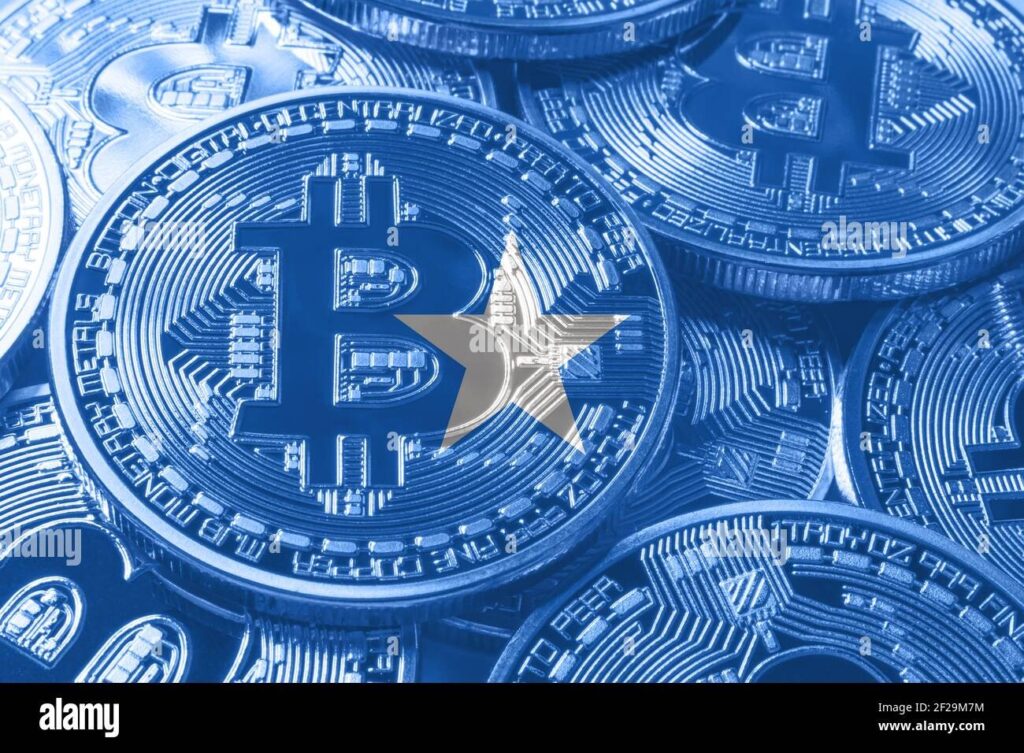
Alt text: Fusion of Bitcoins and the Somalia flag
Source: University of Bosaso
Despite the lack of official regulation in Somalia, the digital asset market is not slowing down. International organizations have yet to establish formal guidelines for crypto use in Somalia. Still, the country’s organic embrace of decentralized finance hints at its long-term potential to address economic gaps.
Key players in the financial and tech sectors have moved forward:
- Salaam Bank officially launched a USDT (Tether) service, becoming the first Somali bank to offer blockchain-based stablecoin transactions for customers.
- Taran App is actively providing integrated digital asset services, connecting all major mobile money platforms in the country and offering a practical gateway to stablecoins and crypto wallets.
- Binance, the world’s largest crypto exchange, is also present in the Somali market. While local banks do not yet issue crypto-linked cards directly, Binance cards can be accepted via banking channels, signaling a growing fintech bridge between Somalia and global crypto ecosystems.
These developments confirm that the infrastructure, demand, and innovation are already in motion. What’s missing is a legal framework to ensure safety, accountability, and opportunity.
Factors Driving Crypto Adoption in Somalia

Alt text: Silhouette of analysts analyzing the connection of several crypto coins and different sectors
Source: Zerocap
Several factors are accelerating crypto adoption in Somalia. Some of these include high reliance on mobile money, cross-border remittances, and economic instability.
High Reliance on Mobile Money
Tanzania’s high reliance on mobile money, used by over 80% of the adult population, creates a seamless pathway to digital currencies.
Cross-border Remittances
Cryptocurrencies also offer a lifeline for cross-border remittances, a vital income source for many Somali households. Remittances from the Somali diaspora exceed $2 billion annually, accounting for over 20% of GDP. Digital assets offer lower fees and faster transactions compared to traditional methods.
Economic Instability and Inflation
Economic instability and inflation drive citizens to seek alternative ways to store value, with crypto providing a decentralized and accessible option.
Tech-savvy Youth Population
Somalia’s growing, tech-savvy youth population is eager to explore innovative financial technologies, further boosting adoption.
Public Demand and Practical Readiness
By early 2024, Somalia had 10.7 million internet users (a 55.2% penetration rate), 11.28 million mobile connections, and growing 4G/5G coverage driven by low data costs. This ecosystem is ripe for the use of stablecoins and digital asset platforms.
“The number of users in the African Cryptocurrencies market is expected to reach 75.77m users by 2025.”
Cryptocurrency Usage in Various Sectors
Cryptocurrency is making its mark across several sectors in Somalia, with remittances being the most prominent use case.
Cross-border Remittances
Remittance is the most common use case of cryptocurrency in Somalia. Given the country’s reliance on money sent from the diaspora (exceeding 20% of GDP), digital currencies like Bitcoin and stablecoins (such as the USDT offered by Salaam Bank) are increasingly used to send funds quickly and affordably.
Retail Business
In retail, some small businesses are adopting crypto payments as an alternative to mobile money, while others use it as a hedge against local currency devaluation.
Tech and Financial Services
Cryptocurrency is finding its place in the tech and financial services sectors, with a growing interest in blockchain technology for improving transparency in local governance and financial transactions.
Cryptocurrency Regulation in Somalia

Alt text: Bitcoins and law identifiers
Source: Amini & Conant
As of 2024, Somalia lacks a formal legal framework for cryptocurrencies, and the market operates in a state of high alert following official guidance from the Central Bank.
Central Bank Warning
In an official statement, the Central Bank of Somalia (CBS) issued a stern warning to the public against the use of virtual assets such as bitcoins and stablecoins. The bank emphasized that cryptocurrencies are not recognized as legal tender in Somalia and highlighted the absence of licensed financial institutions authorized to engage in such monetary business.
The statement outlined several risks, including:
- Lack of legal oversight and licensed agencies in Somalia.
- High price volatility is influenced by speculation, with no guarantees for investors.
- The potential use of cryptocurrencies in criminal activities.
The CBS urged the public to exercise extreme caution, reinforcing that virtual assets are not a secure or stable form of investment.
Existing Legal Authority and Future Path
Despite the warning, the Federal Government of Somalia holds the legal authority to create such a framework. Under the Provisional Constitution (2012), the Federal Government has exclusive authority over monetary policy. The Central Bank of Somalia (CBS), re-established by Law No. 130 of 2011, is legally empowered to:
- License and supervise financial institutions.
- Regulate national payment systems, which would include digital asset infrastructure.
While no digital asset legislation exists, the CBS has made progress in formalizing digital finance, such as launching the National Payment System (NPS) in 2021 and issuing Mobile Money Regulations in 2023. These developments form a strong base from which to expand into digital asset legislation in the future, should the government’s stance shift.
Challenges Facing Crypto Adoption in Somalia
Despite its growing popularity, cryptocurrency adoption in Somalia faces several challenges.
- Lack of Legal Framework: The primary challenge is the lack of formal regulation, now compounded by the Central Bank’s official warning. This creates high uncertainty and leaves users with no protection against fraud or scams.
- FATF Grey List: Somalia remains on the Financial Action Task Force (FATF) grey list. This requires any future digital asset regulation to have extremely strict Anti-Money Laundering and Counter-Financing of Terrorism (AML/CFT) compliance to avoid international financial exclusion.
- Infrastructure and Education: Limited internet access in rural areas and unreliable electricity infrastructure make it difficult for many to participate. Furthermore, there is a lack of education and awareness about cryptocurrencies beyond urban centers.
- Institutional and Political Fragmentation: The country lacks a capital markets authority or specialized body for blockchain oversight. Furthermore, potential fragmentation between federal and member states (e.g., Puntland) could hinder the harmonization of any future laws.
The Potential for Cryptocurrency in Somalia

Alt text: Hand holding a bitcoin hologram
Source: PlasBit
Despite the regulatory hurdles, Somalia holds significant potential for digital assets, primarily due to its unique economic structure.
A U.S.-Anchored Opportunity
As the United States passes landmark crypto legislation, including the GENIUS Act for stablecoins and the CLARITY Act for digital asset markets, it sends a clear signal that digital assets are here to stay.
For Somalia, this global momentum is imperative. Somalia’s use of the U.S. dollar as its de facto legal tender makes American regulatory models especially relevant. The GENIUS Act, for instance, mandates full reserve backing and audits.
Somalia could adopt a similar model to regulate the USD-backed stablecoins (like USDT) already being used for remittances and consumer payments. Aligning with U.S. standards would not only provide legal clarity but also enhance international financial credibility.
Should the Central Bank’s position evolve, Somalia could draw from several global models to build a framework:
- GENIUS Act (U.S.): A stablecoin framework suited to Somalia’s USD-based economy.
- EU MiCA: A comprehensive model for digital asset licensing and consumer protection.
- Nigeria & Kenya: Regional examples of pilot programs, policy shifts, and sandbox testing that Somalia can learn from.
The young, tech-savvy population and the rise of local blockchain initiatives further enhance the country’s crypto prospects. However, addressing the regulatory gaps and improving infrastructure would be key to unlocking this potential.
Conclusion
Somalia’s digital economy is evolving faster than its laws. With the U.S. dollar as its monetary backbone, Somalia has a ready-made blueprint in the GENIUS Act. The Central Bank and federal authorities face a critical choice: act decisively to regulate the market, or allow informal digital finance systems to grow beyond their reach.
Cryptocurrency could play a key role in addressing financial exclusion, supporting remittances, and offering an alternative to unstable local currencies. With the right regulatory frameworks and improved access to technology, Somalia has the potential to become a leader in cryptocurrency adoption in Africa.


