



A Peep into Mozambique

Mozambique, located on the southeastern coast of Africa, is a nation rich in natural resources, including coal, natural gas, and mineral deposits. However, its economic terrain is complex, shaped by historical factors and current challenges.
Economic Overview
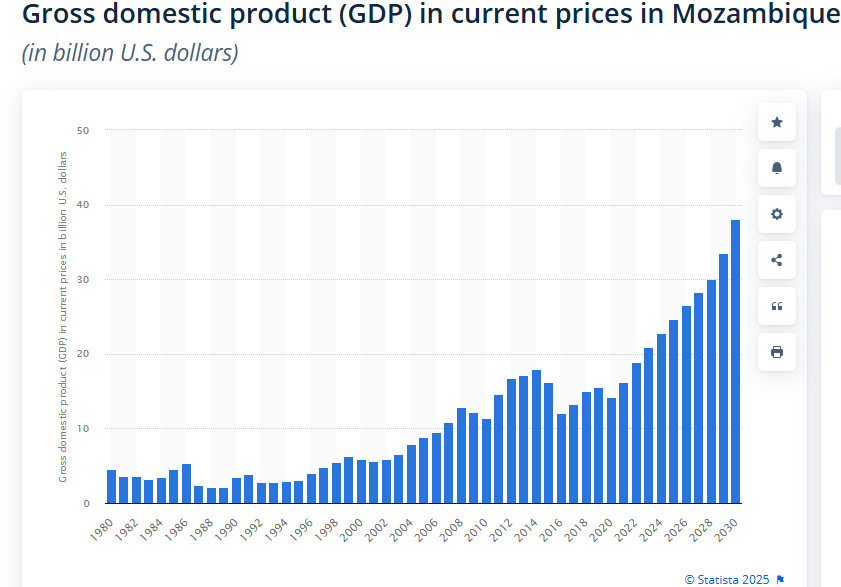
(Source: Statista)
GDP and Major Industries: As of 2025, Mozambique’s economic outlook is positive but varied. Projections estimate a nominal GDP of approximately $23 billion, while purchasing power parity (PPP) estimates place the economy at around $87 billion, reflecting a substantial informal sector. Agriculture remains a cornerstone, employing a vast majority of the workforce, though the extraction of natural gas is becoming an increasingly vital economic driver.
Current Financial System: The financial sector is expanding but still leaves gaps in rural coverage. As of early 2025, formal bank account ownership stood at approximately 32–33% of adults. This relatively low penetration of traditional banking contrasts sharply with the massive uptake of mobile financial services, presenting a clear opportunity for decentralized financial solutions.
Demographics and Internet Penetration
Mozambique’s population has grown to over 36 million as of December 2025. The nation retains a youthful structure, with a significant percentage under the age of 15, representing a future user base native to digital technologies.
Internet and mobile connectivity are improving. By early 2025, mobile connections were equivalent to 50.4% of the total population. Even more impressive is the reach of electronic money institutions (EMIs); in 2025, it was reported that 93% of the population had access to EMI services, ensuring that nearly every district has a point of access to financial services.
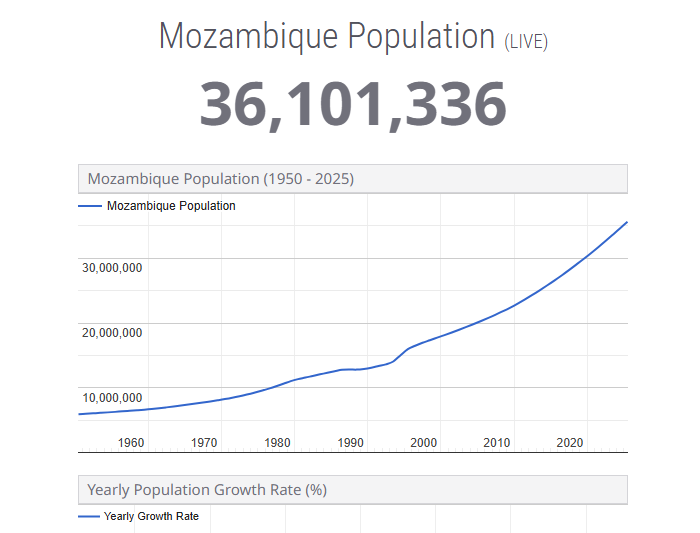
(Source: Worldometer)
Historical Context of Technology Adoption
Historically, Mozambique has faced challenges in technology adoption due to infrastructural limitations and economic instability. However, recent years have seen a surge in mobile money services, like M-Pesa, which have laid the groundwork for broader financial inclusion.
This shift indicates a growing readiness among the population to embrace new technologies, including cryptocurrencies.
Given Mozambique’s unique economic trajectory, understanding its historical context and current challenges is essential. These factors will play a significant role in how cryptocurrencies can be integrated into everyday life, offering solutions to the unbanked and fostering economic resilience.
Current State of Crypto Adoption in Mozambique
Cryptocurrency in Mozambique is still in its early stages, but interest is growing. A combination of economic necessity, technological advancements, and social media awareness is driving this trend.
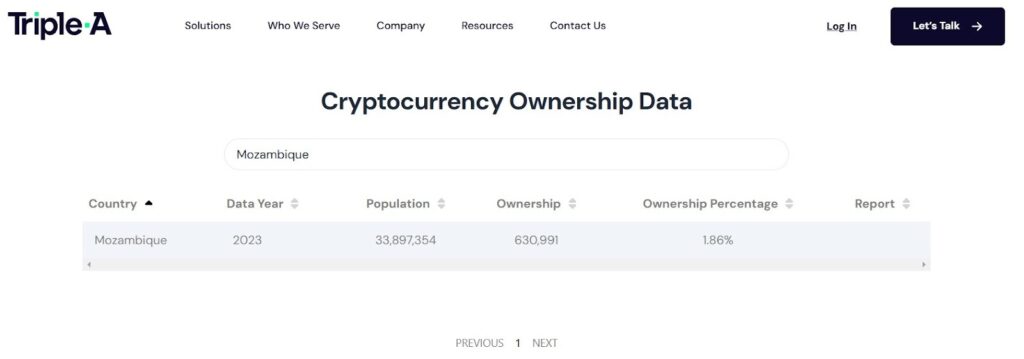
(Source: Triple A)
Overview of Cryptocurrency Usage
Market Projections: The cryptocurrency market in Mozambique is projected to generate revenue of US$5.9 million in 2025. The sector is expected to expand at an annual growth rate (CAGR 2025-2026) of 10.82%, reaching approximately US$6.5 million by 2026.
User Base: Adoption is becoming more focused. The number of users in the cryptocurrency market is expected to amount to roughly 556,440 by 2026. User penetration is projected at 1.32% in 2025, rising to 1.52% by 2026.
Local Projects and Initiatives: Several grassroots initiatives have emerged to educate the public about cryptocurrencies.
For instance, local tech hubs and universities are organizing workshops and seminars aimed at demystifying blockchain technology and its applications. These efforts often attract young professionals and students eager to explore new financial avenues.
Key Players in the Crypto Space
Exchanges Operating in Mozambique: While major global exchanges like Binance and Coinbase are accessible, local platforms are also emerging. For example, platforms like Luno and Paxful allow Mozambicans to buy and sell cryptocurrencies, making it easier to engage with digital currencies.
Local Startups and Tech Communities: A small but growing number of startups are focusing on blockchain technology. These include companies working on remittance solutions and decentralized finance (DeFi) projects tailored to the Mozambican market.
According to the World Bank, remittances are a significant part of Mozambique’s economy, contributing around 6% of GDP, which highlights the potential for cryptocurrencies to facilitate cheaper and faster remittance services.
Crypto Law in Mozambique

(Source: Envato)
Mozambique currently lacks specific legislation directly governing cryptocurrencies. Therefore, the legal status of cryptocurrencies and their associated transactions remains somewhat ambiguous. However, existing laws and regulations can be interpreted to apply to certain aspects of cryptocurrency activities.
The Central Bank of Mozambique (Banco de Moçambique) has not issued specific regulations regarding cryptocurrencies. It generally oversees financial institutions and activities within the country.
While the Bank hasn’t explicitly prohibited cryptocurrency transactions, it has cautioned citizens about the potential risks associated with them, including volatility and the absence of regulatory protection.
In a significant move for the broader financial and digital environment, the European Commission removed Mozambique from its list of “high-risk” jurisdictions (the grey list) in December 2025, citing improvements in its anti-money laundering (AML) and counter-terrorist financing (CFT) regimes. This strengthens the country’s connection to the global financial system and may pave the way for more formal digital asset regulations.
Also, in late 2025, the government announced plans to update regulatory frameworks to support cloud adoption and data centers, explicitly noting that technologies like blockchain could help streamline payments.
Regarding taxation, the Mozambican Tax Authority (AT) has not issued specific guidelines for cryptocurrency taxation. However, general tax principles may apply. For instance, any income or capital gains derived from cryptocurrency transactions could potentially be subject to income tax or capital gains tax, depending on the specific circumstances.
While there are no explicit laws prohibiting cryptocurrency mining in Mozambique, it’s important to consider potential energy consumption and regulatory implications. Mining operations that consume significant amounts of electricity might face scrutiny from authorities, especially if they impact the country’s energy supply.
In the meantime, individuals and businesses engaging in cryptocurrency activities in Mozambique should exercise caution and consider seeking legal advice to understand the potential risks and liabilities associated with such activities.
Factors Driving Crypto Adoption in Mozambique
(Source: Freepik)
Several key factors are propelling the adoption of cryptocurrency in Mozambique. These elements not only highlight the potential benefits of digital currencies but also illustrate the unique challenges faced by the population.
Economic Challenges and Inflation
While inflation has cooled significantly in late 2025, dropping from peaks in the 10%+ range in 2022 to around 4.4%-4.9% in late 2025, the memory of economic instability drives many to seek alternative stores of value. Cryptocurrencies are viewed by some as a hedge against future volatility and a tool for economic resilience.
As a result, many individuals are looking for alternative stores of value and means of transaction, making cryptocurrencies appealing.
The Mobile Money Revolution
The most significant driver is the explosive growth of mobile money. By June 2025, the number of electronic money accounts surged to 23 million, up from 11.9 million in 2022. This massive shift demonstrates a population comfortable with digital transactions, bridging the gap between cash and digital assets. With 93% of the population having access to EMI services, the infrastructure for potential crypto integration is already in place.
Increasing Access to Technology and Mobile Payments
The rise of mobile technology in Mozambique is a game-changer. This shift is paving the way for mobile payment solutions and crypto wallets, making it easier for individuals to engage with cryptocurrencies. Local platforms are increasingly offering user-friendly interfaces that cater to the needs of Mozambicans.
Mozambique registered approximately 18.91 million mobile connections (excluding IoT) in the fourth quarter of 2024, up from 16.72 million in the previous year. The current number of mobile connections corresponded to 55 percent of Mozambique’s total population
Youth Engagement
Mozambique has a young population eager to explore new technologies. The youth are often more receptive to adopting digital currencies, seeing them as opportunities for investment and entrepreneurship. This demographic is increasingly turning to social media and online communities to learn about and trade cryptocurrencies.
Challenges to Crypto Adoption in Mozambique

(Source:Freepik)
Despite the promising factors driving cryptocurrency adoption in Mozambique, several significant challenges hinder its widespread acceptance and use.
Regulatory Environment
1. Government Stance: The Mozambican government has taken a cautious approach to cryptocurrencies, primarily due to concerns about volatility and potential fraud. The Bank of Mozambique has issued warnings about the risks associated with digital assets, which may discourage potential users from engaging with cryptocurrencies.
2. Lack of Specific Legislation: Currently, there are no comprehensive regulations governing cryptocurrencies in Mozambique. This legal ambiguity creates uncertainty for businesses and individuals looking to invest in or use digital currencies, stifling innovation and growth in the sector.
Lack of Awareness and Education
Many Mozambicans still lack a basic understanding of how cryptocurrencies work. This knowledge gap can prevent individuals from engaging with digital currencies confidently. Without widespread education on the benefits and risks of cryptocurrencies, potential users may remain hesitant to participate in the market.
Infrastructure Limitations
Mozambique’s technological infrastructure faces challenges, particularly in rural areas. While urban centers are seeing improvements in internet connectivity and mobile services, many rural communities still struggle with access. This disparity limits the reach of cryptocurrency services and hinders adoption among the broader population.
Despite the increasing global interest in cryptocurrencies, Mozambique has not yet experienced widespread adoption, primarily due to limited access to technology and low financial literacy levels.
Security Concerns and Scams
The cryptocurrency space is not without risks. Reports of scams and fraudulent schemes have emerged, particularly targeting inexperienced users. The lack of regulatory oversight makes it challenging for authorities to protect consumers and enforce accountability. This environment can lead to distrust among potential users, further slowing adoption.
Cultural Resistance
Cultural attitudes towards money and finance can also impact cryptocurrency adoption. In some communities, traditional financial practices and skepticism towards digital currencies persist. Overcoming these cultural barriers requires targeted outreach and education efforts to demonstrate the value and safety of using cryptocurrencies.
Case Studies
Here, we highlight notable examples and lessons learned from local efforts and comparisons with other African countries.
Successful Crypto Initiatives in Mozambique
M-Pesa and Mobile Money Integration: Although not a cryptocurrency itself, M-Pesa’s success in Mozambique demonstrates the appetite for mobile financial solutions.
Launched in 2013, M-Pesa allows users to transfer money and make payments via mobile phones, significantly enhancing financial inclusion. The platform has laid the groundwork for crypto solutions by familiarizing the public with digital transactions.
Local Educational Workshops: Various tech hubs in cities like Maputo and Beira have started offering workshops focused on blockchain technology and cryptocurrency. These initiatives attract young professionals and students, helping build a community of informed users.
For instance, the Maputo Blockchain Meetup brings together enthusiasts to share knowledge and discuss the future of crypto in Mozambique.
Lessons Learned from Other Countries in Africa
Nigeria continues to be a continental leader. In 2025, around 22 million Nigerians (10.3% of the population) held cryptocurrencies, a massive leap from just 0.4% a decade prior. Nigeria also ranks 6th in the 2025 Global Crypto Adoption Index. Mozambique can learn from Nigeria’s youth-driven adoption model and the importance of peer-to-peer markets in navigating regulatory gray areas.
Future Prospects
The future of cryptocurrency adoption in Mozambique holds significant promise, driven by evolving economic conditions, technological advancements, and a growing interest among the population.
Potential Impact on the Economy and Society
Financial Inclusion: Greater adoption of cryptocurrency can significantly improve financial inclusion. Cryptocurrencies can empower individuals and small businesses by providing unbanked populations with access to digital finance, enabling them to participate in the economy more fully.
Economic Resilience: In times of economic instability, cryptocurrencies can serve as a hedge against inflation, offering individuals a stable store of value. This resilience could help communities better withstand economic shocks, contributing to overall economic stability.
Job Creation: The growth of the crypto sector could lead to job creation in areas such as technology development, education, and financial services. As local startups emerge and international companies take interest, new employment opportunities may arise, particularly for young professionals.
Education and Awareness
Increasing education and awareness will be vital for mainstream adoption. Initiatives aimed at informing the public about the benefits and risks of cryptocurrencies can help build trust and encourage responsible usage. As more individuals understand how to navigate the crypto space, adoption rates are likely to rise.
Conclusion
The prospects for cryptocurrency adoption in Mozambique are promising, with the potential to drive financial inclusion, economic growth, and job creation.
By leveraging international partnerships, developing regulatory frameworks, and focusing on education, Mozambique can position itself as a leader in the crypto space, unlocking new opportunities for its citizens and the economy at large.
The journey will require collaboration, innovation, and a commitment to overcoming challenges, but the rewards could be transformative for the nation.


