



Current Economic Situation in Slovakia
Slovakia’s economy remains deeply integrated with the European Union, which provides a foundation of stable monetary policy and investment security, particularly in the automotive and electronics manufacturing sectors.
As a member of the Eurozone, Slovakia benefits from stable monetary policies but also faces challenges due to its dependency on export demand, particularly from Germany and other EU nations.
Recent global disruptions, inflationary pressures, and energy price volatility have impacted growth, with the country seeing a slow economic recovery post-COVID-19. The Slovak government is focused on economic stability, increasing digitalization, and investment in innovation to grow amidst these challenges.
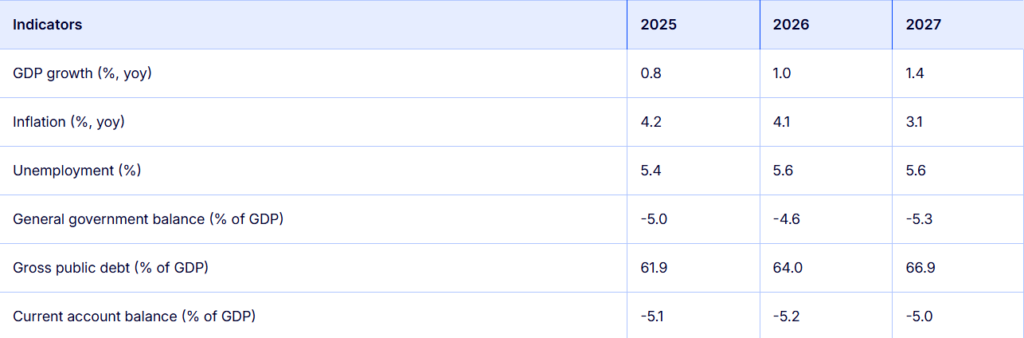
However, real GDP growth is expected to slow to 0.8% in 2025, influenced by trade tensions, global uncertainty, and fiscal consolidation efforts. Economic activity is projected to remain subdued with a 1.0% growth rate in 2026 before picking up to 1.4% in 2027 as exports regain momentum.
Source: European Commission
Inflation remains a significant factor, projected at 4.2% for 2025 due to VAT increases and strong wage growth. Energy price support restructuring is expected to keep inflation elevated at 4.1% in 2026.
The labor market shows resilience with an unemployment rate of 5.4% in 2025, though high vacancies and strong demand in specific sectors maintain a tight market environment. Despite these pressures, household consumption has been supported by rising real incomes, and the accelerated use of EU funds is expected to bolster future investment.
Slovakia’s economic structure is heavily reliant on manufacturing and exports, especially in the automotive, machinery, and electronics sectors, with major global players such as Volkswagen, Kia, and Jaguar Land Rover establishing production facilities.
This reliance on exports, particularly to Germany and other EU nations, has led to strong economic ties and also makes Slovakia vulnerable to external economic fluctuations.
Slovakia has recently faced heightened inflation, primarily due to rising energy and raw material costs, a challenge further intensified by the ongoing geopolitical tensions in Europe, particularly the effects of the Ukraine conflict, which has disrupted energy supplies across the region.
In response, the Slovak government is emphasizing economic stabilization efforts, with a strong focus on digital transformation, green energy, and fostering innovation within its industries.
Slovakia is investing in educational initiatives to equip its workforce with skills aligned with these priorities, particularly in the fields of information technology and digital economy, to support sustainable long-term growth.
Tax incentives and support for small and medium-sized enterprises (SMEs) are also part of the government’s broader strategy to enhance economic resilience, create jobs, and attract foreign direct investment.
“Slovakia’s growing tech-savvy population and active startup ecosystem provide fertile ground for cryptocurrency adoption, particularly as the country embraces digital innovation and blockchain solutions.”
Crypto Law In Slovakia
Slovakia has undergone a complete overhaul of its crypto licensing framework, replacing the former Virtual Asset Service Provider (VASP) trade license with a full financial services regime. This framework is fully aligned with the EU Markets in Crypto-Assets (MiCA) Regulation, which sets harmonized rules for authorization, governance, and consumer protection.
Key regulatory pillars include:
- The National Bank of Slovakia (NBS): Acts as the sole authority responsible for supervising and enforcing rules for licensed CASPs.
- Licensing Deadlines: All existing providers must obtain a MiCA license from the NBS or another EU authority by December 30, 2025.
- Travel Rule (TFR): Requires service providers to collect and exchange information for all crypto transfers to combat money laundering.
- Digital Operational Resilience (DORA): Mandates that all newly regulated crypto entities comply with strict ICT risk management and cybersecurity standards.
- Legal Classification: While not defined as money, crypto-assets are classified as “other property value” under Slovak law
“Despite the legal allowance for cryptocurrencies, Slovakia’s banking sector remains conservative, with many institutions wary of engaging in crypto-related transactions, creating a barrier for wider adoption.”
Current State of Crypto Adoption in Slovakia
Source: Statista
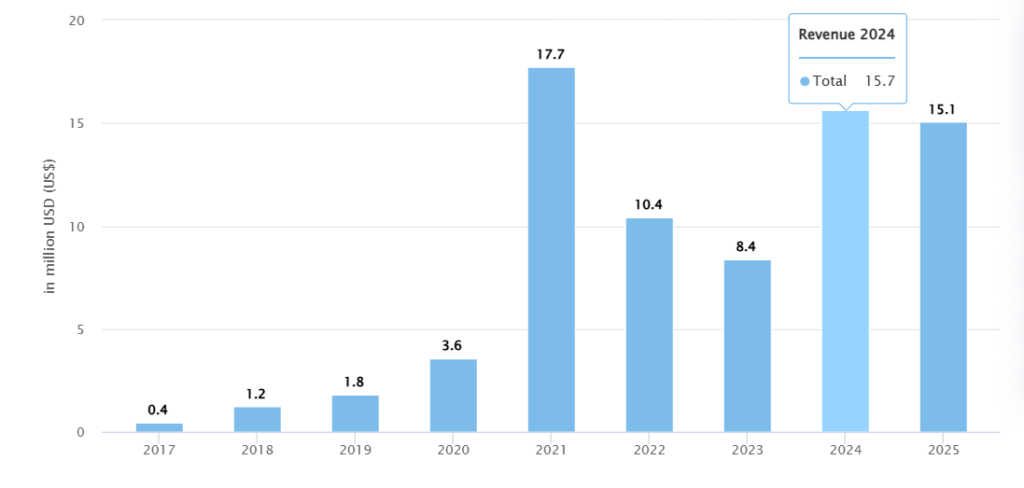
The cryptocurrency market in Slovakia is anticipated to generate about $40.8 million in revenue in 2025. However, a projected annual growth rate (CAGR 2025-2026) of -0.46% suggests a decline to $40.6 million by 2026.
Despite this, the user base is expected to grow, reaching 467.18 thousand users by 2026, with a user penetration rate increasing from 8.21% in 2025 to 8.57% in 2026. The average revenue per user is estimated at $90.8 in 2025.
Cryptocurrency adoption is growing steadily in Slovakia but remains relatively limited compared to some other European nations.
Although crypto is legal to own and trade, it is not widely accepted as a form of payment in the mainstream economy, with most Slovak businesses and merchants opting out of direct crypto transactions.
However, interest among individuals and investors is on a gradual rise, especially within younger demographics and those interested in digital innovation.
Several factors contribute to the restrained adoption of crypto in Slovakia. Banks in the country generally have conservative policies regarding cryptocurrency-related transactions, with many limiting or even restricting accounts associated with crypto trading.
The Slovak National Bank has issued warnings about the risks involved in crypto investments, advising citizens to exercise caution due to price volatility and regulatory uncertainty. These limitations within the banking sector create barriers for individuals and businesses looking to engage with crypto beyond investment purposes.
Despite these hurdles, Slovakia has an active crypto community, with an increasing number of blockchain and fintech startups emerging in the region.
Bratislava, the capital, has seen a rise in crypto-related meetups and events, which creates knowledge-sharing and enthusiasm for blockchain technology. In addition, several cryptocurrency ATMs are available in major cities, providing accessible points for users to buy and sell crypto assets.
The government has not shown a strong stance on promoting cryptocurrency adoption, rather, focuses more on aligning regulations with EU directives.
This passive approach leaves room for organic growth in the private sector, especially as EU-wide regulatory frameworks change. Moving forward, the adoption of digital assets in Slovakia may depend on broader EU regulatory decisions and how these frameworks are implemented at the national level.
Crypto Tax in Slovakia
Under the Slovak Income Tax Act, income derived from the sale of crypto-assets—which includes exchanges for property, services, or other cryptocurrencies—is subject to taxation.
- Non-Business Individuals: Income is taxed as “other income” at a rate of 19% if the tax base is below €48,441.43, and 25% on any amount above that threshold. Loss from these sales cannot be recognized.
- Self-Employed Individuals: Business income from recurrent trading is taxed at 15% if total taxable income is under €100,000. If income exceeds this, the 19% or 25% rates apply based on the tax base.
- Legal Entities: Corporate income from crypto sales is subject to progressive rates: 10% for income up to €100,000; 21% for income between €100,000 and €5 million; and 24% for income exceeding €5 million.
- Future Reporting: From January 1, 2026, licensed service providers will fall under the EU’s DAC8 tax reporting obligations, enhancing transparency across the region
Factors Driving Crypto Adoption in Slovakia
Source: Statista
In Slovakia, several factors are driving the gradual adoption of cryptocurrency, albeit with some unique challenges compared to other European countries. These key factors include:
Interest in Financial Innovation
As a growing tech hub, Slovakia has an increasing number of individuals and entrepreneurs who are enthusiastic about digital innovation.
This demographic is drawn to crypto as a means of exploring new financial opportunities, from alternative investments to decentralized finance (DeFi) projects, fueling adoption, especially within urban centers like Bratislava.
Blockchain Startups and Tech Ecosystem
Slovakia is seeing a steady rise in blockchain and fintech startups, with some companies like
Intellica and Confio GmbH even exploring decentralized applications (dApps) and blockchain-based solutions.
This emerging tech ecosystem promotes familiarity with crypto assets and fosters a supportive environment for crypto adoption, as these companies often host events, workshops, and knowledge-sharing sessions that encourage interest and investment in digital assets.
Availability of Crypto ATMs
Slovakia has several cryptocurrency ATMs located in major cities, such as Bratislava and Košice, which makes it easier for individuals to buy and sell crypto assets directly with cash.
This accessibility allows residents and visitors to engage with crypto without needing to navigate exchanges, driving awareness and familiarity with digital assets.
Global Economic Trends
As inflation rates and currency stability fluctuate worldwide, some Slovak citizens see cryptocurrency as a potential hedge against economic uncertainty.
While this view is not mainstream, global trends in crypto as a store of value or hedge asset are gradually influencing Slovakia’s crypto landscape, especially among those interested in diversifying their financial portfolios.
EU-Wide Regulatory Developments
As an EU member state, Slovakia is influenced by European Union directives and regulatory frameworks, which are increasingly shaping a clearer legal status for crypto.
The newly adopted EU legislation, such as the Markets in Crypto-Assets (MiCA) regulation, promises to establish consistent rules for crypto assets across the Union, which may encourage adoption by providing greater clarity and consumer protection.
These changes have led some Slovak individuals and businesses to begin experimenting with crypto in preparation for a more structured regulatory environment.
Digital Payment Advancements
With the rise of digital and contactless payments in Slovakia, there is a growing openness to digital financial solutions, including crypto.
Though currently limited, some Slovak companies are beginning to explore digital assets as part of their payment and investment strategies, particularly those looking to stand out in the tech-savvy European market.
Challenges Facing Crypto Adoption in Slovakia
Slovakia faces several notable challenges in the adoption of cryptocurrency, stemming from, conservative banking practices and a cautious financial culture. These challenges include:
Conservative Banking Policies
Slovak banks are generally wary of cryptocurrency transactions, with many restricting or even closing accounts associated with crypto trading.
This conservatism creates barriers for individuals and businesses wanting to engage with crypto, limiting their ability to move funds easily between traditional financial systems and crypto platforms.
This banking stance adds friction and discourages adoption, as users are forced to find alternative ways to access and manage their digital assets.
Lack of Consumer Protection and Awareness
Cryptocurrency remains complex and unfamiliar to many Slovak citizens, with limited educational resources available on digital assets and blockchain technology.
This lack of understanding fuels misconceptions and increases the risk of scams and fraud, which have deterred some Slovaks from participating in the crypto economy.
Without strong consumer protection measures, new users face risks, which can harm confidence in crypto as a secure and viable financial option.
Tax Complexity and Burden
Crypto gains in Slovakia are subject to capital gains taxes, typically around 19–25% depending on income level, along with a health insurance tax on some capital gains.
This tax burden, combined with complex reporting requirements, makes crypto investments less appealing for individuals and businesses alike.
The lack of clear tax guidance on crypto assets adds to the challenge, as users must navigate vague or evolving tax laws that add to the cost and administrative effort of holding or trading crypto.
Conservative Financial Culture
Slovakia has a traditionally conservative financial culture, where traditional savings and investments are generally preferred over speculative assets like cryptocurrency.
While interest in crypto is growing among younger Slovaks and tech enthusiasts, the broader population remains cautious, which limits widespread adoption. This cautious financial mindset, combined with a focus on tangible assets, means that crypto is often viewed with skepticism.
Limited Merchant Acceptance
Few Slovak businesses accept cryptocurrency as payment, which reduces its utility in day-to-day transactions.
This lack of merchant adoption means that even those who own crypto primarily use it for investment rather than spending, limiting its integration into the economy. Merchants are hesitant due to concerns over price volatility, tax reporting, and the absence of consumer protection, which hinders broader acceptance.
Price Volatility
Like in other countries, the inherent volatility of cryptocurrencies presents a challenge to adoption in Slovakia.
Price swings can deter both individuals and businesses from using or accepting crypto, as unpredictable value changes create financial risks. For a population already cautious about speculative assets, this volatility is a significant deterrent.
“With a few crypto ATMs and an emerging number of businesses experimenting with digital asset payments, Slovakia’s crypto ecosystem is slowly but surely expanding, though mainstream merchant adoption is still limited.”
The Potential for Cryptocurrency in Slovakia
Source: Freepik
The potential for cryptocurrency adoption in Slovakia is significant, driven by several factors, including its growing tech ecosystem, favorable geographic location within the European Union (EU), and increasing interest in digital financial solutions.
However, realizing this potential will depend on addressing existing barriers and aligning with broader regional developments in crypto regulation and technology.
Young Population and Growing Startup Ecosystem
Slovakia has a youthful population amounting to 9.80% as of December 2023 who are increasingly open to digital innovations.
With an active startup ecosystem, particularly in Bratislava, the country is well-positioned to foster blockchain and cryptocurrency adoption.
Local startups like Blockmate and Marinade are experimenting with blockchain solutions and decentralized applications (dApps), which creates fertile ground for cryptocurrency to be integrated into the broader economy.
Strategic Location within the European Union
As a member of the EU, Slovakia benefits from EU-wide regulations, which could be a driving force in the development of cryptocurrency.
The EU’s efforts to create a comprehensive regulatory framework for crypto, such as the Markets in Crypto-Assets (MiCA) regulation, could pave the way for clearer rules in Slovakia, providing businesses and investors with the confidence to participate in the crypto economy.
With EU-wide guidelines in place, Slovakia could become a regional leader in crypto adoption, benefiting from cross-border crypto transactions and investments.
Increased Interest in Digital and Alternative Assets
Like many other countries, Slovaks are showing a growing interest in alternative investment vehicles, driven by the volatility of traditional financial markets and inflationary concerns.
Cryptocurrencies are seen by some as a potential hedge against economic instability, particularly in uncertain times when traditional assets may not provide the same level of security. When more Slovaks look to diversify their investments, cryptocurrencies could serve as an attractive asset class, increasing adoption rates.
Opportunities in Crypto Payments and Merchant Adoption
While the acceptance of cryptocurrency as a form of payment is currently limited, there is significant potential for growth in this area.
As global trends in digital payments and decentralized finance (DeFi) continue to evolve, Slovakia’s businesses may begin to explore cryptocurrency as a legitimate payment method, particularly for international transactions.
If more Slovak merchants and service providers begin to accept crypto, it would enhance its use in everyday transactions, accelerating adoption.
Blockchain Solutions in Traditional Industries
Beyond cryptocurrencies, Slovakia has the potential to use blockchain technology to improve various industries such as supply chain management, healthcare, and finance.
Integrating blockchain into these sectors may help Slovakia create a more efficient and transparent economy that encourages further adoption of cryptocurrencies, especially for businesses that would benefit from decentralized solutions.
Educational Initiatives and Public Awareness
An increasing demand for educational resources accompanies the growing interest in cryptocurrencies among Slovaks.
More individuals may be willing to engage with the crypto ecosystem when awareness of crypto and blockchain technology improves. Increased public understanding and trust in cryptocurrencies could lower barriers to entry and enhance adoption rates across different sectors, from retail to investment.
Global Trends Toward Digital Currencies
The global rise of central bank digital currencies (CBDCs) and increased discussions about the future of money present an opportunity for Slovakia to position itself as a key player in the digital economy.
While CBDCs are distinct from cryptocurrencies, they may foster greater public acceptance of digital currencies in general. When CBDCs develop in the EU and around the world, Slovaks may become more familiar with the concept of digital currencies, which could facilitate broader adoption of cryptocurrencies.
Conclusion
Slovakia has not fully embraced cryptocurrency as a mainstream form of payment or legal tender. Still, the growing interest in digital assets, especially among its young population, presents significant potential for future adoption.
The presence of a developing blockchain ecosystem, increasing awareness, and Slovakia’s position within the European Union provide a strong foundation for the continued growth of crypto.


