



Current Economic Situation in Poland
Poland maintains a high-income economy within the European Union, characterized by resilience and steady growth. In 2025, real GDP is projected to increase by 3.2%, with growth expected to accelerate to 3.5% in 2026, supported by robust public investment and a rise in real disposable income. The unemployment rate remains low, hovering around 3.1% in 2025.
Inflation is forecast to reach 3.4% in 2025 before moderating to 2.9% in 2026. The economy is diversified across manufacturing, services, and a rapidly expanding technology sector that provides fertile ground for digital asset innovation.
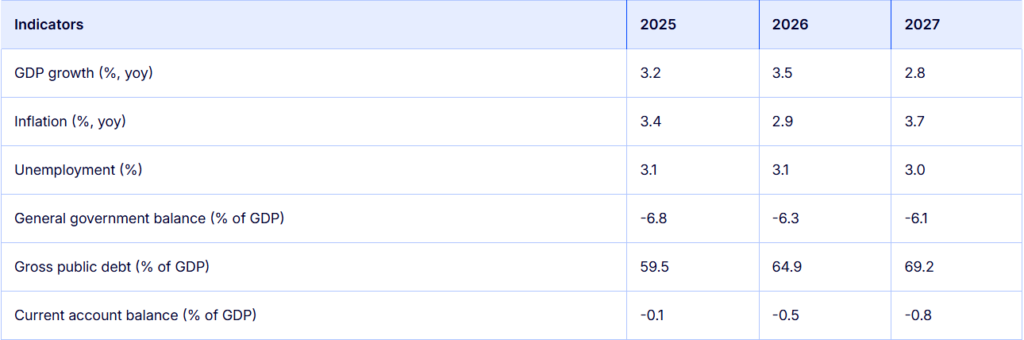
Source: European Commission
Poland boasts a robust and resilient economy characterized by consistent growth over the past two decades.
Key Economic Indicators:
- GDP Growth: Poland has maintained an average annual GDP growth rate of approximately 3-4% over the past five years.
- Inflation Rate: The country has experienced moderate inflation, fluctuating between 2-3% annually.
- Unemployment Rate: Unemployment has remained low, averaging around 4-5%, indicating a healthy labor market.
Crypto Adoption In Poland
Poland’s engagement with cryptocurrencies has been marked by growing public interest and cautious regulatory oversight. It is projected that in 2026, approximately 7.91 million Poles are expected to engage with cryptocurrencies, reflecting a user penetration rate of 19.53%. This indicates a significant portion of the population is exploring digital assets.
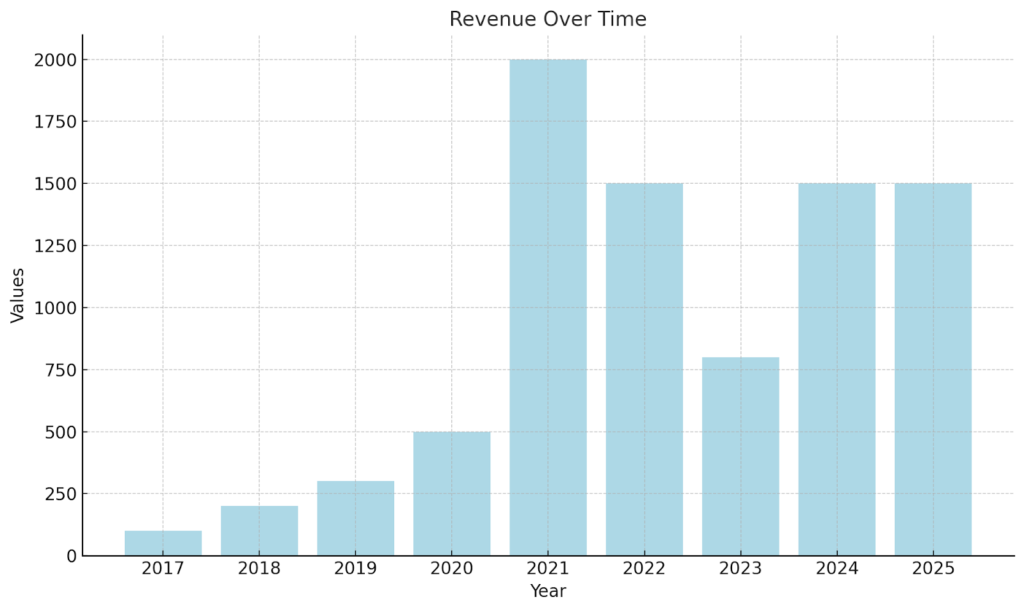
Source: Statista
The Polish populace is growing curious about cryptocurrencies, particularly among younger demographics and tech enthusiasts. However, concerns persist regarding the volatility of digital assets and the potential for fraudulent schemes, leading to a cautious approach among some segments of society.
The Polish government has maintained a cautious yet proactive stance on cryptocurrencies. The Polish Financial Supervision Authority (KNF) was empowered to oversee the crypto market, aligning with the European Union’s Markets in Crypto-Assets Regulation (MiCA). This move aims to enhance transparency and consumer protection within the sector.
Deterrents to Adoption
Several factors may hinder the widespread adoption of cryptocurrencies in Poland:
- Regulatory Ambiguity: Ongoing developments in the legal framework can create uncertainty for investors and businesses.
- Taxation Policies: The complexity of tax obligations related to crypto transactions may deter potential users.
- Security Concerns: Risks associated with cyber threats and scams can undermine confidence in digital assets.
Crypto Law in Poland
Poland’s approach to cryptocurrency regulation is evolving, aiming to balance innovation with consumer protection and financial stability.
Source: Freepik
Legal Classification
Cryptocurrencies are not recognized as legal tender in Poland. Instead, they are considered digital representations of value and are treated as property for tax purposes. This classification subjects crypto transactions to capital gains tax.
Regulatory Framework
The regulatory landscape in Poland is currently defined by the transition toward the EU’s Markets in Crypto-Assets (MiCA) regulation.
- MiCA Implementation: As of late 2025, the Polish Parliament has been working on the “Crypto-Assets Market Act” to formally designate the KNF as the primary regulator.
- Political Developments: The legislation has faced hurdles, including a veto by President Karol Nawrocki in December 2025 due to concerns over excessive KNF enforcement powers, such as the ability to block domains. However, a revived bill was recently passed by the Sejm and is moving through the Senate to meet the EU’s July 2026 full implementation deadline.
- Licensing (CASP): Under the proposed regime, Virtual Asset Service Providers (VASPs) must transition to the new Crypto-Asset Service Provider (CASP) framework. Existing entities have a “grandfathering” period to comply, currently extending to June 2026.
Also, Poland adheres to the EU’s Anti-Money Laundering (AML) directives, imposing stringent Know Your Customer (KYC) requirements on cryptocurrency service providers. In 2024, Poland updated its AML laws to include virtual currency service providers (VCSPs), mandating their registration with the Polish Register of Virtual Currency Activities.
Taxation Policies
Income derived from cryptocurrency transactions is taxable under Polish law. Individuals and businesses must report crypto-related income and gains, with tax rates varying based on the nature of the transaction and the taxpayer’s status.
Crypto Tax in Poland
Poland’s crypto tax regime is governed by the Personal Income Tax (PIT) and Corporate Income Tax (CIT) Acts.
- Tax Rate: Profits from cryptocurrency transactions for individuals are taxed at a flat rate of 19% as income from cash capital.
- Taxable Events: Tax is triggered when crypto is exchanged for fiat (e.g., PLN, USD), goods, services, or property rights.
- Tax-Neutral Transactions: Crypto-to-crypto exchanges are generally tax-neutral and do not generate taxable income until converted to fiat or used for purchases.
- Reporting: Taxpayers must report gains and deductible costs annually using the PIT-38 form between February 15 and April 30 of the following year.
- Corporate Tax: For corporate entities, crypto revenues are classified as capital gains and taxed at 19%, though smaller companies meeting specific conditions may qualify for a 15% or 9% rate.
Current State of Crypto Adoption in Poland
Currently, Cryptocurrency adoption in Poland has been upward, with increasing participation from retail investors and businesses. The current state of crypto adoption in poland is:
Retail Adoption
A significant portion of the Polish population has shown interest in cryptocurrencies. According to a 2025 survey, approximately 19.53% of Poles reported owning digital assets.
Bitcoin remains the dominant asset, owned by approximately 3.1% of the population (roughly 1.2 million people).
Business Integration
Several Polish businesses, particularly in tech and e-commerce, have begun accepting cryptocurrencies as payment. For example, Allegro, one of Poland’s largest online marketplaces, has integrated cryptocurrency payment options, allowing users to pay with Bitcoin for certain products. Additionally, local crypto exchanges like BitBay and Zonda facilitate trading for Polish users.
Institutional Interest
Financial institutions in Poland are exploring blockchain technology for applications such as cross-border payments and secure data management. However, widespread institutional adoption of cryptocurrencies remains in its nascent stages.
Factors Driving Crypto Adoption
Several factors contribute to the growing interest in cryptocurrencies within Poland:
Economic Diversification
Amidst economic uncertainty, many Poles are venturing into cryptocurrencies to help diversify their portfolios. As the financial landscape continues to evolve, individuals strive to minimize risk and enhance returns by diversifying across conventional and digital assets.
Technological Proficiency
Poland boasts a highly tech-savvy population and a robust IT sector, which creates an environment ripe for embracing digital innovations. Familiarity with blockchain technology and cryptocurrencies is widespread, particularly among younger demographics, further accelerating adoption.
Remittance Efficiency
For Poland’s sizeable expatriate community, cryptocurrencies provide a fast and cost-effective solution for international money transfers. Cryptocurrencies have become an attractive option for sending remittances to and from Poland by eliminating intermediaries and reducing transaction fees.
Inflation Hedge
With concerns over inflation and currency devaluation, some Poles view cryptocurrencies like Bitcoin as a viable hedge. These digital assets, which operate independently of traditional financial systems, are perceived as a safeguard against economic instability.
Cryptocurrency Usage in Various Sectors
Cryptocurrencies are making inroads into multiple sectors of the Polish economy:
Retail and E-Commerce
Cryptocurrencies are gaining traction in Poland’s retail and e-commerce sectors. For example, Pyszne.pl, Poland’s largest food delivery service, started accepting Bitcoin as a payment method for orders in 2022. This step was followed by other popular e-commerce platforms like Allegro, where certain merchants now offer crypto payment options, expanding payment flexibility for Polish consumers.
Finance and Banking
While direct cryptocurrency services are still limited due to regulatory concerns, banks in Poland are increasingly exploring blockchain technology for various applications. PKO Bank Polski, Poland’s largest bank, has launched a blockchain-based platform for secure, cross-border payments, showcasing the growing interest in blockchain for enhancing financial services.
Real Estate
The real estate market in Poland has seen a few transactions conducted with cryptocurrency, offering buyers and sellers an alternative payment method. For instance, Atal S.A., a major real estate developer, partnered with cryptocurrency payment services to allow the purchase of properties with Bitcoin and other cryptocurrencies, making it easier for crypto holders to invest in Polish real estate.
Education
Polish universities are incorporating blockchain and cryptocurrency courses into their curricula to prepare students for careers in the rapidly evolving field. Warsaw School of Economics (SGH), for example, offers specialized programs on blockchain technology, while private institutions like Blockchain Academy Poland are helping to upskill professionals interested in the crypto space..
Challenges Facing Crypto Adoption in Poland
Despite positive trends, several challenges impede the widespread adoption of cryptocurrencies in Poland:
Regulatory Uncertainty
The lack of clear and consistent cryptocurrency regulations creates ambiguity for businesses and investors. Evolving policies and potential government crackdowns discourage full engagement, stifling innovation and growth in the crypto space.
Taxation Complexity
Cryptocurrency transactions are subject to intricate tax laws, which can be difficult for users to navigate. This complexity often deters potential adopters, as the fear of missteps in reporting or compliance outweighs the perceived benefits.
Security Concerns
The risks of fraud, hacking, and scams in the cryptocurrency ecosystem remain significant barriers to adoption. These security issues undermine trust in digital assets, particularly among first-time and risk-averse users.
Limited Financial Services
Traditional financial institutions in Poland often exhibit caution toward crypto-related businesses, restricting banking services and other financial support. This lack of integration with the existing financial infrastructure limits the growth potential of the crypto market.
The Potential for Cryptocurrency in Poland
Poland’s strategic position within the EU and its robust tech sector position make it well-positioned to become a leader in cryptocurrency adoption.
Government Initiatives
Polish authorities are considering policies to foster innovation while ensuring consumer protection. For instance, presidential candidate Sławomir Mentzen has proposed establishing a Strategic Bitcoin Reserve and creating a crypto-friendly regulatory environment.
Startup Ecosystem
A vibrant startup scene drives blockchain innovation, with companies developing solutions ranging from decentralized finance (DeFi) platforms to blockchain-based supply chain management systems.
Educational Advancements
Universities and private institutions offer courses and certifications in blockchain technology, cultivating a skilled workforce to support the growing crypto industry.
Final Thought
Poland’s potential in the cryptocurrency sector is immense, driven by its economic resilience, tech-savvy population, and proactive regulatory developments. Overcoming challenges like regulatory ambiguity and security concerns could position Poland as a leading crypto hub in Europe.
Frequently Asked Questions
Is cryptocurrency legal in Poland?
Yes, cryptocurrency is legal in Poland, subject to regulatory oversight and taxation requirements.
What percentage of Poles own cryptocurrency?
Approximately 11% of the Polish population owns some form of cryptocurrency as of 2023.
How are cryptocurrencies taxed in Poland?
Cryptocurrency gains are subject to a 19% capital gains tax, with additional requirements for business-related crypto activities.
Which cryptocurrency is most popular in Poland?
Bitcoin remains the most popular cryptocurrency in Poland, holding approximately 56% of the market share.
Are there crypto ATMs in Poland?
Yes, Poland has an extensive network of crypto ATMs, with over 100 machines distributed across major cities.


