



The Current State of Equatorial Guinea’s Economy
Equatorial Guinea is an upper-middle-income country that recently marked a significant administrative milestone by relocating its capital to Ciudad de la Paz in January 2026. The nation spans 28,000 square kilometers across its mainland, Rio Muni, and several islands.
The economic profile of the country is heavily oil-dependent. Petroleum and natural gas currently account for the vast majority of exports and contribute more than four-fifths of the national GDP.
However, the economy is facing a contraction, with GDP growth forecasted at -1.2% between 2025 and 2027. This downturn is linked to a faster-than-expected decline in the hydrocarbon sector and fluctuating global oil prices.
Despite these fiscal pressures, there is a silver lining in the non-oil sectors. Poverty levels, which stood at 57.0% in 2024, are expected to drop to 55.8% by 2027. This marginal improvement is driven by growth in agriculture—specifically cocoa, coffee, and timber—and an expanding service sector.
The government is also increasingly utilizing Public-Private Partnerships (PPP) to attract foreign investment into transportation, renewable energy, and utilities to diversify away from oil.
The State of Crypto Adoption in Equatorial Guinea
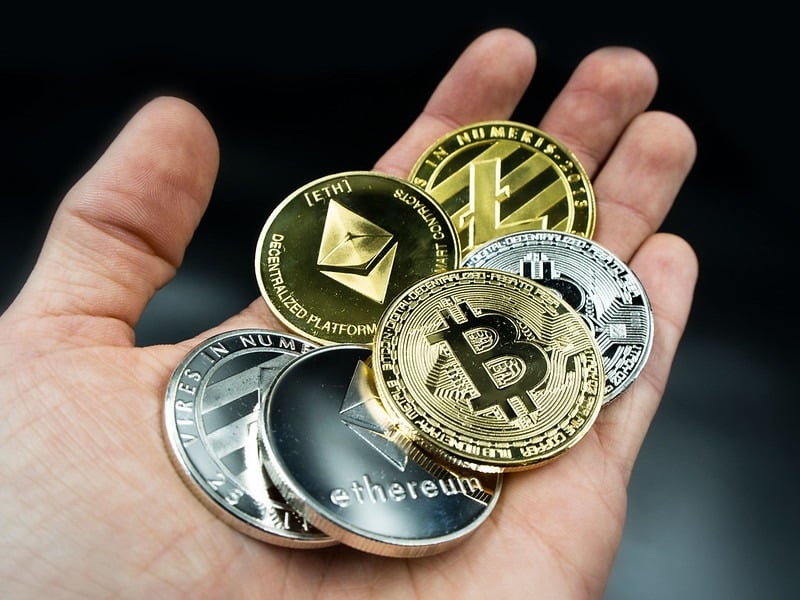
A significant driver for future adoption is the push for financial inclusion. The government has recognized the need to modernize financial services through digital banking and mobile money.
As more citizens gain access to mobile wallets, the transition to decentralized digital assets becomes a more realistic prospect. Currently, the “Equatoguinean crypto market” is mostly used as a tool for wealth preservation or to bypass high fees associated with traditional cross-border payments.
The government has also established a structured PPP law to encourage private sector involvement in infrastructure. While these partnerships currently focus on energy and transportation, they provide a blueprint for future digital infrastructure. If the government decides to digitize its economy further, these PPP frameworks could be used to build the data centers and connectivity hubs required for a robust blockchain ecosystem.
Crypto Laws in Equatorial Guinea

Currently, the cryptocurrency sector in Equatorial Guinea has no specific laws or regulations as the government doesn’t recognize it. Digital currency is not legal tender, but it is not illegal to engage in cryptocurrency-related activities in the region. There are no penalties or enforcement regarding digital currency from the government or central bank.
Equatoguineans can trade and store cryptocurrency. However, with no governmental regulation, there is no institutional protection against fraud and losses. But that might change soon as Equatorial Guinea plans to pivot towards a digital economy.
In a release, the World Bank recommends that digital transformation could play a critical role in diversifying Equatorial Guinea’s economy in the upcoming years. Thus, the need for the country to double down on its crypto adoption.
“Looking at the size of Equatorial Guinea’s economy, digital marketplace platforms can help firms to expand and access other markets, which could be especially important to stimulate the development of the private sector in the country,” said Aissatou Diallo, Resident Representative for Equatorial Guinea.
Taxation of Cryptocurrency in Equatorial Guinea
Cryptocurrency taxation in Equatorial Guinea is non-existent. Since the country doesn’t recognize the digital currency, it has not imposed tax regulations. Hence, players participating in cryptocurrency don’t have to worry about violating any tax laws, as there are none. However, we recommend you stay current as regulations are often updated regularly.
Factors Driving Crypto Adoption in Equatorial Guinea
Although crypto adoption is slow in Equatorial Guinea, it still happens. Here are the factors that are driving the adoption of cryptocurrency in the region:
Economic Uncertainties
The main currency in the region is the Central African Franc, which is subject to inflation and other forms of stability. While Equatorial Guinea’s current economic state is positive, African countries have a history of unstable economies. Cryptocurrency serves as a raft to stay afloat when inflation and economic instability hit.
Remittances
Several Equatoguineans rely on families working abroad to make ends meet. The current rate of remittance fees has made many consider a cheaper and faster alternative, like cryptocurrency, to send money across borders.
Government Regulation
There are no government regulations in Equatorial Guinea. The absence of restrictive laws has led to an open environment for storing and investing in cryptocurrencies in the country.
Investment Opportunities
Cryptocurrencies offer several investment opportunities, from DeFi to storing crypto to sell later. This has led to increased interest in cryptocurrencies as a way to make more money.
Challenges to Cryptocurrency Adoption in Equatorial Guinea
Cryptocurrency has so many perks, from financial inclusion to potential investments. So, what is preventing the widespread adoption of cryptocurrency in Equatorial Guinea? Here are the common challenges possibly in the way of a higher adoption rate in the nation:
Lack of Financial Literacy
One of the leading reasons the crypto adoption rate is under 5% in Equatorial Guinea is the lack of financial literacy. Few people know about cryptocurrency and its potential benefits. Moreover, people with limited education often regard investing as a “risky” venture.
Absence of Trust and Regulation
The Equatoguinean government does not regulate, which has made many citizens wary of it. Moreover, it is uncertain when the country will address the elephant in the room and state its stand on cryptocurrency. So, most citizens avoid it until they can be confident the government is ready to provide consumer protection.
Shift to a Digital Payment Method
Cryptocurrency is not a legal tender in Equatorial Guinea. The accepted currency in the region is the Central African Franc. Moreover, digital payment methods aren’t widely accepted as the economy runs on cash. Credit cards aren’t even accepted except in major hotels and airports. That said, the transition to digital payment often dissuades people from opting for cryptocurrency.
Potential Benefits of Crypto Adoption in Equatorial Guinea
Undoubtedly, Equatorial Guinea is trailing behind in terms of crypto adoption. Other Central African countries are adopting cryptocurrency at a fast rate, but why? Here are the potential benefits of adopting cryptocurrency:
Protects Against Inflation
Crypto tokens, such as Bitcoin, can protect against rising inflation rates because many tokens have a set amount that can be mined. For example, Bitcoin’s set amount is 21 million Bitcoins. Hence, the more money made, the higher the token’s value. So, the asset is a stable raft to stay afloat when the country’s inflation rate rises, which is common in Africa. Equatorial Guinea has been witnessing a rise in the inflation rate. Cryptocurrency can help its citizens retain their purchasing power.
Financial Inclusion
“Cryptocurrencies could provide a significant benefit by overcoming the lack of social trust and by increasing access to financial services (Nakamoto, 2008).”
Cryptocurrency has features that ensure financial inclusion. Setting up an account with cryptocurrency is easy, and you don’t have to undergo tiring bureaucratic processes before transferring money. Plus, it doesn’t need physical locations like banks. Everything is entirely digital to ensure ease of use. Equatoguineans don’t have to travel long distances to process massive transactions.
Faster Transaction Speed
One of the more impressive perks of cryptocurrency is its transaction speed. Cryptocurrency supports rapid transactions that would be envied in the traditional banking infrastructure. Using your mobile phone, you can process a transaction in seconds, regardless of its size.
Investment Potential
You can buy a crypto-asset and watch its value more than triple in a couple of months. Cryptocurrency offers exciting investment opportunities. In addition to buying and selling, investors can leverage DeFi to make money. The many investment opportunities are one of the reasons the country should adopt cryptocurrency. Equatoguineans can earn more by investing in cryptocurrency.
Lower Transaction Fees
Equatorial Guinea is a small country where citizens pay with cash for most things. Continual withdrawals from banks and ATMs often attract outrageous fees. As the country goes digital, opting for cryptocurrency would usher in an era of cheaper transactions. Moreover, the government can invest in its digital currency to tap the many potential benefits of the new movement.
Conclusion
Equatorial Guinea remains one of the few African nations that has yet to take a definitive stance on digital assets. For now, crypto adoption in Equatorial Guinea is a grassroots movement operating without government interference or support.
As the economy undergoes a difficult transition with negative GDP growth and the relocation of the capital, the need for innovative financial tools may eventually force a regulatory update. Until then, the market remains a gray area with significant untapped potential.
Frequently Asked Questions
Why Has Equatorial Guinea Not Adopted Cryptocurrency Yet?
Only a few Equatorial Guineans trade and store crypto. More people don’t because the government and Central Bank refuse to address it.
Can I Buy Crypto Tokens in Equatorial Guinea?
Yes. While the country doesn’t legalize crypto-related activities, it also doesn’t ban it. You can visit platforms like UEEx to buy and trade cryptocurrency with zero restrictions.
How Much Do Equatorial Guineans Have to Pay in Crypto Tax?
Nothing. As of this writing, there are no crypto taxes. So, traders in the region can participate in crypto-related activities without paying a cut to the government.
Disclaimer: The views expressed in this article are not intended as financial advice and should not be taken as one. We take no responsibility for any financial decision made due to this article.


