

If you want to spend crypto in the Philippines, you are in one of the most crypto-friendly countries in Southeast Asia. The Philippines ranked 8th in the 2024 Chainalysis Global Crypto Adoption Index, driven by a large unbanked population seeking financial inclusion, a tech-savvy younger generation, and a massive demand for cheaper remittance options. With over 2 million Filipinos working overseas and the country receiving around $33.5 billion in cash remittances in 2023, cryptocurrency has found a natural and practical home here. This guide covers the businesses where you can spend crypto in the Philippines right now, practical tips for doing it smoothly, and what the legal landscape looks like.
Key Takeaways
- Cryptocurrencies are legal and regulated in the Philippines, and this comes with tax implications.
- Manila, Cebu, Davao, and Siargao are the leading cities for crypto adoption and spending in the Philippines.
- This is because they are tourist-attractive and tech-savvy hotspots.
- Restaurants, bars, retail outlets, and pawnshops lead businesses that accept cryptocurrencies.
Where to Spend Crypto in the Philippines
Cryptocurrency adoption in the Philippines is accelerating, with payment processors like Pouch.ph enabling over 400 small businesses to accept Bitcoin via the Lightning Network—a layer-2 solution that ensures fast, low-cost transactions. For merchants, the process is seamless: customers scan a QR code to pay in Bitcoin, which is instantly converted to pesos and deposited into their bank or mobile wallet.
This not only expands financial inclusion but also gives early-adopting businesses an edge in attracting tech-savvy consumers. Below, we explore the growing list of Philippine merchants embracing crypto payments.
1. Wingman Restaurant
Crypto accepted: BTC
Think Wingman, think American!
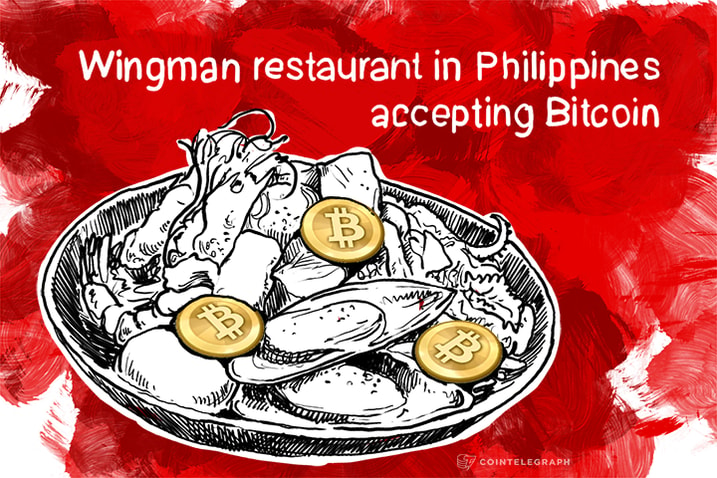
Wingman Restaurant is one of the most famous restaurants in the Philippines offering American-style services with a speciality in chicken wings. It has branches in Manila and the Acacia Estates.
Source: CoinTelegraph
The first of its branches in the Philippines was founded in 2009, and since then, it has built quite a reputation. Over a decade ago, in 2014, the Acacia Estates branches of this restaurant were the first to recognize digital currency by accepting Bitcoin as payment.
Some people even say that Wingman restaurant is the first restaurant to accept crypto in Manila. This does not come as a surprise as it is a renowned location for local Bitcoin Meetups.
After the announcement of Wingman restaurant accepting crypto, Lasse Birk Olesen, the CEO at Bitcoin Nordic, posted his opinion on Wingman’s Facebook page:
“It’s been amazing and inspiring to see this community grow since we had our first meeting of about 10 people less than a year ago! It strengthens my belief that Filipinos might become one of the first nationalities to embrace P2P currency in daily life.”
- Lasse Birk Olesen
2. Kasbar Boracay
Crypto accepted: BTC
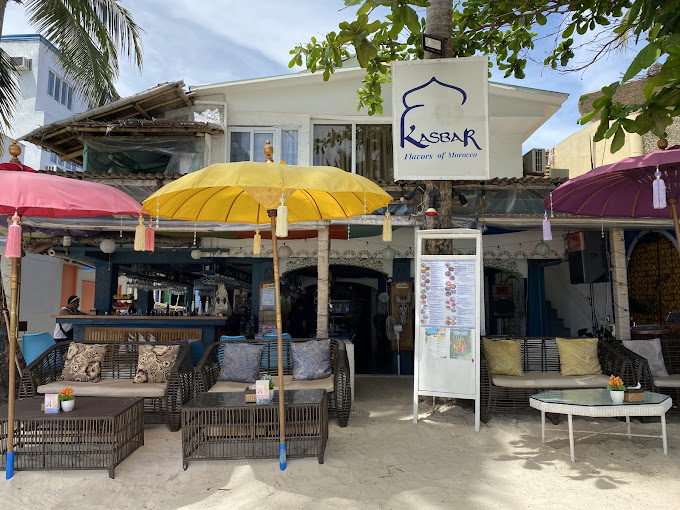
Imagine a bar on a beachfront. Well, that’s exactly the best way to describe Kasbar Boracay.
Source: Images by Kent K
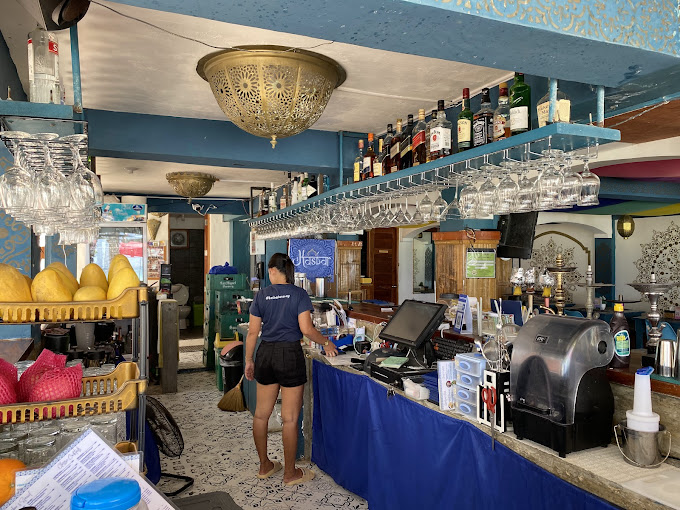
Kasbar is a restaurant and bar that serves delicious cuisines, especially Moroccan. It’s an ideal spot to hold an event where you can eat and chill by the beachside, plus they accept crypto.
Erielyn Gaston, owner of Kasbar, noted that accepting Bitcoin as payment allowed her to attract a wider customer base and increase sales.
Source: Images by Kent K
During a panel discussion at the Bitcoin Island conference, she said this about the flexibility of making crypto payments and the payment processor, Pouch.ph:
“[Pouch.ph] has been very helpful as another mode of payment other than credit cards and e-wallets which is the usual mode of payment here [in Boracay].”
- Erielyn Gaston
3. URBN QC
Crypto accepted: BTC
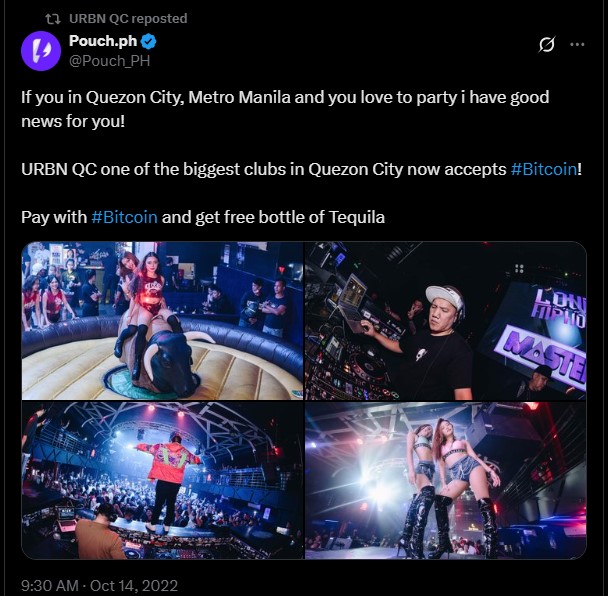
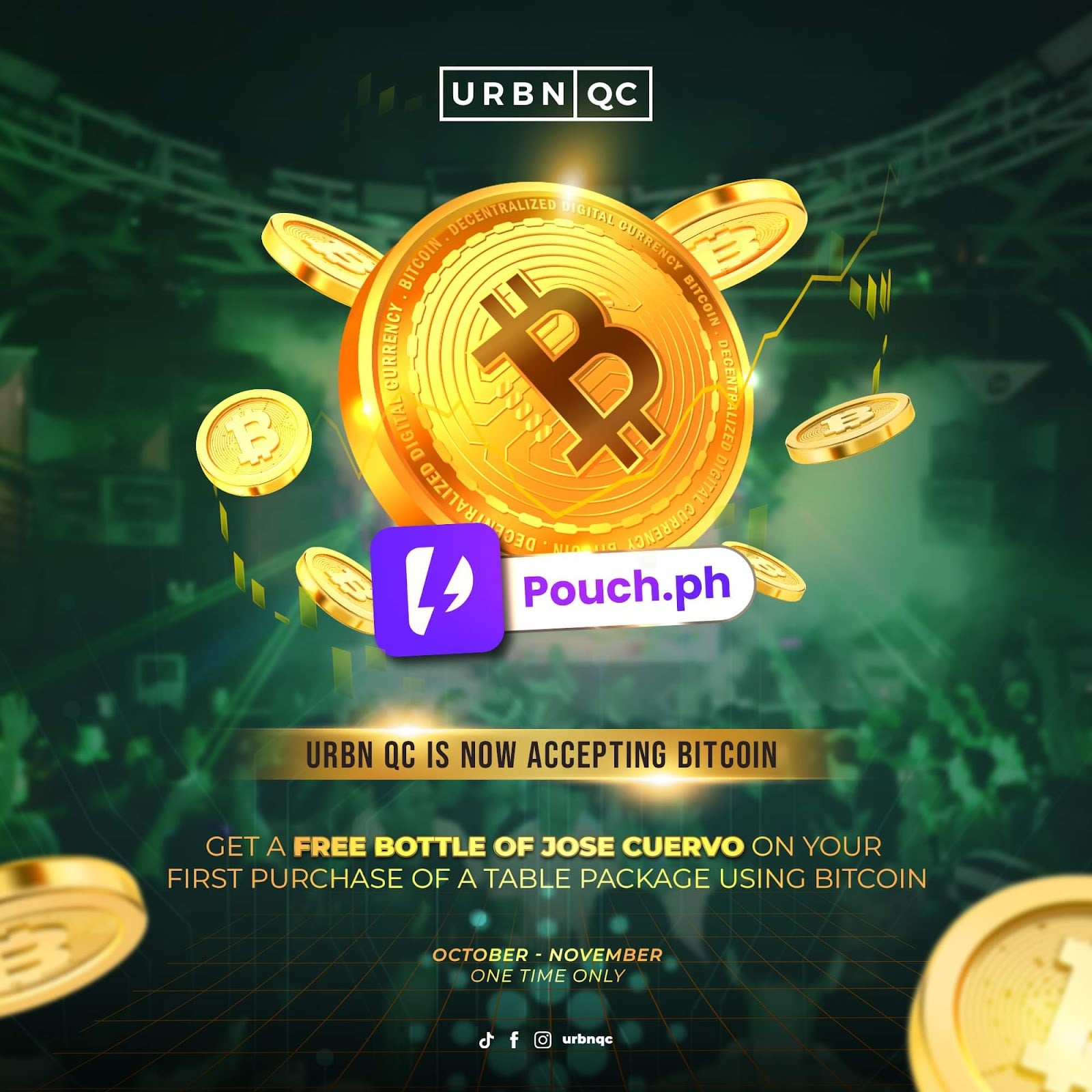
In the Philippines, you can get to spend crypto at night bars. The URBN QC in Quezon City is an honourable mention, not just because of the great food and music but because it accepts various digital forms of payment, including cryptocurrency.

Source: x.com
In 2022, QRBN QC started accepting cryptocurrencies. To confirm this, take a look at this announcement by Pouch.ph on X, which was also reposted by QRBN QC’s official handle:
Source: X.com
The announcement was also followed with this nice graphic:
Source: X.com
4. Draper Startup House
Crypto accepted: BTC
When you think of the Draper Startup House, this comes to mind:

Source: Bitpinas.com
And then this…
Source: Facebook.com
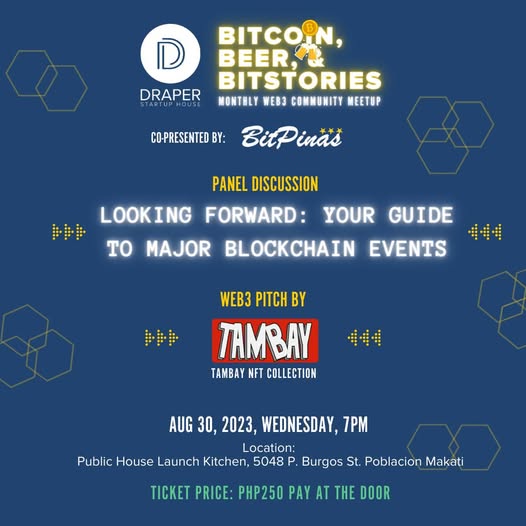
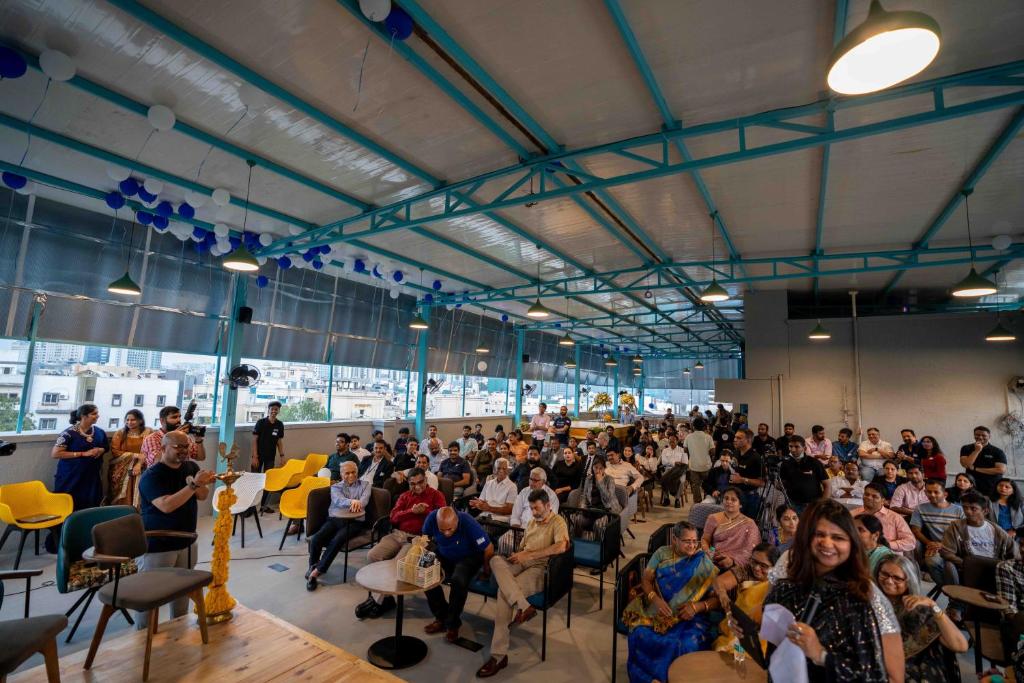
Now you have the hang of it. The Draper Startup House is a unique entrepreneur-focused accommodation or better still, a coworking space that holds lots of tech events, opportunities and startup programmes.
Before you ask, yes! This includes crypto events. As clearly shown in the first image above, the Draper Startup House hosted the 2022 Bitcoin Pizza Day in Manilla.
Source: Booking.com
If you’re seeking a space tailored for entrepreneurs—complete with resources, a collaborative atmosphere, and proximity to Makati’s vibrant business and nightlife hubs—then Draper Startup House is your ideal destination. Plus, you’ll be surrounded by like-minded innovators in the crypto and startup ecosystem.
Related: Best Places to Spend Crypto in Switzerland
5. KosneyLand
Crypto accepted: BTC
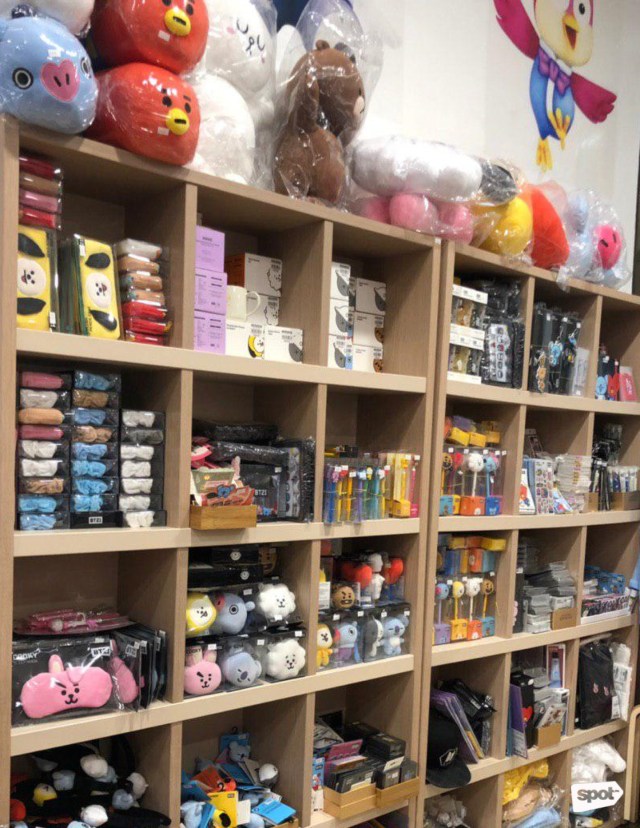
Immediately I saw KosneyLand, I was of the opinion that the ‘K’ in KosneyLand stands for Korea or Kids. You would not believe how satisfying I felt to be right when I saw these words on their Facebook page’s description: “KosneyLand rings all kind of Korean stuff here in the Philippines”.

Source: Spot.ph
KosneyLand is a niche retailer situated at Shangri-La Plaza Mall, Mandaluyong City. At this store, you can get Kids’ stuff, clothes, bags, etc. and the good part, you can pay with Bitcoin.
KosneyLand is one of the businesses using Pouch.ph’s protocol to handle, process, and accept Bitcoin payments.
Source: Spot.ph
6. Moneybees OTC Outlets
Crypto accepted: Bitcoin (BTC), Ethereum (ETH), USD Tether (USDT), Smooth Love Potion (SLP), etc.
Still finding it difficult to spend crypto in certain businesses in the Philippines, the Moneybees Over-the-Counter (OTC) outlets present another medium to do so. At these outlets, you can simply spend your crypto or convert it to pesos.

Source: Bitpinas.com
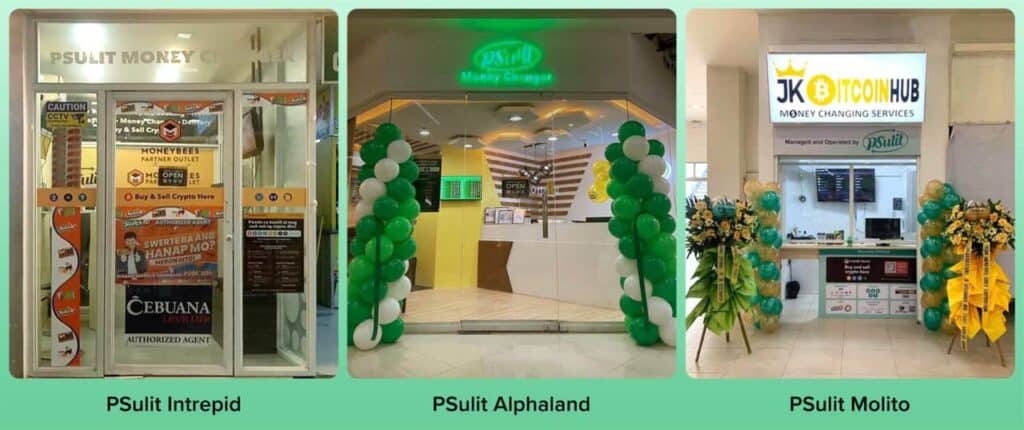
Moneybees OTC outlets give users a spot where they can spend crypto directly or cash out to shop at nearby partnered businesses. These are often found in malls or urban centers.
Through partnerships with companies like PSulit, JK Bitcoin Hub, and the like, not forgetting Moneybees’ good reputation, they have been able to open multiple outlets around the country.
Source: Bitpinas.com
The Chairman and CEO of Moneybees, Jay Ricky Villarante, in a statement once emphasized that their partnership with JK BitcoinHub will contribute to the enhancement of accessibility to cryptocurrency markets.
In his words:
“Working with PSulit Money Changer, one of the most trusted money exchange companies in the Philippines, demonstrates our dedication to providing greater accessibility and convenience to our consumers while embracing the developing world of digital assets and financial technologies.”
7. Tambunting
Crypto accepted: Bitcoin (BTC), Ethereum (ETH), USD Tether (USDT), USD Coin (USDC), Ripple (XRP), etc.
Do you want to spend crypto in a pawnshop while in the Philippines? Head over to Tambunting.
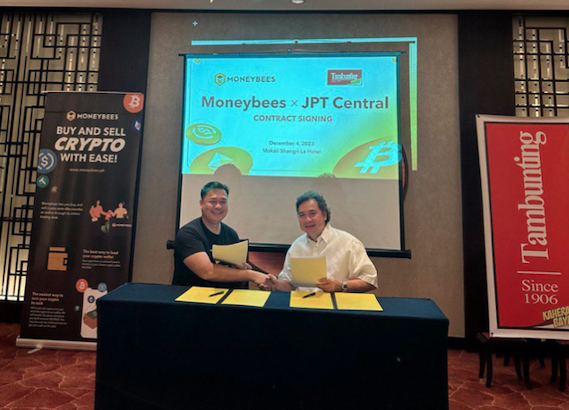
Founded in 1906, Tambunting is the oldest pawnshop in the Philippines. In 2024, it partnered with Moneybees to offer its customers a crypto payment option.
Source: technode.global
This collaboration covers a network of pawnshop brands under Tambunting Kahera ng Bayan, including JPT Central in Forbes Park, Aurotam Pawn Shops, Prime Phil-Asia Star Pawnshops, Prime Quality Supreme Nation Pawnshops, Prime Sealand Pawnshops, and Reliance Prime Equity Pawnshops, a statement issued by Moneybees says.
According to the statement, the partnership’s primary objective is to expand market reach, target new customer segments, and promote financial inclusion for underserved communities nationwide.
The statement further highlighted that:
“Through our partnership, we aim to democratize access to financial services, particularly for those living in rural or remote areas, thereby contributing to the advancement of the financial inclusion goals set by the Bangko Sentral ng Pilipinas.”
- Jay Ricky Villarante, Chairman and Chief Executive Officer of Moneybees.
Now, let’s take a summary glance at all the businesses and their locations mentioned above:
| S/N | Business | Type | Location |
| Wingman Restaurant | Restaurant | Acacia Estates | |
| 2. | Kasbar Boracay | Bar | Boracay |
| 3. | URBN QC | Night Bar | Quezon City |
| 4. | Draper Startup House | Startup | Makati City |
| 5. | KosneyLand | Retail | Mandaluyong City |
| 6. | Moneybees OTC Outlets | Currencies Exchange | Various branches |
| 7. | Tambunting | Pawnshop | Various branches |
Is Crypto Legal in the Philippines?
Yes, cryptocurrency is legal in the Philippines and is actively regulated. The Bangko Sentral ng Pilipinas (BSP), the country’s central bank, recognises cryptocurrencies as legitimate tools for payment and financial transactions. Its regulatory framework started with Circular No. 944 in 2017, which established guidelines for Virtual Currency Exchanges (VCEs). As of 2024, the BSP has licensed 14 Virtual Asset Service Providers (VASPs) to operate in the country, including the Philippine Digital Asset Exchange (PDAX).
The Securities and Exchange Commission (SEC) also plays a regulatory role, particularly around tokenised securities and Initial Coin Offerings (ICOs). Companies conducting ICOs in the Philippines are required to register with the SEC and meet its disclosure requirements.
On the tax side, the Bureau of Internal Revenue (BIR) treats cryptocurrencies as taxable assets. Depending on the nature of your activity, gains may fall under capital gains tax or business income tax. Casual spending is generally not a taxable event in itself, but selling or converting crypto to pesos may be. It is worth consulting a local tax professional if you are a resident making regular crypto transactions.
The bottom line: spending crypto in the Philippines is legal, but it sits within a regulatory framework that requires the platforms and businesses you use to be properly licensed. Always use BSP-regulated platforms and verified merchants.
Tips for Spending Crypto in the Philippines
Spending crypto in the Philippines can be straightforward and rewarding if you keep a few practical tips in mind. Here are brief need-to-knows before you begin your crypto adventure in the Philippines.
Check Accepted Coins
From the business above, it is obvious that Bitcoin (BTC) and Ethereum (ETH) are widely supported, but some merchants also accept stablecoins like USDT or even altcoins. Confirm with the vendor beforehand to avoid surprises.
Be Mindful of Fees
Crypto transactions can incur network fees, and some platforms charge conversion costs if you’re switching to pesos. Compare fees on exchanges or wallets to keep expenses low.
Ask About Direct Crypto Payments
While many merchants accept crypto via intermediaries (like Pouch.ph), some may prefer direct wallet-to-wallet transfers. Clarify their process to streamline your purchase.
Stay Updated on Volatility
We can’t emphasize the volatile nature of crypto enough. Prices can change fast. Check real-time rates before spending to ensure you’re getting fair value, especially for bigger purchases like hotel bookings or tours.
Look for Crypto-Friendly Hubs
Focus on urban areas (Manila, Cebu) or tourist spots (Siargao) where acceptance is higher. Online directories from Coins.ph or Moneybees can help you locate nearby merchants.
Verify Internet Access
Crypto transactions require a stable internet connection, so ensure your phone has data or Wi-Fi, especially in remote areas like islands or rural spots.
Related: Crypto payment Gateway
Challenges of Spending Crypto in the Philippines
While I have shown you tips earlier for stress-free transactions, you may still encounter some problems when spending cryptocurrency in the Philippines, despite the country’s strong adoption. Here are some potential challenges that you might face:
Limited Merchant Acceptance
Remember the article that talked about over 400 businesses accepting crypto already in the Philippines? This is still a small fraction of the total market. Many shops, especially in rural areas or smaller towns, stick to cash or traditional digital payments, leaving crypto users with fewer options.
Price Volatility
The volatile nature of crypto can dramatically make a Bitcoin payment for a meal might cost more (or less) in peso terms by the time the transaction clears, creating uncertainty for both buyers and sellers.
Transaction Fees
Network fees for sending crypto, especially on busy blockchains like Bitcoin or Ethereum, can be high during peak times. This makes small purchases like a cup of coffee less practical compared to free or low-cost alternatives like cash.
Related: Best Places To Spend Crypto In Poland
Regulatory Restrictions
The Bangko Sentral ng Pilipinas (BSP) enforces strict rules on unregistered platforms. If your preferred exchange or wallet is not BSP-licensed, spending options could be limited or riskier.
Conversion Hassles
You will still see that many merchants do not accept crypto directly and require conversion to pesos via platforms like Moneybees OTC outlets. This extra step can add time, fees, and complexity to transactions.
Internet Dependency
No internet, no crypto payment! This can be really embarrassing especially if you have a busy schedule. In remote areas or during outages, which is common in some Philippine regions, transactions can fail or delay, frustrating users.
Scams and Fraud Risks
The entire blockchain itself can be quite technical, creating an environment where scammers can thrive by frauding novices and sometimes even regular users. Without careful vetting, users risk losing funds to phishing or unverified vendors.
These challenges highlight the trade-offs of spending crypto in a country balancing innovation with practical realities. While urban hubs and tech-savvy spots are more accommodating, broader adoption still faces hurdles tied to infrastructure, regulation, and awareness.
Conclusion
From a kids’ store in Mandaluyong City to a night bar in Quezon City, cryptocurrencies have infiltrated numerous niches in the Philippines giving users the spending power to make purchases and do business as they deem fit.
However, challenges such as limited acceptance by merchants due to scam concerns, transaction costs, price volatility, and internet downtimes could be limiting but not dismissive. Outlets like the Moneybees provide alternatives for converting crypto to pesos, giving users more bargaining power.
In conclusion, crypto spending options are growing, but still limited to specific merchants and use cases.
FAQs
1. Where can I spend crypto in the Philippines?
You can spend crypto at bars restaurants, and retail shops in cities like Manila, Cebu, and Davao, as well as tourist spots like Siargao. Businesses in such locations make use of payment processors like Pouch.ph and Bitmarket.ph to service payments.
2. What cryptocurrencies are most accepted?
Bitcoin (BTC) and Ethereum (ETH) are the most widely accepted, followed by stablecoins like USDT. Some merchants also take altcoins, but it varies. Always ask the vendor first.
3. Are there fees when spending crypto?
Yes, you might face blockchain network fees (e.g., for Bitcoin or Ethereum) or conversion fees if switching to pesos. Fees depend on the platform and coin. Be prepared, small transactions can get pricey.
4. Is it safe to spend crypto at these places?
It’s safe if you use BSP-regulated platforms and verified merchants. Avoid sharing private keys or dealing with unregistered vendors to steer clear of scams. Be security cautious.
5. Which digital wallets support crypto payments for online shopping in the Philippines?
Coins.ph and Maya are the most practical options for everyday online spending, as both integrate with local payment infrastructure. Binance Philippines supports crypto-to-peso conversion that can then be used through linked accounts. For direct Bitcoin Lightning payments at merchant checkouts, Pouch.ph powers transactions at hundreds of participating businesses across the country.
6. Are there any debit cards that let me spend crypto directly in the Philippines?
Yes. Crypto debit cards like UPay, Binance Card, and Wirex convert your crypto to the local currency at the point of sale, so you can spend at any Visa or Mastercard-accepting merchant without needing to find businesses that accept crypto natively. UPay is accepted at over 55 million merchants globally and works with Apple Pay and Google Pay.