
Struggling with high electricity bills, noisy rigs, and inconsistent uptime at home? You’re not alone. As mining becomes more competitive and energy-intensive, home setups are no longer the most efficient choice.
That’s why more miners are turning to the best crypto mining hosting services giving their hardware a cooler, cheaper, and more secure home.
In this article, we’ll examine the top hosting options, what to look for in a provider, the best global locations, and how to choose a setup that maximizes your mining potential in 2026 and beyond.
Key Takeaways
- Crypto mining hosting lets you run mining hardware in professional data centers with better power, cooling, and uptime.
- There are different types of hosting services, including shared, dedicated, colocation, cloud, and immersion cooling.
- Choosing the right host depends on your goals, budget, hardware, and location preferences.
- Key features to compare include electricity costs, cooling systems, security, uptime, and support.
- Countries like the U.S., Canada, Norway, and Paraguay are top spots due to stable power and regulations.
What is Crypto Mining Hosting?
Crypto mining hosting is a service that allows individuals or companies to run their mining hardware in a third-party facility.
Instead of setting up miners at home or in an office, users send their mining equipment to a data center that provides electricity, cooling, internet connectivity, physical security, and technical support.
These facilities are built to handle the high energy demands and heat output of mining rigs, ensuring stable and efficient operation. Hosting is especially important in crypto mining because it reduces the overhead and technical burden on the miner.
You can avoid issues like power outages, overheating, or local regulatory restrictions by using a professional setup. This kind of service is ideal for anyone who owns mining machines but lacks the space, infrastructure, or time to manage them.
Hobbyists, small businesses, and large-scale investors all use mining hosting to improve performance and reduce operational risks.
For example, a solo miner in a city with high electricity costs might send their equipment to a hosting facility in Texas or Iceland, where electricity is cheaper and cooling is easier due to the climate.
Key Features to Look for in a Crypto Mining Hosting Provider
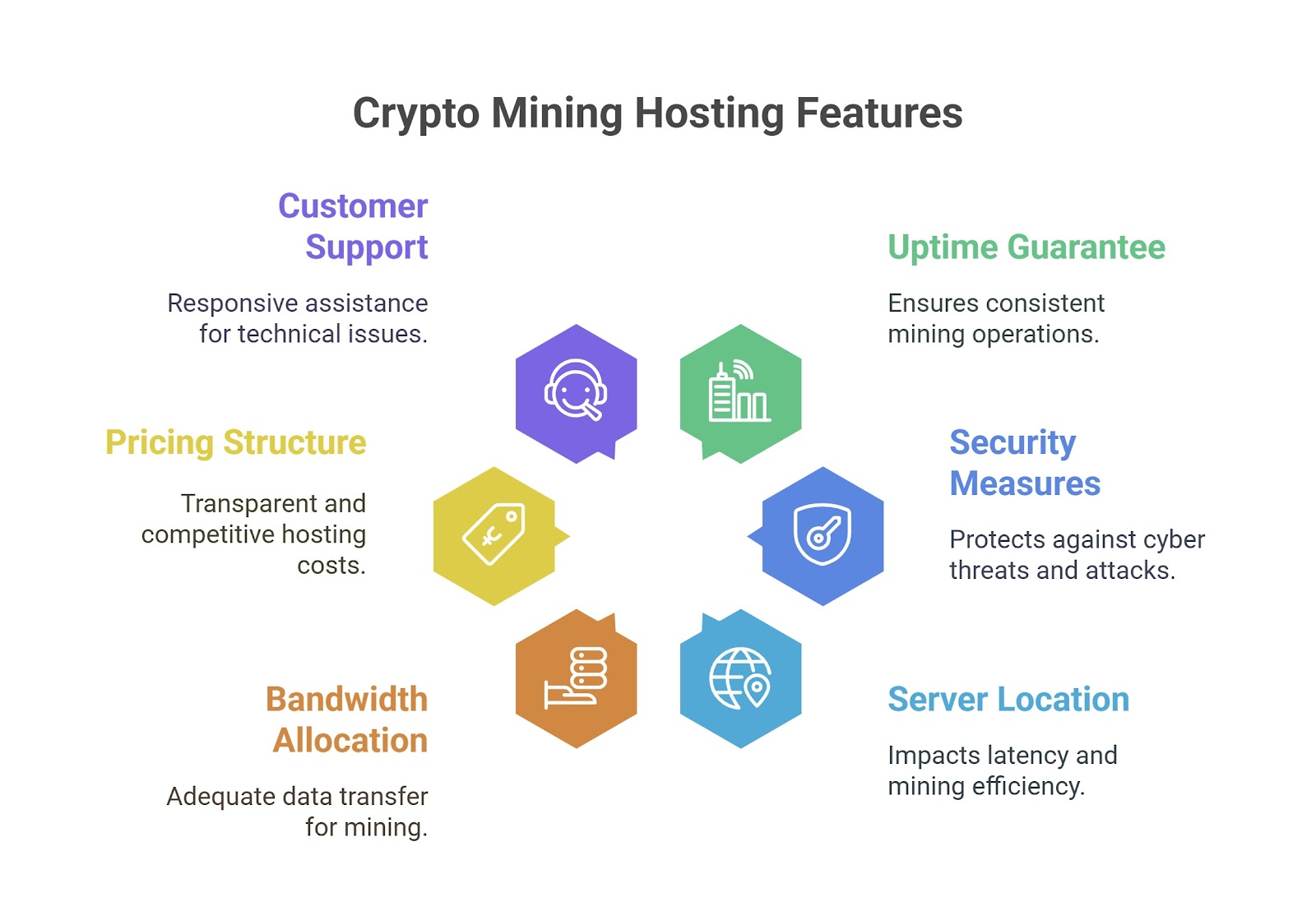
Not all crypto mining hosts are created equal here are the important features to consider before choosing one.
1. Electricity Costs and Power Availability
Electricity is one of the most significant expenses in crypto mining. Hosting providers that offer competitive electricity rates can help reduce operational costs.
Some facilities leverage renewable energy sources, such as hydroelectric or solar power, to provide more sustainable and cost-effective solutions.
It’s essential to consider the availability and reliability of power at the hosting facility. Providers with redundant power systems and backup generators ensure continuous operation, minimizing downtime and potential revenue loss.
For instance, EZ Blockchain offers hosting facilities powered by nuclear energy, providing a stable and emission-free power supply for mining operations.
2. Cooling Infrastructure and Environmental Controls
Mining equipment generates substantial heat, necessitating effective cooling systems to maintain optimal performance.
Hosting providers should have advanced cooling infrastructure, such as temperature-controlled environments and efficient airflow systems, to prevent overheating.
Proper environmental controls not only enhance equipment longevity but also improve energy efficiency.
Facilities that operate in cooler climates or utilize immersion cooling technologies can offer additional benefits in terms of reduced cooling costs and improved hardware performance.
For example, EZ Blockchain’s mobile data centers are equipped with sensors to maintain consistent temperatures, ensuring the mining hardware operates within optimal conditions.
3. Network Uptime and Internet Speed
Reliable network connectivity is important for uninterrupted mining operations. Hosting providers should offer high-speed internet connections with minimal latency to ensure efficient data transmission and communication with mining pools.
Providers that guarantee high network uptime, typically 99.9% or above, help minimize downtime and maintain consistent mining performance.
Redundant internet connections and backup systems further enhance reliability, ensuring continuous operation even during network disruptions.
For instance, EZ Blockchain provides redundant high-speed fiber optic and cable internet connections, ensuring consistent hashing power and minimizing potential losses due to connectivity issues.
4. Security Measures (Physical and Cybersecurity)
Protecting valuable mining equipment and data is paramount. Hosting providers should implement robust physical security measures, including 24/7 surveillance, access controls, and on-site security personnel, to prevent unauthorized access and theft.
Cybersecurity is equally important. Providers should employ firewalls, intrusion detection systems, and regular security audits to safeguard against cyber threats and ensure the integrity of mining operations.
For example, EZ Blockchain’s facilities feature comprehensive security measures, including recorded video surveillance, motion sensors, and robust network security protocols, prioritizing the safety and security of hosted hardware.
5. Scalability and Flexibility
As mining operations grow, the ability to scale resources becomes essential. Hosting providers should offer scalable solutions that allow miners to expand their operations without significant logistical challenges.
Flexible hosting options, such as customizable configurations and adaptable contracts, enable miners to adjust their operations based on market conditions and technological advancements.
For instance, EZ Blockchain’s high-capacity mobile data centers provide turn-key solutions that can be strategically placed close to power supplies, facilitating seamless expansion of mining operations.
6. Transparency and Monitoring Tools
Transparency in operations and access to real-time monitoring tools are important for managing mining activities effectively. Hosting providers should offer dashboards that display key metrics, such as hash rates, energy consumption, and hardware performance, enabling miners to make informed decisions.
Regular updates and clear communication from the hosting provider help build trust and ensure that miners are aware of any issues or changes affecting their operations.
For instance, EZ Blockchain provides secure remote access to hosted hardware, allowing clients to monitor all necessary data and maintain oversight of their mining operations.
Types of Crypto Mining Hosting
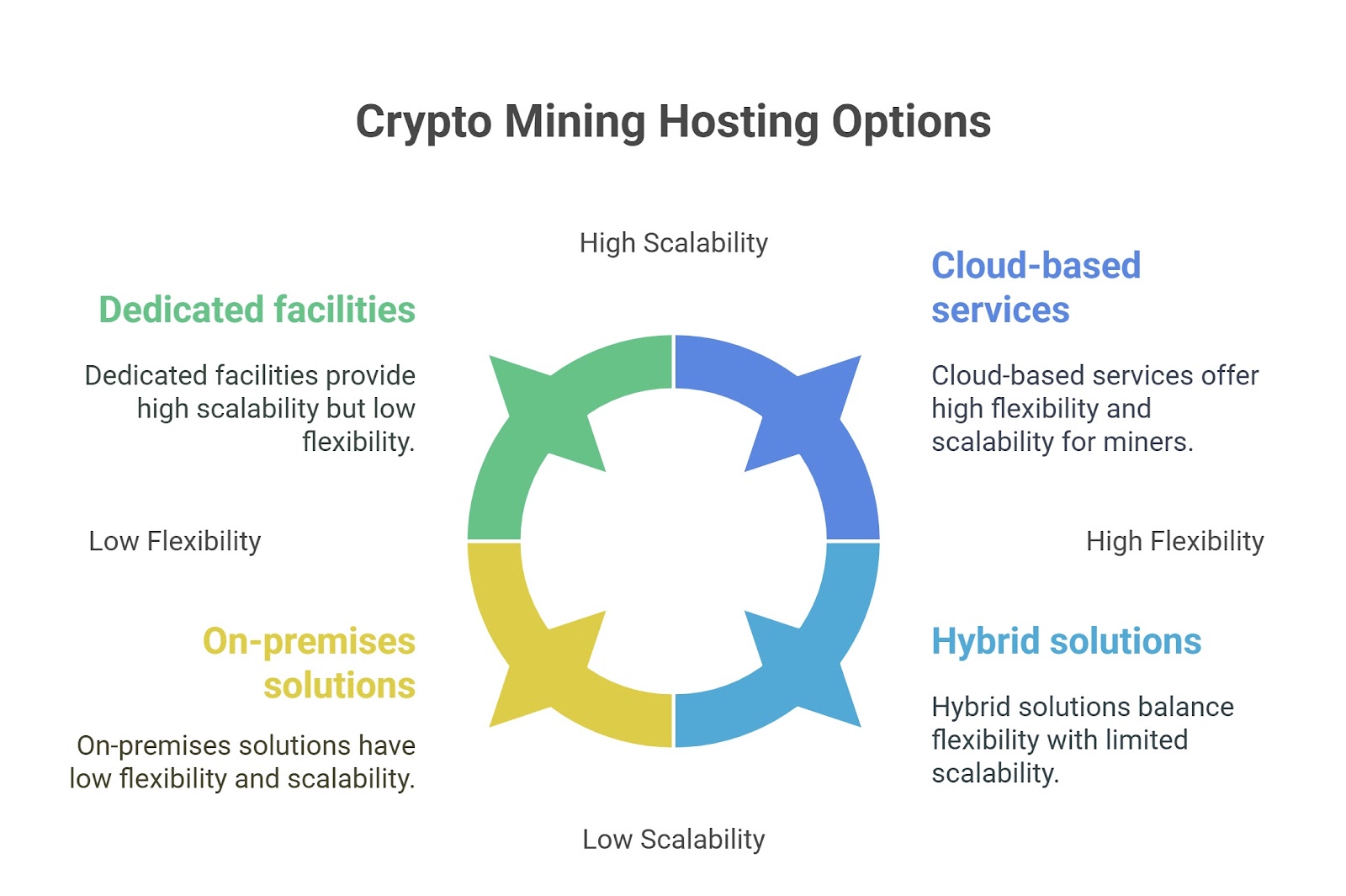
Crypto mining hosting comes in several forms, each offering different levels of control, cost, and support.
1. Shared Hosting
Shared hosting allows multiple miners to use the same facility and infrastructure. Each user rents a portion of the available space, power, and cooling systems.
This setup is similar to shared web hosting, where resources are distributed among various users.
This option is cost-effective, making it suitable for beginners or small-scale miners. However, since resources are shared, performance can vary based on the activity of other users. Also, users have limited control over the environment and configurations.
For example, a miner using shared hosting might experience fluctuations in hash rates if other users increase their usage.
It’s important to choose a reputable provider that ensures fair resource allocation and maintains optimal operating conditions.
2. Dedicated Hosting
Dedicated hosting provides miners with exclusive access to specific resources within a facility.
This means the allocated power, cooling, and space are reserved solely for one user’s equipment. It’s akin to having a private room in a shared building.
This setup offers more stability and predictability in performance. Miners have greater control over their environment, allowing for custom configurations and optimizations. However, dedicated hosting typically comes at a higher cost compared to shared options.
For instance, a miner with specific hardware requirements might opt for dedicated hosting to ensure their equipment operates under ideal conditions without interference from other users.
3. Colocation Hosting
Colocation hosting involves miners placing their own hardware in a third-party data center. The facility provides essential services like power, cooling, physical security, and internet connectivity, while the miner retains ownership and control of the equipment.
This option is suitable for miners who have invested in their hardware but lack the infrastructure to support it.
Colocation offers benefits like enhanced security, reliable power supply, and efficient cooling systems. However, miners are responsible for maintaining and managing their equipment.
For example, a miner operating from a location with unstable power might choose colocation hosting in a region with a more reliable energy grid to ensure continuous operation.
4. Cloud Mining Hosting
Cloud mining allows users to rent mining power from a provider without owning or managing physical hardware. Users purchase a contract for a specific amount of hash power, and the provider handles all operational aspects, including equipment maintenance and electricity costs.
This model offers a hands-off approach to mining, making it accessible for individuals who lack technical expertise or capital to invest in hardware. However, profitability can be lower due to fees, and there’s a risk of scams in the industry.
For instance, a user might purchase a one-year cloud mining contract to participate in Bitcoin mining without dealing with the complexities of hardware setup and maintenance.
5. Immersion Cooling Hosting
Immersion cooling hosting involves submerging mining hardware in a non-conductive liquid to dissipate heat efficiently.
This method enhances performance, reduces noise, and extends the lifespan of equipment. It’s particularly beneficial for high-density mining operations.
While the initial setup cost is higher due to specialized equipment and fluids, the long-term benefits include lower energy consumption and reduced maintenance needs. Immersion cooling also allows for overclocking hardware without the risk of overheating.
For example, a large-scale mining farm might implement immersion cooling to maximize efficiency and minimize downtime, leading to increased profitability over time.
Top Countries for Crypto Mining Hosting in 2025
If you’re planning to host mining hardware, here are the top countries offering the most favorable conditions in 2025.
1. United States
The United States remains a leading destination for crypto mining, contributing approximately 38% of the global Bitcoin hashrate. States like Texas, Georgia, and New York offer competitive electricity rates, ranging between $0.03 to $0.06 per kWh, making them attractive for mining operations.
Hosting providers such as EZ Blockchain and Compass Mining operate facilities across multiple states, offering services that include immersion cooling and real-time analytics.
However, the rapid expansion of mining activities has raised concerns in some communities due to noise and increased energy consumption.
2. Canada
Canada is a prominent destination for cryptocurrency mining, thanks to its vast energy resources and supportive legal framework. Provinces like Quebec and British Columbia offer some of the lowest electricity rates in North America, ranging from $0.05 to $0.08 per kWh.
The country’s cooler climate reduces the need for artificial cooling, lowering operational costs. Additionally, Canada’s balanced regulatory approach allows mining activities to flourish while enforcing necessary compliance measures.
3. Iceland
Iceland offers favorable conditions for crypto mining, using affordable hydroelectric and geothermal energy sources. The country’s cool climate further enhances energy efficiency, reducing the need for extensive cooling systems.
With a tech-savvy population and crypto-friendly regulations, Iceland has become a pioneer in green mining. Notably, 8% of all bitcoins have been mined in Iceland, highlighting its significant role in the industry.
4. Norway
Norway provides eco-friendly and cost-effective Bitcoin mining hosting solutions, leveraging abundant hydroelectric power. Hosting providers like Kontena offer services with hosting fees around $0.073 per kWh.
The country’s cooler climate aids in maintaining optimal operating temperatures for mining equipment.
Also, some facilities repurpose the heat generated by miners to provide heating during cold winters, enhancing overall energy efficiency.
5. Kazakhstan
Kazakhstan has become a significant player in the global cryptocurrency mining industry, capitalizing on its energy reserves and supportive policies.
The country offers low electricity costs, with hosting services like Hive Mining providing rates around $0.07 per kWh.
The government has introduced initiatives to attract foreign investment, including tax breaks and the establishment of economic zones tailored for mining businesses.
However, increasing regulations require miners to obtain licenses and adhere to specific operational guidelines.
6. Russia
Russia’s vast energy reserves and technological expertise make it an important destination for cryptocurrency mining. Regions like Siberia offer some of the lowest electricity prices globally, making them attractive for mining companies.
The government has been working on formalizing the crypto mining sector by drafting laws to regulate activities, aiming to provide a clear legal framework for miners. This evolving regulatory landscape seeks to balance industry growth with national interests.
7. Paraguay
Paraguay offers low-cost electricity from hydroelectric sources, making it an emerging destination for crypto mining. Hosting providers like Kontena offer services with fees around $0.0775 per kWh.
However, the proliferation of unregulated mining operations has raised concerns about energy distribution and infrastructure strain. Efforts are underway to implement regulations that ensure sustainable and equitable energy use.
8. United Arab Emirates (UAE)
The UAE is growing as a crypto-friendly hub, providing mining hosting services with a focus on using renewable energy sources. Facilities in regions like Dubai offer hosting fees as low as $0.068 per kWh.
The country has established regulatory frameworks enabling facilities such as the DMCC Crypto Centre in Dubai to offer a wide range of services, including mining. This supportive environment encourages the growth of crypto-related businesses in the region.
How to Choose the Right Hosting Provider
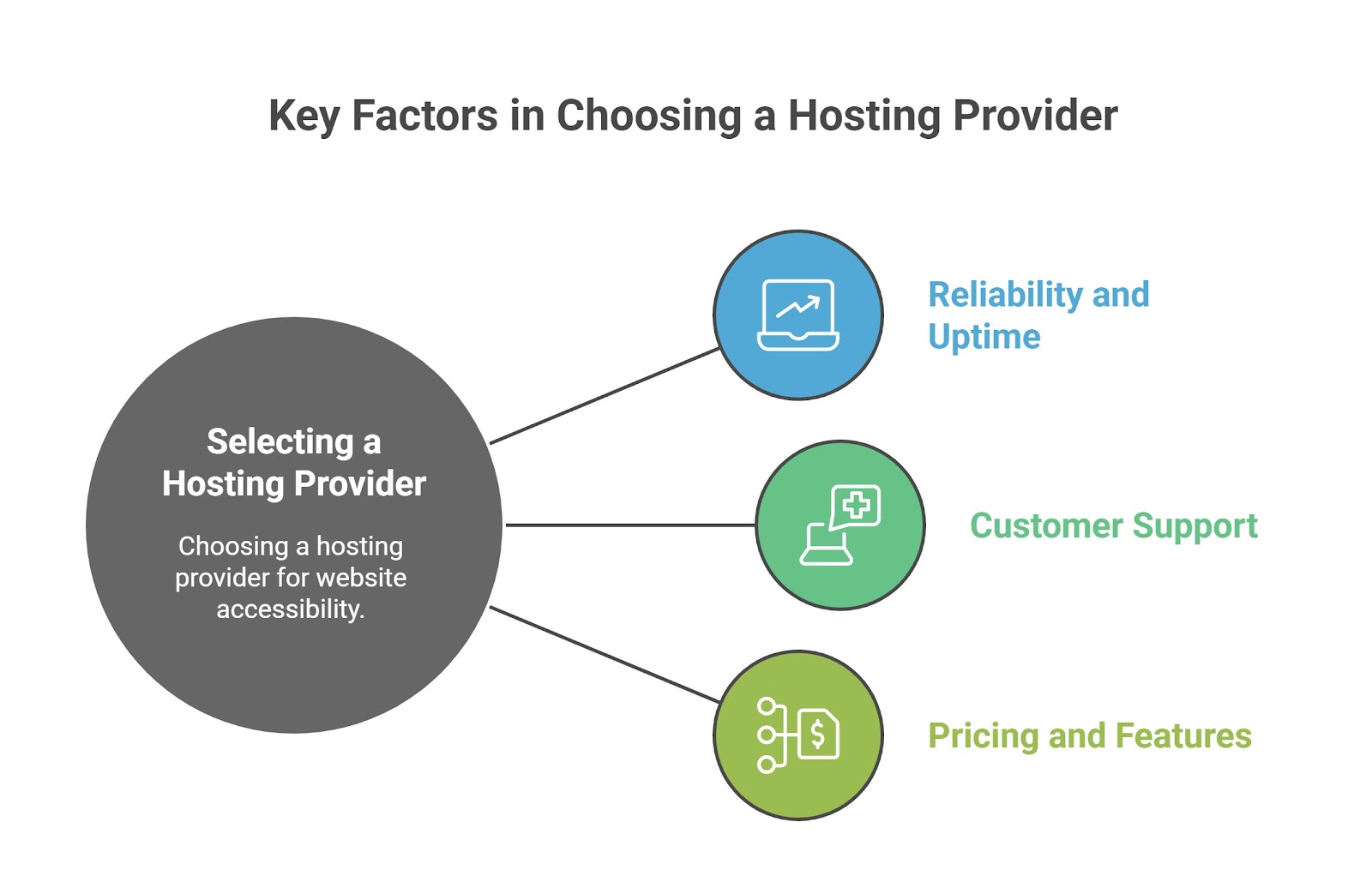
Choosing the right crypto mining hosting provider can make or break your mining success.
1. Assess Your Mining Goals and Budget
Before selecting a hosting provider, it’s important to define your mining objectives and financial constraints. Determine whether you’re aiming for long-term investment, regular income, or experimenting with mining.
Your budget will influence the type of hosting service you can afford, as well as the scale of your operations.
For instance, if you have a limited budget and are new to mining, starting with a shared hosting plan might be suitable.
On the other hand, if you’re planning to scale up and have more capital, dedicated or colocation hosting could offer better control and efficiency.
Knowing your goals and budget helps in narrowing down hosting options that align with your expectations and financial capacity.
2. Evaluate Hosting Types and Facility Location
Different hosting types offer varying levels of control, cost, and responsibility. Shared hosting is cost-effective but offers less control, while dedicated hosting provides more autonomy at a higher price. Colocation allows you to place your own equipment in a provider’s facility, offering control over hardware but requiring a higher initial investment.
The location of the hosting facility significantly impacts operational costs and efficiency. Facilities in regions with cooler climates and lower electricity costs, such as parts of North America or Iceland, can reduce cooling expenses and overall energy consumption.
Also, proximity to reliable internet infrastructure ensures better uptime and performance.
Evaluating both the type of hosting and the facility’s location ensures that you choose a provider that meets your operational needs and budget constraints.
3. Request SLAs and Terms of Service
Service Level Agreements (SLAs) and Terms of Service outline the responsibilities and expectations between you and the hosting provider. Reviewing these documents helps you understand the provider’s commitments regarding uptime, maintenance, support, and liability.
For example, an SLA might guarantee a certain percentage of uptime, specify response times for support requests, and detail procedures for handling outages or equipment failures.
Understanding these terms ensures that you’re aware of the level of service to expect and the recourse available if the provider fails to meet their obligations.
Always request and thoroughly read the Service Level Agreements (SLAs) and Terms of Service before committing to a hosting provider to ensure transparency and alignment with your expectations.
4. Inspect Infrastructure (if possible)
Visiting the hosting facility allows you to assess the quality of infrastructure firsthand. Observing the physical setup, security measures, cooling systems, and overall maintenance can provide insights into the provider’s operational standards.
If an on-site visit isn’t possible, request detailed information or virtual tours that showcase the facility’s infrastructure. Understanding the physical environment where your equipment will operate helps in evaluating the reliability and efficiency of the hosting service.
Inspecting the infrastructure, either in person or virtually, ensures that the hosting provider maintains a facility that meets industry standards and your specific requirements.
5. Review User Feedback and Industry Reputation
Researching user reviews and the hosting provider’s reputation within the industry offers valuable insights into their reliability and service quality. Look for feedback on uptime, customer support responsiveness, and overall satisfaction from current or past clients.
Engaging in online forums, reading testimonials, and checking independent review sites can help you gauge the provider’s standing in the community. Consistent positive feedback and a strong industry reputation are indicators of a trustworthy hosting service.
Taking the time to review user feedback and the provider’s reputation helps in making an informed decision and avoiding potential issues down the line.
6. Understand the Onboarding and Setup Process
Familiarize yourself with the hosting provider’s onboarding and setup procedures to ensure a smooth transition. Understanding the steps involved, from signing agreements to deploying your mining equipment, helps in planning and reduces the likelihood of unexpected delays.
Some providers offer comprehensive support during the onboarding process, including assistance with equipment installation, configuration, and initial testing.
Knowing what support is available and the expected timelines allows you to coordinate effectively and start your mining operations promptly.
Clarifying the onboarding and setup process with the hosting provider ensures that you are well-prepared and can begin mining with minimal disruptions.
Benefits of Using Crypto Mining Hosting
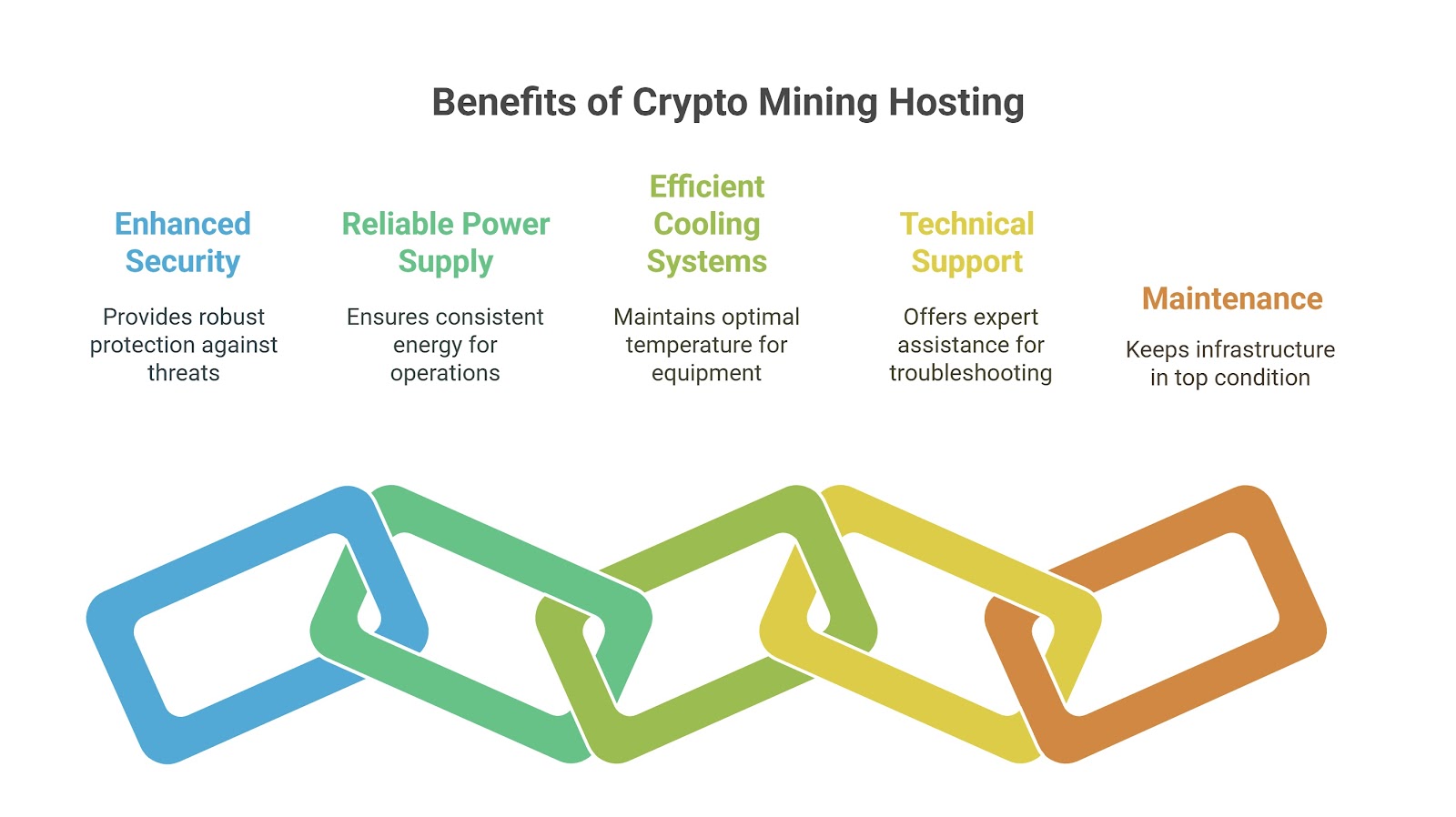
Here’s why more miners are turning to hosting providers instead of managing setups on their own.
1. Reduced Overhead Costs
Hosting your mining equipment in a professional facility can significantly lower your initial and ongoing expenses.
Instead of investing in infrastructure, power systems, and cooling solutions, you pay a fee that covers these essentials.
This approach allows you to allocate resources more efficiently and focus on optimizing your mining strategy.
2. Professional-Grade Infrastructure
Mining hosting facilities are equipped with advanced infrastructure designed specifically for cryptocurrency mining.
They offer high-performance cooling systems, robust security measures, and reliable power supplies.
This professional setup ensures that your mining equipment operates under optimal conditions, enhancing performance and longevity.
3. 24/7 Monitoring and Maintenance
Continuous monitoring and maintenance are important for minimizing downtime and maximizing profitability.
Hosting providers typically have dedicated teams that oversee operations around the clock, promptly addressing any technical issues that arise.
This proactive approach helps maintain consistent mining activity and reduces the risk of equipment failures.
4. Energy Efficiency
Energy consumption is a significant factor in mining operations. Professional hosting facilities often use energy-efficient technologies and may source power from renewable energy providers.
This not only reduces operational costs but also minimizes the environmental impact of mining activities.
5. Ability to Scale Quickly
As your mining needs grow, hosting services offer the flexibility to scale operations without the complexities of expanding physical infrastructure.
You can easily add more equipment or upgrade existing hardware, allowing you to respond swiftly to market demands and opportunities.
Risks and Challenges in Crypto Mining Hosting
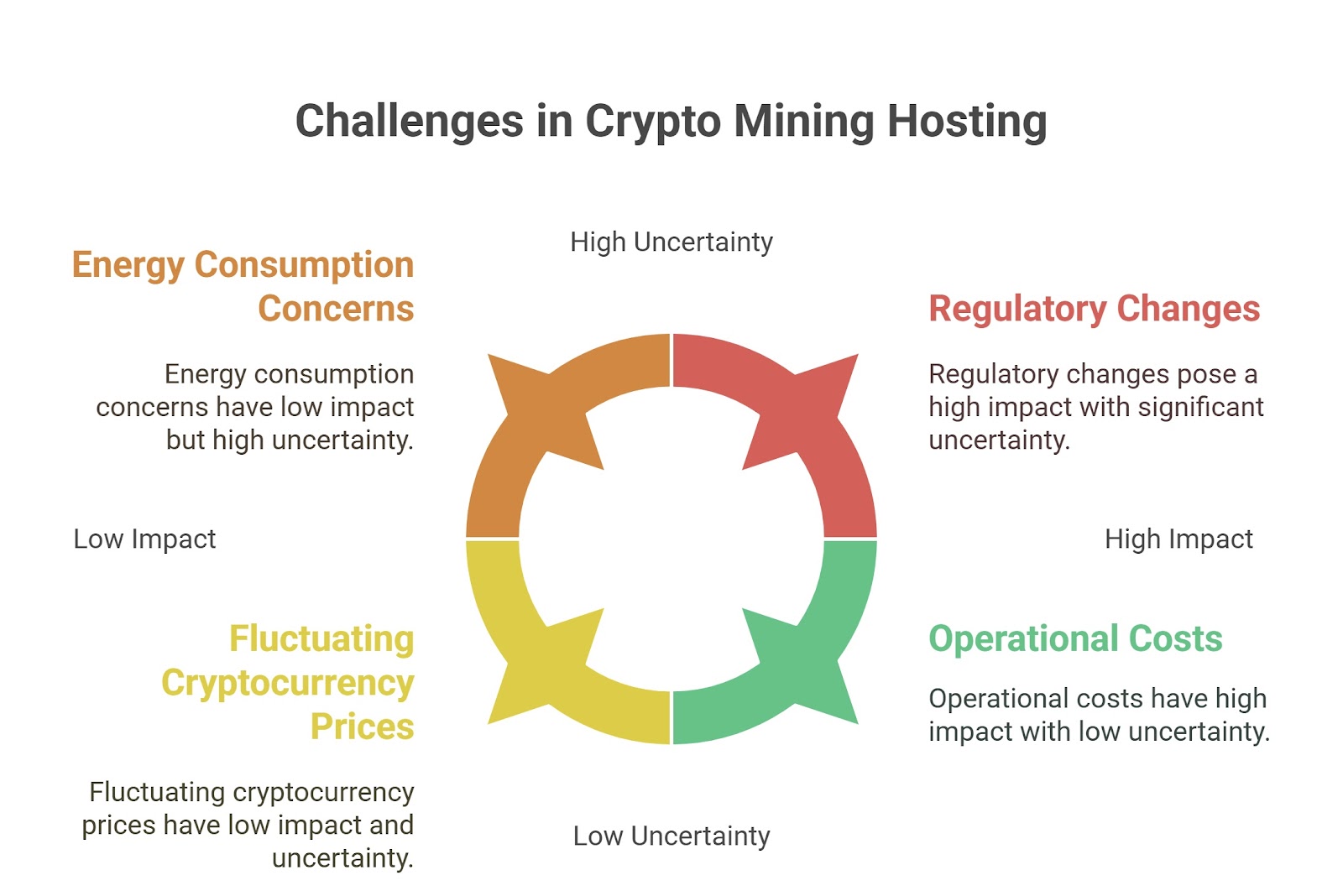
While crypto mining hosting offers many benefits, it also comes with certain risks that miners should be aware of.
1. Regulatory Risks
Regulations surrounding cryptocurrency mining vary across different countries and can change rapidly. For instance, while the United States has introduced the Digital Asset Market Clarity Act to provide clearer guidelines for the crypto industry, other nations may impose stricter controls or outright bans.
These regulatory shifts can impact mining operations, leading to potential shutdowns or the need to relocate.
It’s important that as a miner you stay informed about the legal landscape in their operating regions and be prepared to adapt to new regulations.
Engaging with local authorities and legal experts can help navigate these complexities and ensure compliance with evolving laws.
2. Downtime and Technical Failures
Technical issues such as hardware malfunctions, power outages, or cooling system failures can disrupt mining activities.
For example, inadequate power distribution or faulty wiring can lead to equipment damage or fires.
Such downtimes not only halt mining operations but can also result in financial losses due to missed opportunities. Regular maintenance and investing in quality infrastructure can mitigate these risks.
Also, having contingency plans and backup systems in place can ensure quicker recovery from unforeseen technical failures.
3. Lack of Transparency
Some hosting providers may not offer clear information about their operations, leading to uncertainties for miners. This lack of transparency can manifest in undisclosed fees, unclear service terms, or ambiguous performance metrics.
Without transparent communication, miners may find it challenging to assess the reliability and efficiency of their hosting services. It’s important to choose providers who offer detailed service level agreements and regular performance reports.
Engaging with providers who prioritize openness can foster trust and ensure smoother operations.
4. Hidden Fees
Some hosting services may advertise low costs but include hidden fees that can erode profitability.
These can encompass maintenance charges, setup fees, or unexpected costs related to energy consumption.
Such unforeseen expenses can significantly impact the return on investment for miners. It’s advisable to thoroughly review all contractual terms and seek clarity on any ambiguous charges.
Opting for providers with transparent pricing structures can help in accurate financial planning and avoid unpleasant surprises.
5. Data Security and Miner Theft
Cryptocurrency mining operations are susceptible to cyber threats, including hacking and unauthorized access. Attackers may target mining rigs or wallets to steal digital assets.
Ensuring robust cybersecurity measures, such as firewalls, encryption, and regular security audits, is essential to protect assets.
Also, physical security measures like surveillance and controlled access can prevent unauthorized physical access to equipment.
Collaborating with hosting providers that prioritize security can offer peace of mind and safeguard investments.
Legal and Regulatory Considerations for Crypto Mining Hosting in 2026
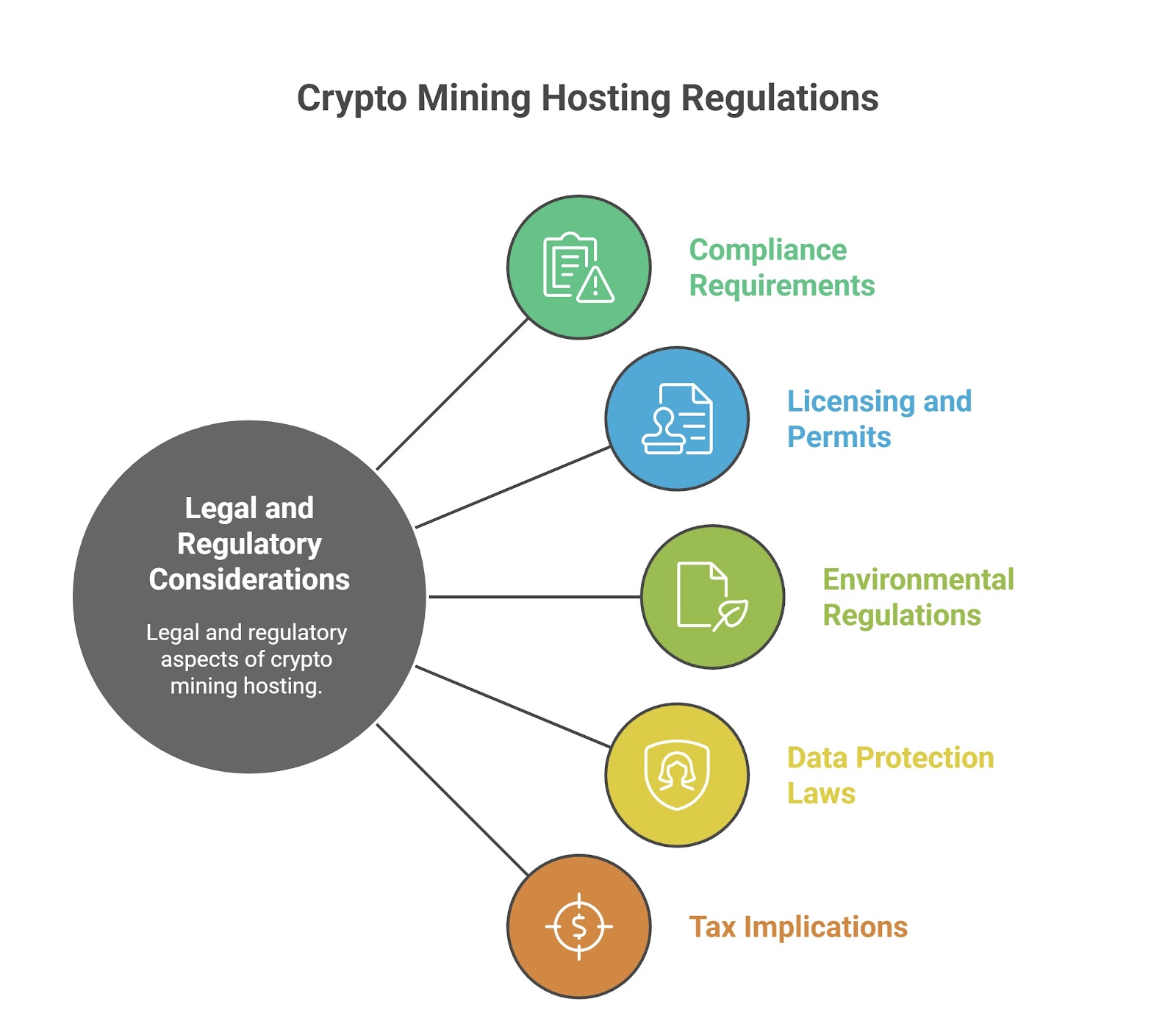
This section highlights key legal and regulatory factors every miner should consider before selecting a hosting service.
1. Hosting Legality by Country
The legal status of crypto mining varies significantly across countries. In 2025, approximately 78 countries permit crypto mining, while around 29 have imposed bans or severe restrictions.
For instance, Kazakhstan has legalized crypto mining and established regulations for exchanges, positioning itself as a favorable environment for miners.
Contrarily, countries like Kuwait have implemented crackdowns on unregulated mining operations due to concerns over excessive energy consumption.
In the United States, regulations can differ by state. Arkansas, for example, has enacted laws requiring noise-reduction measures for crypto mines and mandates state permits for operation, reflecting a more controlled approach to mining activities.
It’s essential for miners to stay informed about the legal landscape in their respective countries or regions to ensure compliance and avoid potential legal issues.
2. Tax Implications
Tax treatment of crypto mining income varies by jurisdiction. In the United Kingdom, for example, income from mining activities is subject to income tax, and any profits from selling mined cryptocurrencies may be liable for capital gains tax.
In the United States, the Internal Revenue Service (IRS) treats mined cryptocurrencies as income at the fair market value on the day they are received.
Subsequent sales of these assets may incur capital gains tax, depending on the holding period and the difference between the sale price and the original value.
Miners should maintain detailed records of their mining activities and consult with tax professionals to ensure accurate reporting and compliance with local tax laws.
3. Data Protection and KYC/AML Compliance
Compliance with data protection and Know Your Customer (KYC) and Anti-Money Laundering (AML) regulations is increasingly important in the crypto mining industry.
In the European Union, the Markets in Crypto-Assets (MiCA) regulation mandates that crypto-asset service providers implement robust KYC and AML procedures to prevent illicit activities.
Similarly, in the United States, the Financial Crimes Enforcement Network (FinCEN) requires virtual asset service providers to adhere to AML regulations, including customer identification and transaction monitoring.
Implementing strong data protection measures and compliance protocols not only ensures adherence to legal requirements but also builds trust with clients and partners.
4. Impact of Global Crypto Regulations (MiCA, SEC, etc.)
Global regulatory frameworks are shaping the crypto mining landscape. The European Union’s MiCA regulation, effective from December 2024, establishes comprehensive rules for crypto-asset markets, including operational standards for exchanges and wallet providers. This regulation aims to enhance investor protection and market integrity.
In the United States, the Securities and Exchange Commission (SEC) continues to evaluate and enforce regulations related to digital assets, focusing on investor protection and market fairness.
Recent legislative actions, such as the repeal of certain tax reporting requirements for decentralized finance platforms, indicate ongoing adjustments in the regulatory environment.
Staying informed about these regulatory developments is important for miners and hosting providers to navigate compliance requirements and adapt to the evolving legal landscape.
Future Trends in Crypto Mining Hosting (2026 and Beyond)
Looking ahead, several key trends will influence how and where crypto mining hosting operates in the coming years.
1. Migration to Energy-Abundant Countries
In 2026, crypto mining operations are increasingly relocating to regions with abundant and affordable energy resources. Countries like Kazakhstan, Ethiopia, and Bhutan are attracting miners due to their underutilized electricity supplies, offering cost-effective solutions for energy-intensive mining activities.
Also, Pakistan has announced plans to allocate 2,000 megawatts of electricity to support bitcoin mining and AI data centers, demonstrating a national commitment to embracing blockchain technology.
These shifts not only reduce operational costs for miners but also contribute to the economic development of these regions by utilizing surplus energy and creating job opportunities.
2. Increased Institutional Hosting Demand
Institutional interest in crypto mining has surged, leading to a significant increase in demand for professional hosting services. As of early 2025, the number of publicly listed cryptocurrency mining companies has grown to 16 on NASDAQ, up from six in early 2021, reflecting heightened institutional investment in the sector.
This growth is further fueled by the expansion of the cloud mining industry, which is projected to reach a market size of $25 billion by the end of 2025, doubling from $12 billion in 2023.
The increasing involvement of institutional players underscores the need for scalable, secure, and efficient hosting solutions to support large-scale mining operations.
3. AI and IoT Integration
The integration of Artificial Intelligence (AI) and the Internet of Things (IoT) into crypto mining operations is transforming the industry.
Companies like Hash AI are leveraging AI algorithms to analyze markets and optimize mining strategies in real-time, enhancing efficiency and profitability.
Furthermore, mining firms are repurposing their infrastructure to support AI workloads, capitalizing on the growing demand for high-performance computing.
For example, Iris Energy has integrated AI and bitcoin mining technologies within the same facilities, maximizing resource utilization.
This convergence of technologies enables mining operations to diversify revenue streams and adapt to evolving market dynamics.
4. Enhanced Security Protocols
As crypto mining becomes more lucrative, the need for robust security measures has intensified. Hosting providers are implementing advanced security protocols, including military-grade encryption, multi-factor authentication, and real-time monitoring, to protect mining operations from cyber threats.
Companies like KSDMiner are leading the way by offering secure and eco-friendly cloud mining experiences, ensuring that customer funds and data remain protected.
These enhanced security measures are essential for maintaining trust and reliability in the increasingly competitive crypto mining industry.
5. Regulatory Harmonization Across Jurisdictions
The global crypto mining landscape is witnessing a trend toward regulatory harmonization, aimed at providing clearer guidelines and fostering innovation.
The European Union’s Markets in Crypto-Assets Regulation (MiCA), effective from December 2024, introduces a comprehensive framework for crypto-assets, ensuring a high level of consumer and investor protection.
Similarly, other regions are developing regulatory regimes to oversee crypto-asset activities, balancing the need for oversight with the promotion of technological advancement.
These efforts toward regulatory alignment are expected to reduce uncertainty, encourage institutional participation, and support the sustainable growth of the crypto mining industry.
Conclusion
Crypto mining hosting continues to be a smart solution for miners looking to cut costs, improve performance, and scale efficiently. As the industry develops, choosing the right provider involves more than just price; it’s about power availability, transparency, legal compliance, and long-term reliability.
With hosting services becoming more advanced and energy-conscious, miners who stay informed and strategic will be best positioned for success.
Even if you’re a solo miner or managing a growing operation, the key is to align your goals with a hosting setup that supports both performance and sustainability.
Frequently Asked Questions
1. What is the best crypto mining hosting service in 2026?
The best crypto mining hosting service in 2026 depends on your needs, but top-rated providers include BitDeer, Compass Mining, and HashCore. These companies offer competitive electricity rates, reliable uptime, and strong customer support.
2. Is crypto mining hosting worth it?
Yes, crypto mining hosting can be worth it for miners who want to reduce infrastructure costs, access cheaper electricity, and ensure optimal uptime and cooling for their equipment.
3. How much does crypto mining hosting cost?
The cost of crypto mining hosting typically ranges from $0.05 to $0.12 per kWh, depending on the provider, facility location, and level of service. Some hosts also charge setup or maintenance fees.
4. Can I host my crypto miner in a data center?
Yes, you can host your crypto mining equipment in a data center if the facility supports high-power consumption and has the right cooling infrastructure and security measures.
5. Does crypto mining hosting support GPU and ASIC miners?
Yes, most crypto mining hosting providers support both GPU and ASIC miners, but it’s important to confirm compatibility with your specific hardware before signing a contract.
6. Is cloud mining the same as crypto mining hosting?
No, cloud mining and crypto mining hosting are different. Cloud mining involves renting hash power from a provider, while hosting means installing and running your own mining hardware in a third-party facility.