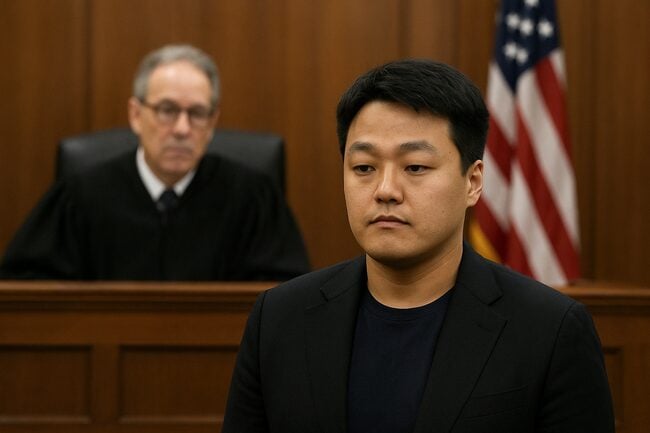
Do Kwon, the South Korean cryptocurrency entrepreneur behind the failed TerraUSD and Luna tokens, pleaded guilty to two U.S. charges of conspiracy to defraud and wire fraud, marking a significant turn in one of the largest collapses in digital asset history.
The plea, entered before U.S. District Judge Paul Engelmayer in New York, comes after Kwon initially denied wrongdoing to a nine-count indictment earlier this year. Under an agreement with the Manhattan U.S. Attorney’s Office, prosecutors will recommend a sentence of no more than 12 years if he accepts responsibility. The maximum penalty is 25 years. Sentencing is scheduled for Dec. 11.
Allegations of Misleading Investors
Prosecutors alleged Kwon misrepresented the stability of TerraUSD, a so-called stablecoin intended to maintain a $1 value. When the token lost its peg in May 2021, Kwon told investors that an automated system, the “Terra Protocol,” had restored its value. Authorities say he instead coordinated with a high-frequency trading firm to secretly purchase large amounts of TerraUSD, artificially supporting the price.
These claims, prosecutors said, drove retail and institutional investors to purchase Terraform Labs products, pushing the market value of Luna — TerraUSD’s sister cryptocurrency — to about $50 billion by spring 2022. Both tokens collapsed later that year, wiping out an estimated $40 billion in value and fueling scrutiny of the stablecoin market.
Civil Settlement and International Charges
In 2024, Kwon and Terraform Labs agreed to pay $4.55 billion to settle a civil lawsuit brought by the U.S. Securities and Exchange Commission. As part of that settlement, Kwon accepted an $80 million personal fine and a ban from participating in cryptocurrency transactions.
Kwon, 33, has been in U.S. custody since his extradition from Montenegro in late 2024, where he was arrested on a separate matter. He also faces criminal charges in South Korea. Under the plea agreement, U.S. prosecutors will not oppose his potential transfer abroad after serving half of his sentence in the United States.
Manhattan U.S. Attorney Jay Clayton said in a statement that Kwon “used the technological promise and investment interest in cryptocurrency to mislead investors,” though prosecutors emphasized the plea deal reflects his cooperation and admission of guilt.
The case remains a touchstone in debates over cryptocurrency oversight, particularly around the regulation of stablecoins and investor protections in the volatile digital asset market.