


Nigeria processed N1.07 quadrillion in electronic transactions in 2024, equivalent to roughly $702.6 billion at the year-end exchange rate, according to data from the Nigeria Inter-Bank Settlement System (NIBSS). That figure represents a 79.6 percent jump from 2023 and signals a structural shift away from cash, driven by a young, mobile-first population, the Central Bank of Nigeria’s cashless policy, and a fintech sector that now serves more than 311 million active bank accounts.
For businesses selling into Nigeria, the choice of payment gateway shapes everything from checkout conversion to settlement speed and the ability to handle cross-border income. This guide reviews six leading payment gateways for 2026, weighing fees, currency support, settlement timelines, and the question almost no local processor can answer well: how do you take or hold crypto?
Key Takeaways
- Nigeria’s electronic transactions reached N1.07 quadrillion (about $702.6 billion) in 2024, up 79.6 percent year-on-year per NIBSS.
- Paystack, acquired by Stripe in 2020, leads for startups and e-commerce with capped local fees and same-day NGN settlement.
- Flutterwave is the strongest pick for cross-border African commerce, supporting 30-plus African currencies and mobile money.
- Moniepoint offers the lowest fees in the market at 0.5 percent, capped at N1,000 per transaction.
- Local gateways cannot process crypto as a payment method because of CBN restrictions on crypto-fiat conversion.
- Upay supports BTC, ETH, USDT, and USDC, with a Visa card that works at 55 million-plus merchants worldwide without forcing conversion to NGN.
The Top Payment Gateways in Nigeria for 2026
The Nigerian market splits into three groups: developer-first gateways for online businesses, bank-owned processors for legacy enterprises, and POS-led platforms for physical retail. Each option below maps to a specific business profile.
| Gateway | Best For | Transaction Fees | Crypto Support | Rating |
|---|---|---|---|---|
| Paystack | E-commerce and startups | 1.5% + N100 (capped at N2,500 local) | No | 4.7/5 |
| Flutterwave | Cross-border African payments | 1.4% local / 3.8% international | No | 4.6/5 |
| Interswitch | Enterprise and POS infrastructure | Custom, volume-negotiated | No | 4.3/5 |
| GT Pay | GTBank merchants | 1.5% | No | 4.0/5 |
| Moniepoint | SMEs and physical retail | 0.5%, capped at N1,000 | No | 4.5/5 |
| Upay | Global crypto payments | Low network fees | Yes (BTC, ETH, USDT, USDC) | 4.8/5 |
Paystack
Source: Paystack
Paystack, acquired by Stripe in October 2020, is the default choice for Nigerian startups and online businesses. The platform offers a clean developer API, sub-24-hour onboarding for most businesses, and a dashboard that simplifies reconciliation across card, bank transfer, USSD, and mobile money rails.
Settlement to Nigerian bank accounts typically clears within one business day. Local card transaction fees are capped at N2,500, which makes Paystack cost-effective on higher-value orders. International card payments attract a 3.9 percent fee plus N100. The gateway is best suited to businesses selling primarily to Nigerian consumers, with the option to expand into Ghana, Kenya, and South Africa through Paystack’s wider Africa coverage.
- Setup fee: Free
- Monthly fee: None
- Supported currencies: NGN, USD, GBP, ZAR
- Key feature: Capped local fees and same-day NGN settlement
Flutterwave
Source: Flutterwave
Flutterwave is built for African businesses that operate across borders. It processes payments in more than 30 African currencies and routes transactions through local rails to reduce conversion losses. Merchants can accept cards, bank transfers, mobile money including M-Pesa and MTN MoMo, and USSD.
For Nigerian merchants serving customers in Kenya, Ghana, or South Africa, Flutterwave reduces the friction of multi-currency settlement. The platform integrates with WooCommerce, Shopify, and other major e-commerce systems. International transaction fees are higher than local rates, so purely domestic businesses may prefer Paystack.
- Setup fee: Free
- Monthly fee: None
- Supported currencies: 30-plus African currencies, USD, EUR, GBP
- Key feature: Pan-African coverage with mobile money integration
Interswitch
Source: Interswitch
Interswitch is Nigeria’s oldest payment infrastructure company. It operates the Verve card network, the Quickteller consumer platform, and the enterprise switching solutions used by most Nigerian banks. For large businesses with custom POS deployments, in-branch payment needs, or direct banking integrations, Interswitch is the go-to provider.
Pricing is negotiated based on volume, which makes the platform less accessible to small businesses but highly cost-effective at scale. Interswitch’s reach includes ATM networks, POS terminals, and online payment pages, and integration often provides direct access to local banking rails that newer fintechs sit on top of.
- Setup fee: Varies by product
- Monthly fee: Custom, enterprise pricing
- Supported currencies: NGN primarily
- Key feature: Verve card network plus POS and ATM infrastructure
GTPay
Source: GTBank
GT Pay is the payment gateway operated by Guaranty Trust Bank, one of Nigeria’s largest commercial banks. It is aimed at merchants who already bank with GTBank and want a tightly integrated payment flow. The product supports card payments, bank transfers, and USSD transactions, with direct settlement into GTBank accounts and no third-party delays.
The main limitation is that GT Pay works best inside the GTBank ecosystem. Businesses that bank elsewhere or need multi-bank settlement flexibility will find the platform restrictive. Setup is straightforward for existing GTBank business customers.
- Setup fee: Free for GTBank customers
- Monthly fee: None
- Supported currencies: NGN
- Key feature: Direct GTBank settlement and USSD support
Moniepoint
Source: Moniepoint
Moniepoint started as a POS aggregator and has expanded into a full business banking and payments platform. It is particularly strong for physical retail, market traders, and SMEs that rely on POS terminals for daily transactions. The platform offers business accounts, payroll features, and expense tracking alongside payment processing.
Transaction fees are among the lowest in the market at 0.5 percent, capped at N1,000 per transaction, with near-instant settlement. For Nigerian businesses that operate largely in person, Moniepoint’s combination of POS hardware and a business banking account makes it a practical all-in-one option.
- Setup fee: Free
- Monthly fee: None
- Supported currencies: NGN
- Key feature: POS terminals, near-instant settlement, and the lowest fees in the local market
Upay
Source: Upay
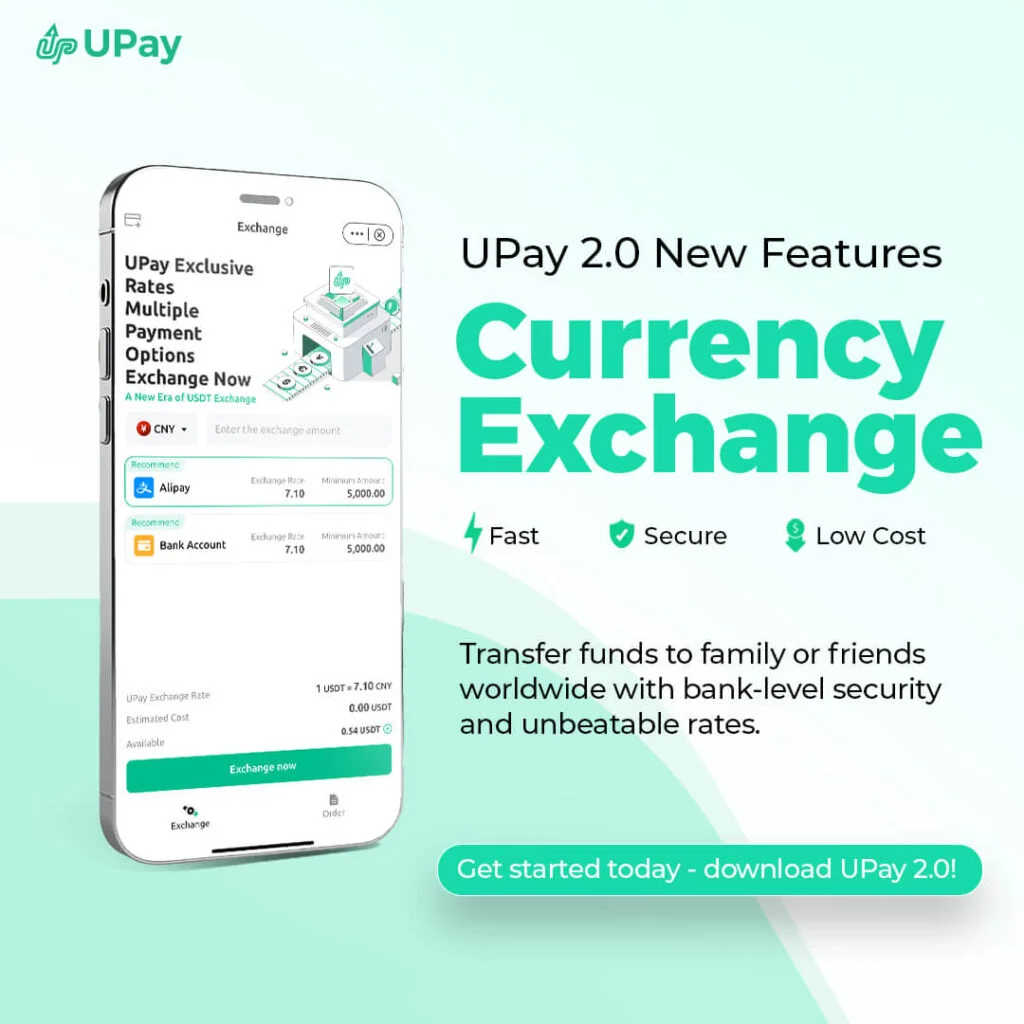
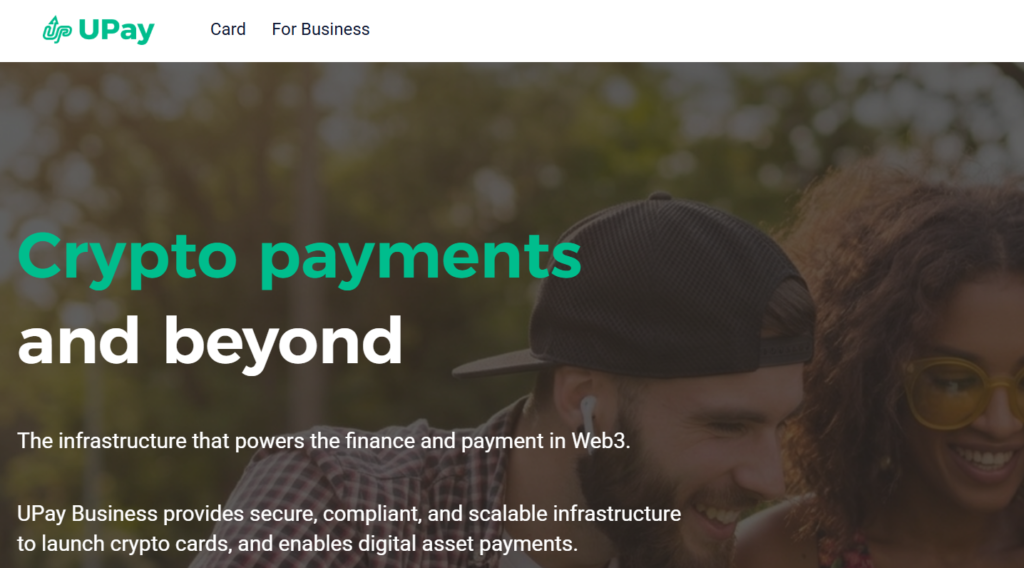
Upay is a crypto card and wallet platform that lets Nigerian users hold and spend Bitcoin (BTC), Ethereum (ETH), USDT, USDC, and other major cryptocurrencies. Where local gateways are blocked by CBN restrictions on crypto-fiat conversion, Upay works around the rule by issuing a Visa card backed by the user’s crypto balance.
The card is accepted at over 55 million Visa merchants worldwide, including international online stores accessible to Nigerian buyers. It supports ATM withdrawals and integrates with Apple Pay and Google Pay. Setup is fully digital through the Upay iOS or Android app at upay.best.
- Setup fee: Free
- Monthly fee: None
- Supported currencies: BTC, ETH, USDT, USDC, plus other major crypto
- Key feature: Spend crypto at 55 million-plus Visa merchants without converting to NGN
How to Choose the Right Payment Gateway for Your Business in Nigeria
Three factors decide the right gateway for a Nigerian business. The first is the customer mix. If most buyers are local Nigerians paying by bank transfer or USSD, Paystack or Moniepoint will be more practical than a cross-border platform. The second is settlement currency. Businesses with USD or crypto revenue need a gateway that can hold or convert foreign currency without heavy losses, which often points to Flutterwave for cross-border African flows or Upay for crypto.
The third is transaction volume. High-volume merchants should negotiate custom rates with enterprise providers such as Interswitch or large bank-owned gateways. Beyond those three, evaluate integration complexity, developer documentation, and refund handling before committing. Run real transactions through a shortlist of two or three gateways before going live, because performance in production rarely matches the marketing site.
Why Upay is a Strong Choice in Nigeria for 2026
Upay fills the one gap that no local Nigerian gateway can close: handling crypto. Under current CBN directives, banks routinely block or reverse transactions flagged as crypto-related, which makes domestic payment rails unworkable for anyone earning, paying, or saving in digital assets.
Upay operates differently. As a crypto card and wallet platform, it lets users hold BTC, ETH, USDT, USDC, and other major cryptocurrencies and spend them directly through a Visa-powered card at over 55 million merchants worldwide. There is no need to convert to NGN before spending, which protects users from naira volatility and bank-side restrictions. The card supports ATM withdrawals and integrates with Apple Pay and Google Pay. For Nigerian freelancers paid in USDT, crypto traders, or businesses with international clients who prefer crypto, Upay is the practical option. Setup is fully digital through the iOS or Android app at upay.best.
Conclusion
Nigeria’s payment gateway market is competitive and improving quickly. Local options such as Paystack, Flutterwave, and Moniepoint cover the majority of NGN transaction needs at fair rates. Interswitch and GT Pay serve enterprise and bank-aligned merchants. For businesses operating internationally or working with crypto, Upay closes a gap that local processors structurally cannot. Evaluate your business model, transaction volume, and customer profile, then pick the one or two gateways that match. Get started at upay.best.
Frequently Asked Questions (FAQs)
Which payment gateway has the lowest fees in Nigeria?
Moniepoint charges 0.5 percent capped at N1,000, the lowest for NGN transactions. Paystack caps local card fees at N2,500, which works well for higher-value e-commerce orders.
Can Nigerian businesses accept crypto payments?
Local gateways cannot, because of CBN restrictions on crypto-fiat transactions. Upay lets businesses and individuals hold and spend BTC, ETH, USDT, and USDC through a Visa card accepted at 55 million-plus merchants worldwide.
Is Paystack or Flutterwave better for cross-border payments?
Flutterwave is stronger for cross-border African payments, with support for more than 30 African currencies and mobile money rails. Paystack has expanded into Ghana and Kenya but is still strongest in Nigeria.
Do Nigerian payment gateways support recurring billing?
Paystack and Flutterwave both support recurring billing through their subscription APIs. Businesses running SaaS or subscription products should test the flow end-to-end before going live.
How long does settlement take with Nigerian gateways?
Most local gateways settle to Nigerian bank accounts within one business day. Moniepoint offers near-instant settlement for POS transactions. International settlements through any provider take longer.
Can I use Upay alongside a local Nigerian gateway?
Yes. Many Nigerian businesses run a domestic gateway such as Paystack or Moniepoint for NGN sales and add Upay for crypto income, international suppliers, or personal spending. The two do not conflict.