Getting started with cryptocurrency can feel overwhelming, there are so many platforms, features, and coins to choose from. As a beginner, the right trading platform can make learning faster, safer, and less stressful.
A beginner-friendly platform should be easy to use, have strong security, offer affordable fees, and provide helpful learning tools. The best options also make it simple to deposit money, buy your first coin, and track your progress.
We’ve researched top crypto trading platforms for beginners, giving you the opportunity to compare features, share pros and cons, and decide which stand out. By the end, you’ll know exactly which platform fits your needs
Key Takeaway
- A crypto trading platform is an online marketplace where you can buy, sell, and exchange cryptocurrencies
- As a beginner, security should be your top priority.
- Not all platforms work in every country, and some have restricted features depending on where you live
- Buying an asset just because everyone on social media is talking about it or because its price is shooting up is called FOMO.
- A good platform should be easy to use, secure, affordable in fees, and offer multiple ways to deposit and withdraw money.
What is a Crypto Trading Platform?
A crypto trading platform is an online marketplace where you can buy, sell, and exchange cryptocurrencies like Bitcoin, Ethereum, and other digital assets.
Think of it like a stock trading app, but instead of company shares, you’re trading coins and tokens. These platforms connect buyers and sellers, handle the transactions, and often provide tools to help you manage your trades.
Some platforms are centralized (run by a company, like Coinbase or Binance), while others are decentralized (peer-to-peer, no middleman). For most beginners, centralized platforms are easier to start with because they’re more user-friendly and handle most of the technical details for you.
Why platform choice matters for beginners
If you’re just starting with crypto, your choice of platform can make or break your experience. When experts call a crypto platform “beginner-friendly,” they usually mean it does well in these areas:
- User Experience (UX): Simple sign-up process, clean dashboard, easy buy/sell buttons, and clear charts.
- Low or transparent fees: The platform should explain exactly what you’ll pay per trade and avoid hidden charges.
- Security: Strong protection for your account — things like two-factor authentication (2FA), withdrawal limits, and insurance against certain losses.
- Education: Tutorials, articles, videos, or even rewards for learning about crypto. The more you understand, the safer your decisions.
Key Features Beginners Should Compare before Choosing a Crypto Trading Platform
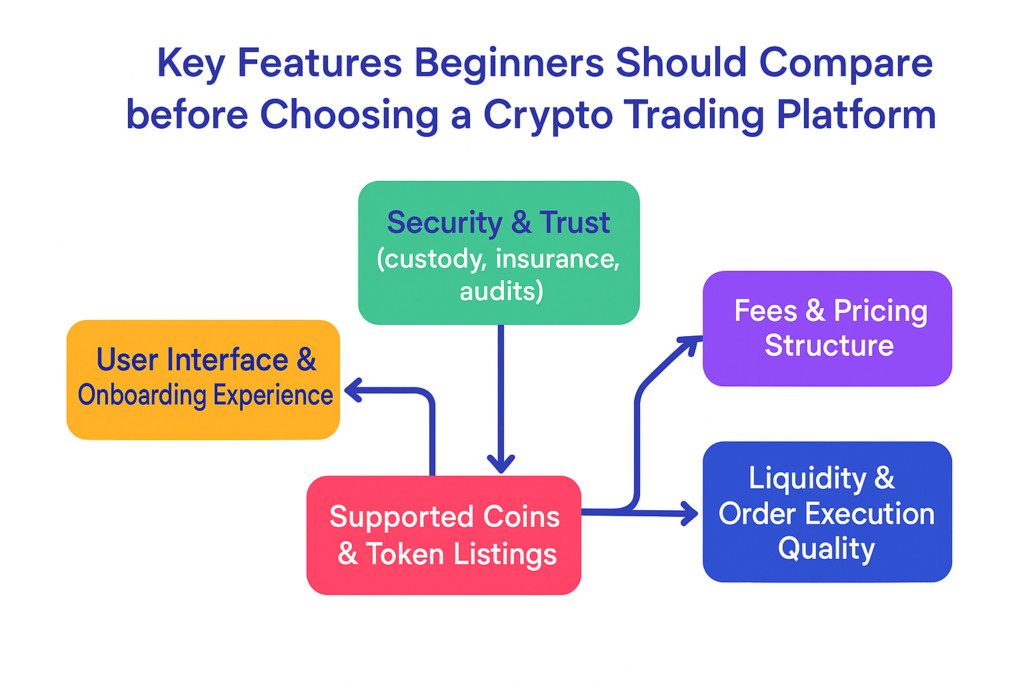
When you’re new to crypto trading, all platforms might look similar at first glance. But a closer look at key features can help you spot the one that will make your learning curve easier and your funds safer.
User Interface & Onboarding Experience
A clean, simple design means you spend less time figuring out where to click and more time learning the basics. The best platforms guide you through each step, from signing up to making your first trade.
Security & Trust
Security should be your top priority. Look for platforms that are transparent about how they protect your money. Look for platforms with authentic cold Storage, Hot Wallets, 2FA, Withdrawal Whitelists.
Fees & Pricing Structure
Low fees are great, but clarity matters even more. Hidden costs can eat into your profits before you even notice. Watch out for Trading Fees, Spreads, Deposit/Withdrawal Fees, Maker/Taker.
Supported Coins & Token Listings
The coins a platform supports determine what you can trade. Stablecoins are pegged to a currency (e.g., USDT, USDC) to avoid big price swings. Bitcoin and Ethereum are widely traded and stable in liquidity. Altcoins are smaller projects with higher risk/reward.
Liquidity & Order Execution Quality
Liquidity means there’s enough buying and selling happening so you can trade quickly without affecting the price much. Platforms with high liquidity fill orders faster and at fairer prices.
Customer Support and Educational Resources
As a beginner, you’ll have questions. Look for platforms with 24/7 chat, email help, and beginner guides, videos, or webinars. Some even reward you with crypto for completing learning modules.
Regulation & Geographic Availability
Not all platforms work in every country, and some have restricted features depending on where you live. Always check if the platform is licensed or regulated in your region.
KYC / Identity Verification Requirements
KYC (Know Your Customer) means providing ID and personal info before you can trade. While it can feel inconvenient, it’s a legal requirement for regulated platforms and helps prevent fraud.
Top Crypto Trading Platforms for Beginners
Choosing your first crypto trading platform can be confusing. To make it easier, here are eight popular beginner-friendly options, each with a quick overview, pros, and cons.
| Trading platform | Best for | Trading fee | Max leverage | Security features | Unique features |
| UEEx | Overall Best | Spot Trading: 0.09% Futures Trading: 0.05% Margin Trading: 0.08 % – 0.10% Stock Trading: 1.50% | 200x | 93% of users’ assets in cold storage Proof of Reserve 2000 unique wallet addresses | Fee discounts and staking rewards through its native token, $UE. Copy trading and auto-invest |
| Coinbase | clean design and simple interface | Trading fees: 0.05% – 0.60% | 20x | 98% of users’ assets in offline storageCold storage Two factor authentication | DeFi and NFTs with Coinbase Wallet Powerful tools like real-time order books, deep liquidity, and sophisticated charting |
| Binance | Low Fees and High Options | 0.1000% / 0.1000% Maker / Taker for Spot and margin | 125x | Offline cold storage, two-factor authentication | Automated trading bots and an API for custom strategies. Educational resources from Binance Academy |
| Kraken | High Security | 0% – 0.40% (spot, margin, futures) | 50x | Advanced security measures, cold storage | Advanced trading tools, futures trading |
| Crypto. com | Mobile Friendly & Rewarding | Spot Trading fees: 0.2500% / 0.5000% maker/taker | Proof of reserveMulti-factor authentication (MFA) | DeFi tools and flexible earning options with no lock-up periods | |
| eToro | Learn by Copying | Trading and Deposit Fees: 1% for crypto traders Crypto Asset Transfer Fee: 2% | 30x | Advanced cybersecurity measures, segregated client accounts, and regulation by trusted authorities like FCA and CySec. | Innovative CopyTrader™ feature. Free $100K demo account Easy-to-use interface for beginners and professionals alike |
| Bitstamp | Simple & Trusted | 0.30% / 0.40% maker/taker (decreases as trading volume increases) | N/A | 95% of assets stored offline and robust encryption for personal data | Powerful APIs for custom trading setupsMobile crypto app, available in multiple |
| KuCoin | Huge Coin Selection | Base fee of 0.1% | 125x | 2FA, trading password | Powerful APIs for custom trading setupsMobile crypto app, available in multiple modes |
| Gemini | Secure & Regulated | Spot Trading Fees: 0.40% Taker Fee, 0.20% Maker Fee | 100x | Two-factor authentication and hardware security keys. Proof of reserves | Gemini’s ActiveTrader It is a full-reserve exchange and custodian |
UEEx: Best Overall
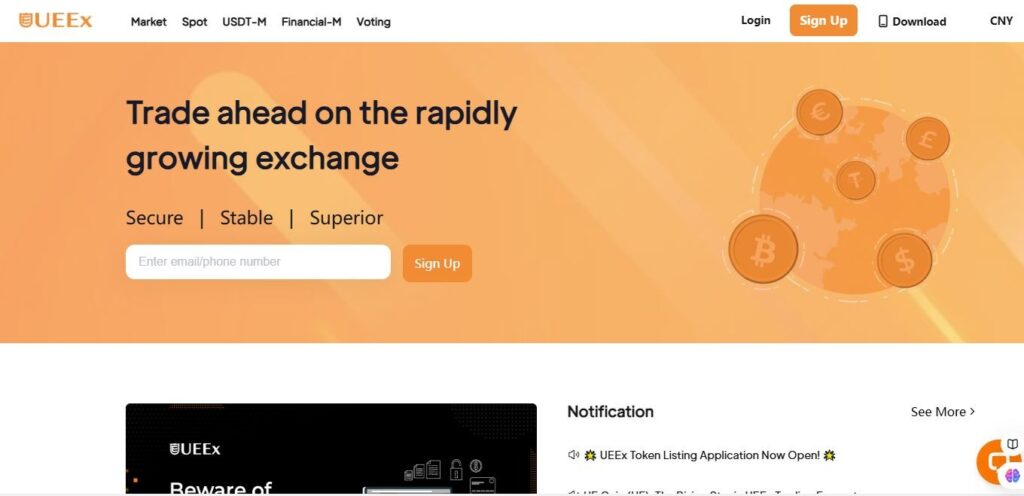
UEEx is a reliable crypto exchange that has become popular around the world, since its launch in December 2020. Today, it serves over 1 million users across several countries.
The platform offers 300+ cryptocurrencies and 230+ trading pairs, giving users plenty of options to buy, sell, or invest.
UEEx also supports 10+ fiat currencies (like USD), making deposits and withdrawals simple. Safety is a big focus, 93% of funds are kept in cold storage, reducing the risk of hacks.
On top of that, UEEx keeps things beginner-friendly with competitive fees, demo trading, copy trading, and 24/7 customer support. All of this makes it a strong choice for both new and experienced traders.
Pros
- Offers UECoin (UE), a native cryptocurrency with a total supply of 10 billion.
- Provides a mobile app for both Android and iOS users.
- Ensures 24/7 customer service for quick assistance.
- Delivers competitive fee rates and preferential VIP trading benefits.
cons
- High leverage risk with up to 200x on futures trading, which may not be suitable for all users.
Coinbase: Best for its clean design and simple interface
Coinbase is designed for people with zero crypto experience. The interface is clean, buying crypto feels as simple as shopping online, and there’s built-in educational content.
It’s regulated in multiple countries, giving beginners a sense of safety. Even better, users can earn small amounts of crypto by completing short learning modules.
Pros:
- Extremely easy to use.
- Regulated and secure.
- Educational content with rewards.
Cons:
- Higher fees than most competitors.
- Limited advanced features unless you use Coinbase Advanced.
Binance: Low Fees and High Options
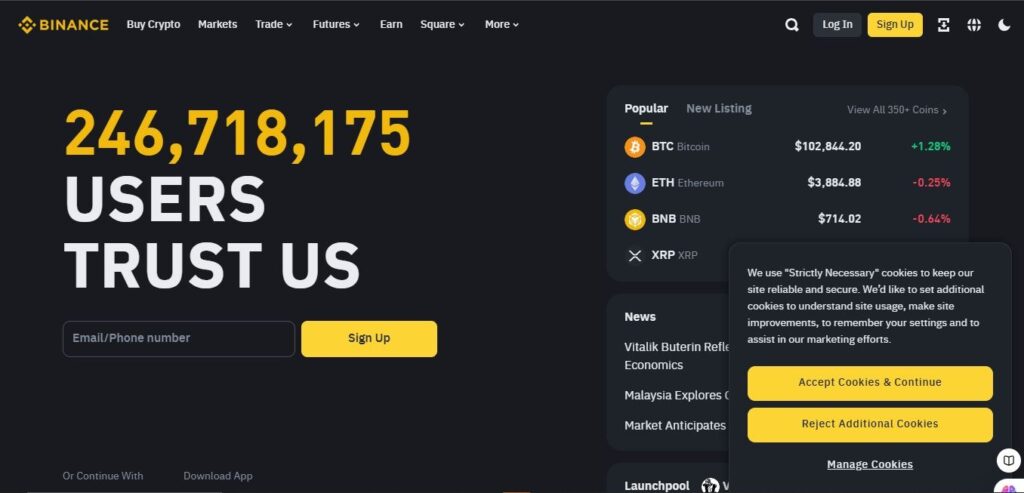
Binance is the world’s largest crypto exchange, known for extremely low fees and one of the largest selections of cryptocurrencies.
Beginners can start with the simple “Convert” option, which hides advanced trading screens until you’re ready. The platform also has a large support section with tutorials and guides.
Pros:
- Very low trading fees.
- Hundreds of coins.
- Beginner-friendly “Convert” feature for simple swaps.
Cons:
- Can feel overwhelming at first.
- Some features are restricted in certain countries.
Kraken: Safety First
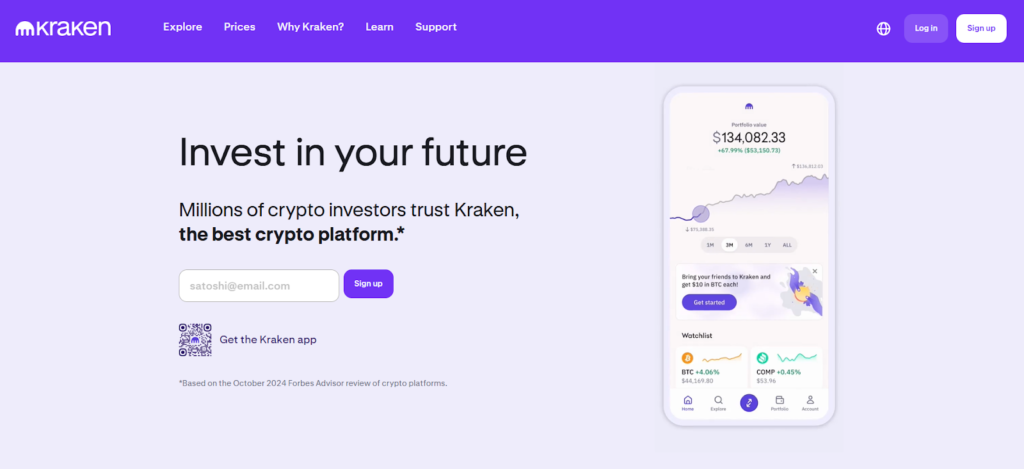
Kraken has one of the best reputations in the industry for security and transparency. It’s been around since 2011 and has never been hacked.
Fees are clearly displayed, and there are no hidden costs. Beginners can use Kraken’s “Instant Buy” option while avoiding the complexity of advanced trading screens until they’re ready.
Pros:
- Very secure.
- Clear, fair fees.
- Good for both beginners and advanced traders.
Cons:
- The interface feels more technical.
- Fewer coins than Binance.
Crypto.com: Mobile Friendly & Rewarding

Crypto.com is built for mobile users. The app is modern, clean, and loaded with perks like a Visa card that gives cashback in crypto. The “Buy” feature is straightforward, letting you purchase with a debit card or bank transfer in just a few taps.
Pros:
- Modern, easy-to-use app.
- Cashback Visa card.
- Wide coin selection.
Cons:
- Fee structure can be confusing.
- Some perks require staking CRO tokens.
eToro: Learn by Copying
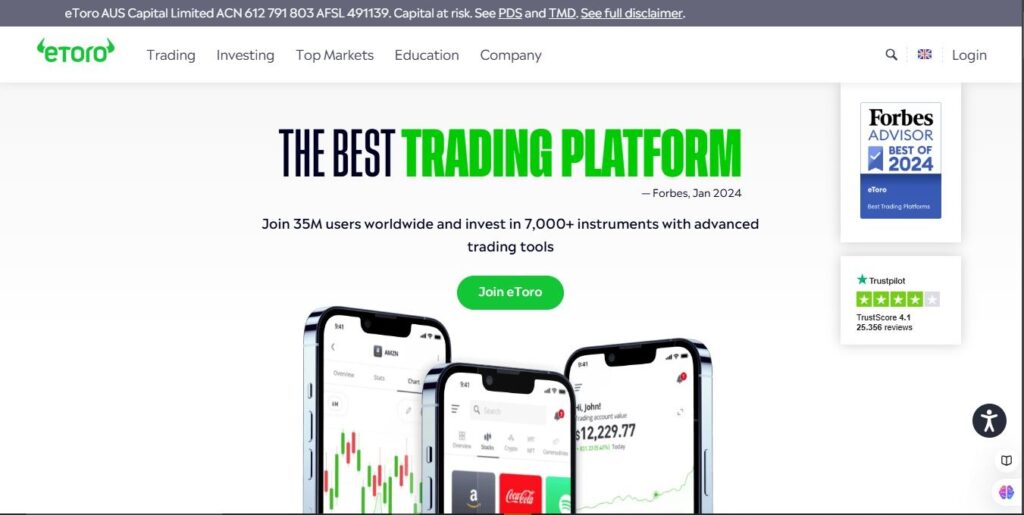
eToro is a multi-asset trading platform that offers stocks, ETFs, and crypto in one place. Its standout feature is Copy Trading, where you can automatically mirror the trades of experienced investors. This helps beginners learn strategy while participating in the market.
Pros:
- Copy trading lets you follow experts.
- User-friendly interface.
- Regulated in many countries.
Cons:
- Higher spreads.
- Fewer coins than big exchanges.
Bitstamp: Simple & Trusted
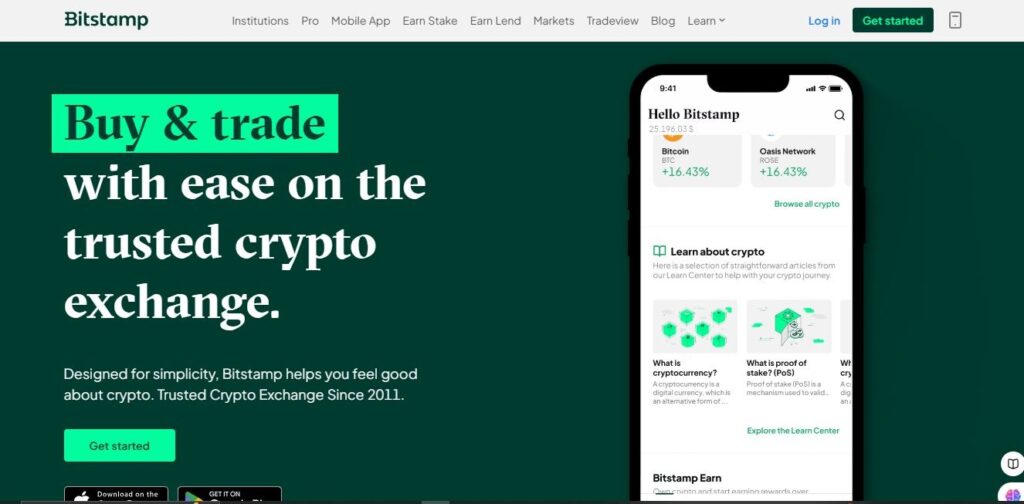
Bitstamp is one of the oldest exchanges still running and is known for its reliability. The platform’s layout is uncluttered, making it easy for beginners to find their way around. Fees are straightforward, and customer support is responsive.
Pros:
- Oldest active exchange with a solid reputation.
- Transparent fees.
- Easy-to-use interface.
Cons:
- Smaller coin selection.
- Limited extra features.
KuCoin: Huge Coin Selection

KuCoin offers access to hundreds of cryptocurrencies, including many smaller coins not available on other beginner platforms. It has a basic trading mode for newcomers and a more advanced one for when they’re ready.
Pros:
- Hundreds of coins.
- Low fees.
- No KYC for basic use in some countries.
Cons:
- Not licensed in certain places.
- Fewer fiat options.
Gemini: Secure & Regulated

Gemini focuses on strong security and regulatory compliance, especially in the U.S. The app is minimalist and includes features like Recurring Buys, perfect for beginners who want to dollar-cost average without watching the market daily.
Pros:
- Strong security.
- Regulated in the U.S.
- Recurring buy option for DCA.
Cons:
- Higher trading fees.
- Smaller coin list than Binance or KuCoin.
Basic Trading Concepts Every Beginner Should Know
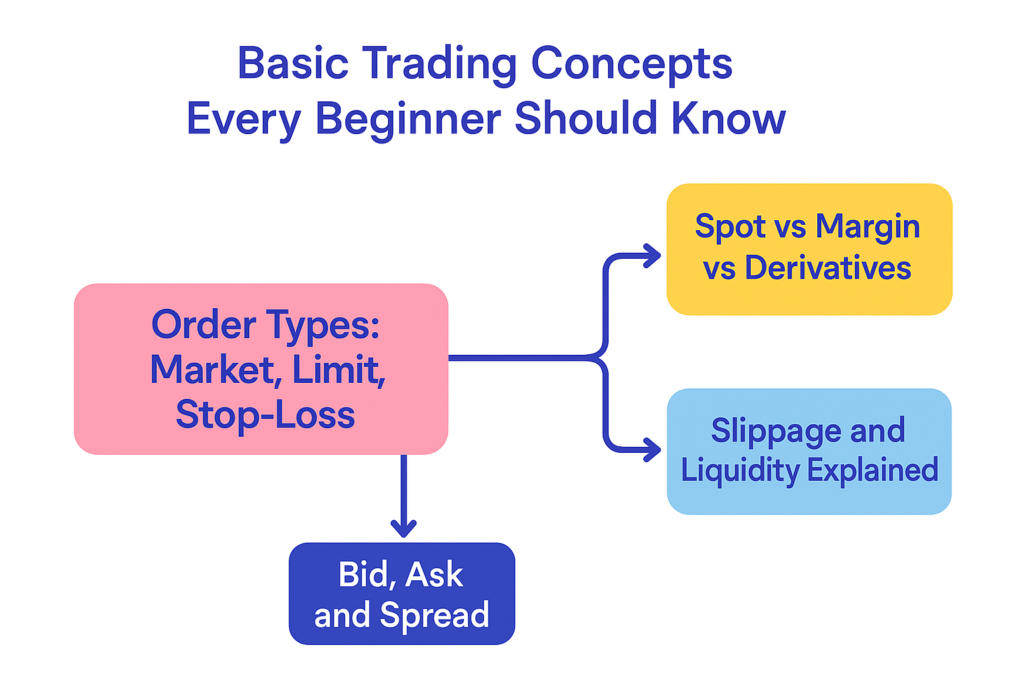
Before you place your first trade, it’s important to understand some basic concepts. These will help you avoid costly mistakes and feel more confident when using any trading platform.
Order Types: Market, Limit, Stop-Loss
When you buy or sell on a trading platform, you’re creating an “order.” The type of order you choose affects when and at what price your trade will be completed.
- Market Order: You buy or sell instantly at the best price available right now.
- Limit Order: You set the exact price you want to buy or sell at, and your trade only happens if the market reaches that price.
- Stop-Loss Order: An automatic sell that triggers if the price drops to a level you set, helping you limit losses.
Spot vs Margin vs Derivatives (Simple Comparison)
There are different ways to trade, and the risk changes with each one:
Spot Trading: The simplest form. You buy the actual asset (e.g., Bitcoin) and own it. Example: Buying 1 BTC and holding it in your account.
Margin Trading: You borrow money from the exchange to trade bigger amounts than you own. This can amplify both profits and losses. Example: You have $100, but borrow $200 more to trade with $300 total.
Derivatives Trading: You trade contracts that track the price of an asset without owning it. Common in futures and options trading. Often used for speculation or hedging.
Example: Predicting that Bitcoin’s price will rise by next week without actually buying any Bitcoin.
Slippage and Liquidity Explained
Liquidity: How easy it is to buy or sell without affecting the price. High liquidity means trades happen quickly at stable prices; low liquidity means your order might take longer or cause price changes.
Slippage: The difference between the price you expect and the price you actually get. This can happen if the market moves fast or liquidity is low.
Example: You place a buy order at $100, but it’s filled at $101 because the price jumped.
Tools & Resources for Beginners in Crypto trading
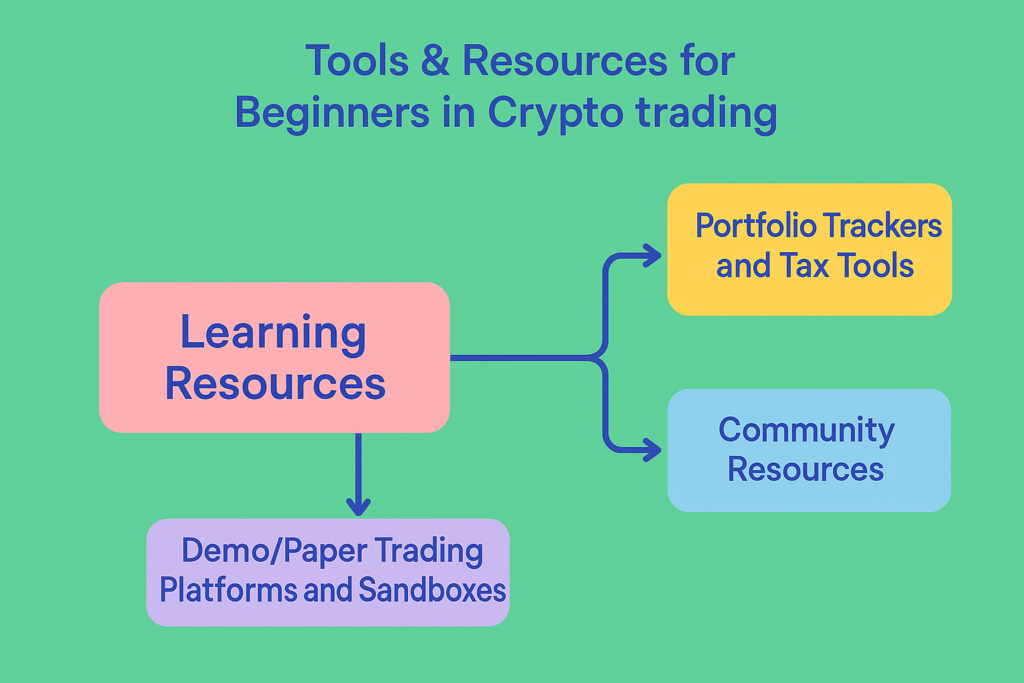
Getting started in crypto can feel overwhelming, but you don’t have to figure it all out alone. There are plenty of free and paid tools that make learning, tracking, and practicing much easier.
Learning Resources (Blogs, Courses, Exchange Education Centers)
If you’re new, start by building your knowledge follow up on these learning aids
- Crypto Blogs: Sites like CoinDesk, CoinTelegraph, and Binance Blog publish daily updates and guides.
- Free Online Courses: Platforms like Coursera, Udemy, and Khan Academy offer beginner-friendly blockchain and crypto lessons.
- Exchange Education Centers: Many exchanges (Binance Academy, Coinbase Learn, Kraken Learn) have free guides, videos, and quizzes.
Portfolio Trackers and Tax Tools
Once you start buying, you’ll need to keep track of what you own and what it’s worth.
Portfolio Trackers apps like CoinStats, Delta, and Blockfolio let you monitor your coins in real-time.
Tax Tools services like CoinTracker, Koinly, and Accointing help you prepare reports for taxes (if required in your country).
Demo/Paper Trading Platforms and Sandboxes
Practice makes perfect and you don’t have to risk real money to learn. Demo Trading platforms like eToro and TradingView offer simulated trading with fake balances.
Some exchange sand boxes have test environments for practicing orders without spending real funds.
Community Resources
Joining a crypto community helps you stay updated and learn from others but you must be careful. Check the platform’s own discussion boards for updates and FAQs.
Some popular Subreddit include r/CryptoCurrency and r/Bitcoin for news and discussions.
Many projects have official chat groups for announcements and Q&A example may include a telegram group, be sure to source for information before startup
Common Beginner Mistakes & How to Avoid Them
Starting your trading journey can be exciting, but it’s also easy to make costly mistakes if you’re not careful.
Here are some of the most common errors beginners make, and simple ways to protect yourself.
Chasing Hype and FOMO Buys
Buying an asset just because everyone on social media is talking about it or because its price is shooting up. This is called FOMO, fear of missing out. Often, by the time you buy, the price is already near its peak, and it can drop fast.
How to avoid:
- Always do your own research (DYOR).
- Look at the project’s fundamentals, not just the hype.
- Use a plan for entry and exit instead of reacting emotionally.
Ignoring Fees and Spreads
Focusing only on the asset’s price and ignoring trading fees, withdrawal fees, and spreads (the difference between buying and selling prices). These can quietly eat into your profits.
Example: You make a $20 profit, but after paying $15 in combined fees, you’ve only gained $5.
How to avoid:
- Check the platform’s fee structure before trading.
- Compare fees between exchanges.
- Avoid trading very small amounts too often, as fees can add up.
Keeping Large Balances on Exchanges Unnecessarily
Leaving all your crypto in an exchange wallet for months or years. Exchanges can get hacked, freeze withdrawals, or have technical issues.
How to avoid:
- Keep only the amount you plan to trade on the exchange.
- Move long-term holdings to a secure wallet (hardware wallets are safest).
- Write down your wallet’s recovery phrase and store it offline.
Falling for Giveaways and Phishing Scams
Believing fake messages, emails, or social media posts that promise free crypto in exchange for sending your own. Scammers also make fake websites that look like real exchanges to steal your login details.
Example: A fake “Elon Musk” account says, “Send 0.1 BTC and get 0.2 BTC back!” you send it, and never hear back.
How to avoid:
- Never send crypto to “double your money” offers, they are always scams.
- Check website URLs carefully before logging in.
- Enable 2FA (two-factor authentication) on your accounts.
Conclusion
Choosing the right crypto trading platform as a beginner can make a huge difference in your learning journey. A good platform should be easy to use, secure, affordable in fees, and offer multiple ways to deposit and withdraw money.
Start with a platform that matches your needs, whether you want something simple like Coinbase, low-cost like Binance, or all-in-one like eToro. Always begin with small amounts, learn the basics, and take advantage of free educational tools that many exchanges offer.
FAQs
What is the best crypto trading platform for a beginner?
The best platform is one that is easy to use, has low fees, offers good security, and supports the coins you want. Examples include Coinbase, Binance, and eToro.
Do I need an ID to open a crypto trading account?
Yes, most platforms require KYC (Know Your Customer) verification. You’ll need to upload a photo ID and sometimes proof of address.
Can I start trading crypto with a small amount?
Yes! Many platforms let you start with as little as $10 or even less, depending on the exchange and your location.
Which payment methods can I use to buy crypto?
Most beginner-friendly platforms accept bank transfers, debit/credit cards, and sometimes PayPal. Fees vary by method.
Is it safe to keep my crypto on the platform?
It’s safe short-term, but for long-term storage, use a private wallet. Exchanges can be hacked, so don’t store large amounts there.