Key Highlights
- The 2021 DLT Act enables direct crypto-to-property transactions with blockchain-registered deeds
- Switzerland allows 0% capital gains tax on private crypto transactions, and cantonal wealth taxes range from 0.1% to 1%
- Lex Friedrich permits non-EU/EFTA buyers with property caps, and Golden residency options are also available
The State Of The Economy For Citizens & Foreigners Related To Acquiring Property In Switzerland
Source: Wikipedia
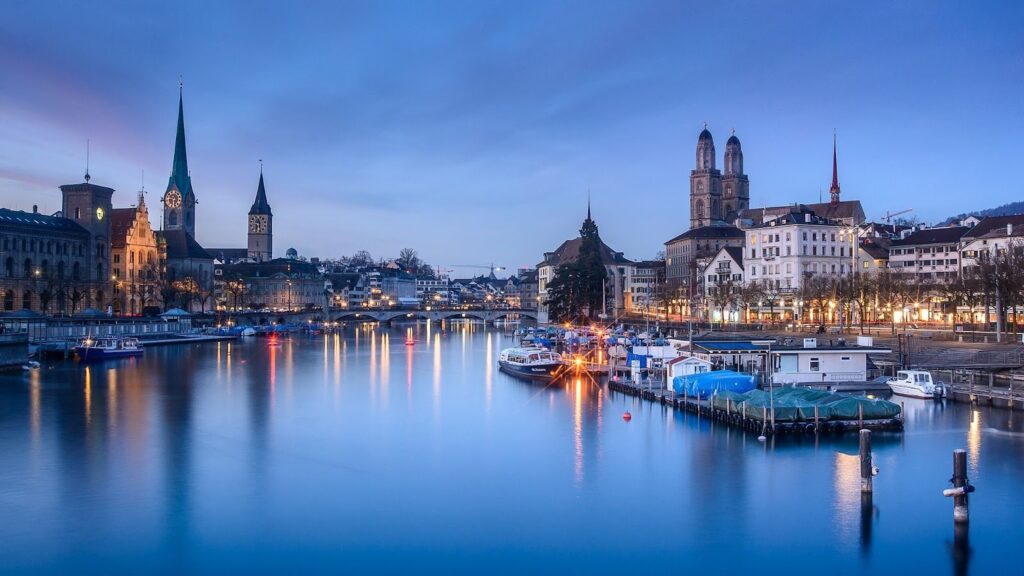
Switzerland’s economy in 2025 operates with characteristic precision, maintaining GDP growth at 1.8%-2.0% driven by exports in precision manufacturing, pharmaceuticals, and financial services.
For Swiss citizens, economic indicators paint a favorable picture with median household income reaching CHF 76,200 (adjusted to 2023 dollars), unemployment sits at 2.3%, and inflation remains contained at 1.2%.
Swiss Citizens
The domestic market offers accessibility through competitive mortgage rates hovering at 1.5-2.5% for fixed 10-year terms. Cantonal wealth taxes apply at rates between 0.05-1% on net assets exceeding CHF 100,000, though exemptions for primary residences up to CHF 200,000 provide relief. However, housing affordability presents challenges.
Average apartment prices have climbed to CHF 10,239.91 per square meter (~$10,239.91, or approximately 0.18 BTC / 3.63 ETH), reflecting annual increases of 3-5%. This surge stems from chronic supply shortages where completions lag household growth by 20,000 units yearly, according to Federal Housing Office data.

Source: Pexels
Rental burdens reveal the strain: households earning under CHF 80,000 allocate an average of 29.1% of income to housing, spiking to 35.7% in metropolitan areas like Zurich and Geneva. In these urban centers, only 41% of rental listings remain affordable for middle-income earners, compared to 80% of low-income housing stock deemed affordable outside major cities.
Foreign Investors
International buyers operate in Switzerland’s property market through the Lex Friedrich framework, which balances openness with sovereignty.
Non-EU/EFTA buyers can acquire secondary residences or commercial properties, though restrictions apply and purchases are capped at 10% of a commune’s housing stock in regions like Geneva and Vaud, with outright bans in certain zones.
Notably, no reciprocity requirements exist, enabling U.S. or UAE investors to proceed via notarized declarations.
Foreign buyers face acquisition taxes of 3-5%, plus notary and cadastral fees of 0.25-1%, though partial reclamation applies for investors and the pathways to residency include lump-sum taxation (CHF 200,000-400,000 annual flat rate for high-net-worth individuals) or establishing businesses with CHF 1 million+ investments, often collateralized by real estate.
Rental yields average about 2.5%-3.5% nationally, reaching 4% in Lugano, which is lower than EU averages but prized for stability. For global investors, Switzerland offers political neutrality, AAA credit ratings, and a Swiss franc serving as a safe-haven currency against eurozone volatility. Approximately 15% of households pay HOA-equivalent fees averaging CHF 200 monthly.
The State of Cryptocurrencies In Switzerland
Source: Pexels
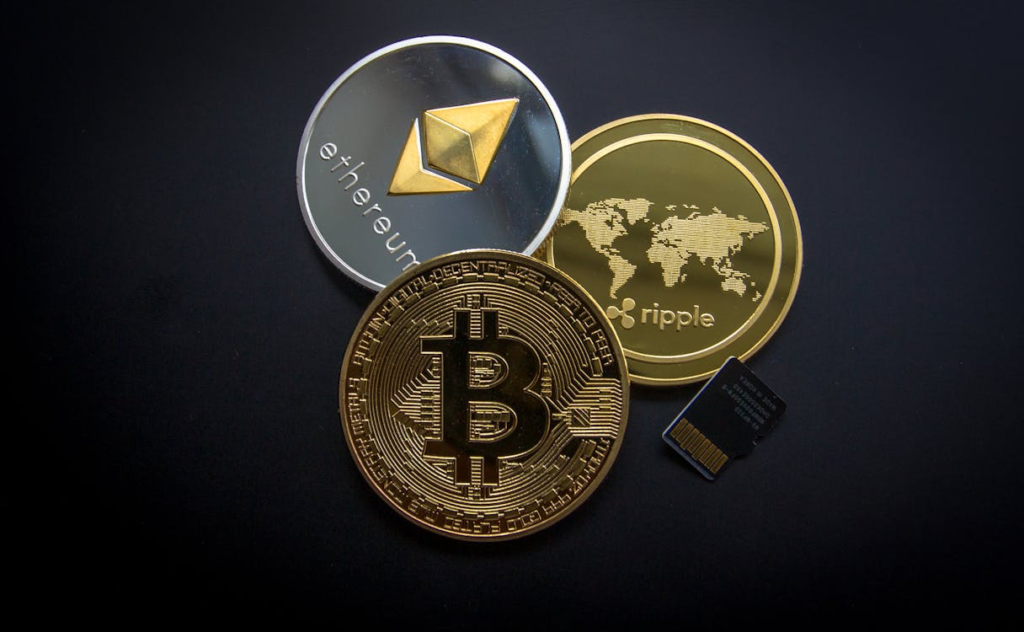
Switzerland has established itself as the global epicenter of cryptocurrency innovation in 2025, with “Crypto Valley” in Zug hosting over 900 blockchain entities spanning banking, real estate, and technology sectors.
The Cryptocurrency Regulatory Framework In Switzerland
The 2021 Federal Law on Distributed Ledger Technology (DLT Act) revolutionized Switzerland’s crypto landscape by:
- Classifying cryptocurrencies as assets with legal standing
- Introducing ledger-based securities (Registerwertrecht) transferable exclusively via blockchain registers meeting integrity standards
- Amending the Financial Market Infrastructure Act to license DLT trading systems as financial intermediaries subject to AML/KYC requirements
- Establishing bankruptcy protections through asset segregation for custodians
- Expanding Fintech licenses to DLT activities up to CHF 100 million in deposits (non-interest-bearing crypto)
- Redefining securities under FinSA to encompass tokenized rights
Platforms like SIX Digital Exchange (SDX) now facilitate B2B issuance, trading, and custody under this framework.
Mining remains unregulated for personal use and exempt from financial intermediation rules under FinSA and AMLA, while staking services require risk disclosures and asset segregation.
CARF Implementation
Approved in June 2025 and effective January 1, 2026 (first exchanges in 2027), the Crypto-Asset Reporting Framework mandates annual reporting of transactions exceeding USD 50,000 by providers, including exchanges and wallets. This aligns Switzerland with OECD standards across 74 partner jurisdictions (EU, UK, G20 minus U.S., China, and Saudi Arabia), though self-custody remains exempt.
Buying Real Estate With Crypto In Switzerland
Source: Pexels
Switzerland’s real estate sector has seamlessly integrated cryptocurrency payments through DLT-registered infrastructure, enabling direct transactions without mandatory fiat conversion.
Under the 2021 DLT Act, buyers can execute property purchases through:
- Direct Wallet Transfers: Payments from crypto wallets to blockchain-registered ledgers
- Cantonal Registration: Land registers in Zug and Ticino log transaction IDs (TXIDs) after six blockchain confirmations
- Notarization: AMLA-compliant notaries oversee KYC procedures for intermediaries holding keys
- Timeline: Process reduced from months to days compared to traditional methods
- Fee Structure: Notary fees at 0.25-1% of transaction value
Licensed agencies facilitate transactions through FINMA-vetted custodians, with stablecoins increasingly used to hedge CHF volatility.
The Federal Housing Office notes this payment flexibility particularly appeals to buyers navigating market shortages, where 2.8% of tenant households exceed budget constraints.
Real Estate Agencies Accepting Cryptocurrencies In Switzerland
| Agency Name | Crypto Accepted | Payment Method Details |
| Engel & Völkers Switzerland | BTC, ETH, major tokens | Luxury focus with crypto exchange integration; accepts for high-end purchases (e.g., CHF 10M+ chalets), converting via partners like CoinsPaid for seamless notary binding |
| Crypto Emporium | BTC, ETH, SOL, DOGE, USDT, and other major cryptocurrencies | Reduces fees attached to acquiring property via traditional banking by allowing their clients pay in direct crypto transactions |
| Bithome | BTX ETH, Stablecoins, and other major cryptocurrences | Send a pre-agreed crypto amount to the address provided by Bithome using your preferred wallet, then receive transaction confirmation. |
Engel & Völkers
About The Company
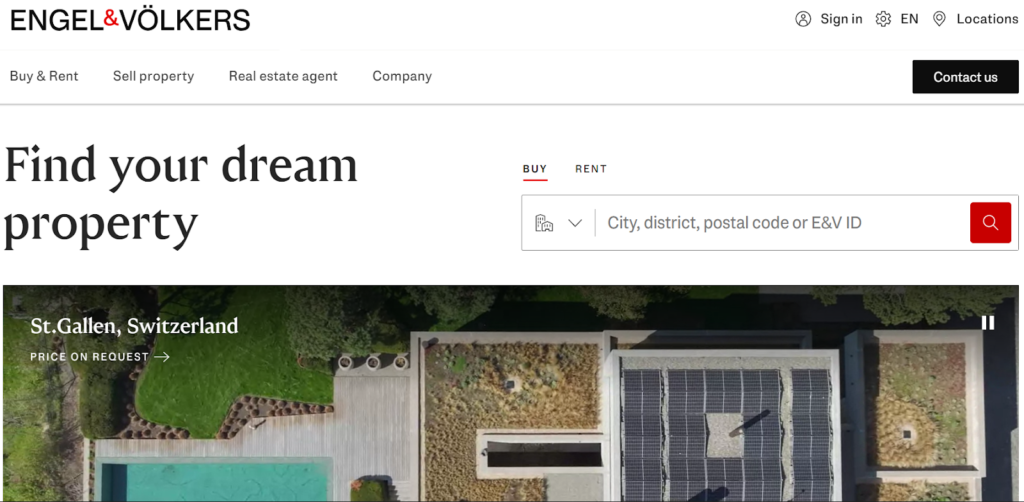
Engel & Völkers has specialized in premium residential and commercial real estate services for over 45 years. With 16,700+ people in 35+ countries and 1,000 locations, they facilitate luxury property transactions, including crypto-to-property purchases through established partnerships.
Cryptocurrencies Accepted
BTC, ETH, major tokens
Transaction Process
Luxury property purchases are facilitated through crypto exchange integration via partners like CoinsPaid. Transactions are processed in the blockchain for high-end purchases, enabling seamless notary binding for properties valued at CHF 10M+, including chalets and luxury residences.
Crypto Emporium
About The Company
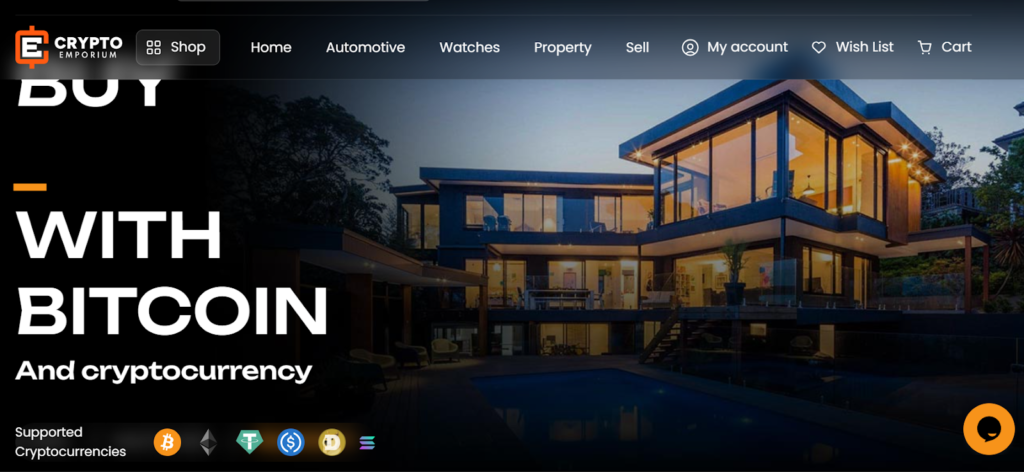
Crypto Emporium is the premier platform for acquiring Swiss real estate using cryptocurrency. Launched in 2018 as the world’s first cryptocurrency-only e-commerce store, they connect buyers with trusted, fully vetted sellers offering exclusive Swiss properties.
Cryptocurrencies Accepted
BTC, ETH, SOL, DOGE, USDT, and other major cryptocurrencies
Transaction Process
Discover properties, including contemporary city apartments and traditional alpine chalets. Cryptocurrency streamlines transactions by eliminating high banking fees and reducing processing times. All properties are prepared for crypto transactions with a swift, secure process.
Bithome
About The Company
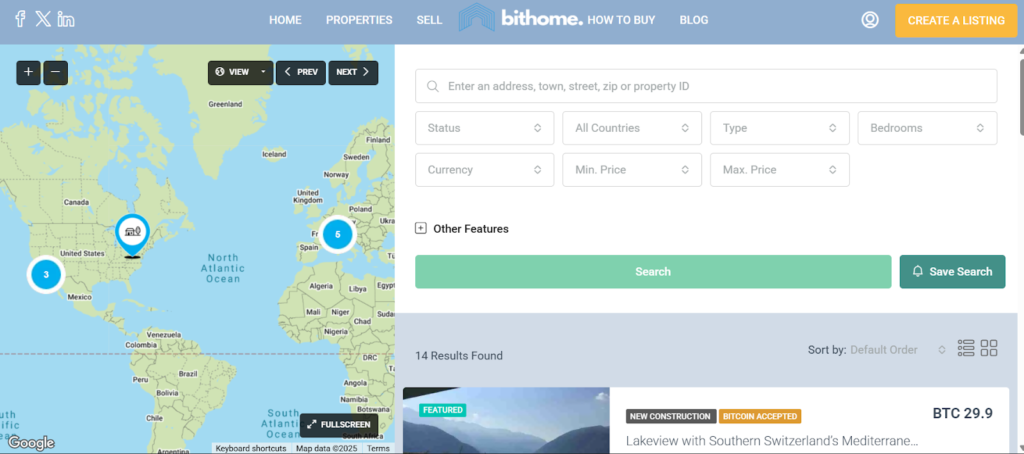
Bithome connects realtors to crypto holders worldwide, partnering with UTRUST, a top cryptocurrency payment solution. Their platform enables the purchase of real estate properties around the world using the strongest cryptocurrencies with bleeding-edge blockchain security.
Cryptocurrencies Accepted
BTC, ETH, Stablecoins, and other major cryptocurrencies
Transaction Process
Choose a property on the Bithome website, reach out to the listing owner to agree on terms and prices. Parties set a date, time, and transaction amount. Send the crypto amount to the provided address using your preferred wallet, then receive transaction confirmation.
What Regions Are The Hottest For Real Estate In Switzerland?
Switzerland’s 2025 real estate market shows concentrated growth in specific regions, with national averages at CHF 10,239.91 per square meter reflecting 4-6% year-over-year gains amid supply shortfalls of 20,000 units, according to Federal Housing Office data.
National yields average 2.5-3.5%, with 80% of low-income housing remaining affordable outside urban centers.
Some of the hottest regions include:
Zug
Source: TieTalent
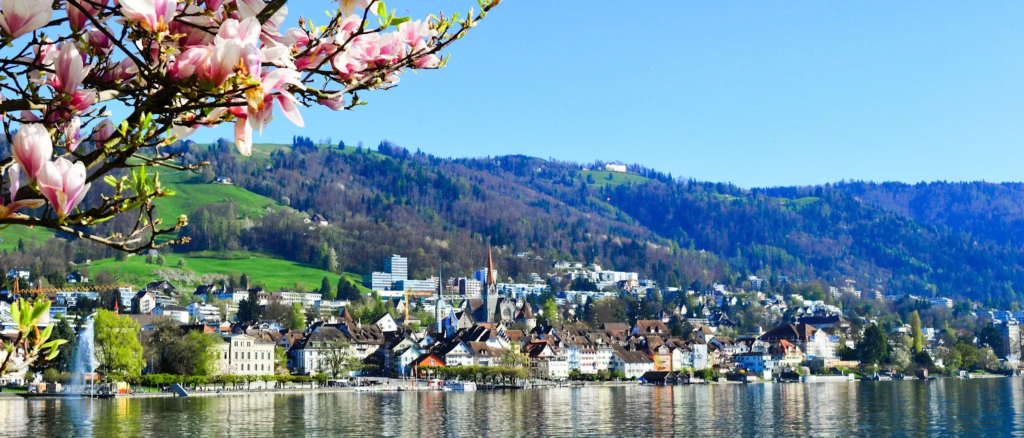
- Price: ~CHF 12,000/sqm
- Yield: 4%
- Growth: 15% demand increase driven by 900+ blockchain firms
- Infrastructure: DLT-friendly cantonal registers pioneering TXID deeds since 2021
- Appeal: Villa enclaves overlooking Zugersee attracting blockchain entrepreneurs
Lugano

Source: The WTA
- Price: CHF 11,500/sqm (up 5%)
- Yield: 3.5%
- Crypto Integration: BTC/USDT legal tender status; LVGA token ecosystem
- Market: Mediterranean-style lakeside properties with tokenized real estate pilots
- Outlook: CARF 2026 implementation amplifying appeal for digital asset holders
Zurich
Source: Winalist
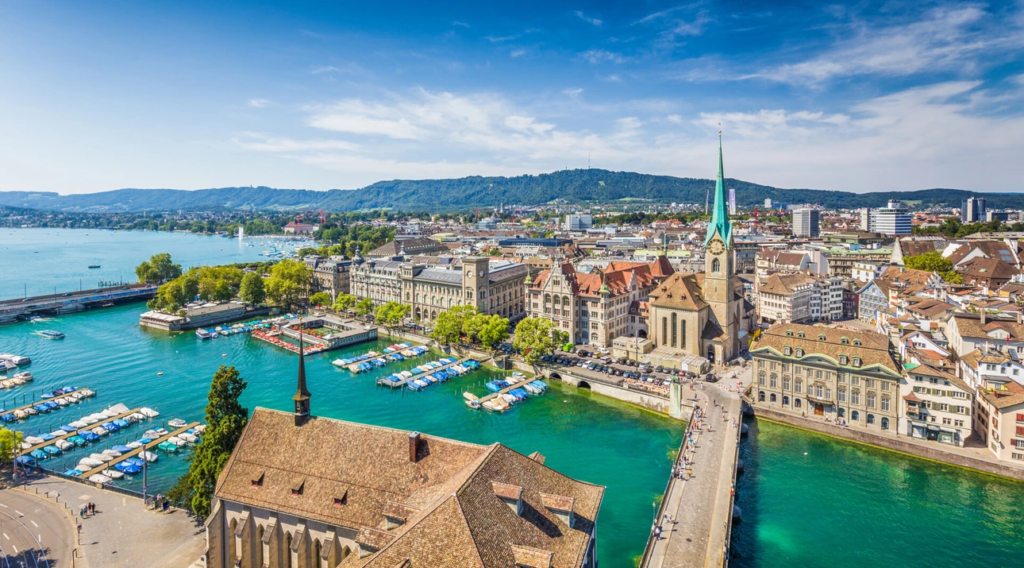
- Price: €5,037/sqm equivalents in premium districts like Seefeld
- Yield: 2.8%
- Growth: 11% appreciation with 25% expat population growth
- Infrastructure: Bitcoin ATMs since 2014; SDX platform presence
- Challenge: Only 41% of rentals are affordable for middle earners
Geneva
Source: Winalist
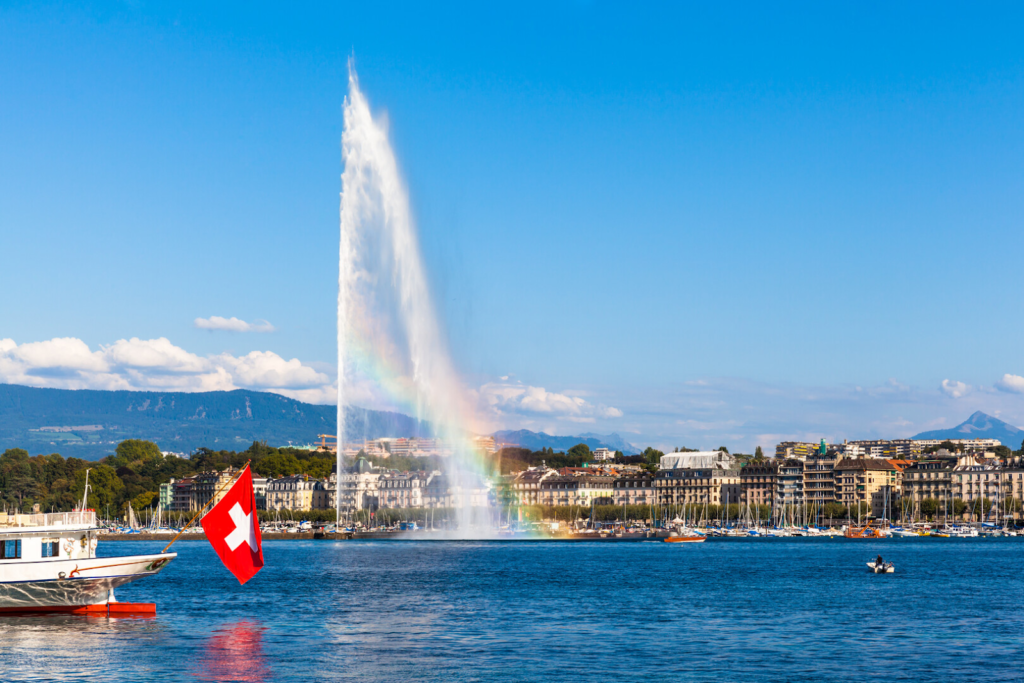
- Price: CHF 13,000/sqm (7% annual rise)
- Yield: 3%
- Market: Cologny and diplomatic quarters attracting HNWIs
- Incentive: Lump-sum taxation options
- Constraint: 5,000-unit supply shortage pushing rental burdens to 35.7% of income
Basel and Lausanne

Source: The Standard
- Price: CHF 9,500-10,500/sqm
- Basel Yield: 6% (pharmaceutical sector boom)
- Lausanne Appeal: Academic institutions driving cross-border talent
- Market: Mid-tier entry points for European buyers
Other luxury segments include the St. Moritz and Engadin Valleys.
Challenges & Opportunities
Regulatory Complexity
- DLT Act’s blockchain integrity requirements may delay non-compliant transactions by 4-6 weeks
- CARF’s 2026 implementation requires meticulous reporting for transactions exceeding USD 50,000
- FINMA’s stablecoin scrutiny around default guarantees risks reclassification for tokenized real estate
Cantonal Variations
- Zug’s liberal framework contrasts sharply with Vaud’s Lex Friedrich restrictions
- Foreign acquisition taxes reach 5% in certain cantons
- AML forensics requiring detailed wallet histories deters approximately 20% of cross-border transactions
Affordability Pressures
- Only 41% of Basel/Zurich listings suit medium earners per FHO data
- 2.8% of tenant households exceed budget constraints
- Midterm supply gaps of 15,000 units persist in major markets
Market Volatility
- Even stablecoins carry conversion risks during high-volume periods
- Property price appreciation (3-5% annually) outpaces income growth in urban centers
While all of the above are challenges to be overcome when acquiring property with crypto in Switzerland, the country still creates avenues for several opportunities that are scarce elsewhere. Here’s a few you should know:
Legal Protections
- DLT’s bankruptcy segregation reduces counterparty risks by approximately 70% via SDX custody
- Asset protection is stronger than traditional holdings
Tax Advantages
- 0% capital gains tax on private crypto transactions (versus 19-28% in comparable EU markets)
- VAT-exempt crypto exchanges
- Deductible losses for professional traders
- Superior yields (3.5% in Lugano) compared to Swiss bonds (1.5%)
Infrastructure Leadership
- Crypto Valley’s 900+ firms pioneering NFT integration for art/luxury hybrid properties
- 23% national adoption rate (EU-high), driving institutional capital flows
- Henley Index 11th ranking, attracting international investment
Transaction Efficiency
- Direct BTC/ETH/USDT payments in Zug/Lugano expedite closings
- Fee reduction of approximately 2% versus international wire transfers
- Days instead of months for DLT-registered transactions
Fractional Ownership
- Platforms like SwissRealCoin enable entry to CHF 10M+ properties through tokenization
- Democratizing access to premium commercial real estate
International Compliance
- CARF alignment with 74 OECD partners, enhancing transparency
- Lump-sum taxation attracting HNWIs seeking residency
For digital asset holders, Switzerland represents a unique convergence: established property rights meet blockchain innovation, zero capital gains taxation meets institutional custody, and alpine stability meets technological frontier, creating a market where crypto vaults translate directly into tangible real estate legacies.
Frequently Asked Questions (FAQs)
Is it legal to buy property directly with Bitcoin in Switzerland?
Yes. Under the 2021 DLT Act, direct wallet-to-ledger transfers are legally recognized in cantons like Zug and Lugano. Notaries log transaction IDs (TXIDs) after blockchain confirmation. Fiat conversion is not mandatory, though AML compliance documentation remains required.
What cryptocurrencies are accepted for Swiss real estate?
Major cryptocurrencies accepted include BTC, ETH, USDT, SOL, DOGE, and USDC. Stablecoins like USDT and USDC are increasingly favored for price stability. Agencies like Swiss Real Estate facilitate direct acceptance, while SwissRealCoin offers tokenized securities for commercial properties.
How does crypto taxation work for property purchases in Switzerland?
Private investors enjoy 0% capital gains tax on irregular crypto trades. Cantonal wealth taxes of 0.1-1% apply to holdings valued at FTA year-end rates. Income from staking, mining, or DeFi activities faces progressive taxation up to 45%. Crypto exchanges are VAT-exempt. Professional traders can deduct losses. No additional crypto-specific taxes apply to property transactions beyond standard acquisition taxes.
Can foreigners use crypto for residency-linked properties in Switzerland?
The Lex Friedrich framework limits non-EU/EFTA buyers to secondary residences with certain caps, but crypto funds can support CHF 1 million+ business establishment or lump-sum taxation arrangements (CHF 200,000-400,000 annually) that facilitate residency. Agencies like Engel & Völkers and Vicox Legal coordinate compliant conversions. Note that crypto payment doesn’t directly grant Golden Visa status—residency pathways are separate but can be funded through digital assets.
Conclusion
Switzerland in 2025 stands at the forefront of crypto-enabled real estate, merging centuries of property law tradition with blockchain innovation. The nation’s 23% crypto adoption rate, 900+ blockchain entities in Crypto Valley, and pioneering DLT Act create an unmatched ecosystem for digital asset holders seeking tangible property investments.
With 0% capital gains tax on private crypto transactions, streamlined blockchain-registered deeds reducing closing timelines from months to days, and direct acceptance of BTC, ETH, and stablecoins by major agencies, Switzerland has eliminated traditional friction points in cross-border real estate acquisition. Property prices averaging CHF 10,239.91 per square meter reflect strong fundamentals, GDP growth at 1.8-2.0%, unemployment at 2.3%, and inflation contained at 1.2%, while hotspots like Zug (CHF 12,000/sqm) and Lugano (CHF 11,500/sqm) offer premium yields between 3.5-4%.
Challenges remain, including cantonal regulatory variations, affordability pressures in urban centers where only 41% of listings suit medium earners, and upcoming CARF reporting requirements for 2026. Yet opportunities outweigh obstacles: bankruptcy-protected DLT custody, tokenized fractional ownership of CHF 10M+ properties, and institutional infrastructure through platforms like SDX position Switzerland uniquely.
For the global citizen navigating inflation, high interest rates, and cross-border payment friction, Switzerland’s crypto-real estate market offers a compelling solution, where digital wealth converts seamlessly into Alpine stability, regulatory clarity meets financial privacy, and blockchain technology secures generational assets as enduring as the Matterhorn itself.
UPay facilitates this journey by bridging fiat and crypto with CARF-compliant conversions, ensuring your digital assets translate into Swiss real estate while maintaining the financial freedom and security that define both cryptocurrency and Switzerland’s storied neutrality.