


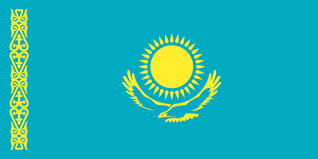
Kazakhstan
Current Economic Situation in Kazakhstan

Source: ADB
Kazakhstan’s economy has demonstrated significant resilience, shifting away from the slower 3.2% growth seen in early 2024. In the period of January to September 2025, the economy expanded by 6.3%, outperforming expectations.
This growth was primarily fueled by the construction sector, which saw a 14.9% increase, followed by mining and quarrying at 9.3%.
The services sector remains the most critical pillar, accounting for 54% of the total GDP. Within this sector, wholesale and retail trade, along with transport and communication, are the largest contributors.
With inflation stabilizing—dropping significantly from the 17.2% highs of previous years to more manageable levels—the environment for digital asset investment and technological infrastructure has become more predictable for institutional players.
Kazakhstan is actively enhancing its role in global trade. The country aims to become a key hub between China and Europe by developing major infrastructures like the port of Aktau and a 19-hectare container hub.
This initiative, known as the Middle Corridor, has gained traction, especially after the Russian invasion of Ukraine, offering a shorter route for goods between Asia and Europe.
In digital finance, Kazakhstan has made significant strides. The 2020 Digital Financial Assets Act established a regulatory framework for cryptocurrencies, requiring licensing for activities like trading and mining.
As of April 2023, the Ministry of Digital Technology oversees these licenses, allowing companies to operate legally within the Astana International Financial Centre (AIFC).
The State of Crypto Adoption in Kazakhstan
Kazakhstan has seen a significant increase in cryptocurrency engagement among its population. As of late 2024, approximately 8% of Kazakhstanis own cryptocurrencies, a doubling from the 4% recorded in 2022.
This growth reflects a steady upward trend despite the complexities of the global market. In the 2025 Global Crypto Adoption Index, Kazakhstan ranked 87th for the period between January and July 2025.
While this puts the country behind regional neighbors like Uzbekistan (which jumped to 33rd), it demonstrates a solidifying interest in digital assets among Kazakh citizens.
A major milestone in adoption is the “CryptoCity” initiative announced by President Kassym-Jomart Tokayev. Planned for the new city of Alatau near the south-eastern border, CryptoCity is designed as a pioneering pilot zone where cryptocurrencies could be used to pay for restaurants, real estate, and investments within a regulated sandbox environment.
This project aims to attract developers and IT specialists, positioning Alatau—already a research hub housing the Institute of Nuclear Physics—as the engine of Kazakhstan’s digital economy.
The mining sector continues to be a central part of the adoption story, though it is now under stricter oversight. Under regulations that took effect in January 2024, all “white” (legal) miners must obtain state licenses and are required to trade at least 50% of their mined coins through AIFC-registered platforms.
This policy ensures that the wealth generated from mining stays within the national regulatory ecosystem. Meanwhile, the government continues to crack down on “grey” miners and unauthorized over-the-counter platforms, having frozen approximately $1.2 million in illicit crypto assets in late 2024 to protect the national power grid and financial integrity.
6.17% of the world’s cryptocurrency is mined in Kazakhstan.
Crypto Law in Kazakhstan
Kazakhstan has been proactive in establishing a comprehensive legal framework for digital assets and cryptocurrency activities. On April 1, 2023, the “Law on Digital Assets in the Republic of Kazakhstan” came into effect, aiming to regulate the issuance, circulation, and operations related to digital assets within the country.
This legislation distinguishes between “secured” and “unsecured” digital assets, with specific guidelines for each category.
Under this law, the issuance and circulation of unsecured digital assets are generally prohibited throughout Kazakhstan. However, an exception exists within the Astana International Financial Centre (AIFC), a special economic zone with its own regulatory environment.
Within the AIFC, activities involving unsecured digital assets are permitted, provided they comply with established regulations. Entities wishing to operate in this space must obtain the appropriate licenses from the Astana Financial Services Authority (AFSA), the regulatory body overseeing financial activities in the AIFC.
Digital mining, a significant aspect of Kazakhstan’s crypto landscape, is also addressed in the legislation. The law mandates that only registered entities can engage in mining activities, and they must obtain licenses valid for three years from the Ministry of Digital Development, Innovation, and Aerospace Industry.
Also, starting from January 1, 2024, miners are required to sell at least 50% of their mined digital assets through licensed exchanges within the AIFC, with this threshold increasing to 75% from January 1, 2025.
To combat illicit activities and ensure compliance, Kazakhstan has intensified its oversight efforts. In 2024, authorities shut down 36 unauthorized cryptocurrency exchanges, seizing assets worth $112 million.
The legal landscape for digital assets in Kazakhstan also underwent a major transformation in late 2025. Lawmakers updated the national banking law to officially include digital assets, bringing them into the mainstream financial system.
The Law on Banks and Banking Activities now recognizes “digital financial assets” (DFAs) as a distinct legal category. This includes stablecoins tied to fiat currency and tokenized assets backed by physical commodities, provided they are issued by licensed digital platforms.
This change allows traditional banks to hold, issue, and handle digital assets, potentially allowing citizens to access crypto products through their regular bank accounts in the near future.
The Astana Financial Services Authority (AFSA) remains the primary regulator for the industry. Any entity wishing to operate as a Virtual Asset Service Provider (VASP) must obtain a license from AFSA, which is now issued for a fixed term of up to five years.
These licensed entities are subject to the same rigorous standards as traditional financial institutions, including risk management, consumer protection, and the “Travel Rule,” which requires the collection and sharing of customer information for transactions.
Potential Benefits of Crypto Adoption in Kazakhstan
Kazakhstan’s use of cryptocurrency offers several potential benefits:
1. Economic Diversification
Kazakhstan can reduce its reliance on traditional industries like oil and gas by integrating cryptocurrencies and blockchain technology. This shift encourages the growth of the fintech sector, fostering innovation and creating new economic opportunities.
2. Attraction of Foreign Investment
A clear regulatory framework for digital assets makes Kazakhstan an appealing destination for international crypto businesses. The Astana International Financial Centre (AIFC) offers a favorable environment for crypto-related activities, attracting foreign investments and boosting the local economy.
3. Job Creation and Skill Development
The expanding crypto industry can lead to the creation of new jobs in technology, finance, and related sectors. This growth not only provides employment opportunities but also promotes the development of a skilled workforce adept in emerging technologies.
4. Enhanced Financial Inclusion
Cryptocurrencies offer alternative financial services, especially for those without access to traditional banking. In Kazakhstan, the rising popularity of digital assets provides citizens with new avenues for investment and financial participation.
5. Increased Energy Sector Revenue
Kazakhstan’s affordable electricity has attracted cryptocurrency mining operations. This influx boosts demand for energy, potentially increasing revenues for the country’s energy sector.
Challenges to Crypto Adoption in Kazakhstan
Kazakhstan’s journey toward cryptocurrency adoption presents several challenges:
1. Energy Infrastructure Strain
The influx of cryptocurrency mining operations has significantly increased energy consumption, leading to power shortages and blackouts. In 2021, following China’s ban on crypto mining, many miners relocated to Kazakhstan, exacerbating the strain on the country’s energy resources.
2. Regulatory Uncertainty
While Kazakhstan has introduced laws to regulate digital assets, the developing nature of these regulations can create uncertainty for businesses and investors. Frequent changes and a lack of clarity may deter potential participants in the crypto market.
3. Limited Public Awareness
According to RISE Research and Freedom Horizons’ most recent report on the digital assets market in Central Asia and the Caucasus, the percentage of people in Kazakhstan who own cryptocurrencies has doubled in just two years, from 4% in 2022 to an estimated 8% in 2024.
4. Internet Reliability
Political unrest has led to periodic internet shutdowns in Kazakhstan, disrupting online activities, including cryptocurrency transactions and mining operations. For instance, during the January 2022 protests, a nationwide internet blackout caused a significant drop in global Bitcoin computational power.
5. Security Concerns
The rise of unauthorized crypto platforms poses risks to users and the broader financial system. In response, Kazakh authorities have blocked over 3,500 rogue crypto platforms to protect consumers and maintain market integrity.
Future Prospects and Trends of Crypto Adoption in Kazakhstan
Kazakhstan’s cryptocurrency landscape is evolving rapidly, with several key trends shaping its future:
1. Government Support and Infrastructure Expansion
In January 2025, President Kassym-Jomart Tokayev emphasized the need for swift development of the nation’s crypto infrastructure. This directive aims to position Kazakhstan as a significant player in the global digital asset market.
2. Growth in Cryptocurrency Ownership
The percentage of Kazakhstan’s population owning cryptocurrencies has risen from 4% in 2022 to an estimated 8% in 2024. This upward trend indicates increasing public interest and acceptance of digital assets.
3. Balancing Mining with Energy Sustainability
Kazakhstan will need to address the energy consumption of crypto mining. This may involve incentivizing the use of renewable energy sources and implementing stricter energy efficiency standards.
The government will likely continue to monitor and regulate mining operations to prevent strain on the national grid. The focus will be on legal, or “white” miners.
4. Attraction of Institutional Investors
Analysts predict that by 2025, the development of spot ETFs and new crypto-based financial products will make the market more appealing to institutional investors. This could lead to increased capital inflow and market maturation.
5. Emphasis on Legal Operations
The government is intensifying efforts to combat unauthorized crypto activities. In 2024, authorities shut down 36 illegal cryptocurrency exchanges, underscoring a commitment to fostering a regulated and transparent crypto market.
Conclusion
Kazakhstan has successfully transitioned from being a passive host for crypto miners to becoming a proactive regulator of the digital economy. The dual approach of integrating digital assets into traditional banking laws while fostering innovation in pilot zones like Alatau demonstrates a sophisticated strategy.
While challenges regarding energy and unauthorized trading persist, the clear legal path provided by the AIFC and the 2025 banking updates suggests a stable and transparent future for the Kazakh crypto market.


