



Current Economic Situation in Singapore
Source: Nationalgeographic.com
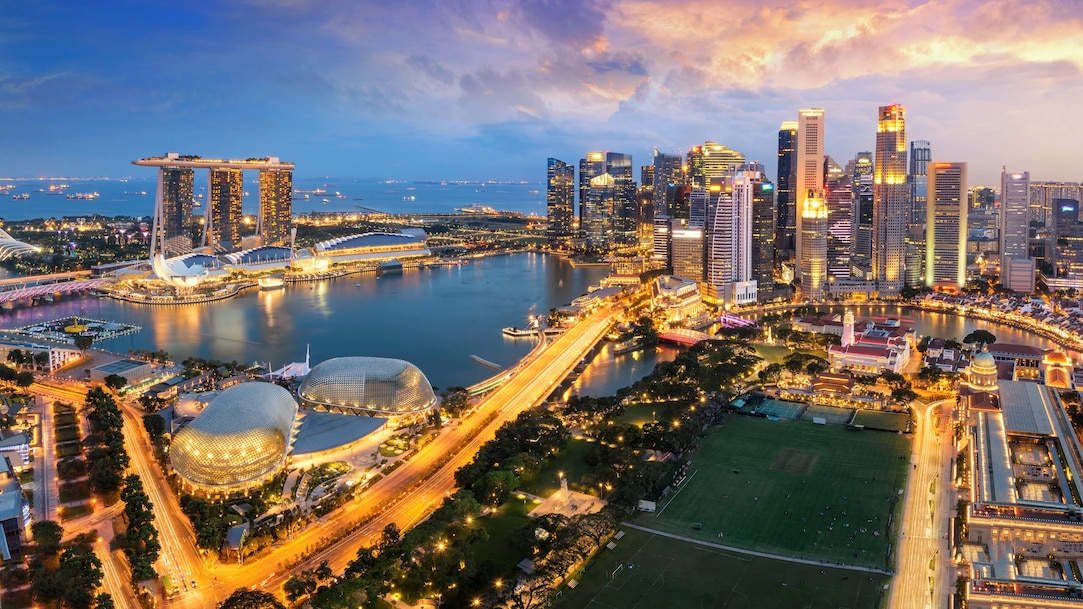
The economy of Singapore is considered the “world’s freest” by the 2024 Index of Economic Freedom. Singapore ranks with an economic freedom score of 83.5.
For more context, the Singaporean economy ranks higher than the world and regional averages. In the Asia-Pacific region, it ranks in pole position out of 39 countries.
The World Bank Human Capital Index ranks Singapore as one of the best in the world in human capital development. This, however, has not always been the case.
More than 50 years ago, Singapore was confronted with high unemployment, poor infrastructure, and an uncertain future. Today, the city-state is home to a high-income, globally competitive economy that is underpinned by one of the highest levels of human capital development in the world.
After its independence in 1965, Singapore experienced rapid growth and elevated from a low-income economy to a higher-income one. This growth results from a business-friendly regulatory environment and strong investments in infrastructure, education, healthcare, and public services.
Source: IMF Data Mapper
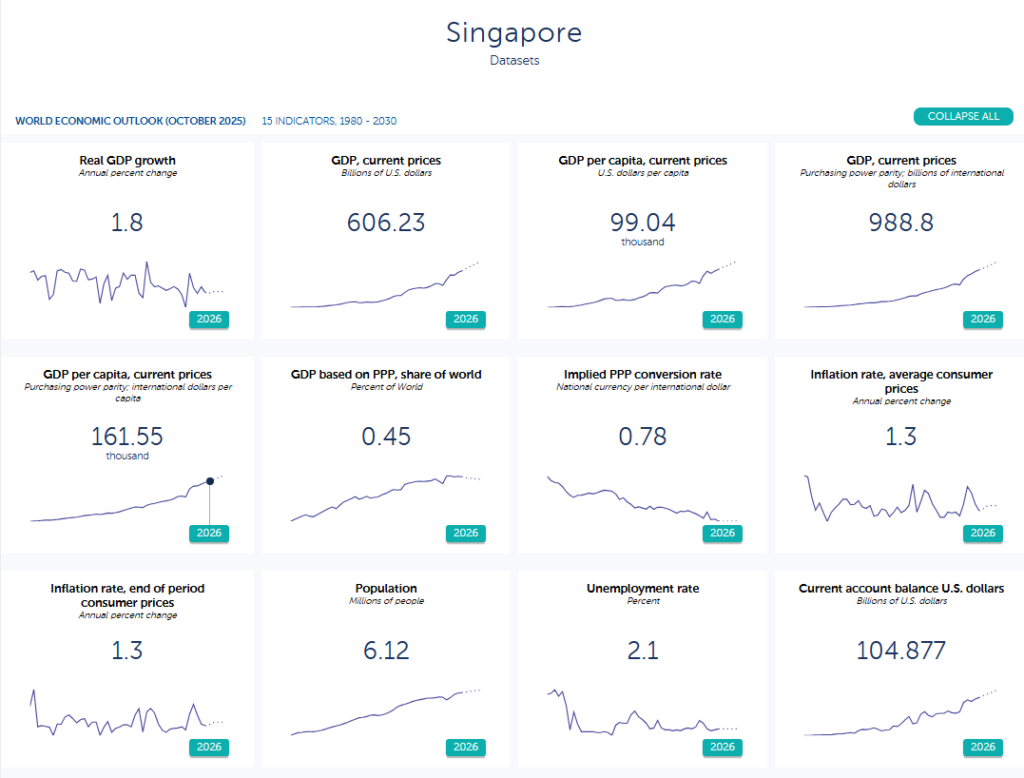
As of 2025, Singapore’s economy remains robust. The Monetary Authority of Singapore reported that GDP growth reached 4.8% in 2025, significantly exceeding initial projections of 2.0-3.0%. This strong performance was driven by increased electronics demand, a pickup in pharmaceuticals, tourism recovery, and resilient services and construction sectors.
For 2026, GDP growth is projected to moderate to around 2% year-over-year, with the Ministry of Trade and Industry forecasting a range of 1-3%.
Inflation remains controlled, with MAS Core Inflation averaging 0.5% in 2025 and forecast to range between 0.5-1.5% in 2026. The stable economic environment, combined with effective monetary policy, continues to support Singapore’s position as a leading financial and technology hub.
Singapore has utilized digital innovation so well that it sits as a global leader in the Asia-Pacific region.
The nation brags about approximately US$627 million in funding for cryptocurrency companies in 2023, across 88 deals. Its robust fiscal system is attracting investors, who also do not have to pay capital gains tax.
This incentive is triggering more adoption of cryptocurrencies as well as improving the economy.
Crypto Law in Singapore
Cryptocurrency is legal in Singapore, and it is regulated under the Payment Service Act (PSA) which was launched in January 2020, and the Financial Services and Markets Act (FSMA) enacted in April 2022.
The Monetary Authority of Singapore (MAS) is the body responsible for formulating regulations and supervising financial institutions—both traditional and crypto-related.

Source: Smartsinga.com
MAS introduced the Payment Service Act in a bid to streamline all payment-related services under a single legislation and detailed license and money laundering compliance requirements for cryptocurrency operators.
The PSA categorizes all digital currencies as digital payment tokens (DPTs), while MAS recognizes Bitcoin and Ethereum as cryptocurrencies. This made cryptocurrencies legal assets to be treated similarly to other asset classes.
The act mandated that any individual or business carrying out DPT-related services must obtain a license and have a registered office in Singapore.
In a bid to tackle money laundering and terrorism financing, the MAS issued Notice PSN01 and PSN02 (the Crypto Travel Rule, as it is popularly called). These notices detailed the guidelines about Anti-Money Laundering (AML) and combating the financing of terrorism (CFT) for DPT service providers.
However, both PSN01 and PSN02 were canceled on April 4, 2024, as the MAS decided to expand the scope of the regulated payment services. Their requirements, however, were incorporated into a broader set of regulations.
Crypto exchanges and related service providers are required to obtain a capital market services (CMS) license, along with meeting the financial requirements of the MAS.
Some consumers had concerns about the safety of funds and sought a more transparent accountability and risk declaration process. The authorities of Singapore discovered this through public consultation in a bid to know the public perception towards DPTs.
Taking the feedback into account, the MAS released a new regulation on DPT service providers in July 2023, which ensured transparency by protecting customers’ funds for a time in case of bankruptcy.
This will mitigate the risk of loss or misuse of customers’ assets and facilitate the recovery of customers’ assets in the event of a DPT service provider’s insolvency. MAS will also restrict DPT service providers from facilitating lending and staking of DPT tokens by their retail customers.
Furthermore, the MAS sought public feedback on drafting a new legislative amendment to PSA. They utilized the feedback and implemented it in the first quarter of 2024. The MAS amended the Payment Service Act, focusing on DPT service providers.
This new amendment expanded the act to regulate three types of additional services, which are:
- Digital asset custody, which includes holding, maintaining control, or facilitating the administration of digital payment tokens on behalf of customers.
- Payments or transfers involving tokens, even if the service provider does not take possession of the DPTs.
- Cross-border payments, regardless of whether the funds are within Singapore.
Under this new amendment, service providers are mandated to separate their assets from those of customers, which they hold in trust. A significant portion of the customer’s assets, like 90%, must be stored offline in cold wallets.
Also, the amendment emphasized the need for not letting a single individual manage and control customer assets, although this restriction is lessened for smaller companies, where two individuals are allowed to do so.
In October 2024, MAS issued a Consultation Paper on the proposed regulatory approach for Digital Token Service Providers under the FSMA. On June 6, 2025, MAS announced that the new regime took effect on June 30, 2025, requiring all Singapore-incorporated digital token service providers serving only overseas clients to either obtain a Part 9 license or cease operations.
MAS stated that licenses would be granted only in limited circumstances due to heightened cross-border money-laundering and terrorism financing risks, with no transitional period provided.
Recent AML/CFT enhancements include strengthened inter-agency cooperation, increased deregistration of inactive companies, improved reporting channels, and legal reforms to aid law enforcement in prosecuting offences. These measures, announced by Minister Indranee Rajah in October 2024, have been rolled out progressively and are largely in practice as of July 2025.
Current State of Crypto Adoption in Singapore
Singapore achieved a remarkable milestone in 2025 by ranking first globally in cryptocurrency adoption. According to the 2025 World Crypto Rankings report by Bybit and DL Research, Singapore scored 7.5 out of a possible score, outperforming 78 other countries, including the United States, Lithuania, Switzerland, and the UAE.
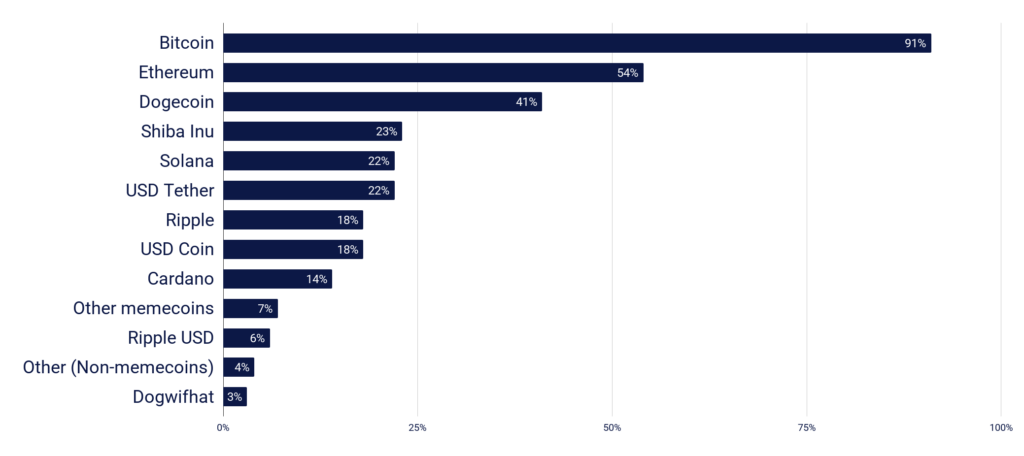
About 91% of Singaporeans are aware of at least one cryptocurrency, according to the 2025 Independent Reserve Cryptocurrency Index (IRCI) report for Singapore. This represents a significant increase from previous years and is the highest awareness rate globally. The IRCI is an annual survey of 1,500 Singapore residents.
Source:Independentreserve.com
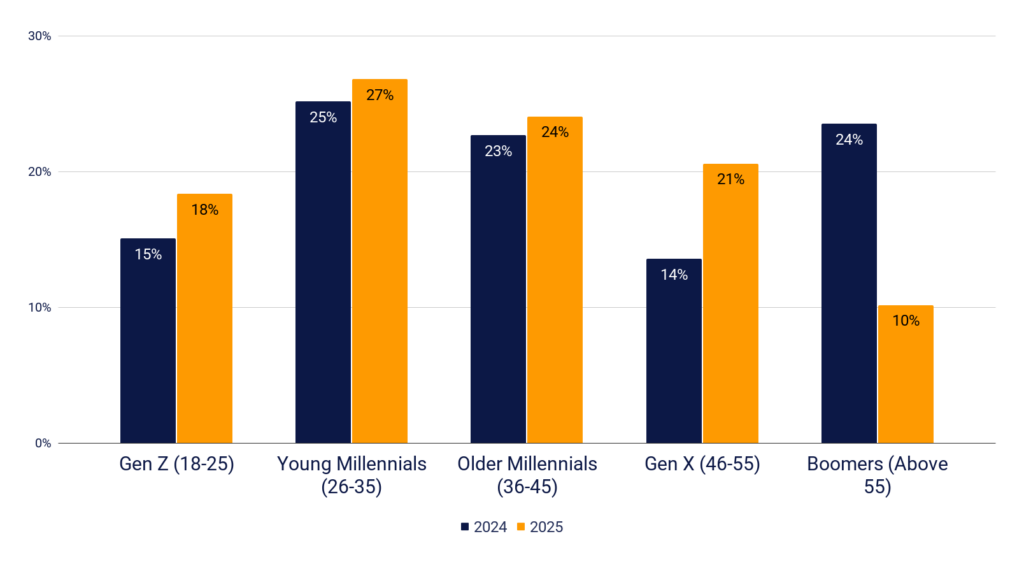
In 2025, 29% of Singaporeans own or have owned crypto 12 months prior, a decrease from 40% in 2024.
This moderation reflects a more selective approach to crypto investment, with many investors engaging in strategic profit-taking and portfolio rebalancing. About 68% of crypto investors hold Bitcoin, while 28% now hold memecoins.
Source: Independentreserve.com
The 2025 IRCI Index moved from 56 in 2024 to 43 in 2025. This moderation reflects how crypto is taking root in Singaporeans’ financial consciousness. Singapore achieved perfect scores in user penetration (1.00) and high cultural visibility (0.96), with over 11% of the population reportedly holding cryptocurrency.
Among those who sold their holdings in the past 12 months, 67% made a profit, indicating mature market behavior. Additionally, 49% of crypto investors sold part or all of their holdings, suggesting active portfolio management rather than passive holding.
In the global context, cryptocurrency ownership in Singapore increased from 26% to 28% in 2025, according to Gemini’s 2025 Global State of Crypto Report. Singapore’s cryptocurrency ownership rate of 24.4% represents more than a doubling from just 11% in 2021.
Factors Driving Crypto Adoption
Singapore’s robust legal framework and conducive business environment are top drivers of its impressive crypto adoption rate.
Let us explore these in detail:
Regulation and Transparency
The clear legal framework, coupled with feedback mechanisms, has been a major driver of cryptocurrency adoption in Singapore. Singapore’s regulatory clarity under the Payment Services Act and Financial Services and Markets Act has created an environment where innovation thrives within well-defined boundaries.
The MAS’s public consultation process and the actual implementation of the concerns raised have improved transparency, building trust between key players. The recent enhancements to AML/CFT regulations, including strengthened inter-agency cooperation and improved reporting channels, have further solidified Singapore’s reputation as a well-regulated crypto hub.
Favorable Business Climate and Innovative Environment
One of the unique features of Singapore is the hospitable environment it presents, where all businesses can flourish. In addition, Singapore is well known as a global leader in innovations and technology.
The 2025 World Crypto Rankings specifically cited Singapore’s “regulatory clarity, licensing depth, and good institutional participation” as key factors in its top ranking.
The government’s forward-thinking approach, as evidenced by projects like Project Guardian and the Orchid Blueprint, demonstrates Singapore’s commitment to remaining at the forefront of digital finance innovation.
Financial Infrastructure
The healthy relationship between crypto service providers and traditional financial institutions has triggered more adoption. The strong presence of traditional financial institutions exploring crypto has led to a robust payment infrastructure supporting crypto-fiat conversion.
In December 2025, Ripple received approval from MAS to expand its Major Payment Institution (MPI) license, enabling broader regulated payment offerings using digital payment tokens, including XRP and RLUSD. This development demonstrates Singapore’s willingness to embrace institutional-grade blockchain infrastructure.
Low-Income Tax
In Singapore, there is no capital gains or income tax on cryptocurrency for individual investors; however, to buy, sell, or trade crypto that is not officially designated as DPTs, you may pay an 8% goods and services tax.
In addition, if you are trading cryptocurrencies as a business, your profits will be subject to income tax. This incentive has contributed to the growth in the adoption of cryptocurrencies in Singapore.
Cryptocurrency Usage in Some Sectors
Cryptocurrencies are being employed in various sectors in Singapore. These include:
Food Industry/Transportation Sector
Cryptocurrency is encroaching into the food delivery and transportation sectors as businesses offering such services are seeking to capture potential crypto customers.

Source: Cryptotimes.io
Earlier this year, Grab, a super-app that offers a variety of services, from ride-hailing to food delivery and digital payments, integrated cryptocurrencies as a payment option.
Users can now top up their e-wallets using cryptocurrency, demonstrating the practical application of digital assets in everyday transactions.
Airline Industry
In 2018, Singapore Airlines launched ablockchain-based loyalty program for frequent customers. In partnership with KPMG and Microsoft, the airline developed a digital wallet called KrisPay, which allowed customers to turn travel miles into units of payment that can be used with partner merchants in Singapore.

Source: Aerocadet.com
At that time, Mr. Goh Choon Phong said:
We are excited to be introducing KrisPay, a novel way for our KrisFlyer members to digitally access their miles at their fingertips, at any time. By creating a miles-based digital wallet that integrates the use of miles into their daily lives, KrisFlyer members have yet another way to use miles instantly on everyday transactions.
The amazing part was that the system utilized blockchain to underpin clients’ loyalty wallets.
Healthcare
Blockchain has encroached into the healthcare sector, too. SGInnovate, a deep technology firm owned by the Singaporean government in 2018, invested in MediLOT Technologies, a startup that specializes in blockchain and healthcare analytics.
Source: Opengovasia.com/
MediLOT uses a dual blockchain system integrated with AI and data analytics to extract information from healthcare records, enhancing the effectiveness of treatments and diagnoses for patients.
Financial Services
Blockchain is used in the financial sector for various reasons. One noteworthy application is trade finance. Standard Chartered Singapore in 2019 employed blockchain for cross-border trade finance transactions.
Source: Nikkei.com
The first transaction (for Standard Chartered in that region) that was completed using this technology was a shipment of chickpeas that originated in Australia for delivery to BSM Global in Bangladesh.
The remarkable benefit of this system is the reduced time limit for transactions to process. Other transaction mechanisms may take five or more days, but on this system, it takes less than 24 hours. Another benefit is transparency.
The transparency of the whole process also helps build trust and loyalty across the supply chain to promote more cost-efficient products and services. This is a win-win for all parties.
An interesting fact was that Agrocorp, which was the supplier of the chickpeas, had used this transaction on another banking platform, DBS, earlier. They tested and trusted the system enough to employ it again.
In December 2025, blockchain infrastructure provider StraitsX launched its Singapore dollar-pegged stablecoin XSGD on the XRP Ledger to meet rising demand for regulated multi-chain stablecoins. XSGD is fully backed by reserves held with DBS Bank and Standard Chartered and has processed over 8 billion on-chain transactions since its 2020 launch.
Challenges Facing Crypto Adoption in Singapore

Source: Villanovau.com
The future of cryptocurrencies in Singapore appears promising, but it has its challenges. One of the major challenges is the volatile nature of these digital assets. This feature poses significant risks to investors and makes businesses hesitant to fully employ it as a reliable store of value or accept it as a payment instrument.
Another challenge is the evolving regulatory framework. The June 30, 2025, deadline for Digital Token Service Providers to obtain licenses or cease overseas operations created significant compliance challenges for many firms. The strict requirements and MAS’s statement that licenses would be granted “only in limited circumstances” effectively created a high barrier to entry.
Price volatility remains a concern, with 53% of potential investors citing it as a barrier to crypto investing, while 32% want more consumer protection and regulation. The 2025 IRCI report also noted that while awareness is high, fewer Singaporeans are actively adopting crypto, highlighting the continued need to build trust and familiarity to grow the sector.
Additionally, concerns about crypto scams and security vulnerabilities persist, despite Singapore’s robust regulatory framework.
The Potential for Cryptocurrency in Singapore
The potential of cryptocurrency in Singapore cannot be overemphasized, as the country continues to position itself as a global leader in the crypto space. Singapore’s first-place ranking in the 2025 World Crypto Rankings confirms its status as the world’s premier jurisdiction for digital asset adoption and innovation.
As more businesses and individuals embrace blockchain technology, innovative use cases and tailored solutions are sprouting in various sectors. The approval of Ripple’s expanded MPI license in December 2025 demonstrates Singapore’s commitment to supporting institutional-grade blockchain infrastructure for cross-border payments and settlements.
The government’s forward-thinking initiatives continue to drive innovation. MAS announced in November 2025 that it would hold trials to issue tokenized MAS bills in 2026 using wholesale central bank digital currency (CBDC). The BLOOM initiative, launched in October 2025, supports trials with tokenized bank liabilities and regulated stablecoins for settlement.
Singapore is actively building an ecosystem that supports innovative crypto technologies, making it a prime destination for entrepreneurs, developers, and investors. The nation continues to pioneer stablecoin regulation, with draft legislation expected to be published in 2026. The framework prioritizes full reserve backing with high-quality liquid assets and reliable redemption mechanisms, positioning Singapore as a trusted hub for regulated stablecoin issuance.
The robust regulatory framework, combined with advanced technological infrastructure, makes Singapore a prolific environment for crypto to thrive. The balance between regulation and innovation is a laudable feature that is attracting key players globally. The Asia-Pacific region has experienced a surge in digital asset adoption, with on-chain activity rising approximately 70% year-over-year, and Singapore remains at the center of this growth.
The tech-savvy population, supportive government policies, and the strategic position of Singapore as a financial hub in Asia further reiterate its potential for this emerging technology. With partnerships extending from Project Guardian (involving over 40 global financial institutions) to collaborations with Germany’s Deutsche Bundesbank on universal standards for tokenized assets, Singapore is building the foundation for the next generation of digital finance.
Conclusion
Singapore has capitalized on technology and innovation, and in return, this has led to a continuous increase in the adoption of cryptocurrencies. The public consultation process and acting on key players’ concerns have fostered transparency and contributed to this growth.
Singapore’s achievement of the top ranking in the 2025 World Crypto Rankings validates its approach to balancing innovation with prudent regulation. The nation’s perfect scores in user penetration and cultural acceptance demonstrate that clear regulatory frameworks attract both institutional and retail participation.
The Singaporean government’s incentives, such as low-income tax, business-friendly regulations, and the provision of a conducive environment for blockchain innovation, are maintaining the nation’s status as a global leader in this emerging technology. Recent developments, including the expansion of Ripple’s payment services, trials for tokenized government bills, and the forthcoming stablecoin legislation, showcase Singapore’s commitment to remaining at the forefront of digital asset evolution.
As cryptocurrency continues to mature from a speculative asset class to mainstream financial infrastructure, Singapore’s pragmatic regulatory approach provides a blueprint for other nations seeking to harness the benefits of cryptocurrency while managing associated risks. The country’s ability to attract major players like Ripple, support innovative projects through initiatives like Project Guardian, and maintain regulatory clarity positions it as the world’s leading crypto hub for 2025 and beyond.
With awareness at record highs, institutional infrastructure expanding, and government support remaining strong, Singapore continues to demonstrate that people are still buying crypto and building the future of finance in a well-regulated, innovation-friendly environment.


