


Ethereum has tightened its grip on Europe’s stablecoin market, emerging as the dominant blockchain for euro-denominated digital assets. Recent data from Barchart shows that half of all issued tokenized euros are currently deployed on the Ethereum network, reinforcing its position as the primary settlement layer for regulated stablecoins in the region.
“According to Barchart data, Ethereum dominates the euro stablecoin market, with 50% of all issued tokenized euros based on the Ethereum network.”
This milestone highlights Ethereum’s continued relevance in a market that is becoming increasingly competitive, especially as regulators across Europe push for compliant digital money frameworks under initiatives such as MiCA (Markets in Crypto-Assets Regulation).
Why Ethereum Is Winning the Euro Stablecoin Race
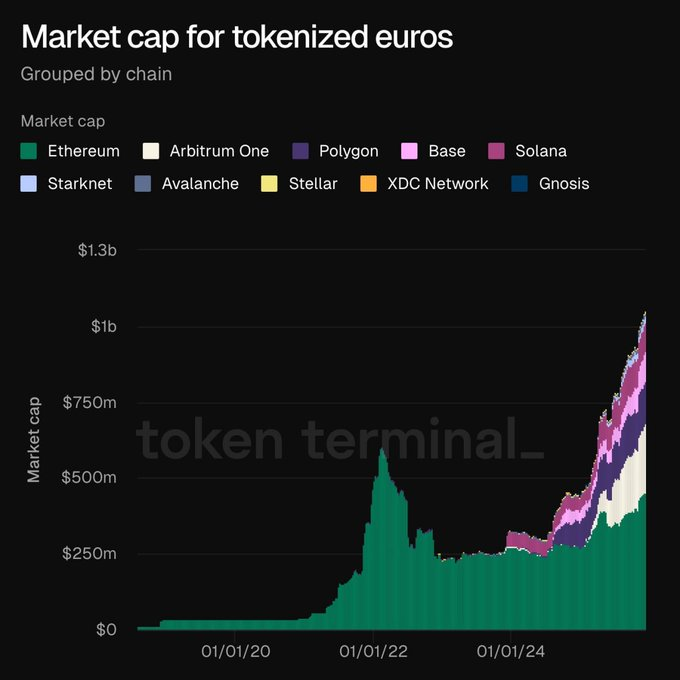
Ethereum’s leadership is not accidental. The network remains the most widely adopted smart contract platform, offering deep liquidity, robust security, and a mature developer ecosystem.
For euro stablecoin issuers—many of whom are regulated entities—these factors are critical. Ethereum provides seamless integration with decentralized finance (DeFi) protocols, institutional-grade custody solutions, and established on-chain transparency standards.
Most euro-backed stablecoins, including those issued by fintech firms and crypto-native companies, rely on Ethereum to reach users across exchanges, payment platforms, and DeFi applications.
The network’s compatibility with Layer 2 scaling solutions has also helped reduce transaction costs, making euro stablecoins more practical for everyday transfers and settlements.
Implications for the Broader Crypto Market
Ethereum’s dominance in euro stablecoins strengthens its role as a financial infrastructure layer rather than just a platform for decentralized apps. While the U.S. dollar still commands the largest share of the global stablecoin market, growth in euro-denominated tokens signals rising demand for alternatives that align with European regulation and local payment needs.
This trend could accelerate institutional adoption, particularly among European banks and payment providers exploring on-chain settlement. It also places pressure on rival blockchains attempting to capture market share by offering lower fees or faster transactions.
What Comes Next
As competition intensifies, Ethereum’s challenge will be maintaining its lead while scaling efficiently. Still, with 50% of all tokenized euros already issued on the network, Ethereum remains the default choice for euro stablecoins—for now. The data confirms a clear message: when it comes to euro-backed digital money, Ethereum is setting the pace.