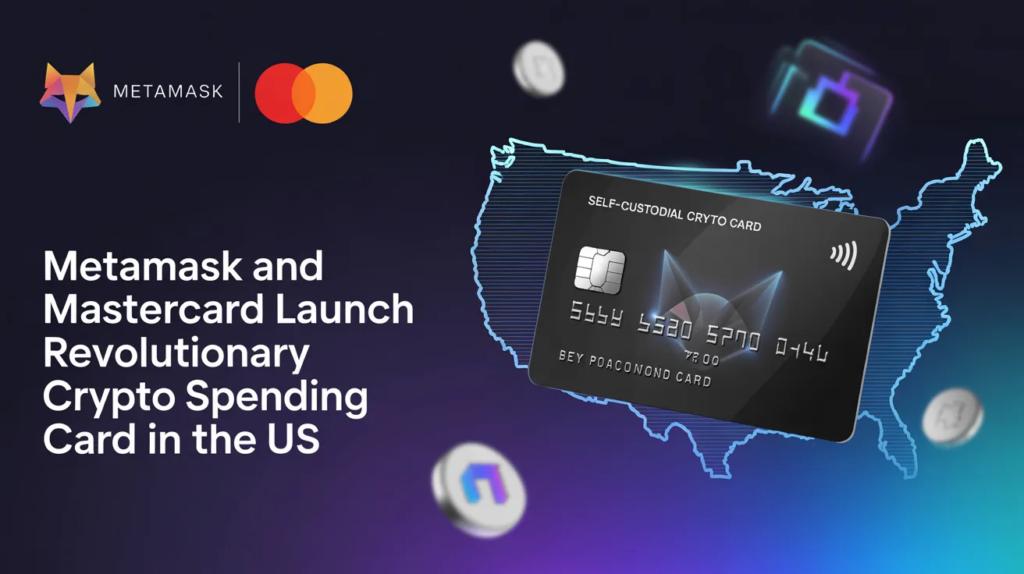
MetaMask and Mastercard have officially rolled out a self-custodial crypto payment card across the United States, opening access in 49 states—including New York for the first time. The launch marks a significant step in bringing on-chain assets into everyday retail payments without requiring users to surrender custody of their funds.
Developed by Consensys, the company behind MetaMask, the new MetaMask Card allows users to spend crypto anywhere Mastercard is accepted—more than 150 million merchant locations worldwide. The card is issued by Cross River Bank and powered by Baanx, now operating as Monavate.
The nationwide expansion follows a limited pilot first introduced at ETHDenver 2025 and earlier availability across parts of Europe and Latin America. With U.S. general availability now live, MetaMask is also introducing a premium $199-per-year Metal Card tier alongside a virtual card that users can access shortly after approval.
Key Takeaways
- MetaMask Card is now available across 49 U.S. states, including New York, marking its first entry into the state’s tightly regulated crypto market.
- The card enables users to spend crypto directly from their self-custodied MetaMask without preloading funds onto a centralized exchange.
- Powered by Mastercard, the card can be used at more than 150 million merchants worldwide, both online and in-store.
- Users earn onchain rewards of up to 1% in mUSD on the standard card and up to 3% on the $199-per-year Metal tier for the first $10,000 spent annually.
- The program is issued by Cross River Bank and operates within U.S. regulatory requirements, including identity verification and compliance checks.
A Self-Custodial Model With Instant Conversion
Unlike many crypto debit cards that require users to preload assets onto centralized exchanges, the MetaMask Card keeps funds inside the user’s wallet until the point of purchase. When a transaction is initiated, crypto is converted in real time to complete the payment.
MetaMask Product Lead Gal Eldar said the objective is to remove friction between blockchain finance and everyday spending.
That positioning directly addresses a long-standing pain point for self-custody users. Historically, spending crypto outside the ecosystem required transferring assets to an exchange, converting them into fiat currency, and then moving funds to a bank account. The MetaMask Card bypasses that multi-step process.
Enrollment requires identity verification and regulatory compliance checks, aligning the product with U.S. financial standards while maintaining wallet-level custody before conversion.
Rewards Paid Onchain
The card introduces crypto-native rewards. Standard cardholders can earn up to 1% back in mUSD on purchases, while Metal Card users receive up to 3% back on the first $10,000 spent annually.
In addition to cashback, MetaMask is building a broader rewards layer where user activity—including transactions and card spending—earns redeemable points. These points may unlock ecosystem perks such as discounts or early access to certain offerings.
The Metal Card also includes zero foreign transaction fees and additional premium benefits. It comes in a physical metal format, while both tiers support Apple Pay, Google Pay, and contactless payments.
Sherri Haymond, Mastercard’s Global Head of Digital Commercialization, emphasized the collaboration’s broader goal:
Security and Compliance Framework
The card integrates Mastercard’s fraud protections, including Zero Liability coverage and ID theft protection features. Transactions move through Mastercard’s regulated payments infrastructure, even though assets remain in self-custody prior to authorization.
However, users should be mindful of tax implications. Converting crypto to fiat at checkout may constitute a taxable event in the United States, depending on individual circumstances. Fees, supported tokens, and transaction limits will also affect the real-world value of crypto cashback rewards.
The program is currently live in the U.S., United Kingdom, European Economic Area countries, Argentina, Brazil, Canada, Colombia, Mexico, and Switzerland, with additional markets planned.
A Competitive Shift in Crypto Payments
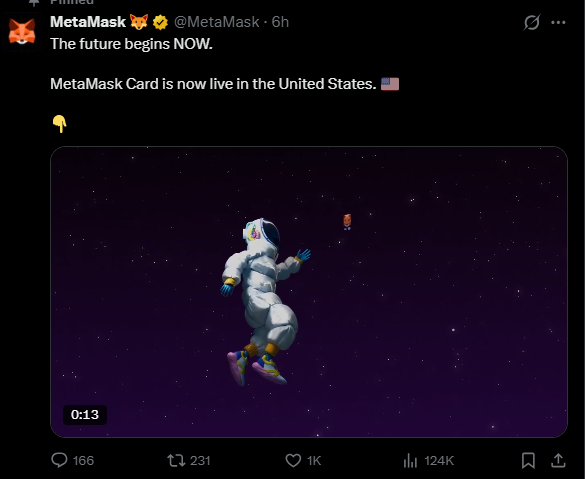
Alt text: MetaMask post on X announcing the card launch
The launch reflects a broader race among wallet providers and payment networks to integrate stablecoins and digital assets into mainstream commerce. Instead of directing users toward centralized exchanges for liquidity, wallet-native cards now aim to keep activity within their own ecosystems.
New York’s inclusion is particularly notable given the state’s strict regulatory posture toward crypto-linked financial products. Access in the state signals that the card structure has cleared key compliance thresholds.
For Mastercard, the partnership deepens its presence in blockchain-based finance. For MetaMask, it represents a strategic push beyond wallet functionality into consumer payments.
If adoption mirrors early pilots—where thousands used the card for routine purchases—the product could accelerate crypto’s presence at the checkout counter. Whether it becomes a mainstream payment alternative will depend on user experience, fees, regulatory clarity, and how seamlessly conversion occurs in real-world conditions.
For now, MetaMask’s U.S. expansion places one of the largest self-custody wallets directly inside the traditional payments network—without requiring users to give up control of their assets before they spend.