


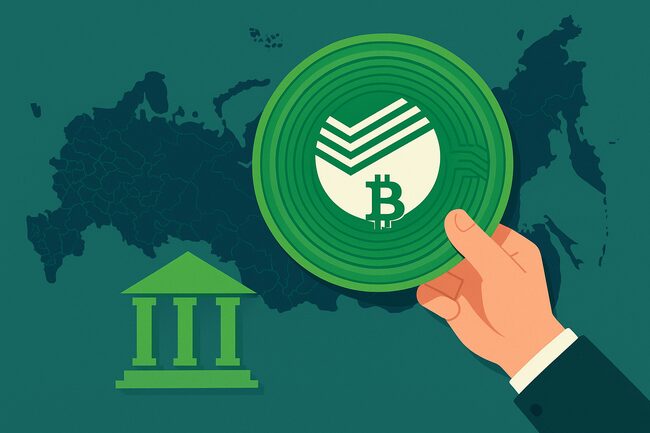
Russia’s largest lender, Sberbank, has submitted proposals to the country’s central bank to offer custody services for Russian cryptocurrency assets, seeking to play a central role in the nation’s growing digital asset sector. The announcement was made on Thursday as part of a wider discussion on cryptocurrency regulation.
The move signals a shift in Russia’s approach to digital currencies, which have gained traction as tools to navigate Western sanctions linked to the conflict in Ukraine. Last year, Russia’s central bank supported legislation allowing businesses to use cryptocurrencies in international trade, reflecting a softening stance on digital assets previously viewed with scepticism.
Sberbank Eyes a Regulated Framework and Asset Safety.
Anatoly Pronin, executive director of Sberbank’s alternative payment solutions division, stated that the bank’s proposals suggest regulating cryptocurrency holdings in a manner similar to traditional assets held in bank accounts. This approach, he noted, would include measures to protect clients’ tokens and guarantee their safety under Russian law.
Custody services, which involve safeguarding digital assets on behalf of clients, can simplify transactions and reduce vulnerability to hacking. However, such assets could be frozen if law enforcement authorities suspect illegal activity.
Industry voices highlight the critical role of custodians
Experts in Russia’s financial sector emphasized the importance of secure custody infrastructure for cryptocurrencies. Gleb Zemskoy, director of blockchain technology and digital currencies development at Insight Finance, described custodians as a “backbone” of the cryptocurrency market.
The discussion surrounding Sberbank’s proposals takes place amid broader efforts by Russian financial institutions to adapt to geopolitical pressures and shifting market dynamics. Digital assets have increasingly been seen as a means to facilitate international trade and financial transactions in the face of sanctions.
Russia’s Evolving Digital Asset Policy
Russia’s cautious shift toward the regulated use of digital currencies marks a significant departure from its earlier restrictive approach. The central bank’s support for limited crypto use in international trade last year reflected an acknowledgement of economic challenges and the potential benefits of digital asset integration.
While the proposed custody services await regulatory approval, Sberbank’s initiative highlights how traditional banking institutions in Russia are positioning themselves to meet new demands. Analysts suggest that regulated custody could boost confidence among businesses and investors navigating an uncertain financial landscape.
The central bank has yet to comment on Sberbank’s proposals. Industry observers say further clarity on regulatory frameworks will be key to determining how quickly these services might launch and whether other banks will follow suit.