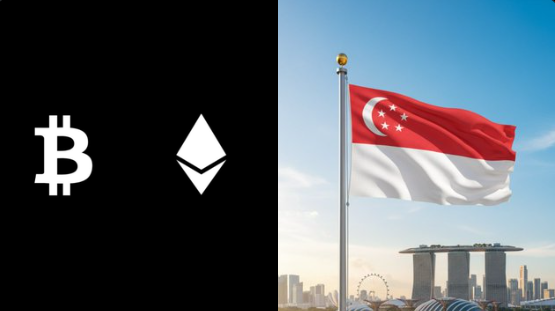
The Singapore Exchange (SGX) has made a significant entrance into the digital asset market with the launch of Bitcoin (BTC) and Ethereum (ETH) perpetual contracts. On day one, the platform recorded 2,000 contracts and a notional trading volume of $35 million—a clear indicator that institutional players in Asia are stepping deeper into regulated crypto derivatives.
A Strategic Shift for SGX and Singapore’s Crypto Position
For years, SGX has been synonymous with traditional equities, commodities, and bond listings. The introduction of crypto perps shows the institution is not simply observing digital asset growth — it’s participating in it.
This aligns with Singapore’s wider regulatory and economic trajectory: controlled expansion into digital finance, with risk mitigation built into the framework.
These perpetual contracts allow traders to gain directional exposure to BTC and ETH without holding the underlying tokens. Because the contracts are dollar-settled and fully regulated, they provide an environment that appeals to fund managers, prop trading desks, and conservative institutional allocators who require compliance clarity before participating in crypto.
Key Takeaways
- SGX’s BTC and ETH perpetual contracts generated $35M notional trading volume with 2,000 contracts on launch day, signaling strong institutional participation.
- The fully regulated and USD-settled structure of the contracts makes them appealing to professional and risk-averse investors.
- Singapore’s strategic regulatory framework continues to position the country as a leading Asian hub for institutional-grade crypto exposure.
- The move represents a broader shift where crypto derivatives are increasingly integrated into mainstream financial infrastructure.
Institutional Interest Driving Momentum
The volume observed on the first day paints a clear picture of market behavior. Institutional traders—many of whom had avoided offshore, lightly regulated crypto derivatives venues—appear to be embracing SGX’s offering.
The exchange’s reputation, combined with Singapore’s regulatory credibility, delivers a structure that risk-sensitive participants have been waiting for.
As noted in the information provided, the strong initial demand “highlights growing institutional interest for regulated crypto derivatives in Asia.” That institutional participation matters.
It not only boosts liquidity but also typically attracts even more players who until now were constrained by governance restrictions or investor mandates preventing use of unregulated platforms.
Why This Matters for Crypto in Asia
Singapore has consistently positioned itself as a hub for financial innovation, and SGX’s move adds momentum across the region. Other exchanges in Asia—from Japan to Hong Kong—have begun experimenting with regulated digital asset products, but SGX’s offering arrives with a high-trust profile that may accelerate adoption in a way smaller or newer exchanges cannot.
Institutional participation also sends a psychological signal: crypto is no longer isolated from formal capital markets. The line between digital assets and traditional finance continues to fade as major exchanges treat BTC and ETH with the same structural seriousness as commodities or FX derivatives.
Looking Ahead
SGX’s debut could mark a turning point in how regulated markets embrace crypto exposure. If trading activity continues to expand, we may see increased derivative offerings, broader synthetic products, and possibly integrations with ETF-style structures or cross-asset settlement tools.
For now, what stands out is the milestone itself: day-one performance of 2,000 contracts and $35 million notional underscores that real institutional money is entering — not through backchannels, not through offshore exchanges, but through a regulated, fully compliant marketplace.
That may prove to be one of the most significant developments for the crypto industry in Asia this year — and potentially, a key signal of what mainstream participation in digital assets will look like going forward.
No related posts.