


Most fintech founders hit the same wall eventually. The product is shaping up. The user base is growing. And then someone on the team asks the question that suddenly makes everything more complicated: “Can our users spend their crypto in the real world?”
It’s a fair question. Increasingly, it’s the question that determines whether a platform stays useful or gets outgrown. And for a long time, answering it meant either building card issuing infrastructure yourself, which is expensive and time-consuming or telling your users to go somewhere else to spend what they’ve earned on your platform.
Neither option is great. That’s where white-label crypto card solutions come in, and why more fintech companies, crypto exchanges, and money service operators are using them to launch branded card programs without the years of groundwork it used to require.
What Is a White-Label Crypto Card, Really?
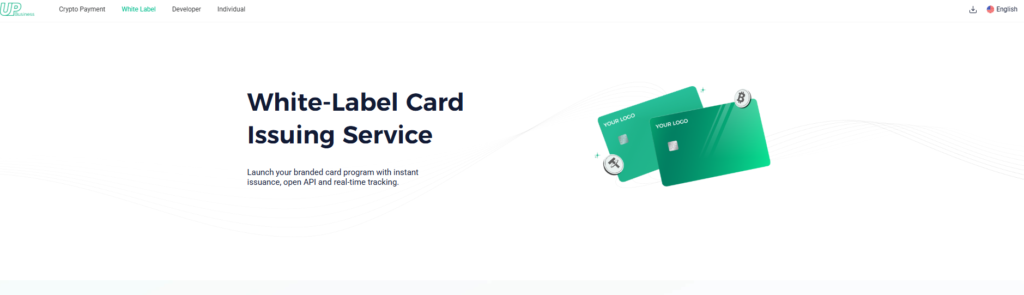
Strip away the jargon, and the concept is straightforward. A white-label crypto card is a payment card — virtual, physical, or both — that runs on someone else’s card issuing infrastructure but carries your brand entirely.
Your logo. Your card design. Your customer experience. The card network relationship, compliance framework, card production, and technical plumbing all sit on the provider’s side. Your users just see a card that feels like it came directly from you.
It’s the same model that has powered a huge portion of the banking world for decades. Most store-branded credit cards, co-branded debit cards, and prepaid cards you’ve ever used were built this way. The brand you see on the card isn’t always the one running the rails underneath — and in most cases, that’s perfectly fine, because the end user gets a seamless experience either way.
The difference now is that this model has finally come to crypto. And it opens up something that wasn’t practical even a few years ago: letting your users spend digital assets — BTC, USDT, ETH — anywhere Visa or Mastercard is accepted, without ever leaving your ecosystem.
Why Companies Are Choosing White-Label Over Building In-House
Building a card program from scratch sounds appealing until you start mapping out what it actually involves.
You need a license to issue cards. You need relationships with card networks. You need a card manufacturer. You need a compliance infrastructure that handles KYC, AML, and transaction monitoring. You need a card management system. You need a customer service operation for lost cards, disputes, and limit requests. And then you need to maintain all of it while still running your actual business.
Most companies that go down that road spend 12 to 18 months and significant capital before a single card goes out the door. And that’s assuming everything goes smoothly with regulators, which it often doesn’t.
The white-label route removes every bottleneck. The licensing, the card network agreements, the production logistics, the compliance tools — they’re already in place. You inherit a framework that took the provider years to build, and you get to market in a fraction of the time.
The trade-off is that you’re working within someone else’s infrastructure. But for most businesses, that trade-off is entirely worth it. What matters to your users isn’t whether you built the card rails — it’s whether the card works when they tap it at checkout.
Related: What is UPay Business? Everything You Need to Know
What a Good White-Label Crypto Card Program Looks Like
Not all white-label programs are created equal. Here’s what the better ones actually offer:
- Full brand customization: The card should look like yours — not a generic card with a logo sticker on it. That means control over the design of both the physical card and the digital card interface that your users see in your app.
- Virtual and physical options: Virtual cards are great for online purchases and can be issued instantly. Physical cards matter for users who want to tap and pay in stores. A credible program should offer both.
- Multi-currency support: Your users should be able to hold and spend in the currencies that make sense for them — USD, EUR, HKD, and the crypto assets your platform supports — without having to manually convert everything before spending.
- Crypto-to-fiat conversion at the point of sale: This is the detail that makes or breaks the user experience. When a user pays with their crypto balance, the conversion should happen automatically and invisibly. They swipe. It works. No manual steps, no separate conversion screen.
- API-first architecture: You need to be able to build your own experience on top of the platform — issuing cards programmatically, setting limits, monitoring balances, and integrating it all into your existing product without friction.
- KYC, AML, and fraud prevention built in: Compliance isn’t optional, and it shouldn’t be something you bolt on after launch. The best programs have these tools running in the background from day one.
- A management dashboard that actually gives you control: You should be able to see what’s happening across your card program in real time — transaction volumes, user activity, limit approvals, compliance flags — without having to submit tickets and wait for reports.
UPay Business: A White-Label Crypto Card Program Worth Looking At
If you’re evaluating options in this space, UPay Business is one of the more complete solutions currently available.
The short version of what they offer: you choose the design and experience, they handle everything else. Card issuance, production, delivery, compliance, technical support — UPay manages the full operational stack so your team can focus on what you’re actually building.
Here’s what that looks like in practice:
- The cards run on Visa and Mastercard networks: That’s 55 million+ merchants in 168+ countries. Apple Pay and Google Pay compatibility is included. Spending limits go up to 100,000 USDT on premium tiers. These aren’t restricted-use cards — they work everywhere a normal card works.
- The API is genuinely developer-friendly: UPay’s open API lets your engineering team automate card issuance, manage account balances, run real-time transaction monitoring, and integrate the entire card program into your existing platform. The documentation is thorough, and dedicated technical support is available throughout integration — not just during onboarding.
- Compliance is built in, not bolted on: KYC and AML verification are automated. Fraud prevention tools monitor transactions continuously. UPay itself holds active financial licenses across the USA, Canada, Hong Kong, Lithuania, and the UAE. So when you partner with them, you’re operating within a framework that has already cleared regulatory scrutiny across multiple jurisdictions. That’s meaningful, especially if you’re launching in markets with complex crypto regulations.
- The management dashboard gives you real oversight: Cardholder management, transaction monitoring, limit approvals, and financial reporting — it’s all in one place and updated in real time. You’re not flying blind or waiting for weekly reports to understand what’s happening with your card program.
- Crypto-to-fiat conversion is seamless: Users spend from their crypto balances, and the conversion happens automatically at the point of sale. You decide which cryptocurrencies and currencies are supported. The experience for your users is the same as using any other card — except the balance behind it is in crypto.
Their target clients — fintech companies, crypto exchanges, and money service operators — reflect how they’ve designed the product. It’s not a consumer card with a business wrapper. Its infrastructure is built for companies that want to embed payment card functionality into a larger product.
Related: How to Accept Crypto Payments Online
Who This Actually Makes Sense For
White-label crypto card programs aren’t for everyone. But if any of these describe your situation, the conversation is worth having:
- You’re building a crypto platform or exchange, and your users are asking how to spend what they’ve accumulated. Instead of telling them to off-ramp and use a different card, you can keep them in your ecosystem.
- You’re running a fintech startup, and you want to offer a card product to your users without the regulatory and operational overhead of building card-issuing infrastructure from scratch.
- You’re a money service operator already handling payments and remittances, and you want to extend your offering into crypto-linked cards.
- You operate a gig economy or freelance platform and want to pay out earnings to workers in a format they can spend anywhere immediately — without wire transfer delays or conversion friction.
- You’re building a rewards or loyalty program and want a card that ties directly into your points or token economy.
In all of these cases, the white-label model gets you to market faster, keeps your users within your product, and removes infrastructure complexity that would otherwise slow you down significantly.
The Part Most Articles Skip: What to Ask Before You Sign Anything
If you’re seriously evaluating a white-label crypto card provider, a few questions are worth asking upfront:
- Who holds the card-issuing license, and in which jurisdictions? If your users are global, you need coverage that matches.
- How long does integration typically take? A good provider should be able to give you a realistic estimate based on your tech stack.
- What does the fee structure look like at scale? Per-card fees, transaction fees, and setup costs can look very different at 1,000 users vs. 100,000 users. Understand the model before you’re locked in.
- What support is available post-launch? Integration support matters, but so does ongoing operational support. Things break. Users have issues. You need to know who to call.
- How much control do I actually have over the card design? Some programs offer real customization. Others hand you a template with limited options. Know what you’re getting.
Final Thoughts
White-label crypto cards aren’t a workaround or a shortcut. For most businesses that want to offer card products to their users, they’re simply the smarter path — faster to market, lower operational overhead, and built on infrastructure that took years and significant regulatory work to put in place.
The question isn’t really whether to use a white-label program. It’s which one is the right fit for your business, your users, and the markets you’re operating in.
If you want to see what UPay Business’s white-label program looks like for your specific use case, UPay Business is where to start. The team is reachable via live chat and can walk you through what a partnership actually looks like before you commit to anything.