


The Clarity Act Seeks To Clarify U.S. Crypto Regulation by Dividing Oversight Between the SEC and CFTC

The U.S. Congress is once again attempting to untangle one of the most persistent problems in the digital asset industry: regulatory confusion. The Digital Asset Market Clarity Act of 2025—widely known as the CLARITY Act—proposes a structured federal framework that divides crypto oversight between the U.S. Securities and Exchange Commission (SEC) and the Commodity Futures Trading Commission (CFTC), based on how assets function rather than how they are labeled. The bill arrives after years of regulatory conflict that has left crypto companies, investors, and developers operating in legal uncertainty. Enforcement actions, overlapping jurisdiction and inconsistent interpretations of existing law have slowed innovation and complicated compliance across the industry. The CLARITY Act is designed to replace that uncertainty with defined categories, formal oversight roles and standardized disclosure requirements. “The CLARITY Act aims to replace enforcement-driven regulation with a structured framework that clearly defines digital assets, intermediary roles, and disclosure obligations.” Rather than treating all tokens as potential securities by default, the legislation introduces a functional model: classify assets based on what they do and regulate activities as much as the assets themselves. Key Takeaways A Functional Split Between the SEC and CFTC One of the bill’s most significant features is its division of authority between U.S. regulators. Under the framework, the CFTC would take primary responsibility for most spot and secondary-market trading of qualifying digital assets, while the SEC would continue overseeing primary offerings, disclosures, and investor protections. This structure directly addresses the long-running jurisdictional overlap that has defined U.S. crypto regulation. The SEC has historically argued that many tokens fall under securities law, while the CFTC has treated them as commodities when they trade in derivatives or spot markets. The result has been parallel claims of authority, conflicting guidance and regulatory ambiguity. The CLARITY Act proposes a cleaner split: “The bill places most spot trading of qualifying tokens under CFTC oversight, while keeping the SEC responsible for primary offerings, disclosures and investor protections.” This approach shifts U.S. crypto regulation away from reactive enforcement and toward predefined compliance pathways. Defining “Digital Commodities” A central innovation in the legislation is the creation of a new legal category: the digital commodity. This term refers to digital assets whose value is derived primarily from the operation and use of their underlying blockchain systems, rather than from the managerial efforts of a centralized entity. In practice, this means that sufficiently decentralized tokens used for network functionality could be regulated more like commodities than securities. Stablecoins and traditional securities are explicitly excluded from this definition. The classification focuses on blockchain utility, decentralization, and network function rather than marketing language or fundraising structures. This model reflects the reality of how many crypto networks operate in practice, especially those that no longer rely on centralized issuers or development teams. Regulating Activities, Not Just Tokens The CLARITY Act does not focus solely on asset classification. It also introduces structured rules for the businesses that operate crypto markets. Exchanges, brokers and dealers handling digital commodities would face registration requirements, conduct standards and reporting obligations. These entities would be regulated largely under CFTC supervision for trading-related activities, with consistent rules designed to improve transparency and market integrity. “The bill focuses on regulating activities as much as assets, setting registration and conduct standards for exchanges, brokers and dealers to strengthen market integrity and transparency.” Developers and issuers would also face standardized disclosure obligations, including information on blockchain architecture, token economics and key risks. The aim is to give investors comparable, reliable data when evaluating crypto projects. Stablecoins and the Genius Act Stablecoins are governed separately under U.S. law. The GENIUS Act, enacted in 2025, created a federal framework specifically for payment stablecoins, excluding qualifying stablecoins from being treated as securities or commodities if they meet strict reserve, redemption and oversight rules. The CLARITY Act does not replace that framework. Instead, it applies only in complementary areas, such as disclosure obligations, reward mechanisms tied to stablecoin use and interactions between stablecoins and broader crypto markets. “The CLARITY Act does not override the GENIUS Act. Its provisions apply only in complementary areas such as disclosures and reward-related features tied to stablecoin use.” This separation avoids regulatory duplication while allowing both laws to operate within a unified market structure. The Idea of “Mature” Blockchains Another notable feature of the legislation is the concept of mature blockchains. The bill creates a pathway for networks to transition into lighter regulatory treatment as they achieve sufficient decentralization and functional independence. Once a blockchain meets defined maturity criteria, its associated token can move toward classification as a digital commodity under CFTC oversight. This reduces regulatory burdens such as registration, provided other legal conditions are met. The model reflects a practical reality: many blockchain projects begin with centralized development and governance structures but gradually decentralize over time. The CLARITY Act attempts to align regulation with that lifecycle instead of locking projects into permanent legal classifications. Criticism and Unresolved Concerns Despite its promise of clarity, the legislation has drawn criticism. Some analysts argue that the definitions may not properly address decentralized finance (DeFi), where protocols often operate without clear intermediaries or centralized issuers. Others question whether investor protections under the CFTC-led framework will match the depth of traditional securities regulation. There are also unresolved questions about how anti-fraud authority will function in overlapping jurisdictions, particularly for hybrid tokens that blur the line between commodities and securities. Legislative Status The U.S. House of Representatives passed the CLARITY Act (H.R. 3633) in July 2025 with bipartisan support. As of January 2026, the bill remains under review in the U.S. Senate, where it has been referred to the Senate Committee on Banking, Housing, and Urban Affairs, with parallel input from the Senate Committee on Agriculture, Nutrition, and Forestry due to the CFTC’s role. Senate committees have held hearings, released discussion drafts, and proposed amendments, but progress has been slowed by debates over stablecoin yields, investor protections, and market structure issues. No final Senate vote has yet taken place, and reconciliation between House and
Binance Launches Tesla ($TSLA) Futures Trading
Binance has rolled out a new way for crypto traders to track one of the world’s most closely watched stocks without touching traditional equity markets. On January 28, 2026, at 14:30 UTC, the exchange will introduce the TSLAUSDT equity perpetual futures contract on Binance Futures, giving users round-the-clock exposure to Tesla Inc. (Nasdaq: TSLA) through a crypto-native instrument. The product is designed to follow the price of Tesla shares while remaining fully settled in USDT. Unlike spot equity trading, which is limited to Nasdaq’s opening hours, the contract will trade 24/7, aligning with the always-on nature of crypto markets. For traders used to derivatives, the structure will feel familiar, even though the underlying reference asset sits firmly in traditional finance. Key Takeaways How the TSLAUSDT Contract Works According to Binance’s announcement, the TSLAUSDT perpetual contract mirrors the price of Tesla’s common stock and allows traders to take positions with up to five times exposure. Positions are margined and settled in USDT, with a minimum trade size of 0.01 TSLA and a minimum notional value of just 5 USDT. This setup significantly lowers the entry threshold for retail participants who want price exposure to Tesla without buying a full share or opening a brokerage account. The contract also supports Binance Futures’ Multi-Assets Mode. This means traders are not restricted to using USDT alone as collateral; assets such as Bitcoin can also be posted as margin across multiple positions. For active derivatives traders managing diverse portfolios, this flexibility is a key draw. While the product tracks Tesla’s market price, it does not grant any shareholder rights. There are no dividends, voting privileges, or ownership claims. It is purely a price-tracking derivative designed for speculation and hedging. A Different Path From Tokenized Stocks This launch is notable given Binance’s history with equity-linked products. In 2021, the exchange briefly experimented with tokenized stocks, offering fractional exposure to companies like Tesla, Apple, Coinbase, MicroStrategy, and Microsoft. That initiative was shut down within months after regulators in jurisdictions including the United Kingdom and Germany raised compliance concerns. This time, Binance is taking a derivatives-based approach rather than issuing on-chain representations of shares. By offering a futures contract that references a stock price, the exchange avoids directly providing tokenized equities while still giving traders access to traditional market movements. The timing has not gone unnoticed. Reports earlier this month suggested Binance had been exploring a possible return to stock-linked offerings as part of a broader real-world asset strategy. The TSLAUSDT perpetual appears to be the first concrete outcome of that reassessment. Traditional Exchanges Move Toward 24/7 Markets Binance is not acting in isolation. Momentum is building across the financial industry around the idea of always-open equity markets and on-chain settlement. NYSE has confirmed it is working on a tokenization platform aimed at enabling continuous trading of U.S. equities and exchange-traded funds. Nasdaq and several international venues have explored similar infrastructure, while OKX is preparing its own stock-linked products for crypto users. Coinbase, meanwhile, has been positioning itself as a future hub for regulated tokenized assets. Commenting on NYSE’s plans, Binance founder Changpeng “CZ” Zhao described the move as “bullish” for the sector, arguing that traditional exchanges adopting on-chain rails strengthens the long-term case for crypto-native settlement. His remarks reflect a growing view that the line between digital assets and traditional finance is thinning, even if regulation continues to shape how far and how fast that integration can go. Rising Confidence in Tokenized Equities The debut of the TSLAUSDT perpetual contract also comes amid increasingly optimistic forecasts for tokenized and equity-linked digital assets. Analysts and institutional investors have pointed to steady growth in the market capitalization of tokenized real-world assets, including stocks and bonds. Recent projections from firms such as ARK Invest suggest that tokenized assets could reach multi-trillion-dollar valuations by the end of the decade. Improved settlement systems, reduced friction in cross-border trading, and deeper institutional participation are often cited as key drivers behind these estimates. While Binance’s new Tesla contract is not a tokenized stock in the strict sense, it fits into the same broader trend: bringing traditional financial instruments into crypto trading environments where access is global and continuous. Not a “Tesla Coin” It is also important to separate Binance’s TSLAUSDT futures product from unrelated tokens using similar names. There is no official “Tesla Coin” listed on Binance’s main exchange, and the TSLAUSDT contract does not represent a cryptocurrency issued by Tesla or endorsed by the company. It is a derivatives product that references Tesla’s stock price and nothing more. For traders, that distinction matters. The futures contract is regulated under Binance’s derivatives framework, carries liquidation risk, and behaves very differently from spot crypto assets or unregulated meme tokens that borrow famous names. What This Means for Crypto Traders With the launch of TSLAUSDT, Binance is expanding the menu of non-crypto assets accessible through its futures platform. For users, it offers a way to trade Tesla price movements without leaving the crypto ecosystem or waiting for U.S. market hours. For the industry, it signals continued interest in blending equity exposure with crypto infrastructure, even as exchanges tread carefully around regulation. As more traditional institutions experiment with tokenization and continuous trading, products like Binance’s Tesla perpetual may serve as a bridge — not ownership of stocks, but a glimpse of how global markets could operate when the clock never stops.
Michael Saylor’s ‘Strategy’ Buys 2,932 Bitcoin Worth $264 Million
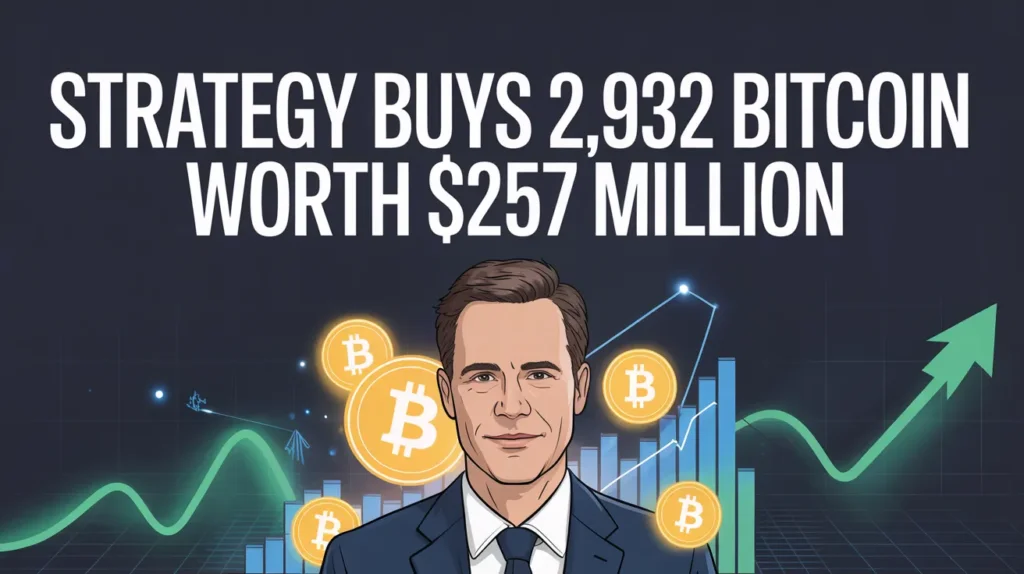
Michael Saylor’s firm, Strategy, has once again added to its already massive Bitcoin treasury, snapping up 2,932 BTC during last week’s market pullback in a move that reinforces its long-standing conviction in the asset. The latest purchase, disclosed in a Monday filing with the U.S. Securities and Exchange Commission, cost the company roughly $264 million and was executed at an average price of $90,061 per Bitcoin. The acquisition took place between Jan. 20 and Jan. 25, a period marked by heightened volatility that saw Bitcoin slide from above $93,000 to briefly dip below $87,000. With this transaction, Strategy’s total Bitcoin holdings climbed to 712,647 BTC, cementing its position as the world’s largest publicly traded corporate holder of Bitcoin. At current market prices, the company’s Bitcoin treasury is valued at approximately $62.5 billion. Key Takeaways Buying the Dip, But at a Slower Pace While the purchase underscores Strategy’s unwavering Bitcoin-first approach, it also highlights a subtle shift in execution. The 2,932 BTC buy is notably smaller than the company’s earlier January acquisitions. Just a week prior, Strategy announced the purchase of 22,305 BTC, following another buy of 13,627 BTC the week before that. Altogether, Strategy has acquired around 40,100 BTC so far this month—more than the combined total it purchased between August and December 2025. The contrast suggests a sharp acceleration in buying activity at the start of the year, even as individual purchases fluctuate in size. The timing of the latest buy is also telling. Bitcoin has fallen more than 6% from recent highs, and Strategy appears to be taking advantage of short-term weakness rather than aggressively buying into strength. This approach contrasts slightly with Saylor’s past stance. In 2024, he openly pledged to keep buying Bitcoin even at peak prices. More recently, however, the firm has leaned toward smaller additions during periods of market uncertainty. How the Purchase Was Funded Strategy financed the acquisition primarily through equity sales under its at-the-market (ATM) offering programs. According to the SEC filing, the company sold roughly 1.57 million shares of its Class A common stock (MSTR), generating about $257 million in net proceeds over the five-day period. In addition, Strategy sold 70,201 shares of its Series A Perpetual Stretch Preferred Stock (STRC), raising approximately $7 million. Combined, the proceeds closely matched the total cost of the Bitcoin purchase. Despite the steady issuance of shares, Strategy still has significant firepower left. As of Jan. 25, the company reported about $8.17 billion in remaining capacity under its common stock ATM program. It also maintains multiple preferred stock programs—STRK, STRF, STRC, and STRD—which together represent tens of billions of dollars in potential future capital raises. A Growing Bitcoin War Chest Strategy’s aggregate purchase price for its Bitcoin holdings now stands at roughly $54.2 billion, including fees and expenses. That translates to an average acquisition cost of $76,037 per Bitcoin across its entire stack. At current prices, the company is sitting on an estimated $8.3 billion in unrealized gains. More notably, Strategy now controls about 3.4% of Bitcoin’s fixed 21 million supply—a staggering concentration for a single corporate entity. This scale has increasingly positioned Strategy as a de facto Bitcoin proxy for public market investors. However, that exposure comes with volatility. MSTR shares were trading around $163 at the time of writing, down about 12% from a January high near $185, reflecting broader market jitters and Bitcoin’s recent pullback. Saylor Signals Another Move As has become customary, Michael Saylor hinted at the purchase before it became public. On Sunday, the Strategy executive chairman posted a familiar message tied to the company’s Bitcoin tracker: “Unstoppable Orange.” Earlier in the week, Saylor had also shared a more direct teaser, writing: “Thinking about buying more Bitcoin.” The timing raised eyebrows. While weekly Bitcoin purchases have become routine for Strategy, Saylor typically waits until the weekend to signal completed acquisitions. Posting midweek suggested something was already in motion—and the SEC filing soon confirmed it. What It Signals for the Market Strategy’s continued accumulation sends a clear message: despite short-term price swings and equity market pressure, the firm remains committed to Bitcoin as its primary treasury reserve asset. The smaller size of the latest purchase, combined with its timing during a dip, points to a more tactical approach without abandoning the broader thesis. For now, Strategy’s balance sheet tells the story. With more than 712,000 BTC in custody, billions in unrealized gains, and ample capital still available for future buys, Michael Saylor’s Bitcoin strategy appears far from slowing down—even when the market does.
Who is Bobby C. Lee? The Real Story of Bobby C. Lee’s

When it comes to cryptocurrency and blockchain innovation, Bobby C. Lee is one of the most recognised names. Born in the United States to Chinese parents, Bobby pursued a strong academic background in computer science before moving into tech and finance. His career path eventually led him to Bitcoin, where his bold vision helped shape the early crypto landscape. Bobby is best known as the co-founder of BTCC (formerly BTC China), one of the world’s first and largest cryptocurrency exchanges. He is also the brother of Charlie Lee, the creator of Litecoin. Beyond business, Bobby has become an outspoken advocate for Bitcoin adoption, financial freedom, and decentralised technology. Read Also: Who is Crypto Bitlord? Find Out Now Key Takeaways His Early Life and Education Bobby C. Lee studied computer science at Stanford University, where he built a strong technical foundation. Before entering crypto, Bobby worked in Silicon Valley and Asia, holding positions at major companies such asYahoo! and EMC. His career in tech and finance gave him the experience to bridge the gap between traditional finance and the new world of cryptocurrency. Career Milestones Source: LinkedIn profile Founding BTCC In 2013, Bobby co-founded BTCC (BTC China), which quickly became one of the world’s largest Bitcoin exchanges by trading volume. His leadership at BTCC not only helped expand crypto adoption in Asia but also set standards for how exchanges should operate with security, transparency, and user trust. Author of The Promise of Bitcoin In 2021, Bobby published The Promise of Bitcoin. The book simplifies complex crypto concepts for beginners and investors, making Bitcoin more understandable to a global audience. Public Speaking and Advocacy Bobby has become a familiar face at international conferences, TV interviews, and blockchain events, where he educates the public on the importance of decentralisation, financial inclusion, and Bitcoin as a store of value. Academic and Professional Achievements Source: Bobby Lee. Here are the Academic and Professional Achievements of Bobby C. Lee (crypto entrepreneur): Academic Achievements Achievement Details Bachelor’s & Master’s Degrees in Computer Science Bobby Lee earned both a B.S. and an M.S. in Computer Science from Stanford University. EMBA from CEIBS (China Europe International Business School) He obtained an EMBA degree from CEIBS in China, which enhanced his business, leadership, and management credentials. Mayfield Fellows Program During his time at Stanford, he was a member of the Mayfield Fellows Program. This is a selective program focusing on entrepreneurship, helping students prepare for startup and leadership roles. Professional Achievements Achievement Details Started his tech career at Yahoo! One of his early roles was as a software engineer at Yahoo!, contributing to early online communities. Roles in China tech & e-commerce He served as Director of Software Engineering at EMC’s China Center of Excellence, CTO of SMG BesTV New Media (a large IPTV operator), and VP of Technology for Walmart’s e-commerce business in China. Founder & CEO of BTCC (formerly BTC China) In 2013, he co-founded BTCC, China’s first BTC/Bitcoin exchange, which under his leadership became one of the world’s largest exchanges. He led it until its sale in 2018. BTCC Mint initiative While at BTCC, Lee launched “BTCC Mint,” a line of physical Bitcoin coins, bars, and chips containing real bitcoins. Over 8,600 Bitcoins were loaded into those physical items. The initiative increased trust among physical Bitcoin enthusiasts. Founder & CEO of Ballet After selling BTCC in early 2019, he founded Ballet, a company that makes crypto cold storage / physical wallets, aiming at making cryptocurrency more accessible. Author of The Promise of Bitcoin He wrote The Promise of Bitcoin: The Future of Money and How It Can Work for You (published in 2021), a book aimed at educating people about Bitcoin’s potential. Board member of the Bitcoin Foundation He serves on the board of the Bitcoin Foundation, a nonprofit promoting Bitcoin adoption. Bobby Lee in the Public Eye Bobby Lee is not just an entrepreneur building companies behind the scenes; he’s an active public figure in crypto, engaging with media, policy, and education. Below are some facets of how he shows up publicly, the messages he pushes, and how people respond to him. Public Messaging & Themes Lee consistently emphasizes the importance of understanding Bitcoin not just as an investment, but as a fundamentally different kind of money: decentralised, scarce, and enabling financial independence. He uses public interviews, podcasts, and videos to explain complex crypto topics in accessible terms. A recurring theme in his public appearances is the importance of owning your private keys, using cold storage, hardware wallets, etc. For example, in “Is Your Bitcoin REALLY Yours? Importance of Cold Storage.” Lee makes a point about owning Bitcoin vs trusting someone else to hold it. Bobby Lee generally supports balanced regulation that encourages innovation while protecting investors. He has argued that governments should regulate exchanges and custodians but avoid restricting personal ownership of crypto. On environmental issues, he acknowledges the energy impact of Bitcoin mining but often highlights the shift toward renewable energy and the long-term sustainability of proof-of-work. Overall, his position is one of responsible growth, calling for transparency and ethical practices from crypto companies. Lee often makes predictions about Bitcoin’s future, including its potential price, place in the global financial system, and rate of adoption. Media Formats & Platforms Lee appears on Bitcoin-focused podcasts, tech and finance media, and crypto conferences. Examples include Bitcoin Magazine Podcast, CoinDesk interviews, and his own podcast and content channels. He gives interviews to major crypto/finance outlets, writes or contributes to articles, and is the author of The Promise of Bitcoin. He also maintains his own website/blog where he writes about “What is Bitcoin?”, Ballet (his hardware wallet company), etc. He utilizes platforms such as Instagram, YouTube, and others to share updates, educational content, and his opinions. His footings in social media help him reach both crypto-savvy audiences and people new to the topic. Public Events & Speeches Public Perception & Influence Because of his track record (BTCC, Ballet, his book), many in the crypto community view Lee
Crypto Mining Loan: A Complete Guide to Crypto-Backed Loans

Setting up a crypto mining operation isn’t just about plugging in hardware and watching coins roll in—it’s capital-intensive, power-hungry, and demands serious planning. From high-end mining rigs to ongoing electricity costs, the financial barrier often stops miners before they even start. That’s why understanding how to secure a crypto mining loan is more relevant than ever. Financing your mining setup can give you the edge to scale faster, compete effectively, and maintain operations during market swings. However, not all loan options are created equal, and selecting the wrong one could ultimately cost more than it benefits. Let’s walk you through how a crypto mining loan works, what to consider, and the best ways to fund your mining goals sustainably. Key Takeaways What is Cryptocurrency Mining and Crypto Mining Loan? Cryptocurrency mining is the process of validating and recording transactions on a blockchain network. Miners use powerful computers to solve complex mathematical puzzles that confirm the authenticity of transactions. Once verified, these transactions are grouped into blocks and added to the blockchain ledger. Mining requires specialized hardware, such as ASICs (application-specific integrated circuits) or high-performance GPUs, that perform calculations at high speeds. This process not only secures the network but also introduces new coins into circulation as rewards for miners. However, mining demands significant energy and computational power, making it a costly and competitive endeavor. Successful mining depends on balancing hardware efficiency, electricity costs, and the value of the cryptocurrency being mined. Crypto Mining Loan A crypto mining loan is a type of financing designed specifically to help miners cover the upfront costs of setting up or expanding their mining operations. Since cryptocurrency mining requires expensive hardware, substantial electricity, and ongoing maintenance, many miners seek loans to manage these expenses without depleting their cash reserves. These loans can come in various forms, from traditional business loans to crypto-backed loans where existing digital assets like Bitcoin or Ethereum serve as collateral. By securing a crypto mining loan, miners gain access to capital that allows them to purchase rigs, pay for power, or upgrade their infrastructure, helping them scale efficiently. Understanding how these loans work, their terms, and risks is essential before borrowing, ensuring the investment supports sustainable mining growth. Top Platforms and Lenders Offering Crypto Loans Platform Type of Loan Collateral Accepted Interest Rates / Fees Aave Decentralized, collateralized loans ETH, USDC, DAI, WBTC, MATIC, and more Reserve fees (10–20%) + interest spread, liquidation fees apply Alchemix Self-repaying loans via yield DAI, ETH No interest; 50% LTV; yield-based repayment; no liquidation fees Binance Centralized, flexible/fixed loans BTC, ETH, BNB, SOL, ADA, 50+ tokens Starting from 2% APR; varies by asset & term; no origination fees Arch Lending Centralized, crypto-backed loans BTC, ETH, SOL Fixed 12%+ APR; 1.5% origination fee; LTV up to 60% Unchained Institutional BTC-backed loans BTC only 13–15% APR; fixed 12-month term; origination fees apply; $150K loan minimum Read Also: A Simple Guide to How Crypto Lending Works Here are some of the top platforms offering crypto loans: Aave Aave is a decentralized, non-custodial liquidity protocol that allows users to earn interest on deposits and borrow assets. One of Aave’s most innovative features is its flash loans, which offer instant, uncollateralized borrowing for a single transaction, ideal for arbitrage, debt refinancing, and collateral swaps. Users can also open collateralized borrow positions using a wide range of supported assets. With support for multiple chains like Ethereum, Avalanche, and Arbitrum, Aave is suitable for experienced DeFi users who want flexible, automated borrowing strategies. Pros Cons Fees Alchemix Alchemix introduces an innovative lending model where loans repay themselves over time using the yield generated from user deposits. By depositing supported assets like DAI or ETH, users receive a synthetic token (e.g., alUSD) to spend or use, while their original deposit remains locked and continues earning yield. Alchemix protects users from liquidations and market volatility since loans are never forcibly closed. This makes it ideal for users seeking passive, risk-mitigated borrowing without worrying about repayments. Pros Cons Fees Vary. The system automatically uses the yield generated from your collateral to pay off your loan, a core feature of the protocol. Binance Binance, one of the world’s largest centralized exchanges, offers flexible crypto loans with competitive interest rates. Users can borrow using over 50 cryptocurrencies as collateral, including BTC, ETH, BNB, and more. Loans can be structured as fixed or flexible-rate depending on user preferences. The platform is ideal for users already active in the Binance ecosystem who want quick access to liquidity without leaving the exchange. It offers smooth integration and user-friendly terms for traders and investors alike. Pros Cons Fees Arch Lending Arch Lending provides crypto-backed loans with clear terms, fast approval, and no credit checks. It’s designed for individuals and high-net-worth clients looking to unlock liquidity without selling assets like BTC, ETH, or SOL. Loans start at $1,000, with interest rates starting at 12% APR, plus a 1.5% origination fee. Borrowers can choose between interest-only and amortized repayments. Arch also offers personal onboarding support, making it ideal for less technical users seeking tailored crypto loan services. Pros Cons Fees Annual interest rates are subject to change and may vary based on loan type, the principal amount requested, and the borrower’s jurisdiction of residence. Unchained Unchained offers crypto-backed loans tailored for businesses using Bitcoin as collateral. The platform requires a minimum loan of $150,000 and is suited for commercial borrowers seeking quick liquidity without selling their BTC. Borrowers maintain shared control of their collateral through a multi-signature setup, reducing custodial risk. With fixed 12-month terms, interest-only payments, and no credit checks, Unchained emphasizes privacy, security, and long-term financial planning for corporate clients and institutional borrowers. Pros Cons Fees How Does Crypto Mining Loan Work A crypto mining loan provides miners with the necessary capital to finance their operations, including hardware purchases, electricity costs, and rig expansions. The loan process typically follows these steps: Application and Approval Miners apply for a loan through platforms specializing in crypto financing or traditional lenders offering business
NFT Bridging vs NFT Swapping: Complete Guide for Beginners
Since 2020, NFTs have evolved from simple digital collectibles into valuable assets with real utility across gaming, art, and virtual experiences. As blockchain networks multiplied, creators and traders needed better ways to exchange or move these assets without losing ownership or authenticity—leading to the rise of NFT swapping and NFT bridging. Both methods solve different challenges. NFT swapping focuses on trading assets efficiently, while NFT bridging enables movement across blockchains for greater interoperability. Understanding how each works and when to use them can help maximize value, reduce costs, and unlock more opportunities in the expanding NFT economy. This guide explores both in detail. Key Takeaways What is NFT Swapping? NFT swapping is the process of exchanging one non-fungible token for another, or for a combination of NFTs and cryptocurrencies, without the need to sell and repurchase through traditional marketplaces. Unlike a standard buy-sell transaction, swapping allows two or more parties to directly trade their digital assets in a single, streamlined agreement—often using smart contracts for automation and security. This method is popular among collectors, gamers, and digital artists who want to diversify or upgrade their portfolios quickly. NFT swapping can also involve advanced formats such as multi-asset trades, wrapped NFTs, or fractional ownership exchanges, enabling greater flexibility and liquidity. How NFT Swapping Works NFT swapping simplifies the exchange of digital assets by allowing owners to trade directly without going through the traditional “sell-and-buy” process on marketplaces. The process typically relies on blockchain-based smart contracts, which ensure the trade is executed only when both parties meet the agreed terms. Here’s how it works in detail: Step-by-Step Process of Swapping NFTs Identify the Assets to Be Swapped Both parties decide which NFTs (or NFTs plus cryptocurrency) will be exchanged. This could be a simple one-to-one trade or a multi-asset swap. Choose a Swapping Platform Select a trusted NFT swapping platform that supports the relevant blockchain (e.g., Ethereum, Polygon, or Binance Smart Chain). Connect Your Wallet Link your crypto wallet, such as MetaMask, Trust Wallet, or WalletConnect, to the platform. This wallet stores your NFTs and enables smart contract interaction. Create or Accept a Swap Offer Smart Contract Execution The swap is governed by a smart contract that holds both parties’ assets in escrow until the trade is completed. If either side fails to meet the agreed terms, the assets are returned. Confirmation and Transfer Once both parties approve, the smart contract executes the swap instantly, transferring ownership of the NFTs on-chain. Verify Ownership Each party checks their wallet to confirm receipt of the new NFT(s) and the corresponding transaction record on the blockchain. Platforms and Tools That Enable NFT Swaps In essence, NFT swapping works because blockchain technology ensures security, transparency, and trustless transactions, eliminating the need for intermediaries while giving traders more control over their exchanges. Main Types of NFT Swaps NFT swapping is not limited to simple one-to-one trades. As the NFT market grows, swapping methods have evolved to offer more flexibility, better liquidity, and broader participation. Below are the main types of NFT swaps and how they work: Auction-Based Swaps In auction-based swaps, the NFT owner lists their asset for trade in a competitive bidding format. Instead of only bidding with cryptocurrency, participants can offer other NFTs or a mix of NFTs and tokens as part of their bid. This method encourages competitive offers and allows sellers to choose the trade that provides the best overall value. Auction-based swaps are popular in art and collectibles markets, where rarity and desirability drive bidding activity. For example, an artist lists a rare NFT for swap, receiving offers that include a mix of high-value NFTs and cryptocurrency from multiple bidders before choosing the best deal. Multi-Asset Swaps Multi-asset swaps involve trading multiple NFTs—or NFTs plus cryptocurrencies—in a single transaction. This method is ideal for portfolio adjustments, allowing both parties to balance value without breaking the deal into multiple trades. Smart contracts handle the complexity by ensuring all assets are transferred simultaneously, reducing risk and saving on transaction costs. A gamer, for instance, trades three in-game NFT weapons and some ETH for another player’s rare in-game skin and armor set in one unified swap. Fractional Swaps Fractional swaps deal with NFTs that have been “fractionalized” into smaller ownership units, usually represented as fungible ERC-20 tokens. This allows users to swap portions of high-value NFTs without having to trade or own the entire asset. Fractional swaps make expensive NFTs more accessible and increase liquidity by allowing more participants to get involved. For example, instead of swapping an entire NFT worth $50,000, a collector trades 20% of its fractionalized shares for another partial share of a different NFT. Wrapped NFT Swaps Wrapped NFT swaps involve converting an NFT into a “wrapped” version compatible with a different blockchain or marketplace. This enables swaps that wouldn’t otherwise be possible due to blockchain incompatibility. Wrapped NFTs act as tokenized representations of the original asset and can be traded or swapped like native NFTs on the target network. Example: An Ethereum-based NFT is wrapped into a Binance Smart Chain-compatible version so it can be swapped with a BSC NFT in a decentralized platform. Direct Swaps Direct swaps are the simplest form of NFT swapping—two parties agree to exchange NFTs directly without involving other assets or complex terms. The trade is executed peer-to-peer, often using escrow-based smart contracts to ensure fairness. Direct swaps work best when both NFTs are perceived as having comparable value, or when both traders value the asset beyond its market price. For example, two collectors trade a rare NFT art piece for an exclusive music NFT directly through a secure swap platform. Benefits of NFT Swapping NFT swapping offers several advantages that empower users and expand the digital asset ecosystem beyond simple buying and selling. Here are some key benefits: Access to Cross-Chain Markets Swapping NFTs, especially through wrapped NFTs or multi-chain platforms, allows users to tap into markets on different blockchains. This cross-chain access breaks down silos, enabling collectors and traders to explore a
What Is DeFi Lending and How Does It Work?
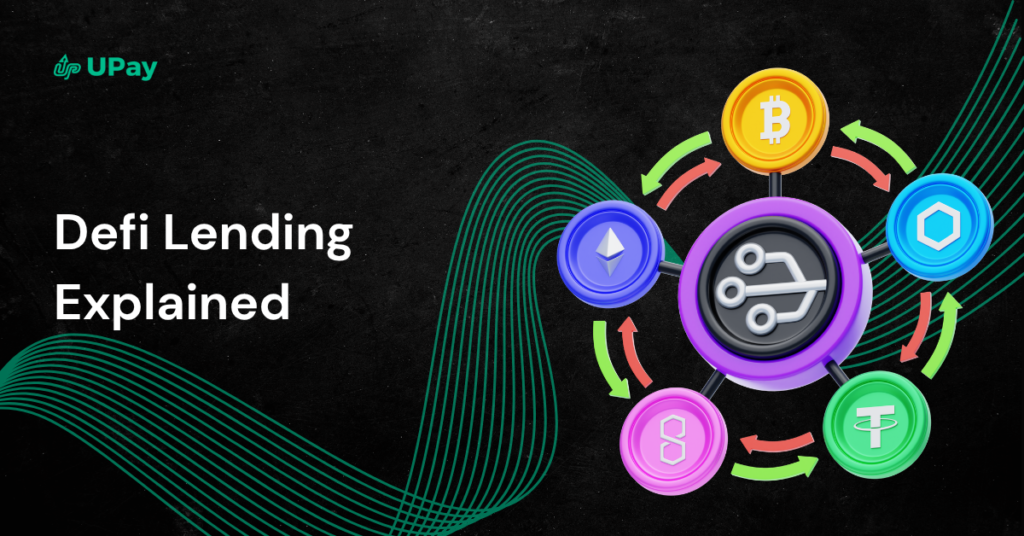
Decentralized finance (DeFi) is changing how people borrow and lend, without banks, brokers, or long waiting times. In mid-2025 alone, lending protocols like Aave, Maple, and Morpho helped drive total value locked in DeFi lending past $55 billion, powered by everyday users depositing crypto to earn interest or borrow against their holdings. That number keeps climbing, and it’s not by chance. It’s about access. No paperwork. No approval queues. Just connect your wallet, deposit your crypto, and lend or borrow instantly—thanks to smart contracts doing all the work in the background. But that convenience comes with questions. How exactly do these platforms operate without a central authority? What makes DeFi lending different from traditional loans? And what’s the catch? This guide breaks down how DeFi lending works, what powers it, and what you should know before getting involved. Key Takeaways What is DeFi Lending? DeFi lending is a way to borrow and lend cryptocurrencies using decentralized finance protocols built on blockchain networks. Unlike traditional lending, which relies on banks or financial institutions as intermediaries, DeFi lending operates through smart contracts—self-executing programs that automatically manage loan agreements without the need for a middleman. In a DeFi lending system, users can supply their crypto assets to lending pools, which are then available for borrowers to access. Borrowers typically provide collateral in the form of other cryptocurrencies to secure the loan, ensuring the lender’s funds are protected. Interest rates, loan terms, and repayments are all governed transparently and automatically by the underlying smart contracts. This process allows anyone with a digital wallet to participate as a lender or borrower, enabling faster, permissionless, and borderless access to credit, all while maintaining security and transparency on the blockchain. How Does DeFi Lending Work? DeFi lending operates through blockchain technology and smart contracts, creating an automated, trustless system for borrowing and lending crypto assets. Here’s a breakdown of the key components and processes involved. Role of Smart Contracts in Automating Loans Smart contracts are programmable agreements that automatically enforce the terms of a loan without human intervention. When a borrower meets the necessary conditions, such as providing collateral, the smart contract releases funds instantly. Repayments and interest calculations are also handled automatically, reducing delays and eliminating the need for intermediaries. This automation ensures transparency, security, and efficiency throughout the lending process. Lending Pools and Liquidity Provisioning Instead of traditional one-to-one loans, DeFi lending often uses pooled funds contributed by multiple lenders. These lending pools aggregate crypto assets, which borrowers can access as needed. Lenders earn interest based on the demand for loans and the size of the pool, while borrowers benefit from quick access to liquidity. This pooling system helps optimize capital use and distribute risk among participants. Collateralization Types To protect lenders, DeFi loans generally require collateral, but the form and amount vary: Over-collateralization Borrowers must lock assets worth more than the loan amount. For example, depositing $150 worth of crypto to borrow $100. This reduces risk for lenders due to market volatility and is the most common method used in DeFi. Under-collateralization Loans are granted with collateral worth less than the loan amount, often based on creditworthiness or reputation within the network. This approach is less common and carries a higher risk but allows greater capital efficiency. Flash Loans These are uncollateralized loans that must be borrowed and repaid within a single blockchain transaction. Flash loans enable advanced financial operations like arbitrage or refinancing without upfront capital but require precise execution to avoid default. By combining these mechanisms, DeFi lending creates a flexible, transparent, and efficient way for users to access credit using blockchain technology. Key Components of a DeFi Lending Protocol A DeFi lending protocol is made up of several essential elements that work together to enable trustless borrowing and lending. Each component plays a specific role in ensuring the protocol is secure, transparent, and efficient. Lenders and Borrowers At the core of any DeFi lending platform are lenders and borrowers. This peer-to-peer model removes intermediaries and allows anyone with a Web3 wallet to participate globally. Collateral Tokens and Loan Tokens DeFi loans are collateralized, meaning borrowers must lock up assets (collateral tokens) to secure a loan. These tokens are typically well-established cryptocurrencies like ETH, BTC, or stablecoins such as USDC or DAI. In exchange, borrowers receive loan tokens—the asset they intend to borrow, often stablecoins or another cryptocurrency. If the value of the collateral falls below a certain threshold, the protocol may automatically liquidate it to cover the loan. Lending Pools and Interest Rate Models DeFi platforms use lending pools rather than matching individual lenders with borrowers. These pools are funded by users and made available for borrowing by others. Interest rates in these pools are determined by interest rate models, which can be: Oracle Services and Risk Management DeFi protocols rely on oracle services to fetch real-time market data, such as crypto prices. These oracles are crucial for assessing the value of collateral, triggering liquidations, and maintaining overall protocol accuracy. Risk management mechanisms also include: Together, these components form a self-governing ecosystem that powers decentralized lending—secure, permissionless, and scalable. Advantages of DeFi Lending DeFi lending offers a range of benefits that make it a compelling alternative to traditional lending systems. These advantages are: Speed and Automation Through Smart Contracts Smart contracts eliminate the need for intermediaries by automating the entire lending process. Loans are executed, collateral is secured, and repayments are tracked instantly without delays or manual approval. This reduces friction and enables borrowers to access funds quickly, often within minutes. Immutability and Transparency of Blockchain-Based Systems All transactions on DeFi lending platforms are recorded on a public blockchain, making them tamper-proof and verifiable. This immutability ensures data integrity, while transparency allows users to audit the protocol’s activity, monitor liquidity pools, and verify loan histories in real time. Borderless and Permissionless Access DeFi lending is open to anyone with an internet connection and a crypto wallet. There are no gatekeepers, credit checks, or geographic restrictions. This permissionless model promotes financial
Buying Pepe Coin: How To Buy Pepe Instantly and Securely
Like every other cryptocurrency, Pepe Coin has become a token investors look toward for fast trades and community-driven opportunities. Its popularity is not just about memes; it represents a growing interest in assets that move quickly across exchanges. For that reason, many people are searching for the most reliable ways to start buying Pepe Coin. To do this, understanding secure and instant purchase methods is essential. From choosing the right exchange to setting up a safe wallet, every step matters. In this guide, you will learn how to buy Pepe Coin instantly and securely without unnecessary risks. Key Takeaways What is Pepe Coin? Read Also: What is Flipcoin Crypto and How Does It Work? Pepe Coin (PEPE) is a meme-based cryptocurrency inspired by Pepe the Frog, one of the most recognizable internet characters in meme culture. Launched in April 2023, it was designed to celebrate the humorous and community-driven aspects of crypto, rather than focusing on complex use cases. The project positions itself as a fun and straightforward token that thrives on cultural relevance, online engagement, and shared community spirit. Currently trading at $0.00001089 and with a $4.5 billion market cap on Coingecko at the time of writing, Pepe Coin has quickly established itself as one of the largest meme tokens in circulation. Unlike many projects that emphasize utility, PEPE focuses on simplicity, entertainment, and inclusivity—drawing strength from its rapidly growing community of holders. Its unique features, such as no transaction taxes, permanently locked liquidity, and an immutable smart contract, make it stand out as a meme token built with transparency and user trust in mind. Step-by-Step Guide to Buying Pepe Buying Pepe Coin is simple if you follow the proper steps. Below is a straightforward guide to help you purchase Pepe Coin instantly and securely on a reliable exchange. Signing up on an Exchange The first step is to register with a cryptocurrency exchange that lists Pepe Coin. Popular centralized exchanges often require a valid email address, a secure password, and two-factor authentication (2FA) for extra protection. Make sure to choose an exchange known for security and liquidity. Verifying Identity (KYC Requirements) Most regulated exchanges require Know Your Customer (KYC) verification before trading. This usually involves uploading a government-issued ID, a selfie, or proof of address. Completing KYC not only secures your account but also ensures compliance with financial regulations. Funding Your Account Once your account is active, you need to add funds. Exchanges typically support multiple payment methods, including bank transfers, debit/credit cards, and crypto deposits. Bank transfers may take longer, while cards and stablecoin deposits usually provide instant funding. Searching for Pepe and Making the Purchase After funding your account, search for Pepe (PEPE) in the exchange’s trading section. Select your preferred trading pair (e.g., PEPE/USDT), enter the amount you want to buy, and confirm the transaction. Once completed, the tokens will appear in your exchange wallet. Preparing to Purchase Pepe Coin Before buying Pepe Coin, it’s essential to prepare appropriately to ensure your investment is safe and accessible. Taking time to set up the right tools and security practices will make the process smoother and more secure. Choosing a Secure Crypto Wallet A crypto wallet is essential for storing your Pepe tokens after purchase. Hot wallets (like mobile apps or browser extensions) offer convenience and quick access but remain connected to the internet, making them more vulnerable to hacks. Cold wallets (like hardware devices) provide offline storage and stronger protection, making them ideal for long-term holders. Choosing the right option depends on whether you prioritize speed or maximum security. Ensuring Exchange Compatibility with Pepe Not every exchange supports Pepe Coin, so it’s crucial to confirm that the platform you plan to use lists PEPE trading pairs. Checking compatibility beforehand saves time and avoids issues when funding your account. Well-established exchanges with strong liquidity are usually more reliable for buying Pepe instantly. Security Measures Before Investing Before making any purchase, enable two-factor authentication (2FA) on your exchange account, use strong passwords, and store your wallet’s private keys or seed phrases safely offline. It’s also wise to research the exchange’s track record on security. Taking these steps reduces the risk of unauthorized access and keeps your Pepe investment secure. Where to Get Pepe Coin Instantly Finding the right platform is one of the most important steps when buying Pepe Coin. Since speed and security are key, it’s worth exploring both centralized exchanges (CEXs) and decentralized exchanges (DEXs) to see which option works best for your needs. Top Centralized Exchanges Listing Pepe Coin Centralized exchanges (CEXs) are the most popular option for buying Pepe instantly because of their ease of use, liquidity, and fiat on-ramp services. Leading exchanges, such as Binance, Kraken, OKX, Bybit, and KuCoin, list PEPE with strong trading pairs, including PEPE/USDT, making transactions fast and straightforward. With centralized platforms, you can deposit funds directly via debit card, bank transfer, or stablecoins, then trade instantly for Pepe. Their user-friendly dashboards and integrated wallets also make them a top choice for first-time buyers. Decentralized Exchange (DEX) Options for Pepe For those who prefer complete control over their assets, decentralized exchanges like Uniswap and PancakeSwap offer access to Pepe Coin without intermediaries. On a DEX, you connect your personal crypto wallet (such as MetaMask or Trust Wallet), swap Ethereum or Binance Smart Chain tokens for PEPE, and the tokens are delivered directly to your wallet. While this method offers greater privacy and eliminates the need for KYC, it requires more caution since users are fully responsible for handling wallet security and avoiding fraudulent contracts. Comparing Fees, Speed, and Reliability When choosing between CEXs and DEXs, three factors stand out: In short, if you’re looking for convenience and instant execution, centralized exchanges are often the better option. However, if privacy and self-custody are of greater importance, decentralized exchanges offer a practical alternative. What Can You Do With Pepecoin Pepe Coin (PEPE) may have started as a meme-inspired token, but it has grown into an asset with several practical and