


Crypto has grown far beyond Bitcoin and Ethereum, and with that growth comes new terms and concepts. One of them is FPI, a term that actually has two different meanings in the crypto market.
On one hand, FPI stands for Foreign Portfolio Investment, money that flows from international investors into crypto assets like Bitcoin, stablecoins, and DeFi tokens. These inflows can bring liquidity, growth, and attention to the market, but they also raise questions about volatility, regulation, and risks.
On the other hand, FPI refers to the Frax Price Index, an innovative stablecoin created by the Frax Finance team. Unlike USDC or USDT, which are pegged to the U.S. dollar, this token is pegged to the U.S. Consumer Price Index (CPI), making it an inflation-resistant “flatcoin” designed to protect purchasing power over time.
Both versions of FPI matter because they show how crypto is evolving: one highlights how global capital is entering digital assets, while the other shows how new stablecoin designs are addressing inflation and stability challenges. Together, they reveal the opportunities and questions facing crypto as it moves into 2025 and beyond.
Key Takeaway
- Traditionally, Foreign Portfolio Investment (FPI) refers to cross-border capital flowing into financial assets
- FPI is also shorthand for the Frax Price Index, an inflation-resistant stablecoin developed by the Frax Finance team
- Crypto assets, especially CPI-pegged tokens like the Frax Price Index (FPI), are increasingly marketed as hedges against inflation
- FPI inflows provide liquidity and depth, which can improve price discovery and reduce volatility in normal conditions
- On-chain analytics allow researchers to track wallet addresses, token flows, liquidity pools, and Total Value
“The future of FPI in crypto will depend on balancing innovation, transparency, and global regulatory clarity.”
What is FPI in Crypto?
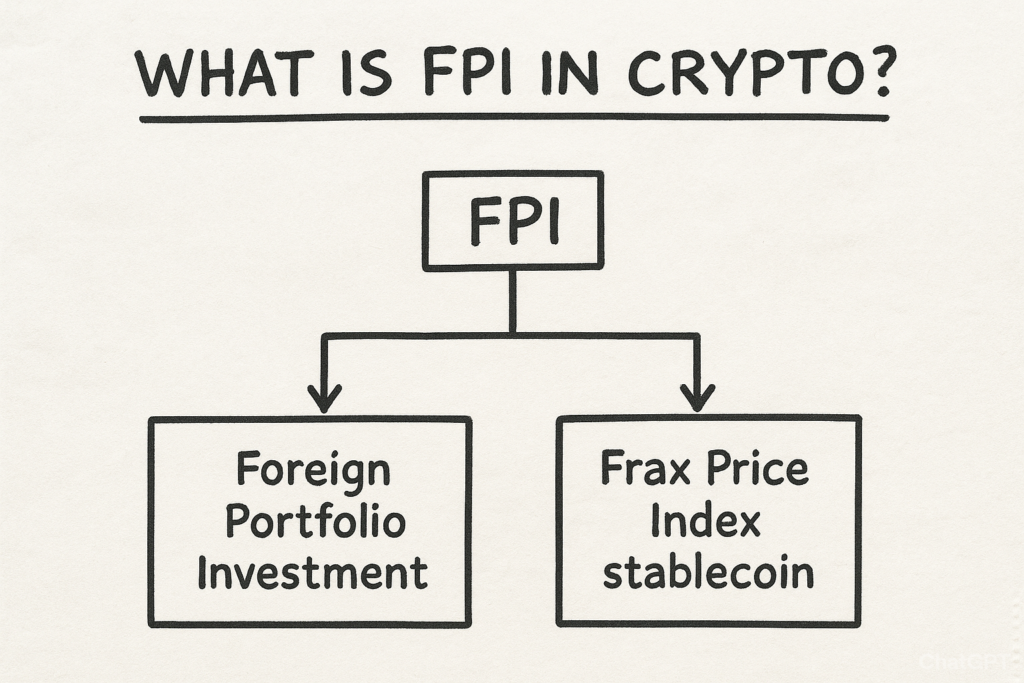
When the acronym FPI comes up in crypto discussions, it can point to two very different but equally important concepts:
FPI as Foreign Portfolio Investment Applied to Crypto Markets
Traditionally, Foreign Portfolio Investment (FPI) refers to cross-border capital flowing into financial assets like equities, bonds, or derivatives without granting direct control of the underlying enterprise.
In crypto, this idea translates to international investors allocating capital into digital assets, whether that’s Bitcoin, Ethereum, or tokenized securities. The rise of global crypto exchanges and custodians has blurred geographical boundaries, making it easier for institutions and individuals across the world to treat crypto as part of their portfolio diversification strategy.
For the crypto industry, foreign portfolio inflows provide deeper liquidity, stronger market participation, and a signal of growing institutional legitimacy. On the flip side, they expose markets to regulatory changes in major economies and highlight the tension between decentralized assets and centralized financial oversight.
FPI as the Frax Price Index Stablecoin Project
On the other hand, FPI is also shorthand for the Frax Price Index, an inflation-resistant stablecoin developed by the Frax Finance team. Unlike traditional stablecoins pegged to the U.S. dollar, FPI is pegged to the U.S. Consumer Price Index (CPI-U).
In practice, this means the token is designed to maintain purchasing power over time rather than remain fixed at a nominal fiat value.
By tracking a real-world inflation benchmark, FPI belongs to a new class of assets sometimes called “flatcoins” digital currencies that attempt to hedge users against inflation while providing a stable unit of account. This design makes it particularly appealing in times of rising prices and uncertain monetary policies.
Why FPI Is Relevant Now
The years since 2020 have brought persistent inflationary pressure worldwide. Even though headline inflation rates in some regions have eased compared to 2022 peaks, many economies still grapple with elevated costs of living.
In this environment, stablecoins like FPI, which aim to track inflation rather than fiat, have become attractive to users who want to safeguard long-term purchasing power. Unlike traditional dollar-pegged tokens, FPI adjusts with the CPI, making it a more “real value” reference point for savings, contracts, and payments.
Regulatory Scrutiny & Institutional Interest in Foreign Investments in Crypto
At the same time, governments and regulators are paying closer attention to how foreign portfolio investments interact with digital assets. Cross-border capital flows into crypto have raised questions about money laundering, taxation, and systemic risk. Yet, institutional interest hasn’t waned.
Sovereign wealth funds, pension schemes, and asset managers are increasingly experimenting with crypto exposure, whether directly through tokens or indirectly via tokenized securities and ETFs.
FPI, in both its meanings, sits at the heart of this shift: foreign capital continues to shape crypto markets, and new inflation-indexed assets are redefining how investors perceive stability.
Developments in DeFi Stablecoins / Unit-of-Account Models
Within decentralized finance (DeFi), the conversation has shifted from “how do we peg to the dollar?” to “how do we create a truly stable unit of account?” Projects like FPI demonstrate a step forward.
By aligning value with inflation data, Frax Price Index offers DAOs, treasuries, and individuals a way to denominate contracts or savings in terms that hold real purchasing power. Combined with growing institutional FPI inflows, this evolution highlights the broader trend: crypto is no longer just about speculation — it’s increasingly about financial primitives that compete with traditional monetary systems.
“Foreign portfolio investment brings liquidity and growth, but also raises new questions about risk and regulation.”
Foreign Portfolio Investment Applied to Crypto (FPI)
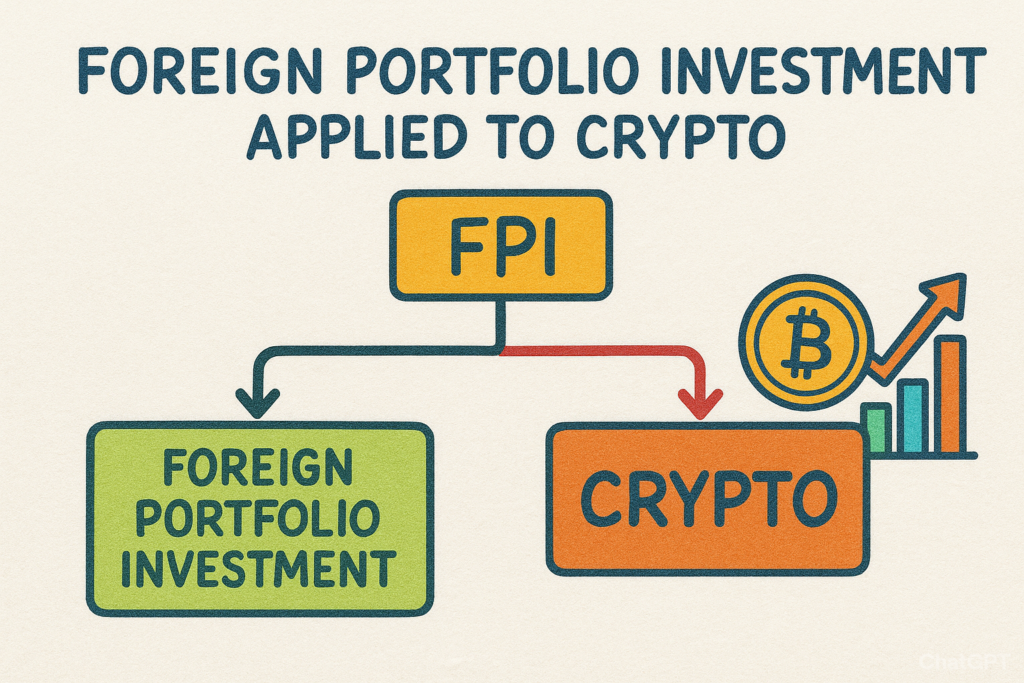
In traditional finance, Foreign Portfolio Investment (FPI) refers to cross-border capital flows where investors purchase financial assets such as equities, bonds, mutual funds, or derivatives in another country.
Unlike Foreign Direct Investment (FDI), which gives investors significant influence or control over a company’s operations, FPI is primarily about financial exposure and return-seeking behavior. Investors hold securities but rarely interfere in the governance of the issuing entity.
Key Characteristics: Liquidity, Lack of Control, Risk Exposure
The hallmarks of FPI are its liquid nature, short-to-medium investment horizon, and lack of managerial control. Investors can easily buy and sell assets, making FPI highly responsive to global market conditions. At the same time, portfolio investors face risks from exchange rate fluctuations, political instability, and regulatory changes in the host market.
Types of Crypto Assets That Attract FPI
In the crypto economy, the same principles apply, but the asset classes differ. Foreign portfolio investors in crypto are typically drawn to:
- Stablecoins: Viewed as low-volatility entry points.
- Major altcoins: Such as Ethereum, Solana, and other high-liquidity assets.
- Tokenized assets: Real-world assets (RWAs) like tokenized treasury bills and real estate.
- DeFi tokens: Governance or yield-bearing tokens within decentralized protocols.
Challenges: Volatility, Custody, Regulatory, On-Chain Transparency
FPI in crypto faces unique hurdles. Volatility remains a defining risk, as even top-tier tokens can swing double digits within days. Custody is another challenge institutional investors require secure, regulated custodial solutions for large-scale holdings.
Regulatory uncertainty complicates decision-making, since the classification of tokens as securities or commodities varies across jurisdictions. Finally, on-chain transparency, while a strength for monitoring flows, can also expose investors to front-running risks and public scrutiny.
Real-World Context & Examples for “FPI in Crypto”
In 2025, global inflows into crypto assets reached US$60 billion year-to-date, according to a report summarising digital-asset fund flows.
A survey from late 2025 found that 55% of global hedge funds now hold some crypto assets, up from 47% the previous year, a clear sign that institutional investors increasingly treat crypto as part of traditional portfolios.
Weekly fund-flow data show weeks with multibillion-dollar inflows into crypto funds, indicating renewed confidence and capital commitment from large investors.
Drivers of Crypto FPI Flows
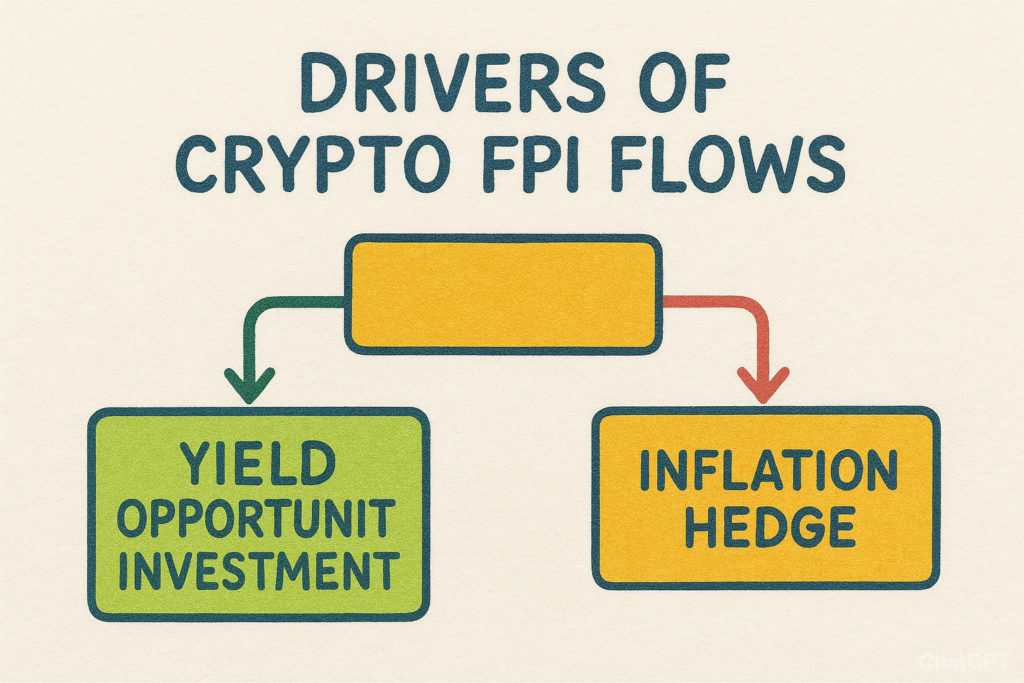
Several factors push FPI into crypto, including yield opportunities, inflation protection, and the search for new global investment options.
Yield Opportunities (Staking, Liquidity Mining)
One of the biggest draws for foreign investors in crypto is the opportunity to generate yield. Through staking, liquidity mining, or lending protocols, investors can earn significantly higher returns compared to traditional savings or government bonds.
Inflation Hedge (Stablecoins, CPI-Pegged Assets)
Crypto assets, especially CPI-pegged tokens like the Frax Price Index (FPI), are increasingly marketed as hedges against inflation. By tracking consumer prices rather than fiat currencies, these tokens appeal to investors looking to preserve real value.
Regulatory Arbitrage and Tax or Jurisdictional Advantages
Crypto markets operate globally, allowing investors to exploit jurisdictional differences in tax rates, capital controls, and compliance requirements. This “regulatory arbitrage” makes crypto attractive as a portfolio component when traditional channels are restricted.
Institutional Mandates & ESG / “Crypto as an Asset Class” Thinking
As institutional frameworks evolve, crypto is gradually being recognized as a legitimate asset class. Some funds are mandated to diversify across emerging assets, and with ESG-linked discussions around decentralized finance, carbon-neutral mining, and blockchain transparency, crypto is finding its way into ESG-conscious portfolios as well.
Risks and Drawbacks on FPI in Crypto
While FPI brings growth to crypto, it also carries risks like volatility, regulation issues, and liquidity challenges that investors must consider.
Volatility Risk: Loss of Value Due to Crypto Crashes
The most visible risk is price volatility. Crypto assets are notorious for dramatic boom-and-bust cycles, which can erode foreign portfolio gains quickly.
Regulatory Risk: Changing Laws, Securities Classification, AML/KYC
Governments around the world continue to adjust how they classify, tax, and monitor digital assets. Sudden policy shifts such as bans on stablecoins or stricter AML/KYC enforcement can trap or devalue foreign holdings.
Liquidity Risks; Exit Difficulty; Slippage on Big Entries/Exits
Although crypto markets are liquid compared to niche equities, large portfolio flows can still cause slippage and impact prices, especially for mid-cap tokens or DeFi assets with thinner liquidity pools.
Counterparty and Operational Risk (Smart Contract, Custody, etc.)
Unlike traditional markets, crypto introduces smart contract risks, bugs, hacks, or oracle failures can lead to total loss of funds. Custody solutions are improving, but operational risks persist for institutions managing large, multi-chain portfolios.
Impact of Crypto FPI on Markets
Crypto FPI can reshape markets by influencing liquidity, price movements, and how closely digital assets connect with traditional finance.
Liquidity Effects: Deeper Markets, Price Discovery or Flash Crashes
FPI inflows provide liquidity and depth, which can improve price discovery and reduce volatility in normal conditions. However, sudden exits can trigger flash crashes, given the speed at which digital assets are traded.
Correlation with Traditional Markets / Spillovers
As foreign portfolio money flows into crypto, correlations with equities, bonds, and commodities are increasing. Crypto is no longer entirely “uncorrelated” instead, it behaves like a risk-on asset during global liquidity shifts.
Influence on DeFi / Stablecoin Design and Adoption
Institutional FPI has shaped the rise of stablecoins and DeFi protocols. The demand for more “investor-friendly” tokens — such as CPI-pegged coins reflects how foreign capital is influencing the evolution of crypto monetary systems.
How to Measure / Monitor FPI in Crypto
Tracking FPI in crypto is important to understand market flows, risks, and overall adoption.
On-Chain Metrics (Token Flows, Wallet Concentration, TVL)
On-chain analytics allow researchers to track wallet addresses, token flows, liquidity pools, and Total Value Locked (TVL) in DeFi protocols — offering a transparent view of foreign capital entering the ecosystem.
Off-Chain Metrics: Institutional Reports, Holdings, OTC Volumes
For larger institutions, much of FPI activity happens off-chain via over-the-counter (OTC) trades, custody reports, and fund disclosures. These metrics complement on-chain data to form a complete picture.
Benchmarking Performance vs Inflation or Traditional Indices
Investors often evaluate crypto FPI performance by comparing returns to CPI inflation rates, S&P 500 indices, or bond yields. This benchmarking helps assess whether crypto investments truly diversify and protect against macroeconomic risks.
Regulatory and Legal Considerations Globally
Regulation plays a key role in shaping how FPI works in crypto. Different countries treat crypto investments and stablecoins in different ways. Tax rules, securities laws, and cross-border may limit or affect investors. Clear global standards could help balance growth with investor protection.
Securities Regulation (How/If Tokens Qualify as Securities Under Different Jurisdictions)
A major question is whether tokens qualify as securities. The U.S. SEC has pursued cases against token issuers, while the EU’s MiCA framework introduces a more structured approach. These decisions determine whether foreign investors face stricter compliance obligations.
Tax Treatment of Foreign Crypto Investments
Tax treatment varies widely. Some countries classify crypto gains as capital gains, others as income. For foreign investors, withholding taxes and reporting obligations add complexity to portfolio management.
Restrictions/Capital Controls and Cross-Border Transactions
In regions with strict capital controls, investing in crypto can act as a loophole for cross-border transfers. This has attracted both genuine investors and illicit flows, prompting regulators to tighten monitoring of crypto-related FPI.
“FPI in crypto is more than just a trend, it’s where traditional finance meets decentralized innovation.”
FPI as the Frax Price Index Stablecoin
The Frax Price Index (FPI) is an experimental stablecoin created by the Frax Finance protocol to tackle one of the biggest weaknesses of dollar-pegged stablecoins, loss of purchasing power over time.
Instead of fixing its value to the U.S. dollar, FPI is pegged to the U.S. Consumer Price Index (CPI-U), which measures inflation based on a standardized basket of goods and services. The core purpose of FPI is to provide a flatcoin, a token that maintains real value rather than nominal value offering a practical hedge against inflation.
How It Differs from Other Stablecoins
Traditional stablecoins like USDT, USDC, or DAI aim to maintain a 1:1 peg with the U.S. dollar. FPI, however, adjusts upward in line with CPI inflation, ensuring that a holder’s purchasing power stays constant over time.
This makes FPI attractive for long-term saving, DAO treasuries, or contracts where parties want to preserve economic fairness despite rising prices. In short: while dollar-pegged stablecoins keep you stable in nominal terms, FPI keeps you stable in real economic terms.
Design and Mechanics of FPI Stablecoin
FPI uses the CPI-U index published monthly by the U.S. Bureau of Labor Statistics. This basket includes categories like food, housing, healthcare, transportation, and utilities.
The peg ensures that the value of FPI increases as the reported CPI rises. While CPI has critics (for being a lagging indicator or failing to capture true inflation in some sectors), it remains the most widely recognized benchmark for consumer inflation.
FPI maintains its peg using the Collateralization Ratio (COL) and Algorithmic Market Operations (AMOs). The system dynamically manages reserves to ensure that enough collateral backs the stablecoin, while AMOs adjust supply and liquidity to track CPI changes. These mechanics combine algorithmic elements with collateral to balance efficiency and safety.
Governance and Related Tokens (FPIS etc.)
The FPI system is governed by the Frax DAO community and primarily interacts with FPIS (Frax Price Index Share), the governance and utility token that supports the FPI ecosystem.
FPIS holders participate in voting on policy, AMO strategies, and parameter changes. This governance layer aligns the system with community and market needs while decentralizing control.
Inflation-Pegged Stablecoin in Action — Frax Price Index (FPI)
The official documentation for Frax notes that FPI is pegged to a real-world consumer goods basket (the U.S. CPI-U), making it “the first stablecoin pegged to a basket of real-world items.”
That means, in theory, holding FPI should keep your purchasing power more stable over time compared to dollar-pegged stablecoins — a real-world hedge against inflation. This is particularly relevant in economies with high inflation or currency devaluation.
Although FPI’s adoption is still smaller than major USD-stablecoins, its existence and backing provide a live example of how “flatcoins” (inflation-adjusted stablecoins) are gaining ground as a new stablecoin category.
Use-Cases and Applications
FPI is designed to function as a unit of account in DeFi and beyond. DAOs, treasuries, and businesses can denominate obligations like salaries, contracts, and debts in FPI. This ensures fairness by maintaining real purchasing power over time, unlike dollar-pegged contracts that erode under inflation.
For individuals, FPI offers a hedge against the dollar’s inflationary erosion. For institutions or DAOs with large stablecoin reserves, holding part of treasury assets in FPI can provide inflation-adjusted stability. This makes it an attractive diversification tool alongside dollar stablecoins.
Integration with DeFi Protocols (Lending, Staking, Collateral)
FPI has been integrated into DeFi ecosystems for lending, borrowing, and collateral purposes. By using FPI, DeFi participants can build inflation-resistant financial products, such as loans denominated in real-value units rather than nominal-dollar units.
Risks, Trade-Offs, and Criticism
Because FPI is pegged to CPI-U, it inherits both the strengths and weaknesses of that index. Critics argue that CPI lags behind real inflation and may underrepresent certain categories of expenses. This creates a timing lag in how FPI adjusts.
Collateralization Risks; If Yields or Backing Fail to Keep Up with Inflation
Like all collateral-backed stablecoins, FPI faces risk if reserves fail to generate sufficient yield or backing assets lose value. A mismanaged collateral ratio could compromise the peg.
Smart Contract Risk; Oracles, Governance Attacks
As with any DeFi protocol, FPI is only as secure as its code and oracle infrastructure. A manipulation of CPI data feeds, governance exploits, or smart contract vulnerabilities could destabilize the peg or undermine trust.
“As crypto matures, FPI will play a key role in connecting global investors to decentralized markets.”
Adoption Challenges: Liquidity, Acceptance, Regulatory Classifications
Flatcoins like FPI are still experimental. Adoption depends on liquidity, exchange support, and user confidence. Moreover, regulators may view CPI-pegged tokens differently than dollar-pegged stablecoins, raising questions about their classification as securities, commodities, or derivatives.
Current Status & Future Roadmap
The Frax Price Index (FPI) is a proposed inflation-pegged stablecoin concept developed by the Frax community. Instead of tracking a fixed currency like the U.S. dollar, FPI is designed to track real inflation, using indexes such as the U.S. Consumer Price Index (CPI-U). Although discussed widely in DeFi circles, FPI has not been deployed as a live, circulating asset as of November 2025.
Looking forward, Frax could expand beyond the U.S. CPI to create region-specific FPIs—pegged to European, Asian, or emerging market inflation indices. This would make FPI relevant to a more global audience and help DeFi communities tailor inflation-resistant units to account for their local economies.
Implications for Stakeholders
The impact of FPI in crypto, whether as foreign portfolio investment or the Frax Price Index stablecoin carries different consequences for market participants.
Each group, from investors to DeFi builders to regulators, faces unique opportunities and risks.
Understanding these implications helps stakeholders make smarter decisions in a fast-changing crypto landscape.
For Investors
If you’re an investor, “FPI” in crypto can mean two things: foreign portfolio inflows into crypto markets, or the Frax Price Index stablecoin. In both cases, the main task is to evaluate risk versus reward.
With foreign inflows, check which tokens or regions are attracting capital, strong inflows often signal confidence and liquidity. With the FPI stablecoin, assess whether you want to hold value in a way that keeps up with inflation rather than staying flat against the dollar.
Portfolio Allocation Considerations
Investors should avoid going “all in.” Instead, think of FPI-related assets as part of a balanced portfolio. For example, a mix of dollar-pegged stablecoins (USDC, DAI) for liquidity, inflation-adjusted tokens like FPI for long-term protection, and traditional crypto assets (BTC, ETH) for growth can create a more resilient strategy. The key is diversification—using each type of asset for its unique strength.
For DeFi Protocols / Crypto Projects
For DeFi builders, FPI matters in two ways. Foreign capital inflows can bring more liquidity and users to their platforms, boosting growth. But they also raise risks large investors exiting suddenly could cause instability.
On the other hand, stablecoins like FPI can reshape how protocols design lending, borrowing, or savings products. By using inflation-resistant units, protocols can offer users more trust and fairness. The trade-off is technical: integrating a complex stablecoin adds risks like oracle reliability, smart contract security, and liquidity management.
For Policy Makers & Regulators
Governments face a balancing act. Too much regulation risks stifling innovation and pushing projects offshore. Too little can expose retail investors to scams, crashes, or systemic risks.
For FPI-related activities, regulators should encourage experimentation with safeguards, clear rules on stablecoin reserves, investor protections, and licensing frameworks that can support both innovation and safety.
Data Transparency, Oracle Standards, Cross-Border Frameworks
Policymakers also need to set standards for how inflation data, collateral, and cross-border investments are reported. Transparent oracles (data feeds) are critical for projects like FPI that rely on CPI adjustments. Likewise, since foreign portfolio inflows cross national borders, international coordination matters. Agreed frameworks for taxation, anti-money-laundering (AML), and capital flows can reduce friction while ensuring compliance.
Challenges & Open Questions on FPI
FPI in crypto brings new opportunities, but also comes with big challenges. Measuring real inflation, market manipulation, and liquidity issues remain tough. Rules differ across countries, making regulation a moving target.
Measuring Real Inflation vs Nominal Peg Performance
One of the biggest questions around FPI—especially the Frax Price Index stablecoin—is whether it truly reflects real inflation. The CPI is widely used but also heavily debated; critics say it underestimates the real cost of living and lags behind actual price changes. This raises a challenge: if FPI tracks CPI too slowly, users may still lose purchasing power in fast-moving inflation cycles. For investors, comparing the nominal peg of dollar stablecoins versus the “real value” peg of FPI becomes a key decision point.
Potential for Markets to Game the Peg / Manipulation of Indexes or Oracles
Another risk is manipulation. Since FPI depends on oracles to feed CPI data on-chain, any weaknesses in those feeds could be exploited. A governance attack, faulty data source, or even coordinated manipulation could cause the peg to drift. Similarly, in the case of foreign portfolio flows into crypto markets, there’s the risk of “gaming” through wash trades or capital movements designed to inflate volumes. Without strong safeguards, FPI systems remain vulnerable to market abuse.
Liquidity Constraints in Down Markets
Liquidity is the lifeline of any financial asset. In down markets, both forms of FPI face constraints. For foreign portfolio inflows, capital tends to retreat quickly during volatility, leaving shallow order books and sharper crashes. For the FPI stablecoin, thin liquidity on exchanges can make it difficult to swap in or out of positions without heavy slippage. Until adoption grows, these liquidity risks limit FPI’s ability to serve as a true safe haven during market stress.
Regulatory Arbitrage & Jurisdictions Clamping Down
Finally, regulation remains an open question. Some investors seek out FPI-related opportunities precisely because they exist in regulatory grey zones, enabling tax benefits or fewer restrictions.
But as jurisdictions tighten rules around stablecoins, cross-border capital, and DeFi projects, these advantages may vanish. The challenge is whether regulators can craft frameworks that support innovation while discouraging harmful arbitrage. Overly strict regimes may push projects offshore, while overly lax rules could invite systemic risks.
Conclusion
FPI in crypto can mean two things: foreign portfolio investment (money flowing into crypto from around the world) and the Frax Price Index (a stablecoin designed to fight inflation). Both are important because they show how crypto is growing and changing.
Foreign portfolio investment brings more money, liquidity, and attention to crypto markets, but it also brings risks like volatility and regulatory challenges. The Frax Price Index stablecoin offers a new way to protect value against inflation, showing how stablecoins are evolving to meet real-world needs.
Together, these two sides of FPI show that crypto is moving beyond speculation. It’s becoming part of global finance, attracting institutions, inspiring new stablecoin designs, and pushing regulators to create better rules. The future of FPI in crypto will depend on how well investors, builders, and policymakers handle both the opportunities and the risks.
FAQs
What does FPI mean in crypto?
FPI can mean Foreign Portfolio Investment in crypto markets or the Frax Price Index stablecoin designed to fight inflation.
How does Foreign Portfolio Investment affect crypto?
It brings more liquidity and global attention to crypto but also adds risks like volatility and regulatory uncertainty.
What is the Frax Price Index (FPI) stablecoin?
It’s a stablecoin pegged to inflation data (like the Consumer Price Index) instead of a fixed currency like the US dollar.
Why is FPI important for investors?
It offers new ways to diversify portfolios, hedge against inflation, and benefit from institutional interest in crypto.
What are the risks of FPI in crypto?
Major risks include volatility, changing regulations, liquidity issues, and reliance on accurate data for inflation-pegged stablecoins.
What’s the future outlook for FPI in crypto?
Expect more adoption of inflation-pegged stablecoins, higher institutional inflows, better regulations, and stronger links with traditional finance.