


Key Highlights
- Acquiring land properties in Turkey costs approximately $935.68 per square meter nationally, with Istanbul prime districts averaging $1,295/m² and luxury coastal areas reaching $4,000/m².
- Over 50% of Turkey’s population has engaged with cryptocurrency in some form. The country ranks 14th globally for crypto adoption, with trading volumes exceeding $1 trillion USD.
- Crypto must be converted to Turkish Lira (TRY) through licensed exchanges before property registration at the Tapu (Land Registry).
The State of Cryptocurrencies In Turkey

Source: Pexels
Turkey has emerged as one of the world’s most crypto-engaged nations, driven by a combination of currency volatility, tech-savvy demographics, and a desire to hedge against inflation.
Over 50% of the population has used cryptocurrency in some form, for savings, trading, or transactions. With trading volumes exceeding $1 trillion USD, Turkey’s crypto market is anything but a rounding error on the global stage.
The regulatory landscape for cryptocurrencies in Turkey underwent significant transformation in 2024-2025.
In July 2024, Turkey enacted its first comprehensive crypto legislation through Law No. 7518, which amended the Capital Markets Law to establish definitions and frameworks for crypto assets, wallets, trading platforms, and Crypto Asset Service Providers (CASPs). This marked a decisive step toward institutionalizing the crypto market.
On March 13, 2025, the Capital Markets Board (CMB) published two regulatory documents establishing detailed rules for CASPs, including exchanges, custodians, and wallet providers.
Key requirements include: minimum capital of $4.1 million for exchanges and $13.7 million for custodians; mandatory licensing from the CMB; private keys must be stored within Turkey; platforms must hold liquid reserves equal to 3% of customer assets; and strict listing standards for crypto assets.
The Travel Rule was also fully implemented on February 25, 2025, enforced by MASAK (Financial Crimes Investigation Board). All crypto transactions exceeding 15,000 TRY (approximately $425) now require complete identity verification for both sender and receiver.
Turkey imposes a 0.03% transaction tax on crypto trades.
The most commonly used cryptocurrencies in Turkey include Bitcoin (BTC), which accounts for roughly 60% of real estate-related crypto payments, USDT and USDC (Stablecoins), and Ethereum.
Major Turkish crypto exchanges include Binance TR, BTCTurk, and Paribu, while services like Papara provide easy on/off ramps between Lira and crypto.
Regarding taxation, Turkey currently has no specific crypto tax law. However, profits from trading or mining are generally considered taxable under existing income tax regulations. For real estate purchases, there is no additional tax when using crypto as the funding source, although standard property transaction taxes apply regardless of how the purchase is funded.
Buying Real Estate With Crypto In Turkey
Source::Piramal Realty
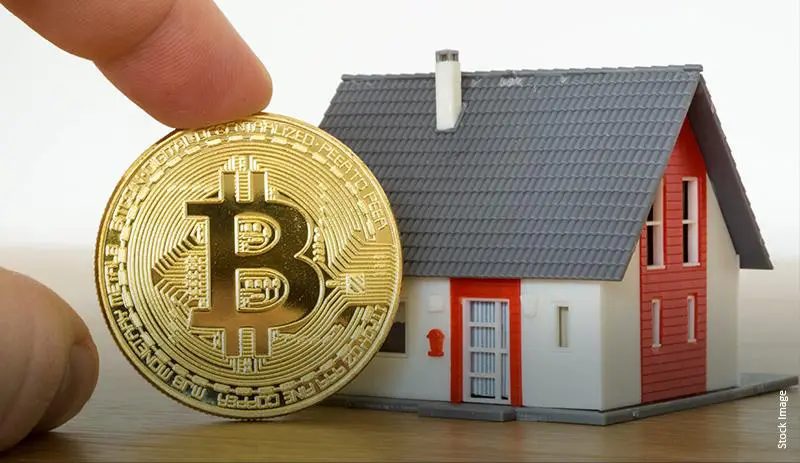
Turkey has pioneered crypto-facilitated real estate transactions, with the first known Bitcoin property sale occurring in September 2017 when Bayram Tekçe, chairman of Antalya Homes, accepted 20 BTC (then worth approximately $80,000) for an apartment in Antalya.
Since then, the practice has become routine, with dozens of agencies now accepting cryptocurrency payments.
The process works through a conversion mechanism involving buyers transferring cryptocurrency to the agency’s international wallet, which then converts it to fiat currency (typically USD or EUR) and subsequently to Turkish Lira for the official property registration. The seller receives TRY, and the Tapu (Land Registry) records the transaction in local currency as required by law.
Most crypto-friendly agencies recommend stablecoins (particularly USDT) for transactions under $1 million to avoid price volatility between agreement and closing. For larger transactions, the daily exchange limit of $1,000,000 USD means the conversion process can take anywhere from one day to a week, depending on the property value.
Real Estate Agencies Accepting Cryptocurrency in Turkey
| Agency Name | Crypto Accepted | Payment Method Details |
|---|---|---|
| Antalya Homes | BTC, ETH, USDT, USDC, BCH, LTC, XRP, XLM | Pioneer of crypto real estate (first sale 2017). Wallet-to-wallet transfer to the company’s international crypto account, converted to fiat at live market rates. |
| Istanbul Homes | BTC, ETH, USDT, USDC, BCH, LTC, XRP, XLM | Same parent company as Antalya Homes. KYC documents are required before transfer. Crypto is converted to USD/EUR, then to TRY for the seller. Full citizenship by investment support is available. |
| Tekçe Real Estate | BTC, ETH, USDT (primary); all exchangeable cryptocurrencies accepted | Exchange crypto for Turkish Lira at the actual market value. Lawyer-supervised transactions in complex jurisdictions. |
Antalya Homes
About The Company
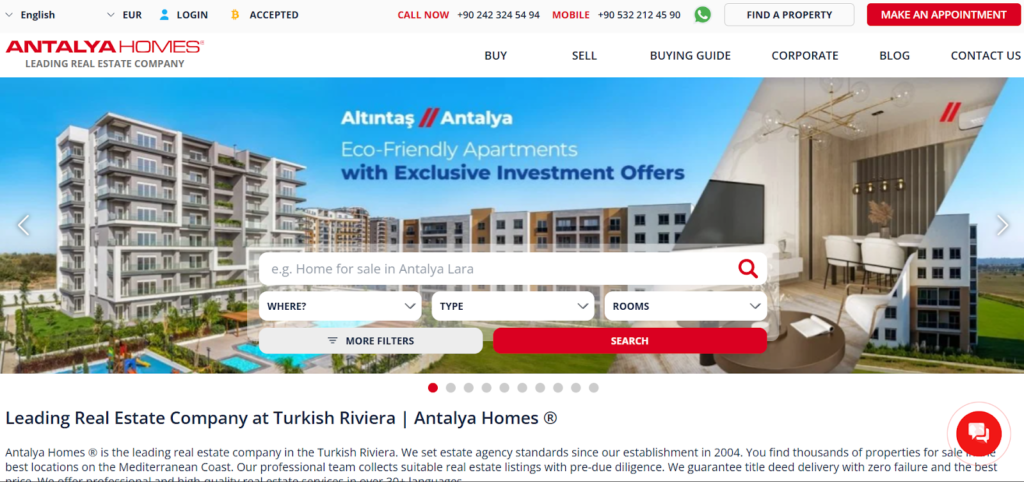
Antalya Homes is the leading real estate company in Turkey that conducted probably the first real estate sale with Bitcoin in the world in September 2017. Chairman Bayram Tekçe accepted 20 BTC for an apartment in Antalya, pioneering crypto adoption in real estate.
Cryptocurrencies Accepted
BTC, ETH, USDT, USDC, BCH, LTC, XRP, XLM
Transaction Process
Send cryptocurrency to Antalya Homes’ international crypto accounts after KYC documents are approved. They convert crypto to fiat at live market rates with your approval for timing. Money is transferred via international banks, and you receive the title deed after the seller has made payment.
Istanbul Homes
About The Company
Istanbul Homes, part of the same parent company as Antalya Homes, offers flexibility for property buyers and investors in Turkey. Their chairman, Bayram Tekçe, managed the first property sale with Bitcoin globally in 2017, establishing a trusted crypto payment process.
Cryptocurrencies Accepted
BTC, ETH, USDT, USDC, BCH, LTC, XRP, XLM
Transaction Process
After KYC documents are received, send cryptocurrency to Istanbul Homes’ accounts abroad. They convert crypto to fiat at real market prices with your permission for timing and exchange rate. USD swift arrives in 2-3 days, EURO in 5-7 days, and then the title deed is issued.
Tekçe Real Estate
About The Company
TEKCE is an international real estate company with 20 offices in 5 countries, 250+ professional agents speaking 30+ languages. Since 2017, they have finalized over 2,500 sales paid by Bitcoin, Ethereum, and USDT, making crypto payments a daily routine.
Cryptocurrencies Accepted
BTC, ETH, USDT (primary); all exchangeable cryptocurrencies
Transaction Process
Notify the agent of the crypto payment before the sales agreement, sign the KYC form, and the payment agreement. Transfer crypto to TEKCE’s company wallet. Payment is exchanged at actual market value upon receipt, then fiat is sent to the seller’s bank account per the agreement conditions.
It is important to note, however, that while these agencies facilitate crypto-funded purchases, all transactions must ultimately be recorded in Turkish Lira at the Tapu. Work with your chosen agency to understand their specific conversion process, timing, and any associated fees.
What Regions Are The Hottest For Real Estate In Turkey?
Istanbul

Source: Wikipedia
Turkey’s largest city and a major global hub straddling Europe and Asia, Istanbul dominates the real estate market with approximately 15.7 million residents and over 14 million visitors in 2024.
Property prices in prime districts such as Beşiktaş, Kadıköy, and Şişli average around $1,295 per square meter, with prices rising approximately 23.5% year-on-year and an overall increase of 82% since 2018.
The combination of high rental demand and steady capital appreciation makes Istanbul ideal for investors seeking both income and growth. For crypto investors, Istanbul’s fast-moving investment property sector particularly benefits from the speed of crypto transactions.
Antalya

Source: Dental Excellence Turkey
One of Turkey’s most popular cities for real estate investment, especially among foreign buyers. Antalya welcomed over 17.3 million international tourists in 2024, with a metropolitan population of around 2.72 million.
Property prices vary significantly by district. Sought-after areas like Lara and Konyaaltı range from $2,800 to $4,000 per square meter, while more affordable neighborhoods such as Kepez and Döşemealtı start from around $1,200 per square meter.
Prices rose 39% in 2024, making it appealing for investors seeking stable rental returns and long-term capital appreciation. Antalya’s agencies pioneered crypto real estate transactions in Turkey.
Alanya
Source: Turkey Homes
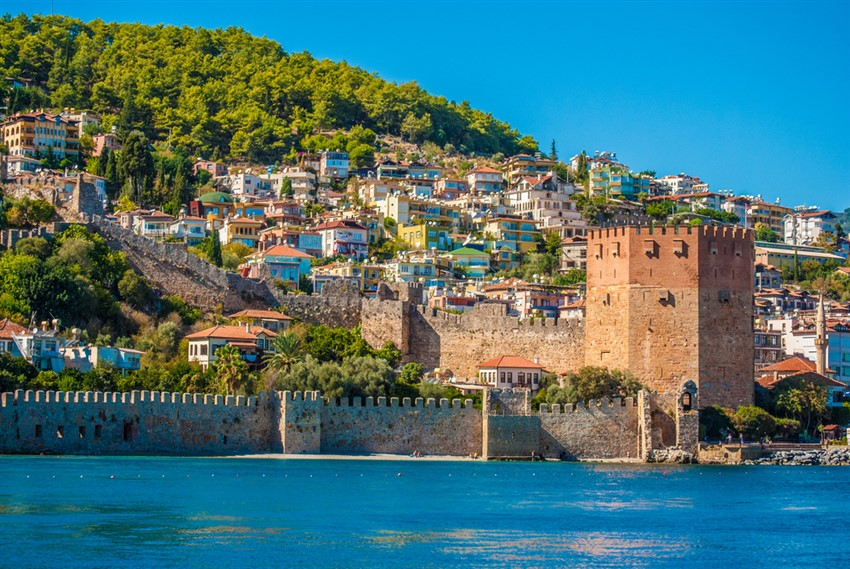
Alanya attracts over 3 million visitors annually due to its favorable climate and beautiful beaches.
The average property price is $1,240 per square meter in 2025, more affordable than in Istanbul or Antalya. Gross rental yields range from 6% to 11%, with studios and one-bedroom apartments in neighborhoods like Mahmutlar, Oba, Cleopatra, and Tosmur delivering the highest returns.
Property prices rose 46% in 2024, outpacing many other regions. Alanya has emerged as a particular favorite for crypto investors seeking vacation homes and rental income properties.
Izmir

Source: Novo-Monde
Turkey’s third-largest city, with a population of approximately 4.46 million, Izmir offers a more relaxed pace than Istanbul while maintaining strong economic fundamentals.
The city combines coastal living with urban amenities and is increasingly attracting foreign investment. Its strategic location on the Aegean coast and well-developed infrastructure make it an emerging alternative for those seeking value outside the primary markets.
Challenges & Opportunities
Challenges
- Mandatory Crypto-to-Fiat Conversion: Unlike some jurisdictions, Turkey does not allow direct crypto payments for property. All transactions must go through licensed exchanges and be recorded in Turkish Lira at the Tapu. This adds steps and potential costs to the process.
- Cryptocurrency Volatility: Significant price swings between agreement and closing can affect final amounts. A property agreed upon when Bitcoin is at $45,000 might require substantially more BTC if the price drops during the conversion period. Stablecoins mitigate but don’t eliminate this risk.
- Evolving Regulatory Landscape: While 2024-2025 brought clearer regulations, the framework continues to evolve. New compliance requirements, licensing rules, and potential future restrictions could impact crypto-property transactions.
- High Inflation Environment: While inflation has decreased to ~31%, it remains elevated. This affects operating costs, property taxes, and the value of TRY-denominated rental income for foreign investors.
- KYC and AML Requirements: The Travel Rule implementation means transactions over 15,000 TRY require full identity verification. Buyers must be prepared to document the source of their crypto funds and complete thorough compliance processes.
Opportunities
- Currency Arbitrage: The weak Turkish Lira makes property exceptionally affordable for holders of USD, EUR, or crypto. Investors can acquire quality real estate at significant discounts compared to just a few years ago.
- Citizenship Pathway: The $400,000 investment threshold for Turkish citizenship is among the most accessible globally. Crypto-funded purchases qualify, offering a path to a passport with visa-free access to 110+ countries.
- Strong Capital Appreciation: Property prices rose 56% in Istanbul, 46% in Alanya, and 39% in Antalya in 2024 alone. Real estate serves as both an inflation hedge and a growth investment.
- Attractive Rental Yields: Average gross yields of 7.41% nationally, with coastal and university cities seeing 8-12% returns. Short-term tourist rentals in prime locations can deliver even higher income.
- Mature Crypto-Real Estate Ecosystem: Turkey’s agencies have been processing crypto property transactions since 2017. The infrastructure, expertise, and legal frameworks are well-established compared to most other countries.
- Strategic Location: Bridging Europe and Asia, Turkey offers access to multiple markets, time zones, and travel routes. Istanbul’s status as a transcontinental hub adds long-term value to property investments.
- Growing Tourism Sector: As the fourth-most-visited destination globally, Turkey’s tourism industry (12% of GDP in 2023) supports strong demand for short-term rentals and vacation properties.
What Are You Waiting For?
Turkey stands out as one of the world’s most mature and accessible markets for crypto-funded real estate investment. The combination of pioneering agency expertise (dating back to 2017), clear regulatory frameworks, attractive property prices, strong capital appreciation, and a compelling citizenship pathway creates a unique opportunity for crypto holders looking to diversify into tangible assets.
While the mandatory conversion to Turkish Lira adds a step compared to some jurisdictions, the established infrastructure and experienced agencies make the process straightforward. With proper planning around volatility and compliance, crypto investors can efficiently convert digital wealth into Turkish real estate and potentially a Turkish passport.
Whether you’re seeking a Mediterranean vacation home, a high-yield rental investment in Istanbul, or a pathway to citizenship in a strategically located country bridging East and West, Turkey offers compelling value for the crypto-enabled property buyer in 2025.
Frequently Asked Questions (FAQs)
Can I buy property in Turkey directly with Bitcoin or cryptocurrency?
Not directly. While you can fund your purchase with cryptocurrency, Turkish law requires all property transactions to be recorded in Turkish Lira at the Tapu (Land Registry). Your crypto must be converted to TRY through a licensed exchange before the purchase is finalized. Many agencies handle this conversion process for you.
Is cryptocurrency legal in Turkey?
Yes. Owning, trading, and investing in cryptocurrency is fully legal. However, using crypto as a direct payment method for goods and services has been prohibited since April 2021. For real estate, this means crypto must be converted to fiat currency before the transaction.
Can I obtain Turkish citizenship by buying property with crypto?
Yes. The source of funds (crypto vs. traditional banking) does not affect citizenship eligibility. If your property purchase meets the $400,000 minimum threshold and you maintain the investment for three years, you qualify for Turkish citizenship regardless of how the purchase was funded.
Which cryptocurrencies are accepted for property purchases?
Most agencies accept Bitcoin (BTC), Ethereum (ETH), and USDT as primary options, representing about 90% of crypto real estate payments. Many also accept Bitcoin Cash, Litecoin, Ripple (XRP), Stellar (XLM), and other major cryptocurrencies. USDT is increasingly preferred for its price stability.
How long does a crypto property transaction take?
The crypto conversion typically takes 1-7 days depending on the transaction size (daily exchange limits of $1,000,000 apply). The overall property purchase process, including due diligence, contract signing, and Tapu registration, generally takes 1-4 weeks. Citizenship applications take an additional 3-6 months.
Are there additional taxes when buying with cryptocurrency?
No. There is no additional tax for using crypto as the funding source. Standard property transaction taxes apply: title deed transfer fee (4% split between buyer and seller), VAT (1-18% depending on property type, with exemptions available for foreign buyers), and annual property taxes (0.1-0.3% of assessed value).
What happens if crypto prices change during the transaction?
This is a key risk. Most agencies convert crypto at live market rates at the time of transfer, not at the time of agreement. To mitigate volatility, many buyers use stablecoins like USDT, or they convert volatile crypto to stablecoins before beginning negotiations. Some agencies offer video calls showing live exchange rates so you can choose the optimal moment to convert.
Do I need to visit Turkey to buy property with crypto?
The entire process can be conducted remotely through video calls, digital contracts, and power of attorney arrangements. However, you will need to visit Turkey at some point for biometric data collection if applying for citizenship or a residence permit. Many agencies offer virtual tours and handle all documentation remotely.
What are the restrictions for foreigners buying property in Turkey?
Foreign individuals can purchase up to 30 hectares of land, buy multiple properties (residential or commercial), and do not need a local partner or Turkish company. The only restrictions apply to military zones and security areas—most tourist and residential areas are fully accessible. Total foreign ownership cannot exceed 10% of any district’s area.
How does UPay fit into the crypto-to-property process?
UPay provides the payment infrastructure that bridges the gap between crypto holdings and compliant fiat transactions. Our platform enables seamless conversion from digital assets to local currency, ensuring your property purchase meets all regulatory requirements while maintaining transaction speed and security. We work alongside established real estate agencies to provide a complete solution from crypto wallet to title deed.