Setting up a crypto mining operation isn’t just about plugging in hardware and watching coins roll in—it’s capital-intensive, power-hungry, and demands serious planning.
From high-end mining rigs to ongoing electricity costs, the financial barrier often stops miners before they even start. That’s why understanding how to secure a crypto mining loan is more relevant than ever.
Financing your mining setup can give you the edge to scale faster, compete effectively, and maintain operations during market swings. However, not all loan options are created equal, and selecting the wrong one could ultimately cost more than it benefits.
Let’s walk you through how a crypto mining loan works, what to consider, and the best ways to fund your mining goals sustainably.
Key Takeaways
- Crypto mining loans offer flexible funding options to help miners cover hardware costs, electricity, and operational expenses.
- Platforms like Aave, Alchemix, Binance, Arch Lending, and Unchained provide tailored loan solutions for different borrower needs.
- Choosing the right loan involves comparing interest rates, understanding LTV ratios, and checking platform security and eligibility requirements.
- Borrowers must manage risks such as market volatility, liquidation thresholds, and high interest rates before committing to a loan.
- Financing helps miners scale efficiently, but success depends on careful planning, transparent terms, and ongoing risk management.
What is Cryptocurrency Mining and Crypto Mining Loan?

Cryptocurrency mining is the process of validating and recording transactions on a blockchain network. Miners use powerful computers to solve complex mathematical puzzles that confirm the authenticity of transactions. Once verified, these transactions are grouped into blocks and added to the blockchain ledger.
Mining requires specialized hardware, such as ASICs (application-specific integrated circuits) or high-performance GPUs, that perform calculations at high speeds. This process not only secures the network but also introduces new coins into circulation as rewards for miners.
However, mining demands significant energy and computational power, making it a costly and competitive endeavor. Successful mining depends on balancing hardware efficiency, electricity costs, and the value of the cryptocurrency being mined.
Crypto Mining Loan

A crypto mining loan is a type of financing designed specifically to help miners cover the upfront costs of setting up or expanding their mining operations.
Since cryptocurrency mining requires expensive hardware, substantial electricity, and ongoing maintenance, many miners seek loans to manage these expenses without depleting their cash reserves.
These loans can come in various forms, from traditional business loans to crypto-backed loans where existing digital assets like Bitcoin or Ethereum serve as collateral.
By securing a crypto mining loan, miners gain access to capital that allows them to purchase rigs, pay for power, or upgrade their infrastructure, helping them scale efficiently.
Understanding how these loans work, their terms, and risks is essential before borrowing, ensuring the investment supports sustainable mining growth.
Top Platforms and Lenders Offering Crypto Loans
| Platform | Type of Loan | Collateral Accepted | Interest Rates / Fees |
| Aave | Decentralized, collateralized loans | ETH, USDC, DAI, WBTC, MATIC, and more | Reserve fees (10–20%) + interest spread, liquidation fees apply |
| Alchemix | Self-repaying loans via yield | DAI, ETH | No interest; 50% LTV; yield-based repayment; no liquidation fees |
| Binance | Centralized, flexible/fixed loans | BTC, ETH, BNB, SOL, ADA, 50+ tokens | Starting from 2% APR; varies by asset & term; no origination fees |
| Arch Lending | Centralized, crypto-backed loans | BTC, ETH, SOL | Fixed 12%+ APR; 1.5% origination fee; LTV up to 60% |
| Unchained | Institutional BTC-backed loans | BTC only | 13–15% APR; fixed 12-month term; origination fees apply; $150K loan minimum |
Read Also: A Simple Guide to How Crypto Lending Works
Here are some of the top platforms offering crypto loans:
Aave
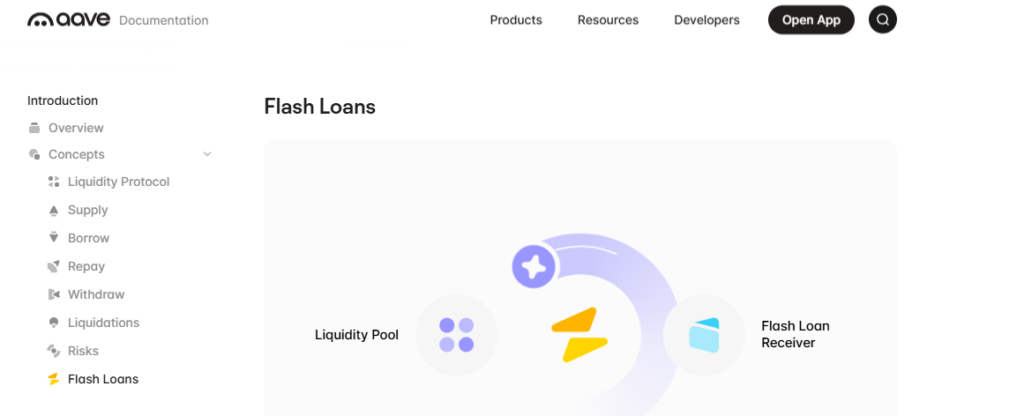
Aave is a decentralized, non-custodial liquidity protocol that allows users to earn interest on deposits and borrow assets.
One of Aave’s most innovative features is its flash loans, which offer instant, uncollateralized borrowing for a single transaction, ideal for arbitrage, debt refinancing, and collateral swaps.
Users can also open collateralized borrow positions using a wide range of supported assets. With support for multiple chains like Ethereum, Avalanche, and Arbitrum, Aave is suitable for experienced DeFi users who want flexible, automated borrowing strategies.
Pros
- Offers flash loans for advanced DeFi strategies
- Highly decentralized with transparent smart contracts
- Broad multi-chain support (Ethereum, Polygon, Arbitrum)
- Variable and stable interest rate options
- Active developer and community ecosystem
- No KYC or credit checks required
- Lower rates for popular assets like ETH and USDC
Cons
- Complex interface for casual users
- Requires familiarity with DeFi tools and wallets
- Flash loans need technical knowledge (smart contracts)
- Users must actively manage positions to avoid liquidation
Fees
- Aave charges a base fee of 0.05% and can be updated via Governance.
Alchemix

Alchemix introduces an innovative lending model where loans repay themselves over time using the yield generated from user deposits.
By depositing supported assets like DAI or ETH, users receive a synthetic token (e.g., alUSD) to spend or use, while their original deposit remains locked and continues earning yield.
Alchemix protects users from liquidations and market volatility since loans are never forcibly closed. This makes it ideal for users seeking passive, risk-mitigated borrowing without worrying about repayments.
Pros
- No manual repayments required—loan repays from yield
- Zero liquidation risk regardless of market conditions
- Full control over repayment timing and strategy
- Transparent protocol with audited smart contracts
- Strong community and open governance
- Asset protection is a top priority
Cons
- Limited collateral options (mainly DAI and ETH)
- Relies on external protocols for yield generation
- Low loan-to-value (max 50%)
- Not ideal for short-term or high-volume borrowing
Fees
Vary. The system automatically uses the yield generated from your collateral to pay off your loan, a core feature of the protocol.
Binance

Binance, one of the world’s largest centralized exchanges, offers flexible crypto loans with competitive interest rates.
Users can borrow using over 50 cryptocurrencies as collateral, including BTC, ETH, BNB, and more. Loans can be structured as fixed or flexible-rate depending on user preferences.
The platform is ideal for users already active in the Binance ecosystem who want quick access to liquidity without leaving the exchange. It offers smooth integration and user-friendly terms for traders and investors alike.
Pros
- Over 50 supported cryptocurrencies as collateral
- Attractive interest rates on major assets
- User-friendly interface tied to Binance account
- Fixed and flexible rate options
- Supports short- and long-term borrowing
Cons
- Not available in restricted markets (US, UK, Canada)
- Centralized platform exposes users to counterparty risk
- Requires KYC and account verification
Fees
- Interest rates vary for each cryptocurrency. 0.000055% hourly and 0.48% annually for BTC, 0.000276% hourly and 2.42% annually for ETH and 0.000776% hourly and 6.8% annually for ETH, etc.
Arch Lending

Arch Lending provides crypto-backed loans with clear terms, fast approval, and no credit checks. It’s designed for individuals and high-net-worth clients looking to unlock liquidity without selling assets like BTC, ETH, or SOL.
Loans start at $1,000, with interest rates starting at 12% APR, plus a 1.5% origination fee. Borrowers can choose between interest-only and amortized repayments. Arch also offers personal onboarding support, making it ideal for less technical users seeking tailored crypto loan services.
Pros
- Instant approval without affecting credit score
- Same-day funding for approved loans
- No invasive paperwork or background checks
- Supports flexible repayment schedules
- Security-focused collateral custody
- Great for high-net-worth clients and startups
- Available for loans starting at just $1,000
Cons
- High APR (12% or more) compared to DeFi platforms
- 1.5% origination fee adds to the total cost
- Limited to BTC, ETH, and SOL as collateral
- LTV ratio capped at around 60%
Fees
Annual interest rates are subject to change and may vary based on loan type, the principal amount requested, and the borrower’s jurisdiction of residence.
- Origination fee: 1.5% of the loan amount, charged when you take out the loan.
- Liquidation fee: 2.5% of the collateral value, charged only if your LTV rises above 90% and your collateral is liquidated.
- Late fee: 10% of the loan amount, charged if you fail to repay on time.
Unchained

Unchained offers crypto-backed loans tailored for businesses using Bitcoin as collateral. The platform requires a minimum loan of $150,000 and is suited for commercial borrowers seeking quick liquidity without selling their BTC.
Borrowers maintain shared control of their collateral through a multi-signature setup, reducing custodial risk. With fixed 12-month terms, interest-only payments, and no credit checks, Unchained emphasizes privacy, security, and long-term financial planning for corporate clients and institutional borrowers.
Pros
- Multi-sig custody model increases BTC security
- No credit check or financial documents required
- Trusted Bitcoin-focused lending provider
- Fast US dollar funding in 2 business days
- Transparent interest and fee structure
- Excellent customer support and onboarding
- Ideal for institutional Bitcoin holders
Cons
- Only supports Bitcoin as collateral
- High APR (13–15%) plus origination fees
- $150,000 minimum loan excludes retail users
- Not available in several U.S. states
Fees
- Origination fee: 2%
- Forced liquidation: 2% selling fee per liquidation
- Late payments incur a $10 per late payment fee
- A returned ACH will incur a $15 per returned payment fee.
How Does Crypto Mining Loan Work
A crypto mining loan provides miners with the necessary capital to finance their operations, including hardware purchases, electricity costs, and rig expansions.
The loan process typically follows these steps:
Application and Approval
Miners apply for a loan through platforms specializing in crypto financing or traditional lenders offering business loans. Approval depends on factors like credit history, mining experience, and collateral.
For crypto-backed loans, miners may use existing assets such as Bitcoin or Ethereum as collateral, which reduces the lender’s risk and can lead to lower interest rates.
Loan Disbursement
Once approved, the loan amount is disbursed either as fiat currency or stablecoins. For example, platforms like Nexo and BlockFi offer crypto mining loans with interest rates ranging between 6% and 12% annually, depending on the loan type and collateral.
Utilization of Funds
Miners use the funds to buy equipment like ASIC miners (costing between $2,000 and $10,000 per unit), pay electricity bills (which can consume up to 60% of mining costs), or improve infrastructure. For instance, a mid-sized mining farm may require a $50,000 loan to scale operations efficiently.
Repayment Terms
Loan repayment varies by provider but generally includes monthly or quarterly payments over 6 to 36 months. In crypto-backed loans, if the collateral’s value drops below a set threshold, the lender may liquidate assets to cover the loan, highlighting the risk miners must manage.
Why Financing Is Crucial for Miners
Cryptocurrency mining demands significant upfront investment; high-performance hardware can cost thousands, and operational expenses like electricity can quickly add up. Without adequate funding, even the most efficient mining setups struggle to stay competitive or scale effectively.
Financing enables miners to acquire cutting-edge equipment, which directly impacts mining speed and profitability. It also helps cover ongoing costs like electricity bills, cooling systems, and maintenance—expenses that can consume over 60% of a mining operation’s budget.
Moreover, market fluctuations can affect miners’ cash flow. Having access to loans or credit lines offers financial flexibility during downturns, ensuring continuous operation and positioning miners to capitalize on market rebounds.
In essence, securing financing is often the difference between a mining venture that stalls and one that thrives in a highly competitive industry.
Types of Loans Available for Crypto Mining Projects
Financing options for crypto mining vary widely depending on the miner’s needs, collateral, and risk tolerance.
Understanding the different loan types helps you choose the best fit for your mining project.
Traditional Business Loans
These loans are offered by banks and fintech lenders to businesses, including mining operations. They typically require a solid credit history and proof of income.
While interest rates may be higher and approval slower, traditional loans provide predictable repayment schedules and no exposure to crypto market volatility.
Crypto-Backed Loans
Crypto-backed loans allow miners to use their existing digital assets, like Bitcoin or Ethereum, as collateral. These loans often offer lower interest rates and faster approval compared to traditional loans. However, if the collateral’s value drops below a certain level, lenders may liquidate the assets to cover the loan, posing a risk during volatile market conditions.
Equipment Financing
Specifically designed to fund hardware purchases, equipment financing helps miners acquire expensive ASICs or GPUs without paying the full price upfront. Repayments are typically spread over time, and the purchased equipment often serves as collateral.
Personal Loans
Individual miners or hobbyists sometimes use personal loans to fund small-scale operations. These loans usually have higher interest rates and lower amounts but don’t require business documentation, making them accessible for those just starting out.
Private Investors and Venture Capital
For larger mining farms or startups, securing funds from private investors or venture capital firms can provide significant capital injection. These arrangements often come with equity stakes or profit-sharing agreements rather than traditional loan repayments.
How to Qualify for Mining Project Financing
Qualifying for financing to support a cryptocurrency mining project depends on several factors, including the type of loan, lender requirements, and your financial position.
Whether you’re applying through a centralized lender, DeFi platform, or private provider, these are the core steps and criteria:
Demonstrate a Solid Mining Plan
Lenders want to see that you have a clear strategy. This includes:
- Expected ROI based on hardware efficiency and electricity rates
- The type of cryptocurrency you plan to mine
- Operational costs and break-even estimates
Provide Acceptable Collateral
Most crypto mining loans require either:
- Crypto-backed collateral (like BTC or ETH), or
- Mining equipment as security (for equipment financing)
Loan-to-value (LTV) ratios typically range between 40% and 70% based on asset risk.
Meet Technical and Infrastructure Requirements
Lenders may assess:
- Your mining hardware setup (ASICs, GPUs, cooling systems)
- Hosting environment and power supply reliability
- Proof of past mining activity or mining pool participation
Creditworthiness and KYC
Centralized lenders may require:
- Credit score and business credit reports
- KYC (Know Your Customer) verification
- Business registration or proof of income for larger operations
DeFi protocols like Aave or Alchemix skip credit checks but may require smart contract interaction and wallet integration.
Prepare Necessary Documents
For traditional or business loans, you may need to submit:
- Business plan or proposal
- Bank statements or crypto portfolio screenshots
- Identity and address verification
Being well-prepared increases your chances of approval and helps lenders understand your capacity to manage risk and repay.
Read Also: Complete Guide to Cryptocurrency Loan Services on Blockchain
Risks and Considerations of Crypto Mining Loans
While crypto mining loans can provide essential capital for scaling operations, they also come with risks that miners must fully understand before borrowing.
These risks vary depending on the type of loan, collateral used, and market conditions.
Collateral Liquidation Risk
Many crypto-backed loans require assets like BTC or ETH as collateral. If the market value of your collateral drops below a set threshold, lenders may automatically liquidate it to protect their position—potentially resulting in a net loss for the borrower.
Market Volatility
Mining profitability depends heavily on cryptocurrency prices. A significant drop in coin value can hurt your revenue, making it harder to repay the loan or cover operational costs.
High Interest and Fees
Interest rates can vary widely across platforms. For example, some centralized providers charge over 12% APR, along with origination or maintenance fees. These costs can quickly add up, especially if mining income is inconsistent.
Regulatory Uncertainty
Crypto mining and lending regulations differ across countries and can change without warning. Restrictions or bans may limit access to electricity or financing or even make your operation illegal in some jurisdictions.
Technical and Operational Failures
Mining equipment can fail due to overheating, power issues, or outdated hardware. If your setup goes offline, loan repayments still continue, placing additional pressure on your finances.
Platform Risk
Using centralized platforms or third-party custodians introduces counterparty risk. Platform hacks, insolvency, or mismanagement can lead to the loss of your funds or collateral.
Tips for Choosing the Right Mining Loan
- Compare interest rates across platforms to ensure you’re not overpaying for borrowed capital.
- Check loan-to-value (LTV) ratios to understand how much funding you can access based on your collateral.
- Read the fine print for any hidden fees, including origination charges, maintenance costs, or penalties.
- Choose a loan term that matches your mining cash flow cycle and ROI timeline.
- Verify the platform’s security protocols and whether your collateral is held in a trusted custody solution.
- Confirm asset support to ensure your preferred cryptocurrencies or equipment qualify for financing.
- Assess the platform’s reputation through user reviews, audits, and community feedback.
- Understand liquidation thresholds and margin calls to avoid losing your collateral during market dips.
Final Thoughts
Securing a crypto mining loan isn’t just about access to capital—it’s about building a mining setup that can sustain itself long-term. As competition and network difficulty increase, the ability to upgrade hardware, cover operational costs, and respond to market shifts becomes essential.
Choosing the right loan means balancing flexibility, cost, and risk with clarity. Take time to evaluate platforms, loan terms, and your mining goals before committing. With the right financing strategy, your mining operation can move from small-scale effort to consistent, data-driven productivity.
Frequently Asked Questions
Can You Get a Loan for Crypto Mining?
Yes, you can get a loan for crypto mining through platforms offering crypto-backed, equipment-based, or business loans tailored to mining operations.
Can I Earn Money From Crypto Mining?
Yes, you can earn money from crypto mining, but profitability depends on factors like hardware efficiency, electricity costs, mining difficulty, and market prices.
Are Crypto Loans Real?
Yes, crypto loans are real — they allow users to borrow funds by using cryptocurrency as collateral, offered by both centralized and decentralized platforms.
Can I Borrow Crypto With No Money?
Yes, you can borrow crypto with no upfront money using crypto-backed or flash loans, but you’ll need existing crypto assets as collateral or the ability to repay within the same transaction, depending on the loan type.
How Risky Is Crypto Lending?
Crypto lending carries moderate to high risk due to market volatility, collateral liquidation, platform security vulnerabilities, and regulatory uncertainty. Proper research and risk management are essential before participating.