

Investing in long-term crypto is often the difference between chasing shadows and building a legacy.
In this space, the seasoned veterans have a golden rule: “Time in the market beats timing the market.
Long-term crypto investing, commonly known as HODLing, has produced some of the most remarkable returns in investment history.

Key Takeaways
- What Makes a Cryptocurrency Good for Long-Term Holding?
- Best Long-Term Crypto Assets to Watch
- How to Build a Long-Term Crypto Portfolio: Strategy and Structure
- Long-Term Crypto Risk Management: What Every HODLer Needs to Know
- FAQs
What Makes a Cryptocurrency Good for Long-Term Holding?
Not every cryptocurrency is worth holding for years. Most tokens launched in any given cycle will not survive the next bear market.
The ones that do share a clear set of characteristics that serious investors look for before committing capital to a multi-year position.
Real-World Use Case and Genuine Demand
A cryptocurrency that solves an actual problem creates sustained demand for its token. Payment networks, smart contract platforms, oracle infrastructure, and cross-border settlement protocols all have identifiable reasons why people need to use the underlying token.
When a project’s token has no clear economic function beyond speculation, its long-term survival is questionable regardless of how exciting the marketing sounds.
Active Development and Protocol Upgrades
A serious blockchain project continues shipping improvements even during bear markets when prices are falling, and media attention has moved elsewhere.
You can verify this by checking a project’s GitHub activity, developer documentation, and roadmap execution history.
Teams that go quiet when prices drop rarely build something that survives multiple market cycles.
Network Effects and Adoption Flywheel
The most durable cryptocurrencies benefit from network effects where each new user, developer, or institution that joins the ecosystem makes it more valuable for everyone else.
Bitcoin’s 15-year track record, Ethereum’s dominant DeFi developer ecosystem, and Solana’s growing consumer application base all demonstrate this flywheel in action.
Institutional and Regulatory Legitimacy
Institutional legitimacy has become a genuine differentiator for long-term holdings.
Bitcoin’s status as a U.S. Strategic Asset, the approval of spot Bitcoin and Ethereum ETFs, Ripple’s resolution of its SEC case, and the EU’s MiCA framework have created a clearer operating environment for assets that sit within legitimate regulatory perimeters.
Best Long-Term Crypto Assets to Watch
| Asset | Category | Key Strength | Risk-Level |
| Bitcoin (BTC) | Digital Gold / Store of Value | Scarcity, institutional backing, legal strategic reserve status | Medium (large-cap) |
| Ethereum (ETH) | Smart Contract Platform | DeFi dominance, RWA tokenization, staking yield, ETF exposure | Medium |
| Solana (SOL) | High-Performance L1 | Sub-cent fees, 65,000+ TPS, mobile-first consumer apps | Medium-High |
| Chainlink (LINK) | Infrastructure / Oracles | Powering RWA data feeds across 900+ protocols globally | Medium-High |
| BNB | Exchange Ecosystem | 31M daily TXs, programmatic supply burn, low gas fees | Medium-High |
| XRP | Cross-Border Payments | SEC case resolved 2025, bank partnerships, 4-second settlement | Medium-High |
How to Build a Long-Term Crypto Portfolio: Strategy and Structure
The Core and Satellite Portfolio Framework
The most practical approach for most long-term investors is a core-and-satellite structure.
The core is 60 to 80% of the portfolio allocated to Bitcoin and Ethereum — the two assets that together represent roughly 70% of total crypto market capitalization and have the strongest institutional credibility.
The satellite portion is the remaining 20 to 40% allocated to higher-conviction positions in projects like Solana, Chainlink, XRP, or BNB based on your specific thesis.
This structure gives you the stability of the established large-cap assets while preserving meaningful exposure to the higher growth potential of the broader ecosystem.
Dollar-Cost Averaging for Sustainable Accumulation
Timing the crypto market is extraordinarily difficult, even for professionals.
Dollar-cost averaging, which means buying a fixed dollar amount of your target assets at regular intervals regardless of price, removes the temptation to time entry points and eliminates the risk of deploying all your capital at a market peak.
Over a full market cycle spanning several years, consistent DCA into quality assets has historically outperformed attempts to pick perfect entry points.
It also makes the emotional discipline of holding through downturns significantly easier because you are buying more units when prices fall.

Rebalancing and Portfolio Maintenance
Long-term crypto investing does not mean setting and forgetting indefinitely. A regular review, perhaps quarterly, of your portfolio’s performance and allocation makes sense.
If one asset has appreciated dramatically and now represents an outsized share of your portfolio, rebalancing back toward your target weights manages concentration risk without abandoning your long-term thesis.
Long-Term Crypto Risk Management: What Every HODLer Needs to Know
Long-Term Crypto Risk Management: What Every HODLer Needs to Know
Crypto markets have historically followed multi-year boom-bust cycles. Every major cycle has produced drawdowns of 70 to 85% from peak to trough for even the strongest assets.
Long-term investors must size positions in a way that they can genuinely hold through those drawdowns without being forced to sell.
The simplest rule: never invest capital you cannot afford to have locked up or significantly reduced in value for two to three years.
Security and Custody Risk
Over $3.5 billion was stolen from cryptocurrency users and platforms. in 2025 For long-term holders, custody is arguably the most critical decision of the entire investment strategy.
Large positions held on centralized exchanges are exposed to exchange-level hacks and insolvency risk.
The correct approach for significant long-term holdings is self-custody using a hardware wallet, where your private keys are stored offline and inaccessible to remote attackers.
Project Failure and Technology Risk
The vast majority of cryptocurrencies launched in any given cycle will fail over a 5 to 10 year horizon.
Concentrating the bulk of your long-term portfolio in the two or three assets with the strongest track records, largest developer ecosystems, and deepest institutional adoption dramatically reduces this risk.
Chasing emerging projects for a core position, rather than a small satellite allocation, is one of the most common mistakes long-term investors make.
Regulatory and Legal Risk
Regulatory clarity has improved dramatically in 2025 and 2026 with the U.S. GENIUS Act, the EU’s MiCA framework, and clearer jurisdictional guidance across the UK, Singapore, UAE, and Japan
However, regulatory change remains a real risk for specific tokens. Focusing on assets that have achieved legal clarity, such as Bitcoin’s strategic asset status, Ethereum’s ETF approval, and XRP’s SEC resolution, reduces this risk compared to holding newer or less established tokens.
Frequently Asked Questions
How long is considered long-term in crypto?
Most serious investors define long-term as holding through at least one full market cycle, which historically spans roughly four years around Bitcoin’s halving schedule.
A minimum of two to three years is generally required to smooth out volatility and capture the returns of a full cycle. The most significant gains in Bitcoin and Ethereum history have been generated by investors who held for five years or more.
Should I include altcoins in a long-term portfolio?
A small allocation to high-conviction altcoins with genuine use cases and active development can enhance long-term portfolio returns, but the majority of altcoins launched in any given cycle fail over a multi-year horizon.
Keep altcoin exposure to 20 to 40% of your total portfolio and focus on assets with large developer ecosystems, real-world adoption, and institutional interest.
Avoid meme coins and tokens with no clear economic function for core long-term positions.
Final Verdict: Manage Your Long-Term Crypto Journey with UPay
Long-term crypto investing demands reliable tools, a secure wallet infrastructure, and a platform you can trust through every phase of the market cycle
Whether you are accumulating Bitcoin and Ethereum through regular DCA purchases, managing a diversified digital asset portfolio, or simply looking for a secure place to store and send your holdings.
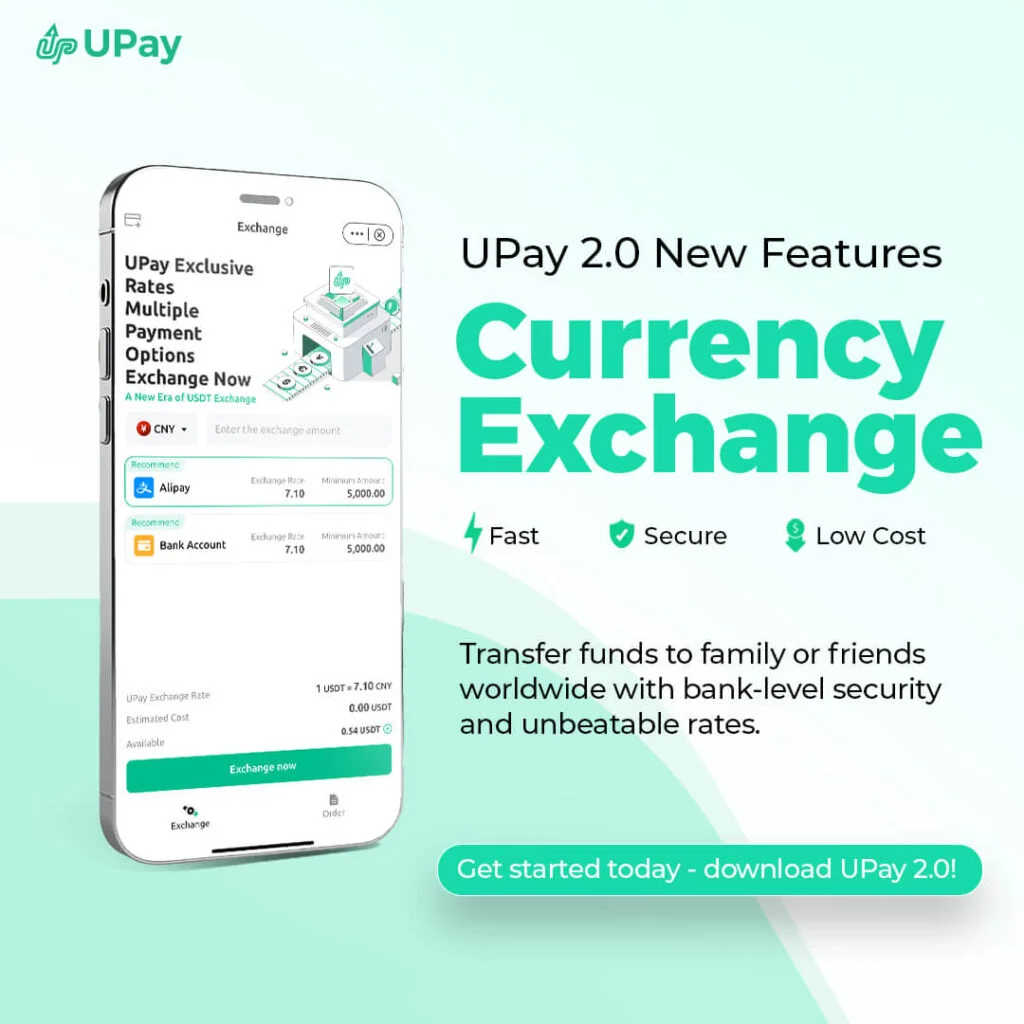
UPay is built for exactly this: a secure, accessible, and feature-rich crypto platform designed for users who take their digital asset journey seriously.
Sign up with UPay for seamless crypto payments and transactions built for the modern investor.