


Crypto Card Fees Explained: What You’re Really Paying in 2026

Explore the world of crypto debit cards and uncover the hidden fees! Learn how to choose a card that suits your needs without breaking the bank.
What Is Cryptocurrency Debit Card | UPay

Discover the ease of using a cryptocurrency debit card. Find out what it is and how it simplifies your crypto transactions.
Cold Wallet vs. Hot Wallet: How to Store Cryptocurrencies Safely

Hot or cold crypto storage? Explore the security and convenience trade-offs to find your vault’s sweet spot. Choose wisely, protect your digital treasure.
How to Make Money with Bitcoin: Complete Guide to Earning, Trading & Passive Income (2026)

Over 560 million people worldwide now own Bitcoin as of 2025, yet most don’t know the 16+ proven methods to actually earn money with it beyond simple buying and holding. In January 2025, Bitcoin surpassed $100,000 for the first time in history, reaching an all-time high of $126,198 in October. But the real story isn’t just about price appreciation. The institutional revolution has transformed Bitcoin from a speculative asset into a legitimate wealth-building vehicle. BlackRock’s Bitcoin ETF manages over $50 billion, MicroStrategy holds 628,000+ BTC in corporate treasury, and 335 major institutions collectively own 3.75 million Bitcoin worth over $400 billion. Most people believe making money with Bitcoin requires either being an early adopter (too late), technical expertise (too complex), or significant capital (too expensive). The truth? Bitcoin offers earning opportunities across every skill level, time commitment, and budget. From passive methods requiring zero daily effort to active trading strategies for those willing to master chart analysis. Yet 93% of the global population still hasn’t touched cryptocurrency, and those who do often leave thousands in potential earnings on the table by only using one or two basic strategies. What This Article Covers This article provides 16 comprehensive methods to make money with Bitcoin, from passive HODLing to active trading, mining to affiliate marketing. You’ll get the 2026 market reality, including current profitability, institutional adoption impact, and regulatory changes. Every method includes real numbers showing actual returns, capital requirements, time investments, and tax implications. I’ll give you a risk-adjusted analysis with honest assessments of difficulty, potential returns, and failure rates. The article includes interactive tools like Bitcoin profit calculators, mining ROI estimators, and tax impact calculators. You’ll learn how BlackRock’s $50B ETF and corporate adoption creates new opportunities, master IRS guidance including Form 1099-DA requirements, and see 5+ real case studies with actual numbers, timelines, and lessons learned. This is not a get-rich-quick scheme article. We’ll cover methods requiring $0 investment (faucets, affiliate marketing) to those requiring significant capital (mining operations, venture investing). Some strategies take 5 minutes to set up (credit card rewards), others require months to master (futures trading). We’ll show you which methods match your risk tolerance, available capital, time commitment, and skill level, then provide actionable steps to get started today. Bitcoin’s transformation in 2025 makes this the most opportune time in history to earn with BTC. Bitcoin ETF accessibility removes barriers for mainstream investors. Corporate adoption validates Bitcoin as an institutional-grade asset. Regulatory clarity through the GENIUS Act, CLARITY Act, and Strategic Bitcoin Reserve provides a legal framework. Maturing infrastructure with custodians, tax software, and lending platforms makes earning easier and safer. Whether you’re a beginner with $100 or an experienced investor with $100,000+, there’s a Bitcoin earning strategy that fits your situation. Why Bitcoin Has Value Understanding Bitcoin’s value proposition starts with fixed supply. Only 21 million Bitcoin will ever exist, and 19.94 million have already been mined. No government or entity controls Bitcoin, making it truly decentralized. It’s the first truly scarce digital asset with global accessibility through 24/7 trading and borderless transfers. Institutional validation comes through $414 billion in institutional ownership and 66 ETFs globally. The “digital gold” comparison and inflation hedge properties support the store of value narrative. The 2025 market shows genuine maturation. BlackRock, Fidelity, and 172 public companies now hold BTC. The Strategic Bitcoin Reserve, GENIUS Act, and CLARITY Act frameworks provide regulatory clarity. Robust exchanges, custody solutions, tax software, and lending platforms demonstrate infrastructure maturity. Volatility is down 75% compared to earlier cycles, though still volatile versus stocks. The $138B+ in spot Bitcoin ETFs makes institutional-grade investment easy, and MicroStrategy’s 628K BTC validates Bitcoin as a balance sheet asset. Several factors drive Bitcoin’s price. The April 2024 halving reduced new supply to 3.125 BTC per block, creating a supply shock. ETF demand with $6.96B+ annual inflows removes BTC from circulation. Institutional accumulation sees 335 entities holding 3.75M BTC, roughly 19% of supply. Macroeconomic factors like Fed rate cuts, dollar weakness, and inflation fears drive BTC demand. Bitcoin operates in roughly 4-year cycles tied to halving events. Technical factors show support at $108K and resistance at $115K-$118K as of November 2025. The 2025 Market Landscape The institutional revolution in 2025 centers on Bitcoin ETFs. Total AUM across U.S. spot ETFs reaches $138-$169 billion, representing 6.79% of total Bitcoin market cap. BlackRock iSHARES (IBIT) manages $50-$63 billion in AUM, becoming the largest commodity ETF and generating $244.5M profits in its first year. 2025 saw $6.96B+ in annual inflows, with Q3 2025 contributing $7.8B, an 85% increase from Q2’s $4.2B. A single-day inflow of $1.38B followed the Trump victory in November 2025. Total ETF Bitcoin holdings reach 1.296-1.358 million BTC, approximately 6.5% of the 19.94M circulating supply. Corporate treasury adoption tells an equally striking story. 335 entities collectively hold 3.75 million BTC through institutional and corporate channels. MicroStrategy leads with 628,791-640,031 BTC, creating a $70B+ portfolio value. Corporate holdings increased from 1.68M BTC in January 2025 to 1.98M BTC in May 2025, marking 18.67% year-to-date growth. 172 public companies now hold Bitcoin as a strategic treasury reserve, a 38% rise in Q3 2025. Fortune 500 participation includes Oracle with 5% treasury allocation, Ford Motor Company launching blockchain currency, and rumors of Apple Bitcoin wallet integration. Regulatory transformation accelerated in 2025. Trump’s executive order in March 2025 established the Strategic Bitcoin Reserve for federal BTC holdings. The GENIUS Act in July 2025 created the first federal stablecoin framework with 100% reserve requirements. The CLARITY Act in 2025 defined SEC/CFTC oversight boundaries, ending jurisdictional disputes. SEC ETF streamlining in September 2025 cut approval time from 270 days to 75 days, a 72% efficiency gain. SEC Chairman Paul Atkins launched the “Project Crypto” initiative creating governance token frameworks. 58% of G20 members fully implemented crypto regulations, up from 22% in 2023. Global adoption metrics show 1.732 billion crypto owners worldwide, representing 13% of 5.63 billion internet users. Bitcoin holders specifically number around 560 million people globally, less than 7% of the world population. 271%
Bitcoin Mining Explained: Tips, Hardware, and Rewards
Bitcoin mining is one of the most important yet least understood parts of the Bitcoin network. It is the invisible engine that keeps the world’s most popular cryptocurrencies running, yet very few people really grasp what it involves or why it matters. Imagine a massive, global ledger that records every Bitcoin transaction ever made. This public record, known as the blockchain, must be constantly updated and protected against tampering. Bitcoin mining accomplishes this by using powerful computers to solve complex mathematical problems that verify and bundle transactions into secure blocks. When a miner successfully completes this work, their block is added to the blockchain, and they are rewarded with newly minted bitcoins plus the transaction fees included in that block Bitcoin mining does far more than create new coins. It is the mechanism that makes Bitcoin secure, trustless, and decentralized. Mining has improved tremendously since Bitcoin’s early days. What once could be done on a home computer now requires specialized, energy-efficient machines and low-cost power sources to remain competitive. The industry continues to innovate, adapting to changes in price, technology, and global regulation. Read Also: Assessing the Sustainability of Cryptocurrency Mining Key Takeaway What Is Bitcoin Mining? Bitcoin mining is the process by which new Bitcoin transactions are verified and added to the public ledger known as the blockchain. At the same time, mining is how new bitcoins are created and introduced into circulation. At its core, mining serves two main purposes: Miners use powerful computers to compete in solving complex mathematical problems. When a miner successfully solves one of these problems, they earn the right to add a new block of transactions to the blockchain and receive a block reward (newly minted bitcoins plus transaction fees). The Role of Miners in Securing the Bitcoin Blockchain Bitcoin operates without a central authority like a bank or government. Instead, it relies on thousands of independent miners around the world. These miners collectively: Because miners must spend real-world resources (electricity and hardware) to participate, attacking the network would be extremely expensive. Any attempt to alter past transactions would require controlling a massive portion of the network’s total computing power, making fraud economically impractical. This decentralized structure is what makes Bitcoin trustless, participants do not need to trust each other or a central party; they only need to trust the system’s rules. Proof-of-Work Explained Proof-of-Work (PoW) is the mechanism that allows Bitcoin to function as a decentralized system without relying on trust, central authorities, or human oversight. It is not simply a technical rule but the economic and security foundation of the Bitcoin network. Proof-of-Work forces participants to demonstrate that they have expended real-world resources before earning the right to update the blockchain, making dishonesty extremely costly and honest participation economically rational. Transaction Collection and Validation When a user sends a Bitcoin transaction, that transaction is broadcast to the network and temporarily stored in a waiting area known as the mempool. Miners constantly monitor the mempool and select valid, unconfirmed transactions to include in a new block. Before inclusion, each transaction is independently verified by the miner. Digital signatures are checked, transaction inputs are confirmed to be unspent, and all consensus rules are enforced. Any transaction that fails these checks is rejected and never makes it into a block. How Proof-of-Work Secures Bitcoin Proof-of-Work ultimately secures Bitcoin by anchoring digital transactions to physical reality. Each block represents a measurable amount of energy spent, and every new block builds on all the work that came before it. To change a past transaction, an attacker would need to redo the proof-of-work for that block and every block after it, while simultaneously outrunning the ongoing work of the rest of the network. This quickly becomes economically and practically impossible. In essence, Proof-of-Work converts electricity into trust. It replaces reliance on institutions with mathematics, economics, and physics, enabling Bitcoin to function as a decentralized, censorship-resistant monetary system where no single party is in control. Why Bitcoin Mining Matters Bitcoin mining is not just a way to earn bitcoin, it is fundamental to Bitcoin’s survival and success as a decentralized financial system. Mining helps ensure that no single entity controls Bitcoin. Because miners are spread across different countries, jurisdictions, and energy sources: Bitcoin has a fixed supply of 21 million coins, and mining is the only way new bitcoins are created. This issuance follows a predictable schedule written into Bitcoin’s code How Bitcoin Mining Works Bitcoin mining is the process that keeps the Bitcoin network operational, secure, and synchronized without relying on any central authority. To understand how mining works in practice, it is important to look at the mining process itself, how miners are rewarded, and how those rewards are expected to evolve over time. The Mining Process At the heart of Bitcoin mining is a cryptographic mechanism built around the SHA-256 hashing algorithm. SHA-256 is a one-way function that converts data of any size into a fixed 256-bit output. This output appears random, cannot be reversed, and changes completely if even a single character in the input is altered. Bitcoin relies on these properties to create a secure computational challenge that cannot be solved through logic or shortcuts, only through raw computation. The actual mining process follows a clear sequence of steps: Because SHA-256 outputs are unpredictable, miners must rely entirely on brute force, performing trillions of hash calculations per second. There is no way to estimate how close a miner is to finding a valid hash, and each attempt has the same probability of success as the last. This randomness is what makes mining competitive and resource-intensive. Once a valid hash is discovered, the block is broadcast to the network. Other nodes quickly verify the proof-of-work and confirm that all included transactions follow Bitcoin’s rules. If everything checks out, the block is accepted and added to the blockchain, extending the ledger by one block and marking the completion of a successful mining cycle. Bitcoin Block Rewards and Halving Each time a miner successfully adds
What Crypto Does Elon Musk Own? Complete Guide to His Cryptocurrency Holdings (2026)
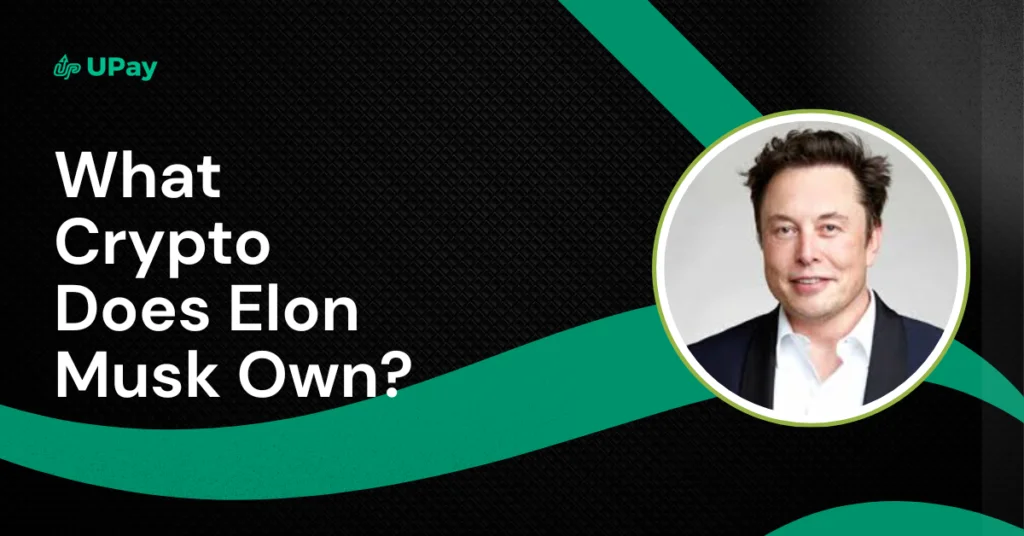
When Elon Musk added “#Bitcoin” to his Twitter bio in January 2021, Bitcoin surged 20% within 24 hours. That’s a $150 billion market cap increase triggered by four characters. When he tweeted “Dogecoin to the moon!” in April 2021, DOGE jumped 50% in hours. When Tesla disclosed its $1.5 billion Bitcoin purchase in February 2021, the cryptocurrency market added $200 billion in value overnight. This is the “Musk Effect” one person’s words and actions moving hundreds of billions of dollars across cryptocurrency markets. But despite Musk’s influence, there’s a lot of confusion about exactly what cryptocurrencies Elon Musk actually owns. The internet is full of misinformation, speculation, and scams claiming to know his holdings. Viral rumors say he owns XRP, Shiba Inu, Floki Inu, Kekius Maximus, and dozens of other tokens. Meanwhile, his actual confirmed holdings Bitcoin, Ethereum, and Dogecoin are rarely explained with proper context or verification. The confusion gets worse when people mix up Musk’s personal holdings with Tesla’s and SpaceX’s corporate Bitcoin. This guide provides verified, source-backed answers about Elon Musk’s cryptocurrency holdings as of November 2025. You’ll learn exactly what cryptocurrencies Musk personally owns, what he doesn’t own, Tesla’s Bitcoin holdings with SEC filing details, SpaceX’s Bitcoin holdings with blockchain tracking data, how his tweets and actions move markets, the connection between the Department of Government Efficiency and Dogecoin, and how to independently verify and track Musk’s crypto activity. This guide goes deeper than other articles. We provide verified information, quantified market impact analysis, and step-by-step guidance for tracking Musk’s crypto moves. Unlike articles that recycle the same basic facts, we provide blockchain analytics, SEC filing interpretation, historical price correlation data, and systematic rumor debunking backed by evidence. Read Also: Who is Elon Musk? The Real Story of Elon Musk’s Rise to Fame What Cryptocurrencies Does Elon Musk Own? (Confirmed Holdings) Elon Musk owns three cryptocurrencies: Bitcoin (BTC), Ethereum (ETH), and Dogecoin (DOGE). He confirmed this at The B Word conference in July 2021 and repeated it in multiple social media posts. Bitcoin is his largest holding, followed by smaller amounts of Ethereum and Dogecoin. The exact quantities are unknown because Musk has never publicly disclosed his wallet addresses. His companies Tesla and SpaceX also hold significant Bitcoin: Tesla owns 11,509 BTC worth $1.1-1.3 billion, and SpaceX holds approximately 5,790-8,285 BTC worth $625-900 million as of November 2025. Bitcoin (BTC) – Musk’s Largest Personal Holding Musk confirmed at The B Word conference in July 2021 that he owns Bitcoin. He stated “I own Bitcoin, and it’s much more Bitcoin than Ether or Doge.” In October 2021, he tweeted “I still own & won’t sell my Bitcoin, Ethereum or Doge fwiw.” In March 2022, he confirmed continued holding during inflation concerns. Musk first mentioned owning Bitcoin in a 2018 tweet. He revealed he owned 0.25 BTC received as a gift from a friend. He likely accumulated more between 2018 and 2021. His exact current holdings are unknown because he’s never disclosed wallet addresses. Musk calls Bitcoin “energy-based money” that cannot be faked like fiat currency. He sees it as a long-term store of value and appreciates the proof-of-work security model. But he’s also critical. He complains about slow transaction speeds Bitcoin has 10-minute blocks. He raised environmental concerns about mining, which Tesla cited when it stopped accepting BTC payments in May 2021. Bitcoin represents Musk’s largest personal crypto position. His long-term holding stance, confirmed in 2021-2022, shows conviction despite his criticism of the technology’s limitations. Dogecoin (DOGE) – The People’s Crypto and Musk’s Favorite Source: (Elon Musk X page) Musk confirmed owning Dogecoin at The B Word conference in July 2021. In January 2024, he said he owns “a bunch of Dogecoin.” He’s endorsed it multiple times on Twitter/X, calling it “Dogecoin might be my fav cryptocurrency.” In his own words: “I decided to support Dogecoin because it seemed like the people’s crypto. A lot of rich people were supporting Bitcoin, but when I talked to people at SpaceX or Tesla, they said they supported DOGE. So I thought, this is for the people.” Musk calls himself the “Dogefather.” He’s Dogecoin’s most vocal celebrity supporter. He tweets about it constantly with memes and endorsements. He likes its technical aspects: faster transaction speeds 1-minute block times versus Bitcoin’s 10 minutes and lower fees, just fractions of a cent, making it practical for payments. His companies use Dogecoin. Tesla accepts it for merchandise purchases. The Boring Company accepts it for Vegas Loop rides. SpaceX funded the DOGE-1 lunar mission with Dogecoin, announced in May 2021, though the launch is still pending. There’s speculation about how much DOGE Musk owns. An anonymous whale wallet holding 36+ billion DOGE, worth billions, is rumored to belong to Musk. He’s denied owning whale wallets. He likely holds a substantial amount distributed across multiple wallets for privacy. The exact quantity is unknown. Ethereum (ETH) – The Silent Third Musk confirmed owning Ethereum at The B Word conference in July 2021, saying he owns “much less than Bitcoin.” In October 2021, he reconfirmed alongside BTC and DOGE on Twitter. Musk has acknowledged owning Ethereum since July 2021 but rarely discusses it compared to BTC and DOGE. He’s criticized slow transaction speeds, 15-second blocks and high gas fees during network congestion. But he appreciates smart contract capabilities and the DeFi ecosystem. Smart contracts could power X/Twitter integrations. Musk focuses public attention on Bitcoin as a store of value and Dogecoin for payments. Ethereum sits in the middle without a clear Musk narrative. He likely holds a small amount relative to Bitcoin. It gives him strategic optionality since Ethereum enables applications Bitcoin doesn’t. Corporate Crypto Holdings: Tesla & SpaceX To understand Musk’s real influence on crypto, you have to look at how Tesla and SpaceX have actually held and managed digital assets. Understanding the Distinction Elon Musk’s personal cryptocurrency holdings are completely separate from Tesla’s and SpaceX’s corporate Bitcoin treasuries. This matters because: Musk cannot unilaterally sell Tesla’s Bitcoin. Board approval is required. Disclosure requirements differ.
Cryptocurrency Security Practices That Actually Protect Your Assets in 2026

Discover expert tips on how to keep your crypto safe. Learn essential security practices, choose the right wallets, and safeguard your digital assets effectively.
Long-Term Crypto Investing: The Complete Strategy Guide

Explore the pros and cons of holding cryptocurrency for the long haul. Understand the risks and benefits to make informed investment decisions.