

The cryptocurrency space is filled with opportunities. Airdrops are one of the most exciting ways for users to earn free tokens and support emerging projects. They promise easy rewards for simple actions, such as following social accounts or holding specific assets, creating a buzz across crypto communities.
But with opportunity comes risk. As the popularity of airdrops has grown, scammers have found clever ways to exploit eager participants through fake offers that can drain wallets or steal sensitive data.
It’s easy to mistake a fraudulent airdrop for a real one, especially when it looks convincing, uses familiar project names, or appears on social media feeds filled with fake engagement.
So, how do you know and identify the signs of a crypto airdrop scam before it’s too late? Let’s uncover the most common red flags and the smart steps to protect your funds.
Key Takeaways
- Crypto airdrops can be valuable marketing tools, but scammers often exploit them by creating fake websites, offering exaggerated rewards, and setting wallet-draining traps.
- Legitimate airdrops never ask for private keys, seed phrases, or upfront payments in exchange for tokens.
- Verifying authenticity through official project channels, blockchain explorers, and community discussions is essential to avoid crypto airdrop scams.
- Transparency through verified teams, whitepapers, and audited smart contracts helps identify trustworthy blockchain projects.
- If you are caught in an airdrop scam, promptly revoke wallet permissions, update your security settings, and report the incident to protect your assets and those of others in the crypto community.
What Are Crypto Airdrops?
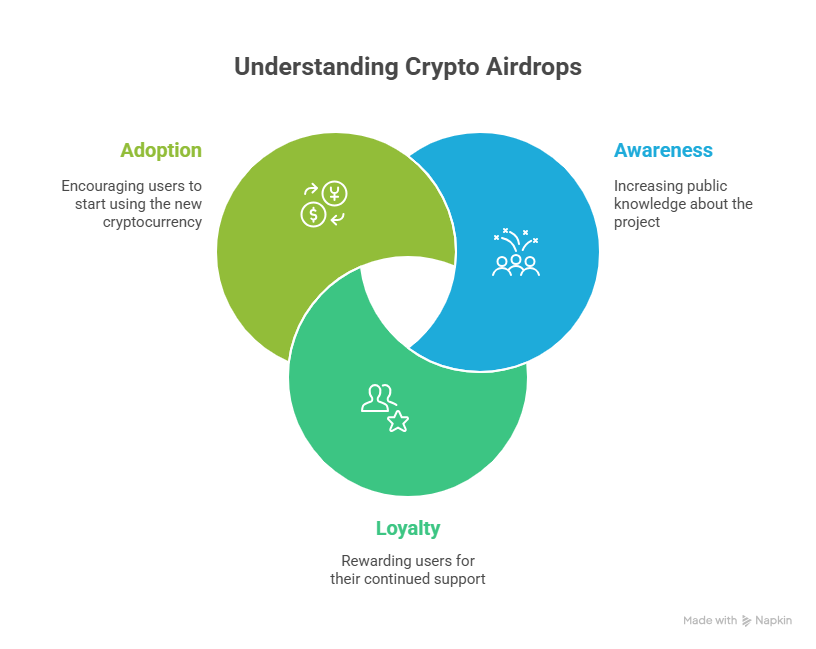
Crypto airdrops are promotional campaigns used by blockchain projects to distribute free tokens or coins to users, often to raise awareness, reward loyalty, or encourage adoption of a new cryptocurrency.
They serve as a marketing strategy to attract attention, increase token circulation, and build an engaged community around a project. In most cases, participants only need to perform simple tasks such as following a social media account, joining a Telegram group, or connecting a wallet to receive these free tokens.
Since the introduction of Initial Coin Offerings (ICOs) in 2017, airdrops have become one of the most popular methods for new cryptocurrency projects to gain visibility without incurring heavy advertising costs.
Legitimate airdrops help spread awareness and incentivize community participation. However, their growing popularity has also made them a target for scammers who use fake airdrops to steal private information, drain wallets, or compromise user security.
Also Read: Tokenomics in Crypto: What It Is and Why It Matters
10 Signs an Airdrop Is a Scam and How To Avoid Them
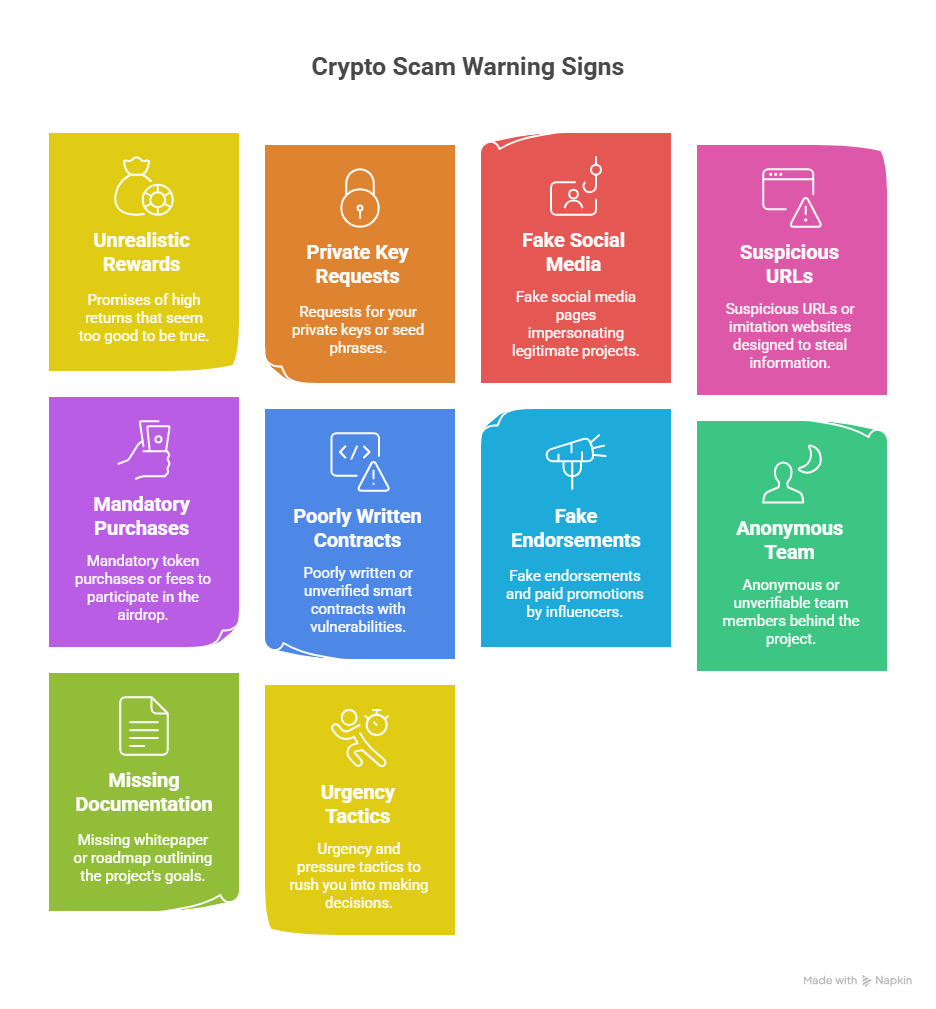
Here are the 10 most common signs that an airdrop is a scam and precautions to take tto avoid them:
- Unrealistic Rewards or Promises
One of the most common signs of a fake crypto airdrop is the promise of unrealistic rewards or guaranteed profits. Scammers often attract victims with exaggerated claims that sound too good to be true—because they are.
These schemes utilise emotional triggers, such as greed and urgency, to prompt users into acting quickly without verifying authenticity.
For instance, you might see flashy ads or posts claiming, “Get $1,000 in free tokens instantly!” or “Claim your guaranteed crypto reward now!” Such offers are designed to make users believe they’re missing out on a massive opportunity.
In reality, no legitimate airdrop offers such high rewards without conditions. Real blockchain projects distribute small token amounts to build awareness, rather than handing out large sums. Always approach such offers with skepticism and verify the project’s authenticity before connecting your wallet or sharing any details.
Real-World Example: A widespread scam involves “deepfake” videos of Elon Musk. In these videos, AI-generated versions of Musk promise to “double” any Bitcoin or Ethereum sent to a specific wallet. In 2024, similar deepfake streams appeared on YouTube featuring Ripple CEO Brad Garlinghouse, falsely promising a massive XRP airdrop to anyone who sent funds first.
- Requests for Private Keys or Seed Phrases
No legitimate crypto airdrop will ever ask for your private keys or seed phrases, and that’s a rule every crypto user should remember. These are the most sensitive pieces of information tied to your wallet, granting full access to your funds.
Anyone who obtains them can easily transfer, sell, or completely drain your assets without any possibility of recovery.
Scammers often disguise their intentions behind fake claim pages or verification forms, requesting users to “confirm wallet ownership” or “verify identity” by entering their private keys. Once provided, your wallet is instantly compromised.
Real airdrops only require a public wallet address for token distribution, never personal login credentials or recovery phrases. If any airdrop campaign asks for your private key or seed phrase, it’s a 100% scam—close the page immediately and report it to protect others.
- Fake Social Media Pages or Impersonation
Scammers often create fake social media pages that closely mimic the official accounts of well-known crypto projects. They use identical logos, names, and even copied posts to appear authentic—sometimes going so far as to buy followers or run paid ads to gain credibility.
These fake pages then promote fraudulent airdrops, directing users to phishing websites or wallet-draining links under the guise of official announcements.
For example,a fake WEPE “help desk” account on X (formerly Twitter) asked users to connect their wallets and even pressured them to input their seed phrases.
To verify authenticity, always check the project’s official website for direct links to their verified social handles. Look for verification badges on platforms like X (Twitter), Telegram, or Discord, and examine small details like username spellings and follower counts.
Avoid engaging with links sent through direct messages or suspicious comments. Legitimate crypto projects share updates only through their official domains and verified community channels—never through random or duplicate profiles.
- Suspicious URLs or Imitation Websites
Phishing is one of the most common tactics used in fake airdrop scams, where scammers create imitation websites that closely resemble legitimate crypto platforms.
These sites often copy design elements, logos, and even domain names to deceive users into believing they’re interacting with the official project. Once users connect their wallets or input personal details, the scammers gain access to their funds or private information.
Real-World Example: In the Uniswap airdrop era, scammers registered typosquatting domains like uniswapp.org (with an extra ‘p’) or arbitrum-rewards.com. More recently, scammers used domains like 2024arb.xyz, which looked professional but contained malicious scripts to drain connected wallets.
To stay safe, always inspect the URL before taking any action. Genuine websites typically use secure connections that start with “https://” and display a valid SSL certificate (the padlock icon next to the address).
Double-check domain names for subtle misspellings or extra characters, like “binánce.com” instead of “binance.com.” Lastly, confirm any airdrop through the project’s official announcements or verified channels—never through random links shared online.
- Mandatory Token Purchases or Fees
A major red flag in any crypto airdrop is the requirement to purchase tokens or pay upfront fees before receiving rewards. Legitimate airdrops are designed to promote a project by giving away free tokens, not by asking users to “buy in.” When an airdrop demands that you send crypto or deposit funds to qualify, it’s almost always a scam.
Fraudulent airdrops often disguise these payments as “network fees,” “unlock deposits,” or “gas requirements.” Once you transfer the funds, the scammers disappear, and your money is gone for good.
Real-World Example: Scammers targeting the Hamster Kombat viral game in 2024, created fake airdrop pages that asked users to pay a “TON gas fee” to claim their allocation early. Users who paid the fee received nothing, while the scammers pocketed the TON tokens.
Real blockchain projects handle distribution costs internally and never request personal payments from participants. To stay protected, avoid any airdrop that requests crypto transfers or claims you must first purchase a specific token. Genuine airdrops are entirely free to claim and don’t involve hidden fees or deposits.
- Poorly Written or Unverified Smart Contracts
Interacting with malicious or unverified smart contracts is one of the most significant risks in fake airdrops.
Scammers often deploy contracts designed to look legitimate but contain hidden functions that can drain your wallet, transfer tokens without consent, or grant unauthorized access once you approve them. Even a single incorrect click can result in the complete loss of your funds.
Before connecting your wallet or claiming tokens, always check the contract’s authenticity using blockchain explorers like Etherscan or BscScan. Verified contracts display a green checkmark and typically include readable source code, developer information, and a history of past transactions.
Real-World Example: The notorious “Monkey Drainer” phishing kit was used in thousands of fake airdrop sites (impersonating projects like Aptos and NFT mints). The smart contract tricked users into signing a “SetApprovalForAll” or “Permit” transaction, which secretly gave the attacker permission to drain every token from the user’s wallet.
If a contract is unverified, lacks transparency, or shows unusual permissions (like “unlimited spend approval”), avoid it entirely. Genuine crypto projects ensure their smart contracts are verified, open-source, and easily auditable by the community.
- Fake Endorsements and Paid Promotions
Scammers frequently exploit fake influencer partnerships and celebrity endorsements to make their airdrops appear legitimate.
They may use edited images, impersonated social media accounts, or paid promotions from unverified “crypto influencers” claiming to have partnered with the project. These tactics create a false sense of trust and urgency, convincing users to participate without questioning authenticity.
For example, some fraudulent Hamster Kombat airdrop promotions involved “crypto influencers” hyping the project without any real connection—helping spread the scam widely.
To spot these traps, look for red flags like generic promotional tweets, suspiciously enthusiastic posts, or comments filled with fake engagement and bot-like replies.
Always verify endorsements through the celebrity’s official social media pages or the project’s verified website.
Legitimate collaborations are typically announced across multiple credible platforms and media outlets. If an airdrop relies heavily on influencer hype without official confirmation, it’s likely a scam designed to exploit followers’ trust and drive traffic to fraudulent links.
- Anonymous or Unverifiable Team Members
Transparency is a cornerstone of any legitimate crypto project, and that starts with a verifiable team. When an airdrop is promoted by a project with anonymous or unverifiable team members, it’s a strong indication that something isn’t right.
Scammers often hide behind fake names, stock photos, or vague bios to avoid accountability once they’ve executed their fraud.
Real-World Example: The Squid Game (SQUID) token, which capitalized on the popular Netflix show, is a prime example. The “founders” were completely anonymous, with no LinkedIn profiles or verifiable history. After the token price surged, the anonymous developers drained the liquidity pool in a “rug pull,” stealing millions and vanishing instantly.
Before trusting any project, take time to research the team’s background. Check their LinkedIn profiles, past project involvement, and online presence to confirm authenticity. A genuine team will have verifiable identities, professional experience, and consistent activity across multiple platforms.
You can also review the project’s whitepaper—it should include clear information about the founders, developers, and advisors. If a project lacks transparency or the listed individuals can’t be verified, treat the airdrop as a potential scam and stay away.
- Missing Whitepaper or Roadmap
A missing or incomplete whitepaper is one of the most evident warning signs of a fake crypto airdrop. Legitimate blockchain projects always provide detailed documentation outlining their goals, technology, tokenomics, and roadmap.
This transparency helps users understand the project’s purpose and long-term vision. When an airdrop lacks this information or offers only vague descriptions, it typically indicates that the project lacks a solid foundation or a well-defined development plan.
Scammers often upload fabricated or plagiarized whitepapers, copying content from well-known crypto projects to appear credible. Common signs include inconsistent formatting, unrealistic timelines, and technical jargon that lacks clarity.
To confirm authenticity, compare the whitepaper against reputable sources, verify originality using plagiarism tools, and ensure that the roadmap aligns with active development or community updates. A genuine project has nothing to hide, whereas a fake one relies on flashy promises rather than real documentation.
- Urgency and Pressure Tactics
One of the most manipulative tactics used in fake airdrops is the creation of a sense of urgency and fear of missing out (FOMO). Scammers use phrases like “Claim now or lose forever!” or “Only 100 spots left!” to push users into acting fast without thinking critically.
This psychological pressure makes people skip essential verification steps, such as checking URLs, smart contracts, or project legitimacy, just to avoid “missing” a supposedly rare opportunity.
Real-World Example: Phishing sites targeting Blur and Optimism airdrop hunters often featured a literal countdown timer on the claim page. The timer would reset every time the page refreshed, but the visual pressure tricked users into connecting their wallets hastily to “claim” before the timer hit zero.
To protect yourself, always pause and verify before taking any action. Genuine crypto projects don’t rely on panic-driven deadlines or countdowns to distribute tokens. Instead, they provide clear instructions and reasonable timeframes for participation.
When you encounter time-sensitive offers, take a step back, confirm the source through official channels, and trust your instincts. Remember, genuine opportunities allow for thorough due diligence, while scams thrive on rushed decisions.
Examples of Recent Fake Airdrops
Here are detailed accounts of recent fake airdrops, including how each fooled users and what could’ve prevented the losses:
Hamster Kombat
Hamster Kombat is a Telegram-based “tap-to-earn” game launched in March 2024, which quickly amassed over 250 million users.
Here’s how it tricked users:
- It promised large HMSTR token airdrops to players based on “profit per hour” (PPH), referrals, and other in-game tasks.
- Just before the token generation event (TGE), rules were changed suddenly: many participants were disqualified via an anti-cheat system, including some who had invested months of gameplay.
- The value of the tokens at listing was significantly lower than expected; the debut price was set at around $0.01, far below what many had anticipated (some expected $0.10-$0.50). It dropped quickly.
- Many players earned “dust” — trivial amounts far below what they thought the airdrop would yield. Some users got less than $10 despite heavy participation.
Wall Street Pepe (WEPE)
WEPE is a memecoin (Ethereum-based) that saw imitation in an airdrop scam.
Here’s how it tricked users:
- Scammers cloned the legitimate Wall Street Pepe website (or created a site that closely resembled it), offering a fake WEPE airdrop.
- Users were asked to connect their wallets. When they did so, they unwittingly signed malicious smart contract transactions that permitted the scammers to drain funds.
What could’ve prevented the losses:
- Always double-check domain names (look for slight misspellings or extra characters).
- Check official social media channels and announcements to see if the airdrop is indeed endorsed.
- Never connect your wallet if prompted by unsolicited links or non-verified sources.
HEX
HEX was exploited via fake airdrop sites.
How it tricked users:
- A counterfeit website mimicked the genuine HEX project’s site.
- If users connected their wallets via this fake site, a malicious contract would be triggered, allowing the scammer to extract tokens or funds from their accounts.
What could’ve prevented the losses:
- Verifying whether the website is the real one (via official links on the project’s page or via trusted listing services).
- Checking whether the contract is verified on Etherscan and if the project has made announcements in their verified social media channels.
LayerZero
LayerZero was another name misused by scammers.
How it tricked users:
- Fake “proof of donation” airdrops were promoted via impersonated social media accounts. These claimed that users must donate a small amount (e.g. $0.10 per token) to qualify, which is not how legitimate airdrops usually work.
- Websites made to look like LayerZero’s, even with design elements and branding similar to official ones. Clicking or connecting wallets through these fake platforms could result in losses.
What could’ve prevented the losses:
- Double checking whether the donation requirement is legitimate (many true airdrops do not require donations or purchases).
- Always visit the official LayerZero website or check audited announcements by security firms about what’s real.
Sui
Sui (SUI), a layer-1 blockchain, also saw fake airdrops.
How it tricked users:
- Phishing web pages claimed users could “check eligibility” for a Sui airdrop. Users who connected their wallets or clicked through signed a contract that allowed unauthorized transfers of their assets.
- Fraudulent NFTs or tokens were dropped to wallets, leading users to fake sites via banners or ads. Some of these led to credential or wallet draining.
What could’ve prevented the losses:
- Be very cautious with unexpected NFT drops or unannounced “claim now” banners.
- Always verify the URL with the official SUI project site or its verified channels.
- Use dummy or minimal-fund wallets when testing unknown contracts or claims.
Luxoshi / Kishui / Fake Memecoin Airdrops
Some users reported losing funds after interacting with memecoin sites (like “luxoshi.org” or sites claiming Pepe-style drops) that were fake. Connecting wallets or approving contracts led to draining.
How To Check If a Crypto Airdrop Is Legit
Verifying the authenticity of a crypto airdrop is essential before connecting your wallet or performing any task.
Here’s how to confirm if an airdrop is genuine and safe:
Verify Through Official Project Pages or CoinMarketCap’s Airdrop Tracker
Start by visiting the official project website and looking for direct announcements about the airdrop. Authentic projects always publish details through verified domains and official social handles.
You can also check trusted platforms like CoinMarketCap’s Airdrop Tracker or CoinGecko’s airdrop section, which list only verified campaigns. If an airdrop isn’t mentioned there, it’s likely not real.
Cross-Check Community Discussions
Explore Reddit, Telegram, or Discord communities for feedback on the airdrop. Genuine airdrops often feature active discussions in reputable cryptocurrency forums, whereas scams tend to generate complaints or warnings.
Be cautious of bots or repetitive “too good to be true” comments, which often indicate fake hype. Always rely on established crypto communities for real user insights.
Validate Tokens Using Blockchain Explorers and Scam-Checking Tools
Use tools like Etherscan, BscScan, or Solscan to inspect the token’s contract address, transaction history, and creator details.
Verified tokens typically have a green checkmark and transparent activity. You can also use scam-checking tools such as Token Sniffer or GoPlus Security to detect risky contracts or malicious permissions. If anything looks suspicious—avoid connecting your wallet.
Also Read: What Is A Phantom Wallet
What To Do If You’ve Fallen for an Airdrop Scam
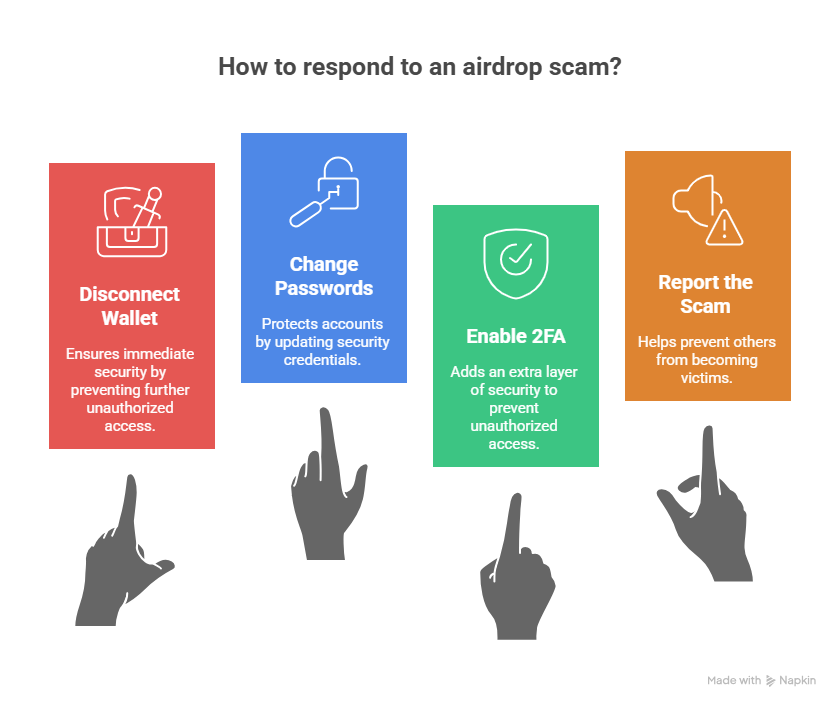
Even the most cautious crypto users can occasionally fall victim to a well-crafted scam. Acting quickly can help minimize damage and prevent further losses.
Here’s what you should do immediately:
Disconnect and Revoke Wallet Access
If you’ve connected your wallet to a suspicious site, immediately disconnect it and revoke any granted permissions. Use trusted tools like Revoke.cash or Etherscan’s Token Approval Checker to remove access from malicious smart contracts. This step helps stop scammers from transferring your remaining tokens or NFTs.
Change Passwords and Enable Two-Factor Authentication (2FA)
Update all passwords linked to your crypto wallets, exchanges, and email accounts. Activate two-factor authentication (2FA) to add an extra layer of security against unauthorized logins. Avoid reusing old or weak passwords—use a password manager if necessary.
Report the Scam Immediately
Report the incident to your wallet provider, exchange platform, or blockchain security community. You can also post verified warnings on Reddit, Twitter (X), or Discord to alert others.
If the scam resulted in a financial loss, consider filing a report with your local cybercrime authorities. Quick reporting can help trace funds and prevent others from falling into the same trap.
Also Read: Top 10 Free Crypto Mining Apps In 2026
Final Thoughts
Crypto airdrops can offer exciting opportunities, but they’ve also become a favorite tool for scammers targeting unsuspecting users. Staying safe requires awareness, patience, and consistent verification before engaging with any token giveaway.
Always check official sources, research project details, and avoid connecting your wallet to unverified sites. By recognizing red flags such as, unrealistic promises, fake websites, or requests for private keys, you can protect your funds and avoid unnecessary losses.
The crypto industry thrives on trust and transparency, and your vigilance plays a key role in maintaining it. Stay informed, stay cautious, and ensure every airdrop you join is genuinely worth your time.
Frequently Asked Questions
How To Know if an Airdrop Is Legit?
You can know if an airdrop is legit by verifying it through the project’s official website or CoinMarketCap’s airdrop tracker, checking community discussions on trusted platforms like Reddit or Telegram, and confirming the token’s contract details on blockchain explorers such as Etherscan or BscScan.
How To Identify Good Airdrops?
You can identify good airdrops by verifying them through official project websites, CoinMarketCap’s airdrop tracker, and active community channels. Look for transparent teams, verified smart contracts, and clear tokenomics, and avoid any airdrops that require private keys, fees, or personal information.
What Are the Risks of Airdrops?
The primary risks associated with airdrops include exposure to phishing scams, malicious smart contracts, wallet draining, and data theft. Scammers may use fake airdrops to trick users into sharing private keys, approving harmful transactions, or visiting fraudulent websites that compromise their crypto assets.
What Are the Red Flags of a Cryptocurrency Scam?
Red flags of cryptocurrency scams include unrealistic profit promises, requests for private keys or seed phrases, poorly designed or fake websites, urgency tactics, anonymous project teams, and fake social media endorsements.
Are Airdrops a Waste of Time?
Airdrops aren’t always a waste of time—legitimate ones can offer real rewards and early access to valuable tokens—but many are scams or yield minimal returns, so it’s only worthwhile if you verify the project’s authenticity before participating.