

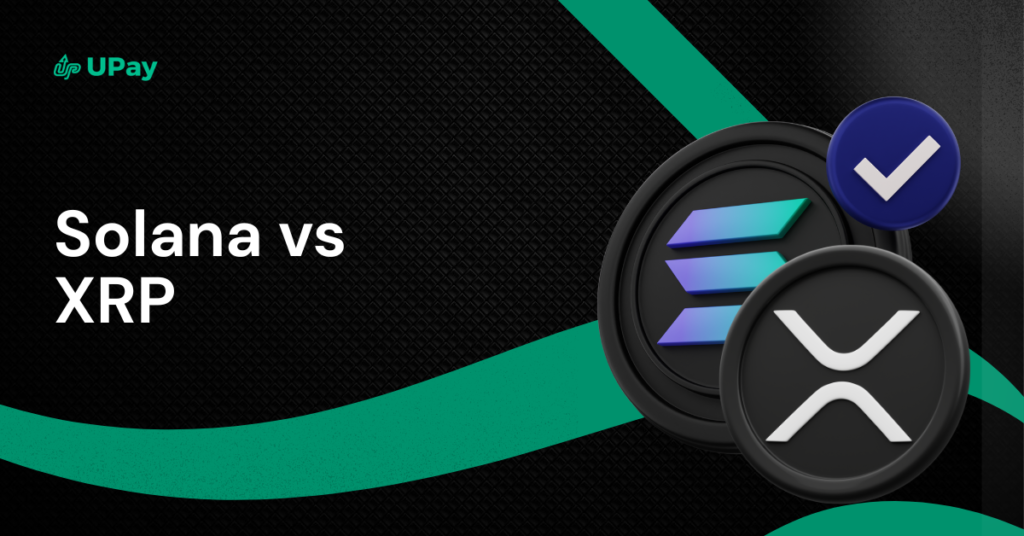
When it comes to blockchain, not all projects are built for the same purpose. Some aim to power the future of decentralized apps (dApps), while others focus on revolutionizing traditional finance. Two of the most talked-about players in this space are Solana (SOL) and XRP (XRP Ledger).
At first glance, they might seem like competitors, but in reality, they serve very different goals. Solana is often called the “Ethereum killer” for its lightning-fast transactions and thriving ecosystem of DeFi, NFTs, and Web3 apps.
On the other hand, XRP Ledger was designed with global banks and payment providers in mind, making international money transfers faster and cheaper than the traditional system.
In 2025, both projects are still standing strong despite market ups and downs. This makes the comparison more relevant than ever: Solana is shaping the future of Web3, while XRP continues to bridge crypto with institutional finance.
So, which one is better for investors, users, and the broader crypto world? Let’s break it down.
Key Takeaway
- Solana is a next-generation blockchain built to handle thousands of transactions quickly
- XRP was created to solve the problem of slow and costly cross-border payments
- Because of this speed and low cost, Solana has become a popular choice for NFT platforms
- The XRP Ledger (XRPL) relies on a system called Federated Byzantine Agreement (FBA) to confirm transactions.
- What makes Solana stand out is its unique approach called Proof of History (PoH).
What are Solana and XRP? (Overview)
Solana (SOL) and XRP (XRP Ledger) are two of the most recognized names in the crypto market, but they serve very different purposes.
Solana Overview
Solana is a next-generation blockchain built to handle thousands of transactions quickly, without losing sight of decentralization or security.
The idea came from Anatoly Yakovenko, who introduced the concept in 2017. A year later, he teamed up with colleagues Stephen Akridge and Greg Fitzgerald to launch Solana Labs, the company behind the project. By 2020, the Solana Foundation was created to help grow and support the ecosystem.
What makes Solana stand out is its unique approach called Proof of History (PoH). Think of it as a built-in cryptographic clock that keeps everything in order. By automatically organizing transactions, it removes common bottlenecks that slow down other blockchains.
This breakthrough gave Solana a big performance edge. In testing, it can handle around 4,000 transactions per second, and in real-world usage, it consistently processes over 1,000 transactions per second.
Because of this speed and low cost, Solana has become a popular choice for NFT platforms, Play-to-Earn games, and a wide range of decentralized apps (dApps) that need fast, reliable transactions.
XRP Overview
XRP, on the other hand, is the native token of the XRP Ledger (XRPL), which was created to solve the problem of slow and costly cross-border payments. Instead of focusing on NFTs or gaming, XRP is built for banks, payment providers, and financial institutions that need fast, secure, and affordable transactions.
The XRP Ledger (XRPL) was introduced in 2012 by developers Jed McCaleb, Arthur Britto, and David Schwartz. Unlike many blockchains that were created for general purposes, XRPL was built specifically to make payments faster, cheaper, and more efficient. Around the same time, they also launched Ripple, a company focused on helping banks and financial institutions use blockchain for global transactions.
XRPL is known for handling instant cross-border payments at a fraction of the cost of traditional systems. It also supports tokenized assets and digital versions of real-world items like currencies or securities while adapting to the strict rules of the financial industry. With the addition of federated sidechains, XRPL can also run smart contracts and private ledgers without affecting its speed or reliability.
It’s important to note that Ripple doesn’t own XRPL. The ledger runs on a network of independent validators. To confirm transactions, these validators use a consensus model that requires a very high level of agreement (around 90%).
While anyone can choose their own list of trusted validators, most follow the recommended lists published by Ripple and the XRPL Foundation to keep the system secure and consistent.
Why Compare Them?
Both Solana and XRP remain highly relevant, but for very different reasons:
- Solana in Web3: Solana has become one of the go-to blockchains for developers thanks to its speed and growing ecosystem. It powers NFT marketplaces, DeFi protocols, tokenized assets, and even gaming platforms. Its role is central in shaping the future of decentralized applications.
- XRP in Finance: XRP has gained a stronger foothold in traditional finance after years of legal battles. With regulatory clarity and adoption by banks and payment providers, it has positioned itself as a bridge between crypto and global financial systems.
Comparing them is useful because it shows two sides of the crypto landscape:
- One side focused on innovation and open Web3 communities (Solana).
- The other focused on practical financial use cases and institutional adoption (XRP).
Choosing between Solana and XRP depends on what you value more, long-term Web3 growth or reliable payment solutions.”
Ecosystem & Use Cases of Solana and XRP

Solana and XRP each power thriving ecosystems, but they serve different purposes. Both networks are expanding, attracting developers and institutions alike, let’s review how their ecosystem and use cases compare
Consensus Mechanism
The XRP Ledger (XRPL) relies on a system called Federated Byzantine Agreement (FBA) to confirm transactions.
Unlike blockchains that depend on mining or staking, XRPL doesn’t need either. Instead, it uses a Unique Node List (UNL), a group of trusted validators that check and approve transactions. When about 80% of these validators agree, the transaction is finalized and added to the ledger.
Solana, on the other hand, takes a different approach by combining Proof of History (PoH) with Proof of Stake (PoS). PoH works like a built-in cryptographic clock that creates timestamps automatically.
Each node can generate these timestamps independently using a process called SHA-256 hashing, which removes the need to constantly share time data across the network. This setup makes reaching agreement on transactions much faster and far more efficient.
The XRP Ledger (XRPL) is overseen by the XRPL Foundation, which brings together representatives from Ripple, community group XRPL Commons, and the XAO DAO. This model is more open than when Ripple had greater influence, but compared to many DeFi-focused projects, decision-making is still somewhat concentrated.
For Solana, governance is tied to its Proof-of-Stake system. Validators play a central role by reviewing and voting on proposals that shape the network’s future. Everyday users can also get involved by staking their SOL tokens with validators whose views and policies they support, giving the community a say in how the blockchain evolves.
Speed and Scalability
The XRP Ledger (XRPL) is built for speed and efficiency. It can handle close to 1,000 transactions per second (tps), and each payment costs just a tiny fraction of a cent. Because there’s no energy-hungry mining involved, transactions are also environmentally friendly and considered carbon-neutral.
Solana is also known for its high performance. The network regularly processes over 1,000 tps, with the average transaction fee sitting at around $0.00064 almost free compared to traditional payment systems. Since it uses a Proof-of-Stake model instead of the energy-heavy Proof-of-Work (like Bitcoin), Solana is highly energy-efficient and maintains a zero net carbon footprint.
Solana (SOL) and XRP Tokenomics and Utility: XRP vs SOL
When comparing Solana (SOL) and XRP, their tokenomics and utility play a big role. Both tokens support active ecosystems, but their designs are very different. XRP was built for payments and liquidity, while SOL fuels dApps, DeFi, and NFTs on the Solana network.
Read Also: Best Solana Meme Coin To Buy: Expert Picks for 2026
XRP
The XRP Ledger (XRPL) has a fixed maximum supply of 100 billion tokens, which means no more can ever be created. Today, over half of that supply is already circulating in the market.
A large portion of XRP is held by Ripple, the company that helped build the ecosystem. To avoid flooding the market, Ripple places its holdings in an escrow system, releasing about 1 billion XRP each month. Any tokens that are not used simply go back into escrow. This setup provides predictability and stability in how XRP enters circulation.
XRP’s main role is to act as a bridge currency for payments. It allows banks, payment providers, and individuals to transfer value across borders in seconds, with minimal fees.
SOL
Solana’s token (SOL) works differently. Unlike XRP, there is no hard cap on the total supply. Instead, Solana uses an inflationary model where new tokens are added to the system as staking rewards. This means validators and delegators who secure the network earn SOL over time.
The inflation rate started high around 8% annually, but it’s programmed to decrease gradually every year until it eventually stabilizes at about 1.5% per year. This makes SOL both a utility token for paying transaction fees and a reward system for keeping the network secure.
In addition to fees and staking, SOL is widely used within the Solana ecosystem for DeFi apps, NFTs, gaming projects, and payments.
In simple terms
XRP = fixed supply, predictable releases, focus on payments.
SOL = inflationary supply, rewards for validators, fuel for Web3 applications.
“XRP’s fixed supply and regulatory clarity make it attractive for institutions, while Solana’s growing ecosystem positions it as a Web3 powerhouse.”
Performance & Reliability XRP Vs Solana

Performance and reliability are key factors when comparing blockchains. Speed, transaction costs, and uptime can determine how useful a network is in real life. Solana is known for its blazing-fast transactions but has faced past outages, while XRP offers stability with low fees. Let’s see how these two measure up.
Transaction speed and cost
Speed and affordability are two of the biggest selling points for both Solana and XRP.
Solana: Solana is known for being one of the fastest blockchains in the industry. It can process thousands of transactions per second (tps) with fees often less than a fraction of a cent. This makes it a strong choice for decentralized apps, DeFi platforms, and NFT marketplaces where users expect quick, low-cost interactions.
XRP: XRP also shines in efficiency. While not quite as fast as Solana in raw numbers, it consistently settles transactions within 3–5 seconds at virtually zero cost (a fraction of a penny per transaction). The main debate around XRP isn’t about performance, it’s about whether its validator network is too centralized compared to other blockchains.
Network resilience and reliability
A blockchain isn’t just about speed, it also needs to run reliably without downtime.
Solana: In its early years, Solana was often criticized for network outages and instability, which sometimes paused activity for hours.
However, things have improved significantly. Since mid 2024, Solana has remained stable, and the much-anticipated Firedancer upgrade is expected to make the network even more resilient by reducing risks of downtime and scaling bottlenecks.
XRP: The XRP Ledger has an impressive track record of near-perfect uptime for more than a decade. It has avoided the frequent outages seen in newer chains. Still, some researchers point out that the network relies heavily on a smaller group of validators, which raises questions about centralization and resilience if those key nodes were to fail.
Market Metrics & Investor Appeal (XRP Vs Solana)
When comparing XRP and Solana, it’s not just about technology, it’s also about numbers and investor confidence. Market metrics like capitalization, liquidity, and trading volume reveal how strong each token is in the market. Price forecasts show where they might head, while token supply and community reach highlight long-term potential
Market Capitalization & Liquidity
Looking at market size, XRP is ahead of Solana in overall value. XRP’s market capitalization sits around $110–$115 billion, making it one of the largest cryptocurrencies by total worth.
However, when it comes to daily trading activity, Solana sees more action. Its average turnover is roughly $6.7 billion per day, compared to XRP’s $2.4 billion, showing that traders are more actively buying and selling SOL in the short term.
Growth Potential & Price Outlook
Both tokens have strong communities backing them, but their growth paths differ. Analysts see XRP with around 76% short-term upside, thanks to its clearer regulatory status and adoption in payments.
For the long run, many believe Solana has stronger fundamentals, since it powers DeFi, NFTs, and Web3 apps. According to forecasts from Bitget, by the end of 2025:
- XRP could reach $5
- Solana could climb to $300
Of course, these predictions depend on market conditions, competition, and overall crypto adoption.
Token Supply & Community Reach
Supply also sets these tokens apart. XRP has about 59 billion tokens circulating out of a fixed 100 billion total.
Solana has around 540 million SOL circulating out of 608 million total (with no strict cap, since inflation adds tokens gradually). In terms of community support, both projects enjoy a strong online presence:
Solana: ~3.53 million followers across major platforms
XRP: ~3.18 million followers
This shows that while XRP has deeper roots in finance, Solana is drawing massive traction in Web3 circles.
Solana and XRP Regulation & Risks
When it comes to regulation, XRP and Solana have had very different journeys.
XRP (XRP Ledger): After years of legal battles with the U.S. Securities and Exchange Commission (SEC), XRP finally gained some clarity in 2023. Courts ruled that XRP itself is not a security when traded on secondary markets, giving Ripple and its token room to move forward.
Since then, Ripple has worked closely with financial regulators and institutions, which has improved trust and adoption in the payments industry.
Solana (SOL): Solana, on the other hand, still faces some uncertainty. The SEC has previously labeled SOL as a potential security, and Solana has been tied up in lawsuits and class-action cases.
While these challenges haven’t stopped development, they do pose risks for investors. On the positive side, Solana continues to improve its stability and reliability through regular upgrades, showing the project’s commitment to long-term growth.
Security Risks
Every blockchain has to balance speed, decentralization, and security and both XRP and Solana face risks in this area.
Solana: Known for its high speed, Solana has also been criticized for outages and smart contract vulnerabilities. Researchers have pointed out risks in Solana’s design, but developer tools like the Anchor framework are helping to make smart contracts safer. The network has been steadily improving, but security remains an area to watch.
XRP: The XRP Ledger has fewer outages compared to Solana, but studies of its peer-to-peer network show that a few “central nodes” play a major role in keeping it running. This means if certain validators fail, the system could face stress. That said, its design has proven resilient for over a decade of operation.
Read Also: Top Security Tokens To Watch Out for in 2026
Conclusion
Solana and XRP are two powerful yet very different pillars in crypto space. Solana is built for speed, scalability, and innovation in Web3 fueling DeFi, NFTs, and decentralized apps. Its high throughput and growing ecosystem make it attractive to developers and investors who believe in the future of decentralized platforms.
XRP, on the other hand, was designed for a very specific purpose: to transform cross-border payments. With its regulatory clarity, strong institutional partnerships, and consistent uptime, XRP remains a leader in bridging the gap between traditional finance and blockchain technology.
For investors, the choice depends on priorities. Those looking for long-term growth in Web3 innovation may lean toward Solana, while those who prefer stability, institutional adoption, and payment-focused utility may favor XRP.
Ultimately, both tokens highlight how diverse the crypto industry has become. Rather than competing directly, Solana and XRP represent two sides of the same evolution, one driving the future of decentralized apps, the other modernizing global finance.
FAQs
What is the main difference between Solana and XRP?
Solana is designed for decentralized apps, DeFi, and NFTs, while XRP focuses on fast and low-cost cross-border payments.
Which is faster: Solana or XRP?
Both are fast, but Solana can process thousands of transactions per second, while XRP settles transactions in 3–5 seconds at ultra-low cost.
Is Solana or XRP more decentralized?
Solana relies on proof-of-stake validators, while XRP uses a smaller set of validators, which some argue makes it more centralized.
Which has better long-term potential: Solana or XRP?
Analysts suggest XRP is stronger in payments and regulation, while Solana has more growth potential in Web3, DeFi, and gaming.
Are Solana and XRP good investments in 2025?
It depends on goals: XRP may suit those seeking stability and adoption in finance, while Solana appeals to investors betting on Web3 growth.
What risks do Solana and XRP face?
Solana faces concerns about past outages and regulatory scrutiny, while XRP faces ongoing debates about decentralization despite legal clarity.